Hayao Miyazaki’s MY NEIGHBOR TOTORO wonderfully captures the joys and fears of being a child
MY NEIGHBOR TOTORO (Hayao Miyazaki, 1988)
IFC Center
323 Sixth Ave. at West Third St.
December 20 – January 2
212-924-7771
www.ifccenter.com
www.nausicaa.net
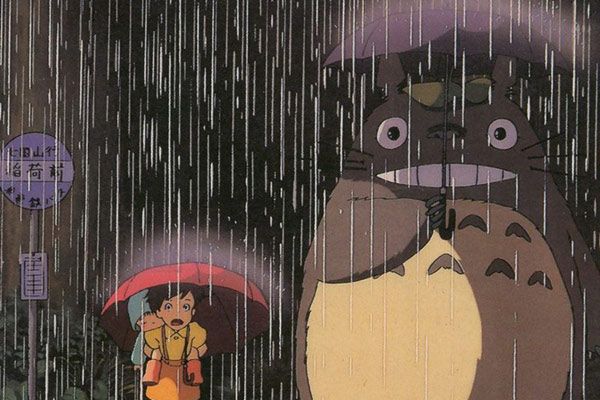
 In many ways a precursor to Hayao Miyazaki’s masterpiece, Spirited Away, the magical My Neighbor Totoro is a fantastical trip down the rabbit hole, a wondrous journey through the sheer glee and universal fears of childhood. With their mother, Yasuko (voiced by Sumi Shimamoto), suffering from an extended illness in the hospital, Satsuki (Noriko Hidaka) and her younger sister, Mei (Chika Sakamoto), move to a new house in a rural farming community with their father, anthropology professor Tatsuo Kusakabe (Shigesato Itoi). Kanta, a shy boy who lives nearby, tells them the house is haunted, and indeed the two girls come upon a flurry of black soot sprites scurrying about. Mei also soon discovers a family of totoros, supposedly fictional characters from her storybooks, living in the forest, protected by a giant camphor tree. When the girls fear their mother has taken a turn for the worse, Mei runs off on her own, and it is up to Satsuki to find her. Working with art director Kazuo Oga, Miyazaki paints the film with rich, glorious skies and lush greenery, honoring the beauty and power of nature both visually as well as in the narrative. The scene in which Satsuki and Mei huddle with Totoro (Hitoshi Takagi) at a bus stop in a rainstorm is a treasure. (And just wait till you see Catbus’s glowing eyes.) The movie also celebrates the sense of freedom and adventure that comes with being a child, without helicopter parents and myriad rules suffocating them at home and school. The multi-award-winning My Neighbor Totoro is screening December 16 to January 2 at the IFC Center as part of the series “An Animated World: Celebrating 5 Years of GKIDS Classics,” paying tribute to GKIDS’ ongoing New York International Children’s Film Festival. The 2006 rereleased dubbed version, featuring the voices of Dakota Fanning (Satsuki), Elle Fanning (Mei), Lea Salonga (Yasuko), Tim Daly (Tatsuo), and Frank Welker (Totoro and Catbus), will be shown before 5:00; the original Japanese version with English subtitles will be shown 5:10 and later. The film will also be screened in a DCP double feature on December 20 at 8:20 followed by Isao Takahata’s Grave of the Fireflies at 10:10. The series also includes such other animated works as Víctor Maldonado and Adrià García’s Nocturna, Jean-Loup Felicioli and Alain Gagnol’s A Cat in Paris, Dominique Monféry’s Eleanor’s Secret, and Benjamin Renner, Vincent Patar, and Stéphane Aubier’s Ernest & Celestine.
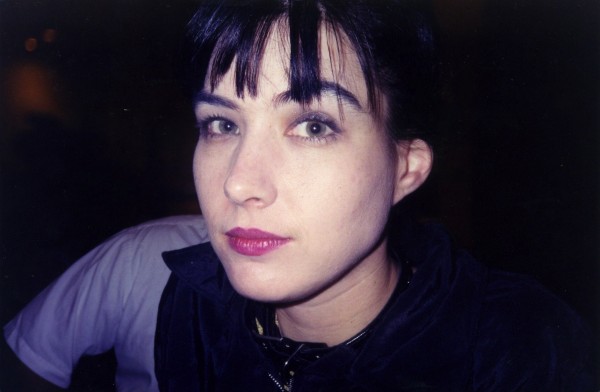
 A cofounder of the riot grrrl movement, Kathleen Hanna was an outspoken feminist as she toured the world with Bikini Kill and then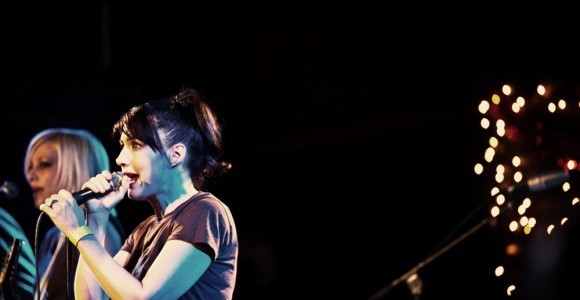
 As it turns out,


 “Every person has a basis desire to eat,” Takeru Kobayashi says at the beginning of Jeff Cerulli and Barry Rothbart’s tasty documentary, Hungry. “There is also the desire to sleep, to have sex,” he continues. “That’s why it’s difficult to see eating as a sport.” From 2001 to 2006, Kobayashi almost single-handedly put the sport of competitive eating on the map by winning the Nathan’s Famous Hot Dog Eating Contest six straight times. But as interest around the world grew, a seemingly irreparable gap grew between some of the sport’s champions and the International Federation of Competitive Eating (IFOCE), which runs Major League Eating (MLE) and is owned and operated by brothers George and Richard Shea. In the film, Cerulli and Rothbart explore the controversy over contracts that led to Kobayashi, Dave “U.S. Male” Goldstein, Brad “the Lunatic” Sciullo, and other rather unique characters being cut off from MLE and taking part instead in unsanctioned events. Goldstein opens up his home to the filmmakers, sharing personal moments with his family, while the rebel Sciullo discusses his battle with a twenty-pound hamburger. Cerulli and Rothbart also speak with such competitive eating champs as Mike “the Scholar” Devito, Furious Pete Czerwinski, Crazy Legs Conti, and El Wingadore, in addition to Dr. Christopher Dimaio, a gastroenterologist who has a word of warning for all of them. But they do what they do because they can’t stop the need to compete, just like any other athlete, and also because some of them don’t have anything else. “Normal life is dreadful,” says jalapeño master Pat “Deep Dish” Bertoletti. The film gets both exciting and disgusting as Goldstein and others prepare for Wing Bowl, followed by Kobayashi coming up with his own plan for July 4. Whether you consider competitive eating a true sport or not, Hungry will make you hungry for more. Hungry is serving up its world premiere November 15 at 1:45 at the IFC Center as part of the “Midnight Docs” section of this year’s DOC NYC festival, with Cerulli, Rothbart, and Kobayashi on hand to talk about the film. The festival, which seeks to “cross fertilize [by] gathering practitioners of many fields — filmmakers, writers, photographers, and other storytellers — to inspire each other,” runs November 14-21 at the IFC Center and the SVA Theatre; among the other “Midnight Docs” are Christina Voros’s Kink, Jonah Bekhor and Zach Math’s The Final Member, and Morgan Matthews’s Shooting Bigfoot.