featured

GLORY GLORY: LAURELYN DOSSETT AND BET WILLIAMS AT JALOPY

Who: Laurelyn Dossett, Bet Williams
What: Songwriting Studio and live concert
Where: Jalopy Theatre, 315 Columbia St. between Woodhull & Rapelye Sts.
When: Saturday, May 9, $60, 2:00; Saturday, May 9, $25, 8:30
Why: “There are secrets / Secrets I swore I’d never tell / But the ones that I loved are all good gone dead / So listen, children, listen well,” Laurelyn Dossett sings on “Run to the River” on her debut solo album, How Many Moons (August 28, Sycamore Road). The North Carolina native has written songs that have been recorded by Levon Helm and the Carolina Chocolate Drops and for the theater (Brother Wolf, Radiunt Abundunt) and has toured with Rhiannon Giddens, Alice Gerrard, and others, but she now takes center stage, joined by her longtime friend and Penn State college roommate, Bet Williams, who is currently recording a new LP, Magic Beauty Pain, the follow-up to such discs as Rose Tattoo, Elephants and Angels, and The 11th Hour. Williams and Giddens appear on How Many Moons, along with Sophia Catanoso, Kari Sickenberger, Charly Lowry, M. C. Taylor, and the Glory Glory Chorus, made up of friends and relatives singing on a family porch.

Produced by Taylor (Hiss Golden Messenger), How Many Moons is an intoxicating mix of Americana, folk, country, jazz, and blues, built around Dossett’s lovely voice. “Laurelyn Dossett is a songwriter and human that I find immensely inspiring. A survivor and a wonder-er. I know she has played a huge part in the lives of so many creative people, and I’m honored to have played a part in her new album,” Taylor said in a statement.

Dossett and Williams come to the Jalopy Theatre in Brooklyn on May 9, first for a two-hour Songwriting Studio workshop at 2:00 in which they will share their musical knowledge, giving advice on tunes that participants can bring with them. At 8:30 they take the stage for a reunion concert; despite knowing each other for four decades, they have never performed together before this tour. Expect a rollicking, poetic evening of gorgeous and camaraderie, as evidenced in the below brand-new video.

“It’s all about the music, yes,” Dossett explained about the record. “But I have pulled together some stuff, and some experiences, that come from me, my friends and family, and this beautiful place I call home. It’s all of a piece of me — the music, the people I love, the land, the river, the flora and fauna. And you, the listener.”

So listen, everyone, listen well.

[Mark Rifkin is a Brooklyn-born, Manhattan-based writer; you can follow him on Substack here.]
INCONCEIVABLE! WALLACE SHAWN AT METROGRAPH

WALLACE SHAWN: THE MASTER BUILDER
Metrograph
7 Ludlow St. between Canal & Hester Sts.
May 8-22
metrograph.com

It’s inconceivable that there can ever be too much Wallace Shawn.

The eighty-two-year-old native New Yorker has written nine full-length plays, appeared in more than two hundred movies and TV series, published three books of essays, and cowritten several screenplays. Among my favorite acting roles of his are in 1981’s My Dinner with André, 1985’s Heaven Help Us, 1987’s Radio Days and The Princess Bride, and, for obvious reasons, 2020’s Rifkin’s Festival. In addition, I thoroughly enjoyed him in his 2017 play Evening at the Talk House; his current show, the terrific three-hour What We Did Before Our Moth Days, directed by André Gregory, continues through May 24 at Greenwich House Theater, where he and his longtime partner, Deborah Eisenberg, recently substituted for two ill actors and where, on Monday nights through May 18, he performs his 1991 Obie-winning monologue The Fever; and I’ve had the pleasure of bumping into him a handful of times around the city, and he has been nothing less than charming and adorable at each encounter.

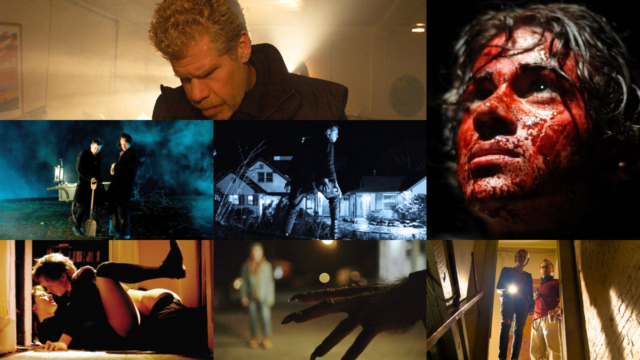
Next he will be at Metrograph for “Wallace Shawn: The Master Builder,” an eight-film retrospective curated by actor and comedian John Early, who portrays Tim in Moth Days, and Lucas Kane, the play’s stage manager and assistant director; the selections are a mix of Shawn in major and minor roles or works based on his plays, in which he does not appear.

“The two of us have been lucky enough to spend the last two years steeping in this side of Wally’s practice, working on his most recent theatrical masterpiece, What We Did Before Our Moth Days,” Early and Kane said in a statement. “In awe of his particular blend of poetry and politics, we put together a program that centers around his writing — featuring two rarely seen filmic adaptations of his plays — while also celebrating his sometimes overlooked roles as a leading man, typified in his collaborations with Gregory and the late Tom Noonan. And yet! Lest we neglect his unforgettable ability to breathe life into pop films and cult classics, we’ve included a couple of films that highlight his character acting, in part, because it’s also roles like these which have helped fund his brilliant playwriting. We are proud to present these films and we hope it reveals a new side of our beloved Wally Shawn.”

The program kicks off May 8 with Amy Heckerling’s 1995 Clueless (“lt’s time for your oral.”), followed by a Q&A with Shawn, Heckerling, Early, and Kane, and Richard Kelly’s 2006 Southland Tales, introduced by Shawn and the curators. Shawn will talk with filmmaker and podcaster Theda Hammel after the May 9 screening of Tom Cairns’s 2004 Marie and Bruce, join Gregory for a Q&A after the May 15 screening of Louis Malle’s Vanya on 42nd Street, speak with Hammel and Early after the May 15 screening of David Hare’s 1997 The Designated Mourner, and, on May 22, introduce Woody Allen’s Radio Days (“Beware, evildoers, wherever you are!”) and Jonathan Demme’s 2014 A Master Builder and participate in a Q&A following a screening of Noonan’s 1995 The Wife.

“I have more free time than a lot of individuals, so, instead of talking, I sometimes write,” Shawn has said.

He clearly does a whole lot more than that.

[Mark Rifkin is a Brooklyn-born, Manhattan-based writer; you can follow him on Substack here.]
LOOKING THE OTHER WAY: LUCRECIA MARTEL SCREENS 4K RESTORATION OF THE HEADLESS WOMAN AT METROGRAPH

A wealthy woman (María Onetto) looks the other way after she might have run over someone in The Headless Woman

THE HEADLESS WOMAN (LA MUJER SIN CABEZA) (Lucrecia Martel, 2008)
Metrograph
7 Ludlow St. between Canal & Hester Sts.
Friday, May 8, 11:30 am; Monday, May 11, 8:25; Tuesday, May 12, 7:15; Sunday, May 17, 8:10
metrograph.com

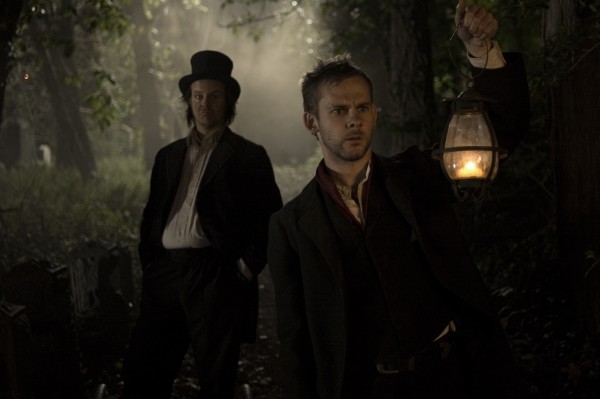
Inspired by nightmares she has in which she commits murder, Lucrecia Martel’s The Headless Woman details a woman’s emotional and psychological reaction after having possibly killed someone. María Onetto gives a mesmerizingly cool, distant performance as Veronica, a middle-aged, upper-class wife and mother whose biggest worry appears to be the turtles that have infested the new pool built behind a veterinary office. But one afternoon, while out driving carelessly in her Mercedes along a twisting, barren road, she hits something. Not sure if it was a child, an adult, or an animal, she decides to continue on, telling no one what she has done. But when a poor, local boy goes missing, she begins to suspect that she might have killed him.

An intriguing mix of Luis Buñuel’s class-consciousness and Edgar Allan Poe’s flair for suspense, The Headless Woman is an unusual kind of murder mystery. In Veronica, Argentine writer-director Martel (La Cienaga, The Holy Girl) has created a compelling protagonist/villain, played with expert calm and faraway eyes by Onetto (Montecristo, The Heavy Hand of the Law), who passed away in 2023 at the age of fifty-six.

A 4K digital restoration of The Headless Woman is screening at Metrograph on May 8, 11, 12, and 17, with Martel, whose first feature-length documentary, Our Land (Landmarks), came out last year, will be on hand for Q&As.

[Mark Rifkin is a Brooklyn-born, Manhattan-based writer; you can follow him on Substack here.]
AN APPETIZING TALK & LUNCH: RUSS & DAUGHTERS AT THE COFFEE HOUSE CLUB

Who: Niki Russ Federman, Josh Russ Tupper, Joshua David Stein, Reggie Nadelson
What: Russ & Daughters: 100 Years of Appetizing, a Conversation
Where: The Coffee House Club at the National Arts Club, 15 Gramercy Park South
When: Friday, May 8, $85, 11:30 am
Why: In 1904, Polish Jewish immigrant Joel Russ started selling herring from a pushcart on the Lower East Side. Ten years later, he opened an appetizing shop on Orchard St., moved to Houston St. in 1920, and renamed it Russ & Daughters in 1933, after his children Hattie, Ida, and Anne. Today it is a thriving business with multiple locations, run by fourth-generation owners and cousins Niki Russ Federman and Josh Russ Tupper. In September 2025, they published Russ & Daughters: 100 Years of Appetizing (Flatiron, $39.99), featuring recipes for such delicacies as smoked whitefish chowder, hot borscht, herring sauces, chopped liver, the Super Heebster bagel sandwich (my favorite), noodle kugel, egg creams, and many more delights.

On May 8, Federman and Tupper will be joined by Brooklyn-based author and journalist Joshua David Stein and author and filmmaker Reggie Nadelson for “Russ & Daughters: 100 Years of Appetizing, a Conversation,” a book talk, signing, Q&A, and three-course prix-fixe lunch hosted by the Coffee House Club at the National Arts Club. Tickets are $85; the intimate event for a limited number of guests is scheduled to conclude at 2:00.

[Mark Rifkin is a Brooklyn-born, Manhattan-based writer; you can follow him on Substack here.]

MAKING IT NEW: TALKING BAND CLIMBS THE MAGIC MOUNTAIN AT LA MAMA

Talking Band explores the magical world of Thomas Mann’s The Magic Mountain in latest production (photo by Maria Baranova)

THE DOOR SLAMS, A GLASS TREMBLES
La MaMa Experimental Theatre Club, the Downstairs
66 East Fourth St. between Second Ave. & Bowery
Wednesday – Sunday through May 9, $35-$40
www.lamama.org
talkingband.org

“All sorts of personal aims, hopes, ends, prospects, hover before the eyes of the individual, and out of these he derives the impulse to ambition and achievement,” Thomas Mann writes in his 1924 novel The Magic Mountain, which serves as the inspiration for Talking Band’s latest play, The Door Slams, a Glass Trembles. He continues, “Now, if the life about him, if his own time seems, however outwardly stimulating, to be at bottom empty of such food for his aspirations; if he privately recognizes it to be hopeless, viewless, helpless, opposing only a hollow silence to all the questions man puts, consciously or unconsciously, yet somehow puts, as to the final, absolute, and abstract meaning in all his efforts and activities; then, in such a case, a certain laming of the personality is bound to occur, the more inevitably the more upright the character in question; a sort of palsy, as it were, which may extend from his spiritual and moral over into his physical and organic part.”

Mann’s intellectual satire about time, love, and tuberculosis at the Berghof sanatorium in Davos in the Swiss Alps, influenced by his wife’s battle with the disease, forms the basis of the new play, written and directed by Paul Zimet and composed by and starring Ellen Maddow, cofounders of Talking Band in 1974 with Tina Shepard, who also appears in the seventy-five-minute intellectual satire.

The Door Slams . . . takes place in and around the Berghof. Marc (Jack Wetherall) and Clara (Maddow) live in the area, where they are visited by their son, Norm (Patrick Dunning), a teacher, and his wife, Jenny (Amara Granderson), who have recently had a baby, Abby. Also stopping by are friends Rick (Steven Rattazzi), a podcaster, and his wife, Rita (Lizzie Olesker), who teaches after-school programs, as well as Oona (Shepard), the town tax collector.

Their movements, particularly when setting the table for a meal, break out into exquisite dances choreographed by Flannery Gregg that make inventive, if repetitive, use of the table- and silverware. As the characters discuss the moon, memory, kairos, hummingbirds, loggers, pencils, tapeworms, and dementia and play charades, Anna Kiraly’s projections on the screen behind them switch from mountains to the forest to the sea. Dream sequences based on scenes from Mann’s novel add a love interest for Marc: his old flame, Anne (Delaney Feener), who becomes the mysterious Clavdia, with Joachim (Norm), Maryusya (Jenny), Dr. Leo Blumenkohl (Rick), Miss Robinson (Rita), Frau Stohr (Oona), and Fraulein Englehart (Clara).

“I used to love to walk along the shore,” Fraulein Englehart tells the doctor. “I could walk for miles with the waves rolling in, the clumps of seaweed on the sand, the vast grey-green water stretching to the horizon. Time drowns in the monotony of space.” The thought matches what Clara later opines: “I never thought we’d be here for so long. But I got used to it. The pace, the quiet, the routine. That’s what worried me. I felt I was becoming . . . dull.”

Meanwhile, Norm is the doomsayer, adding such dark lines as “Just another sign that we’re fucked.” and “I can hardly see the trees. Everything’s about to vanish.” When Oona says that Abby, noticing the baby monitor in her room, knows she is being watched, Norm replies, “Good preparation for the future.”

The Door Slams, a Glass Trembles takes place at a sanatorium in the Swiss Alps (photo by Maria Baranova)

Norm’s foreboding highlights the critical part of The Door Slams . . . that doesn’t work: in such recent triumphs as Triplicity, Existentialism, and Lemon Girls or Art for the Artless, Talking Band beautifully danced around didacticism while exploring the human condition. In The Door Slams . . . they make a number of comments about the Trump administration, without mentioning anyone by name, but the clearer they are, the more they stick out and call attention to themselves. For example, at one point Rick argues, “I tell Rose things could get a lot worse if we just sit on our butts and don’t do anything. Rita and I went to jail protesting nuclear weapons. We got teargassed demonstrating against the Iraq War. Rose just says, ‘And look where we are now.’”

In addition, the character of Anne/Clavdia feels out of place, and certain little touches, such as Norm and Rick wearing the same T-shirt, can cause confusion.

The narrative hits its stride whenever it finds its way into the poetic. “At my age there’s a lot of past in front me,” Marc says as the rain falls. When Clara is watching Marc looking out at the world from the porch, she narrates, “He’s watching dark clouds move across the sky from south to north and he thinks that’s curious. Usually they move from west to east, and then he thinks, What will happen if she dies before I do? What will I do to fill my life? He hears the rain approaching and wonders if he should close the windows.” It’s a stunning, gorgeous moment.

Even with its shortcomings, The Door Slams . . . is still unlike anything else on or off Broadway, exemplified by a brief conversation between Anne and Marc. “‘Make it new!’ Ezra Pound. That’s what I want to do, Marc,” she states. He asks, “Make what new?” She replies, “Everything. What I write, what I read, what I see.”

I can’t wait to see what Talking Band has in store for us next.

[Mark Rifkin is a Brooklyn-born, Manhattan-based writer; you can follow him on Substack here.]

GETTING DOWN TO NUTS AND BOLTS: RICHARD BARONE AND JAMES MASTRO AT CITY WINERY

Who: James Mastro, Richard Barone
What: Nuts & Bolts Revisited Tour
Where: The Loft at City Winery, 25 Eleventh Ave. at Fifteenth St.
When: Sunday, May 3, $30-$42, 7:30
Why: Forty-three years ago, Hoboken legends the Bongos went on the road in support of their EP Numbers with Wings, the follow-up to their breakthrough debut LP, Drums Along the Hudson. The tour included a memorable gig at Columbia University that you can listen to here. During that time, guitarist and vocalist Richard Barone and multi-instrumentalist James Mastro wrote songs that they recorded with Mitch Easter of Let’s Active in North Carolina; the result was the folk/power pop album Nuts & Bolts, with one side comprising songs by Barone, the other by Mastro. Among the tunes were the former’s “I’ve Got a Secret” and “Flew a Falcon” and the latter’s “Time Will Tell” and “Angel in My Pocket.”

Mastro is one of the hardest-working musicians in the business; he just can’t put down his guitar. He has played with Ian Hunter, Alejandro Escovedo, Patti Smith, Richard Hell, Megan Reilly, the Health & Happiness Show, Rachael Sage, and countless others in addition to opening Guitar Bar and art gallery/performance venue 503 Social Club in Hoboken. In February 2024, the consummate sideman released his debut solo record, Dawn of a New Error, to widespread acclaim. Meanwhile, Barone made such highly regarded albums as Cool Blue Halo, Primal Dream, and Glow, produced numerous tribute and benefit concerts, and wrote the memoir Frontman: Surviving the Rock Star Myth.

I’ve had a long connection with both of them; I’ve known Mastro since the late 1980s and have seen him play in many configurations. Around that same time, the woman who would become my wife won a signed copy of Cool Blue Halo that she presented to me, and then we went to see Barone perform a killer set at the Bottom Line, a seminal moment in our courtship.

Mastro and Barone, who have gotten together for Bongos reunions, are back on the road for a brief tour celebrating the rerelease of Nuts & Bolts on Iconoclassic Records, fully remastered and complete with such bonus tracks as a live version of “While My Guitar Gently Weeps” from a United Nations gig. The tour started in Philly, Rhode Island, and Woodstock and comes to City Winery on May 3 before concluding in Freehold. The first set focuses on Nuts & Bolts, while the second features solo tunes from throughout their individual careers.

They’re both wonderful storytellers, so this is a terrific opportunity to catch what should be a very special show.

[Mark Rifkin is a Brooklyn-born, Manhattan-based writer; you can follow him on Substack here.]

WITH A TRACE: LYNNE SACHS SHUFFLES THE CARDS AT ANTHOLOGY

Lynne Sachs seeks a dying form of human interaction in Every Contact Leaves a Trace

EVERY CONTACT LEAVES A TRACE (Lynne Sachs, 2025)
Anthology Film Archives
32 Second Ave. at Second St.
Sunday, May 3, $7-$14, 1:30
www.anthologyfilmarchives.org
www.prismaticground.com

“Evidence does not forget. It is not confused by the excitement of the moment. Am I?” Lynne Sachs asks at the beginning of her latest documentary, Every Contact Leaves a Trace, which is making its New York City premiere at Anthology Film Archives on May 3 as part of the sixth Prismatic Ground festival.

The film has a fascinating premise: Sachs goes through approximately six hundred business cards, or what she calls “memory devices,” she has saved over four decades and decides to reach out to a handful of the people who gave them to her. She calls in forensics experts who confirm that it is still possible to dust the cards for traces of DNA and fingerprints, but Sachs wants to take that to the next level and actually reconnect with seven individuals, remembering how they met in the first place and what they have been doing since.

Among the card givers were professors, filmmakers, doctors, publishers, restaurateurs, contractors, hair salons, a fitness center, a lawyer, museums, her brother Ira Sachs, and even my cinematic mentor, Amos Vogel. She ends up taking a look back with Angela Haardt, a dancer, professor, and filmmaker who cofounded the International Forum of the Film Avant-Garde in Germany; experimental multidisciplinary artist and curator Bradley Eros; textile and mixed media fiber artist Betty Leacraft; educator and former chair of the China Women’s Film Festival Jiang Juan; hair stylist Irina Yekimova; and the late experimental filmmaker and photographer Lawrence Brose, who shares a frightening situation he faced that makes Sachs reconsider whether to keep in the film.

Also participating are Obie winner Rae C. Wright as a therapist, and Sachs’s young twin niece and nephew Felix and Viva Johnson Sachs Torres, who help her pick through the cards and share their thoughts. In addition, Sachs features strikingly poetic visuals in black-and-white and color, card shuffling, geometric drawings, fabulous music by Morton Feldman and Stephen Vitiello, a discussion of German writer Heinrich Heine, and the creation of new artworks.

“It’s rare to take note how an encounter with someone seeps into your way of thinking,” Sachs says as she recalls her initial interactions with these people and investigates the trace elements that they left with each other.

It’s the kind of documentary that is its own time capsule; fewer and fewer business cards are traded today, and an increasing number of meetings are being held online instead of in person, except for, of course, something such as getting one’s hair done.

“Even like for a split second they left something of themselves in me,” Sachs posits. The same can be said for Sachs’s film, which will leave something of her in you, as she has done with such previous works as Tip of My Tongue, Film About a Father Who, and Investigation of a Flame.

Every Contact Leaves a Trace is screening on May 3 at 1:30 at Anthology, preceded by sixth annual Ground Glass Award winner Kohei Ando’s three-minute My Friends in My Address Book and followed by a Q&A.