this week in theater

COMPANY: KATRINA LENK, PATTI LuPONE & CHRIS HARPER

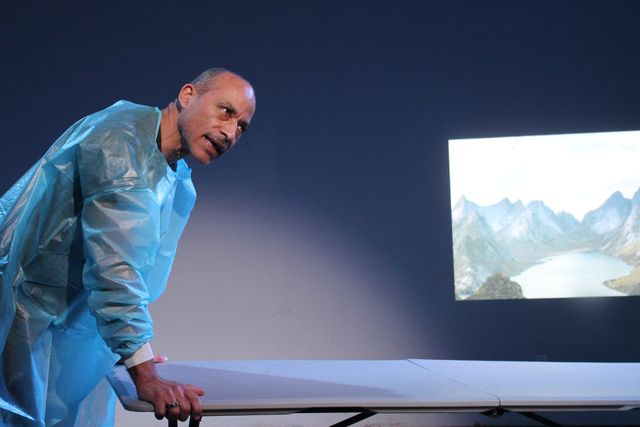
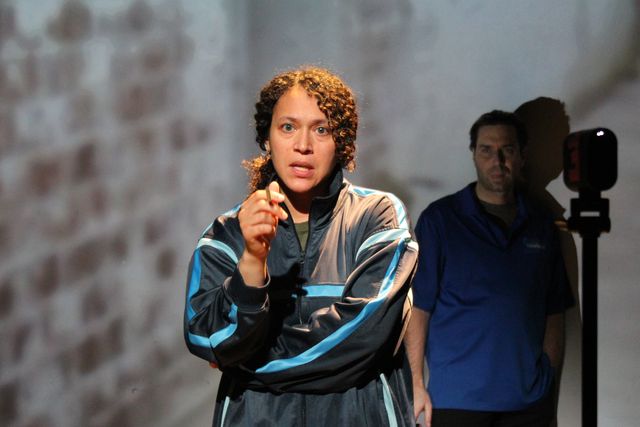
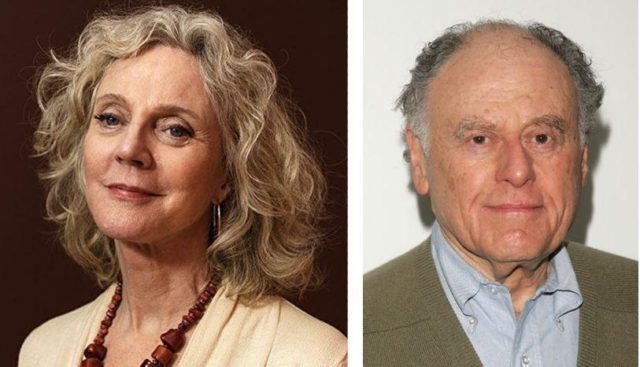
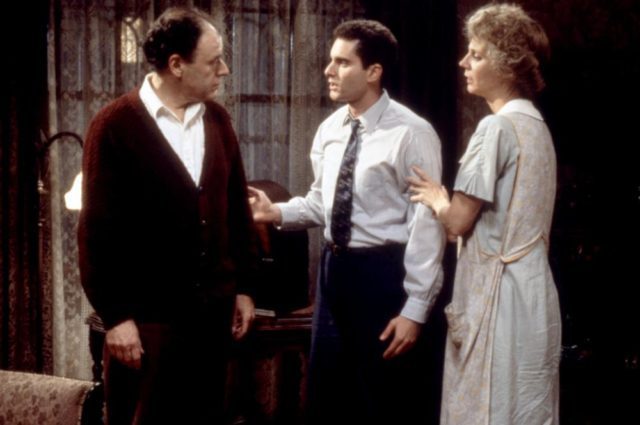
Who: Katrina Lenk, Patti LuPone, Chris Harper, Jessica Shaw
What: Virtual discussion about current Broadway revival of Company
Where: The Temple Emanu-El Streicker Center online
When: Thursday, February 10, free with advance RSVP, 12:30
Why: In my review of the current, controversial revival of Stephen Sondheim and George Furth’s beloved Company, I wrote, “Two-time Tony winner Marianne Elliott has reconceptualized Company in ways that go beyond mere gender switching and diverse casting; this Company emphasizes individuality, confinement, isolation, and fear through magnificent staging.” You can hear what some of the key participants have to say about the show when the Temple Emanu-El Streicker Center hosts a live, virtual discussion with Tony and Grammy winner Katrina Lenk (The Band’s Visit, Indecent), who plays Bobby, previously always portrayed as a man; two-time Tony and two-time Grammy winner Patti LuPone (Evita, Gypsy), who delivers the classic “Ladies Who Lunch”; and Olivier-winning producer Chris Harper (Elliott’s War Horse and The Curious Incident of the Dog in the Night-Time). SiriusXM’s Jessica Shaw will moderate the free talk.

SKELETON CREW

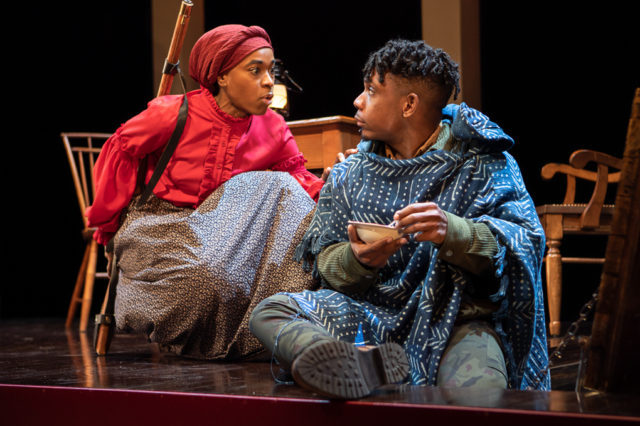
Dominique Morisseau’s Skeleton Crew takes place in an auto stamping plant on the brink in 2008 (photo by Matthew Murphy)

SKELETON CREW
Samuel J. Friedman Theatre
261 West Forty-Seventh St. between Broadway & Eighth Ave.
Tuesday – Sunday through February 20, $59-$159 ($49-$99 with code FAFCREW)
www.manhattantheatreclub.com

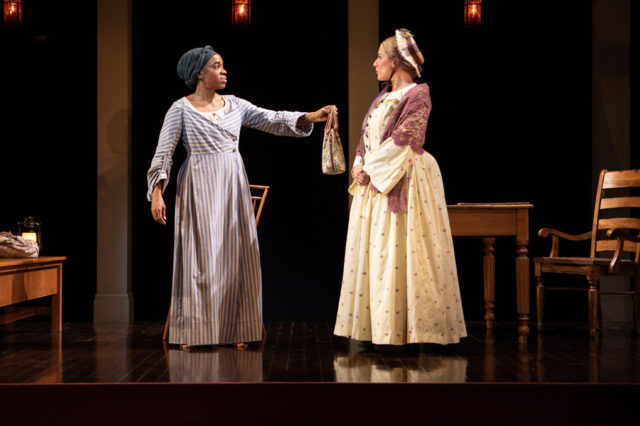
When the audience enters MTC’s Samuel J. Friedman Theatre for the Broadway premiere of Dominique Morisseau’s Skeleton Crew, a sizzling tale of socioeconomic ills in 2008 Detroit, they see Michael Carnahan’s set, the dingy, dirty breakroom of an auto stamping plant, filled with handwritten and preprinted signs detailing various rules and regulations, advising employees that there is no smoking, when the next union meeting is, what their OSHA rights are, what they can and can’t do with the refrigerator, coffeemaker, and microwave. However, there are also multiple reminders, on paper and yellow caution floor signs, to wear a mask and turn off cellphones; those warnings are for the audience in 2022, of course, but the effect is an immediate feeling of equality between the performers and the characters they portray. We are them, and they are us, especially as we all continue to deal with a global pandemic.

The cast then heads onstage and removes all the contemporary signs with a resolute vigilance that, we soon find out, applies to the company admonitions that still remain. “I don’t abide by no rules but necessity. I do what I do til’ I figure out another thing and do that. And that’s all I got to say about it,” Faye (Phylicia Rashad) declares.

Rumors are swirling that the plant might be on the chopping block, which would wreak havoc in a city that we know is about to pay dearly during the coming subprime mortgage crisis. Faye, a divorced single mother, is the union leader with twenty-nine years on the job, intent on making it to thirty to receive more substantial retirement benefits. Despite having survived breast cancer, she smokes constantly; she also has a penchant for gambling with her much younger colleagues: Dez (Joshua Boone), a loose cannon hoping to start his own repair garage, and Shanita (Chanté Adams), a pregnant woman who is one of the line’s best workers. Both in their mid-to-late twenties, Dez ceaselessly flirts with Shanita, whose baby daddy is absent.

Their foreman, Reggie (Brandon J. Dirden), a close family friend of Faye’s since he was a child, used to be one of them before being promoted. He often finds himself in the middle, caught between the employees and his bosses upstairs, walking a tightrope that becomes even more tenuous when he admits to Faye that the plant will indeed be shutting down within a year.

Reggie (Brandon J. Dirden) and Faye (Phylicia Rashad) face a crisis in Broadway premiere of Skeleton Crew (photo by Matthew Murphy)

He tries to convince her to stay quiet about it, which she is hesitant to do. “It’s my job to protect these folks,” Faye says. Reggie responds, “Faye, I’m confiding in you. I’m putting myself on the line for you cuz I’m on your side. But I need you on mine. I need your guidance. Help me figure this out without sounding the alarm.” She agrees but feels guilty keeping the news from Dez and Shanita, who have their own issues with management.

“You youngins don’t have no respect for the blood been spilled so yo’ ass have some benefits,” Faye says to Dez, who she regularly calls “stupid.” Dez shoots back, “What benefits? I don’t hardly see no benefits.”

When materials start disappearing from the plant, Dez, who brings a gun to work and has been acting suspiciously, is a prime suspect. Meanwhile, Faye has hit some hard times and hides a secret from her colleagues. And Shanita shares her complex dreams with the others and plans on working as long as she can, piling on the overtime, before she gives birth. The tension is so thick that something has to eventually give, and when it does, everybody better stand back.

Skeleton Crew premiered at the Atlantic’s Stage 2 in January 2016, then moved to the bigger Linda Gross Theater in May of that year. It’s the first play of Morisseau’s to be produced on Broadway; she also wrote the book for Ain’t Too Proud to Beg: The Life and Times of the Temptations. The play completes her Detroit Projects trilogy, three works set in her hometown in the twentieth century, beginning with 2013’s Detroit ’67 and continuing with 2015’s Paradise Blue. Seen as a whole, the plays explore the Black experience in America in a way that evokes both August Wilson and Lynn Nottage; specific plays that immediately come to mind are Wilson’s Jitney and Nottage’s Sweat and Clyde’s as well as Erika Dickerson-Despenza’s recent Cullud Wattah, about the Flint water crisis.

Director Ruben Santiago-Hudson shows a firm confidence in Morisseau’s language and themes; he previously directed the world premiere of Paradise Blue at the Signature. He also was a close friend of Wilson’s and starred in and/or directed many of his plays, including Jitney and The Piano Lesson, both of which featured Dirden. In addition, Santiago-Hudson knows the Samuel J. Friedman well; his one-man show, Lackawanna Blues, was the previous production at the theater, completing its run in November.

Adesola Osakalumi dances between scenes in Dominique Morisseau’s Skeleton Crew (photo by Matthew Murphy)

Morisseau (Pipeline, Blood Rot) masterfully avoids any specific discussion about race, instead letting the story play out with that subtext hovering over everything like an ominous cloud. The audience knows that Detroit has had a history of race riots — from 1833 and 1849 to 1943 and 1967 — and in 2007-8, nearly twenty thousand Black men and women lost their jobs in car factories. “African Americans earn much higher wages in auto industry jobs than in other parts of the economy, and the loss of these solid, middle-class jobs would be a devastating blow,” the Economic Policy Institute reported at the time.

Tony winner and six-time Emmy nominee Rashad (A Raisin in the Sun, August: Osage County), who has directed three Wilson plays, is a powerhouse as Faye, a tired but strong-willed woman who is determined to not let a system she’s been fighting against her entire life beat her down. Rashad delivers her quips with an uncanny assuredness, her eyes revealing the wear and tear of years of battle, both personal and professional. Boone (Actually, All the Natalie Portmans) is a fireball as Dez, ready to explode at any moment but with a soft side underneath. Adams (Roxanne, Roxanne, Wilson’s Ma Rainey’s Black Bottom, directed by Santiago-Hudson) is charming as Shanita, who is wise beyond her years. And Dirden, who played Sly in the original New York production of Detroit ’67, gives a rousing performance as Reggie, a kindhearted man who has to make hard decisions that rip him up inside.

In between scenes, choreographer Adesola Osakalumi (Cullud Wattah, Fela!) dances at the front of the stage or behind the breakroom windows, moving robotically to hip-hop music that mimics the motion of the machines in the plant, which are seen almost abstractly in projections by Nicholas Hussong lit by Rui Rita. (The sound and music is by Robert Klapowitz, with original songs by J. Keys.) It equates humans with automation, as if people are interchangeable with machines. It might not be a new idea, but it is beautifully laid bare in Morisseau’s searing, intimate drama.

(MTC is currently hosting Detroit Week on Broadway, beginning February 4 at 8:00 with “Detroit Comes to Broadway,” celebrating the people and culture of the Motor City. On February 6 at 5:00, Morisseau, Dr. Michael Eric Dyson, and Michael Dinwiddie will take part in the free virtual discussion “Black Theatre: Radical Longevity.” And on February 7 at 6:00, “Morisseau Moment” fêtes the playwright with proclamations and presentations from her three latest shows, Skeleton Crew, Ain’t Too Proud to Beg, and Confederates, livestreaming from the Harlem School of the Arts.)

PRAYER FOR THE FRENCH REPUBLIC

A Jewish family in Paris faces anti-Semitism in Joshua Harmon epic (photo by Matthew Murphy)

PRAYER FOR THE FRENCH REPUBLIC
Manhattan Theatre Club
MTC at New York City Center – Stage I
131 West 55th St. between Sixth & Seventh Aves.
Tuesday – Sunday through March 27, $99
212-581-1212
www.manhattantheatreclub.com

“Why do they hate us?” a Jewish character asks near the end of Joshua Harmon’s extraordinary Prayer for the French Republic, which opened tonight at MTC at New York City Center – Stage I for a limited run (now extended through March 27). The playwright’s characters answer the question without being preachy or, perhaps even more important, preaching to the choir. In this three-hour multigenerational time-traveling epic, Harmon explores the centuries-old scourge of anti-Semitism with exquisite skill through the experiences of one family.

The play goes back and forth between 1944–46 and 2016–17, narrated by Patrick Salomon (Richard Topol), part of a long line of Salomons who have been in France for more than a thousand years. In his fifties, Patrick is part stage manager from Thornton Wilder’s Our Town, part Woody Allen from Annie Hall, watching and interacting with characters from the past and present.

In 2016, Molly (Molly Ranson), a twenty-year-old college student from America, has come to visit her distant cousins in Paris while studying abroad in Nantes. She arrives on a day when Daniel Benhamou (Yair Ben-Dor), the twenty-six-year-old son, comes home beaten and bloodied after an anti-Semitic attack. His mother, Marcelle Salomon Benhamou (Betsy Aidem), wants to call the police and take Daniel to the hospital, but he refuses. His father, Charles Benhamou (Jeff Seymour) — both parents are successful doctors — is calmer, carefully checking his son’s injuries.

Elodie (Francis Benhamou), Daniel’s brilliant manic-depressive older sister, is incensed that Marcelle blames Daniel’s thrashing on his unwillingness to cover his yarmulke. Elodie doesn’t think Jews should have to hide who they are, while Marcelle is more fearful of the consequences. “You put a huge target on your back!” Marcelle shouts. “Oh, so Daniel’s asking for it now? Is that seriously your argument? He’s asking for it?” Elodie asserts.

The play uses that as a jumping-off point, with scenes marked by full-throated disagreements, quiet allusions, and an astonishing amount of smoothly integrated analysis of Israel, religious and secular Jews, and Judaism in France through the ages, encompassing such events as the People’s Crusade in 1096, the Valentine’s Day massacre of 1349 in Strasbourg, and the 1960s postcolonial exodus of Algerian Jews to France. Set pieces incorporate discussions of Israeli and American Jews and the mass shootings at Charlie Hebdo, the Bataclan theater, and a kosher supermarket in Paris. The characters are troubled by the rise of Marine Le Pen and the National Front in France while considering the fate of the family’s last piano store, a legacy that goes back to 1855.

Irma (Nancy Robinette) and Adolphe Salomon (Kenneth Tigar) wonder where their children and grandchildren are in 1944 Paris (photo by Matthew Murphy)

The play is deeply rooted in history, presented in both monologues and flashbacks, particularly to the mid-1940s, when Marcelle’s great-grandparents, the elderly Irma Salomon (Nancy Robinette) and her husband, Adolphe (Kenneth Tigar), are living in Paris despite the occupation, not about to evacuate their home or give up the life they’ve built together. They worry every minute about the fate of their children, Jacqueline, Robert, and Lucien (Ari Brand), and their grandchildren, including Lucien’s son, Pierre Salomon (Peyton Lusk); Jacqueline escaped to Cuba, but Robert and Lucien are missing.

As Irma and Adolphe, who runs the piano business, sit at the dinner table, Patrick wonders about his great-grandparents. “What were they like, as people?” he asks. “What did they talk about? I have to imagine it was hard not to talk about their children, their grandchildren. . . .” Irma responds as if Patrick is right there with them: “We don’t talk about our children that much.” Adolphe then regales his wife with a beautiful fairy tale in which every member of their family is happy, healthy, and safe, an unlikely fantasy.

Over the course of three hours (with two intermissions), Patrick, the son of a Catholic mother and nonreligious Jewish father, wanders between eras, sharing what details he knows, singing at the Salomon piano that his sister Marcelle inherited, and occasionally participating in the modern-day moments, highlighted by a Passover Seder that turns ugly fast.

Molly (Molly Ranson), Charles (Jeff Seymour), and Daniel (Yair Ben-Dor) make sufganiyot together in world premiere play from MTC (photo by Matthew Murphy)

Terrorism and fear are perpetually on their minds. In an early exchange, Molly, who represents the current battle over BDS and other Israel-related issues on American college campuses, and Marcelle, who represents, well, one of my mother’s best friends, get into it.

Molly: My parents didn’t want me to come to France at all, but . . .
Marcelle: Why not?
Molly: Just cause of all the, you know. The terrorism.
Marcelle: There’s terrorism everywhere.
Molly: That’s what I said, but they were scared.
Marcelle: Aren’t you from New York? What’s to be scared?
Molly: I agree.
Marcelle: The whole world has terrorism now. There’s nowhere to hide. Either you live in the world, or you live in a cave. Personally, I don’t want to be a caveman.

Charles, whose family escaped Algeria when it became too dangerous, admits, “I’m scared, Marcelle. You lay everything out, you lay it out so rationally, and I hear every word you’re saying, but, I’m scared. We are Jews. We are Jews. The only reason we’re still on this planet is because we learned to get out of dangerous situations before they got the better of us. Something is happening in the world, and it’s happening in our country too — I can feel it.” When he says “our country too,” it’s impossible not to think about how it’s happening in America today, with brutal assaults on Jews from Pittsburgh, Boise, and New York City to Colleyville, St. Petersburg, and Poway.

Francis Benhamou brings down the house in a dazzling monologue when Elodie, in a bar with Molly, rants and rages about American Judaism and misperceptions about Israel. “American Jews . . . feel pretty free,” she explains in a verbal barrage. “So when it comes to Israel, they either despise it, or they’re slavishly devoted to it because they have a deep-seated understanding in their bones that there has never been a country on Earth that hasn’t eventually at some point turned on its Jews, and even in America, that fate awaits them too. Then you have the American Jew who hates Israel or is highly critical of Israel and I would argue part of why they feel able to be so critical of Israel is because they feel so safe in America, because they’ve convinced themselves that they can stay in America forever and maybe that’s true now but if history is our guide and history must always be our guide then you have to ask, so you feel safe today but will that be the case a hundred years from now? Or ten?” It’s a discussion I know I’ve had many times with friends and relatives, and Harmon nails it.

Narrator Patrick Salomon (Richard Topol) goes back and forth in time in Prayer for the French Republic (photo by Matthew Murphy)

Takeshi Kata’s elegant set rotates between the Benhamous’ lovely home and the Salomons’ less-fashionable wartime apartment. Tony, Drama Desk, and Obie–winning director David Cromer, who mounted a groundbreaking adaptation of Our Town on Broadway in 2009 (as well as helming The Band’s Visit, The Sound Inside, Tribes, and many other well-regarded shows), seamlessly integrates the two eras, which are often onstage together, one in the background of the other like a ghost, with superb lighting by Amith Chandrashaker and sound by Lee Kinney and Daniel Kluger.

The cast is uniformly outstanding, with Topol’s (Anatomy of a Suicide, The Normal Heart) naturally calm, likable demeanor alleviating some of the palpable tension until there’s no stopping it; Topol previously starred as Lemml, the immigrant stage manager and narrator, in Paula Vogel’s Tony-nominated Indecent, about the making of Sholem Asch’s controversial 1907 Yiddish play, God of Vengeance. Ranson imbues Molly with an inner strength and confidence that has her going toe-to-toe with her cousins, who have a tendency to be loud and forceful; Ranson similarly portrayed Melody, Liam’s (Michael Zegen) shiksa goddess, in Harmon’s Bad Jews, which also dealt with the Holocaust and family legacy. Ranson and Ben-Dor have an immediate chemistry as they balance fighting and flirtation.

Even Daniel’s fondness for Bob Dylan is no mere affectation, as the Nobel- and Pulitzer-winning troubadour famously went from being Jewish to a born-again Christian and back to Jewish during his fabled career; his 1983 album, Infidels, features several songs about Israel.

But it’s Harmon’s (Significant Other, Admissions) impeccable dialogue and razor-sharp characterizations that take center stage. Every word, every action rings true and hits home; he gets the Jewish American experience just right, even if this is a Parisian family (that speaks English without the hint of a French accent). I’ve been involved in these arguments and know these people well; I’m planning on memorizing a bunch of lines in time for this year’s Seders.

SHHHH

Shareen (Clare Barron) and Kyle (Greg Keller) have an unusual relationship in Shhhh (photo by Ahron R. Foster)

SHHHH
Atlantic Stage 2
330 West 16th St. between Eighth & Ninth Aves.
Tuesday – Sunday through February 13 (extended through February 20), $61.50-$81.50
atlantictheater.org

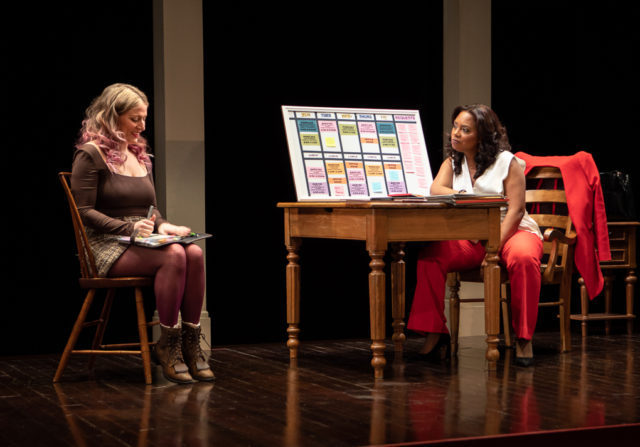
ASMR meets S&M in Clare Barron’s latest dark comedy, Shhhh, which opened tonight at Atlantic Stage 2 for a woefully limited run through February 13 (now extended to February 20). The semiautobiographical play touches on all five senses, beginning with a physical and metaphorical cleansing that concludes with ASMR podcaster Sally, aka Witchy Witch (Constance Shulman), whispering to her listeners, “Indulge yourself. . . . You deserve it.” And for the next ninety minutes, that’s exactly what the six characters do, indulging themselves amid sex, spit, sperm, snot, STDs, and shit as Barron, who wrote and directed the work and stars as Shareen, explores pain, power, penetration, and privilege along with consent, condoms, communication, and control. It’s a feminist reversal of stories by such authors as Charles Bukowski, Henry Miller, and Ernest Hemingway, putting women in charge of an unexpected narrative that goes places where primarily only men have gone before, diving headfirst (or, in one case, toe first) into sex, sadism, and blood and guts.

Shareen is a thirtysomething writer who is sick with an undiagnosed illness. “It’s like the inside of my mouth is one of those fast-forward flowers from the movie Planet Earth?” she tells Kyle (Greg Keller), a neighbor and former lover as she brushes her teeth and he sits on the toilet. “Except instead of flowers. I’m blossoming snot. And then I just swallow.” Kyle isn’t the only one in the theater who lets out an “ew.” It’s a terrific scene that lets the audience know that they are in store for something more than a little bit different.

All the characters speak frankly about bodily functions, about things entering and leaving their various orifices, incorporating pain and pleasure, often at the same time. Sally, a postal worker who is considering transferring to the forensics department — just the word “forensics” makes one think of cop shows in which the forensics unit is usually tasked with investigating the brutal murders of women — takes her date, a gender-fluid dog walker named Penny (Janice Amaya), to the Morbid Anatomy Museum, which includes an encased, full-size anatomical Venus, complete with death mask and innards sticking out. Sally offers Penny the chance to try out an electric device with her that can either “tickle or hurt.”

Francis (Nina Grollman) and Sandra (Annie Fang) talk about sex in graphic detail in Atlantic world premiere (photo by Ahron R. Foster)

Greg uses a graphic description of a horrific accident as foreplay to a perhaps unwanted intrusion. Shareen discusses the hairs on her chin and her inability to orgasm. Two young women in gloriously kinky glittering finery, Francis (Nina Grollman) and Sandra (Annie Fang), eat pizza while delving into their numerous sexual partners and the men’s insistence on not using protection.

Francis admits, “Sometimes I think if someone were to give me a button and say: If you push this button you could kill all the heterosexual men in the world, I would be ethically obligated to push that button. . . . But then here I am, a very privileged white woman. So maybe someone would be obligated to push the button for me as well.” Meanwhile, Sandra says about herself, “Wow. You are so happy You have never been so alone,” considering that she doesn’t necessarily need to be with a man to be satisfied.

Arnulfo Maldonado’s set is a kind of gothic museum, from mattresses strewn on the floor (one of which audience members can sit on) and glass jars of creepy items to a dingy bathroom and a barely visible kitchen in the entryway. The eerie lighting is by Jen Schriever, with sound by Sinan Zafar; Unkle Dave’s Fight House provides intimacy and fight direction.

Shhhh is extremely satisfying, alternating myriad laughs with an abundance of winces and cringes. Its inherent feminism comes equipped with a whip ready to do battle and draw blood, but it also has an innate charm that makes you welcome the thrashing. Every scene takes the complex narrative to another level where the audience better be ready for anything, because the play is wholly unpredictable from start to finish. Every time you think, no, it’s not gonna go there, it does, and then goes even further. Kudos to the brave actors who aren’t afraid of the journey.

Constance Shulman and playwright-director Clare Barron star as sisters in Shhhh (photo by Ahron R. Foster)

Shareen, wearing a tiny, shiny summer slip dress — the superb costumes are by Kaye Voyce — is tired of having to make decisions for herself. “I just want somebody to tell me when and where I can go to the bathroom,” she says. It’s a strong moment, especially when taken in the context of Barron’s personal and professional life. In “Not Writing,” a revealing piece she posted in August 2020 in the inaugural issue of Playwrights Horizons’ online “Almanac: Pasts, Nows, Futures,” she discussed her early success, mental breakdown, and struggle with bipolar disorder.

Alongside pictures of her cats and messy apartment, she explained, “The American Theater gets a real hard-on for a twenty-seven-year-old debut, and it’s impossible to separate the art from this world-premiere fanfare. I’ve played with this whole sexualized image of youth my whole career. It is authentically who I am, but I’m also using it because I know that as a young, white woman in America, this is one reliable way in which I can have power. My youth, my whiteness, my thinness, my Yale degree have all given me permission and protection to talk about whatever the fuck I want and still be taken seriously. These aspects of my identity have gotten me attention, gotten me jobs . . . They’ve made me palatable to people in power.”

More than merely palatable, Barron has been duly praised for her previous work, winning an Obie for 2015’s You Got Older and the prestigious Susan Smith Blackburn Prize for Dance Nation, which was also a Pulitzer finalist. Shhhh was written in 2016 but is only now having its world premiere at the Atlantic.

Barron indeed talks about whatever the fuck she wants in this world-premiere production. One of the most critical lines in the play is when Francis, talking about how men judge women’s bodies, says, “I don’t fucking dissect his body into fucking pieces like a fucking dead animal.” It’s made even more effective with the anatomical Venus hovering just behind her.

In “Not Writing,” Barron also opines, “I haven’t written a play in four years. I don’t know if I’ll write a play ever again. Who cares.” A whole lot of people do.

LONG DAY’S JOURNEY INTO NIGHT

The Tyrone family faces the coronavirus in new streamlined Audible production (photo by Joan Marcus)

LONG DAY’S JOURNEY INTO NIGHT
Audible Theater’s Minetta Lane Theatre
18 Minetta Lane between Sixth Ave. and MacDougal St.
Through February 20 (no shows Monday and Friday), $57-$97
www.audible.com
longdaysoffbroadway.com

Jonathan Miller’s 1986 Broadway revival of Long Day’s Journey into Night created an uproar because the characters spoke over one another rather than treating Eugene O’Neill’s dialogue like gospel. Purists may also be unhappy with Robert O’Hara’s modern-day streamlined adaptation of the Pulitzer Prize-winning classic about a dysfunctional family, but audiences at Audible’s Minetta Lane Theatre, where O’Hara’s version opened tonight for a four-week run before being available on audio, may feel differently — or not.

As the crowd enters the theater, a large onstage monitor plays a loop of clips from CNN about the Covid-19 crisis and the 2020 presidential election. Clint Ramos’s multilevel set is strewn about with Fed Ex and Amazon boxes, a stack of masks, and a bar in the back. The coronavirus has come to the Tyrone family, who’ve been fast-forwarded into the twenty-first century.

O’Neill wrote the semiautobiographical play in 1941 and set it in 1912; O’Hara has moved it up more than a hundred years but hasn’t altered a single word. However, he has made significant cuts to the text, trimming the show down to a too-lean 110 intermissionless minutes; the play usually runs more than three hours and two breaks. Although much of the depth is lost, the production is still compelling, primarily because of excellent performances by real-life husband and wife Bill Camp as actor James Tyrone and Elizabeth Marvel as Mary Tyrone, a morphine addict who can’t face reality.

James Tyrone (Bill Camp) tries to take a break while his wife, Mary (Elizabeth Marvel), shoots up in off-Broadway O’Neill revival (photo by Joan Marcus)

The Tyrones’ older son, Jamie (Jason Bowen), was groomed to follow in his father’s footsteps but instead is a ne’er-do-well writer who spends all his money on booze and hookers. Younger son Edmund (Ato Blankson-Wood) is seriously ill, even if local Dr. Hardy says otherwise, thinking it might be a fever Edmund caught in the tropics. In O’Neill’s text, Jamie has tuberculosis — pretty much a death sentence in 1912 — but in this production it is clear that he has the coronavirus, and the family’s varying attitudes about his diagnosis are reminiscent of the start of the pandemic, before much was known about Covid-19.

O’Hara turns most of the focus on Mary; less time is spent on the others and their concerns inside and outside the house, from careers to alcoholism. Usually, James, Jamie, and Edmund only talk about Mary heading into the spare room, where she takes her morphine, but here we clearly see her sitting at a small table and shooting up, visible through a cutout in the back brick wall. It’s a disturbing image, causing a different kind of visceral reaction; it also made me wonder why one of the characters doesn’t just go upstairs and take the syringe and drugs away from her, a thought that never occurred to me in other productions I’ve seen. (Those include the aforementioned 1986 adaptation with Jack Lemmon, Bethel Leslie, Peter Gallagher, and Kevin Spacey, Jonathan Kent’s 2016 Broadway revival with Gabriel Byrne and Jessica Lange, and Sir Richard Eyre’s 2018 presentation at BAM with Jeremy Irons and Lesley Manville.)

Real-life husband-and-wife Bill Camp and Elizabeth Marvel get frisky in Long Day’s Journey into Night (photo by Joan Marcus)

The emotions between James and Mary are palpable, whether they’re flirting with each other or in a tense standoff; Camp (The Crucible, The Queen’s Gambit) and Marvel (Hedda Gabler, Homeland) display an instant chemistry that never lets up, enhanced by Yee Eun Nam’s abstract projections that reveal Mary’s inner turmoil. But the sons feel more distant and underdeveloped; there’s no longer the necessary back story to make us care about them, and neither Blankson-Wood (Slave Play, The Rolling Stone) nor Bowen (The Play That Goes Wrong, If Pretty Hurts Ugly Must Be a Muhfucka) is given enough to do.

In a production note, O’Hara explains, “The O’Neill Estate has allowed us to imagine this glorious play into the future that we are currently living through. . . . In both its concept and its brevity, this version is not meant to be anything other than an exploration of living in the time of a pandemic through the story and language of one of our greatest playwrights.” In updating the work, Tony nominee and two-time Obie winner O’Hara (Slave Play, Bootycandy) has left the skeletal structure but has removed a large chunk of the soul. And it’s one thing to perform this adaptation live onstage, with a full set, but I can’t imagine how it would work as an audio piece, without the props that place the Tyrones firmly in the Covid era.

NOW IN PROCESS

NOW IN PROCESS
New Ohio Theatre
154 Christopher St.
January 26 – February 6, $15, 7:00
newohiotheatre.org

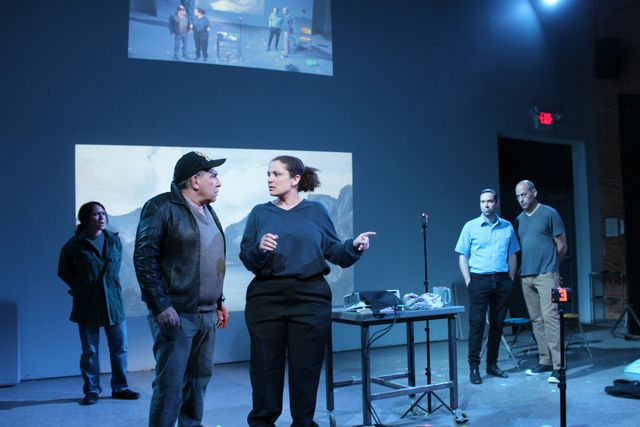
Previously known as the Producers Club, New Ohio Theatre’s annual Now in Process festival is back with a hybrid edition, consisting of four works in progress taking place at the troupe’s Christopher St. home in the West Village and online. “Now in Process is where artists try out their next great idea — in its earliest stages,” artistic director Robert Lyons said in a statement. “We like to be there at the beginning and watch projects grow. This year we have four very different groups with one thing in common — they are fearless.”

The series kicks off January 26-27 with Claire and Pierce Siebers’s The Forest at Night, a concert version of the tale of Hansel and Gretel, with the creators playing the siblings who go on a dangerous journey. In Who Gets to Be Egyptian? (January 29-30), poet, actor, class mixologist, dancer, salesman, activist, artist, pianist, and teacher Michael Gene Jacobs, aka MikeDriven and M1, directs Johnnie Cruise Mercer, Anna Wulfekuhle, Dylan Gervais, and Lomar Collins, using ancient stories to celebrate Blackness and Black power. On February 2-3, NYC-based performance collective Exiled Tongues presents Kept in the Dark, written by Dena Igusti and directed by Ray Jordan Achan, which follows a journalist exposing rape culture and Title IX abuses in high schools. Now in Process concludes February 5-6 with Sherry Lutken’s The Porch on Windy Hill, written by Lutken, Lisa Helmi Johanson, David Lutken, and Morgan Morse, in which a couple escapes quarantine in Brooklyn and heads to western North Carolina seeking out the history of Appalachian music, encountering such songs as “Down in the Valley,” “Green Corn,” “Blackberry Blossom,” and “Sail Away Ladies.” The second performance of each show will be livestreamed.

ADDRESSLESS: A WALK IN OUR SHOES

Addressless presents complicated choices for three homeless New Yorkers over three winter months

ADDRESSLESS
Rattlestick Playwrights Theater online
Thursday – Tuesday through February 13, $1 – $30
www.rattlestick.org

Rattlestick’s virtual, participatory Addressless is an involving piece of activist theater that could only happen online, away from its home on Waverly Pl. The interactive show shines a light on housing insecurity, an issue that has grown during the coronavirus pandemic as New York City shuttles the homeless between hotels and congregate and noncongregate shelters.

Created and directed by Martin Boross of the Hungarian collective STEREO AKT and written by playwright and social worker Jonathan Payne, Addressless is a choose-your-own-adventure style production in which the audience is assigned to one of three teams, trying to help their designated character find safe haven in a harsh city. Louis (Joey Auzenne) is a thirty-three-year-old army vet who is having a difficult time getting a job and a place to sleep. Josie (Bianca Norwood) is a teenage runaway from Buffalo escaping from a drug-addicted mother and an alcoholic father. And Wallace (Shams DaBaron, aka “Da Homeless Hero”) is a fifty-two-year-old single father who’s been homeless on and off since he was ten. The show is hosted by real-life social worker Hope Beaver, who is originally from Texas and now works at a family shelter at Henry Street Settlement, caring for single mothers and their children eight and under.

Addressless is set up as a game, and team members vote on what their character should do over the course of three winter months. Each choice affects how much money the individual has and the state of their health as they attempt to accumulate $1500 to qualify for a housing lottery to live rent free for a year in a new development on the Lower East Side. They choose between sleeping on the streets, which requires the least amount of cash but has the most severe impact on their health, going to a shelter (a kind of middle road), or couch surfing (best for health but most expensive).

A social worker offers choices to military vet Louis (Joey Auzenne) in interactive virtual show from Rattlestick

The teams meet privately in breakout rooms to discuss the options, then vote on the final decision. It is suggested you keep your camera on, and you are encouraged to participate but don’t have to. Being able to see where everyone is zooming in from emphasizes the audience’s privilege: having somewhere to live, owning a computer, laptop, or handheld device, and being able to afford a ticket to the show. (General admission is $30, but there are pay-what-you-can nights beginning at $1.)

Although you’re supposed to comment and vote only on your specific team’s character, the night I went a few people spoke far too often about and voted for all three, which got a little annoying, so hopefully the rules have been clarified since then. I was on Team Wallace, and I found it invigorating to help him make his choices each month. The discussions are about where they will sleep as well as deciding, for example, whether to pose for a photographer for twenty bucks, go to an acquaintance’s work party or attend an AA meeting, or accept a shelter transfer from Manhattan to the Bronx. Depending on what the team decides, the vote is followed by a prerecorded scene depicting the results of the choice. Spoiler alert: There are not a whole lotta good outcomes.

The supporting cast in the prerecorded vignettes includes Faith Catlin as an AA facilitator, Alok Tewari as an ER doctor, Paten Hughes as a high school classmate of Josie’s, Keith Randolph Smith as the photographer, and Michael Laurence as a sales manager, in addition to Chima Chikazunga, Mahira Kakkar, Tara Khozein, Olivia Oguma, and Lisa Ramirez. The production design is by Johnny Moreno, with sets and props by Patricia Marjorie, costumes by Olivera Gajic, music by Tara Khozein, sound by Julian Evans, graphics and animation by Maiko Kikuchi, video editing by Matthew Russell, and integration design by Victoria A. Gelling. It’s not the flashiest online production, instead more DIY that fits in with the overall theme.

It might be a game — Payne (The Revolving Cycles Truly and Steadily Roll’d, The Briar Patch) is a self-proclaimed Dungeons & Dragons geek, so he knows about character and narrative — but it’s built to make you care deeply about the three homeless people, humanizing them, the way you probably wouldn’t if you simply passed them on the street; when I served as Wallace’s banker for December and raised him the smallest amount of money of the three of them, I was truly disappointed in myself, and that failure has stayed with me. Wallace was still upbeat, as that is first-time actor DaBaron’s general nature; during the pandemic, DaBaron, who is also a writer, filmmaker, and hip-hop artist, advocated for the homeless all around the city and particularly the men who were moved to the Lucerne Hotel on the Upper West Side. Auzenne (Wu Tang: An American Saga, Our Lady of 121st Street) plays it much harder as Louis, while Norwood (Plano) gives Josie a distrustful edge.

Based on actual experiences and presented in partnership with Urban Pathways and Community Access, Addressless deals with unfairness and injustice in a way that will make you feel both helpless and furious. At the beginning of the presentation, Beaver says, “I am not an actor. Wish me luck; I’m gonna need it.” She avails herself well as our host, sharing important statistics about homelessness that are likely to surprise you. But like DaBaron, she believes changes can and will be made. As Wallace points out in one vignette, sometimes he just wants to feel “a part of the world again. Like I was fittin’ right in.” But all choices have consequences when you’re without an address.

[To find out more, you can join a virtual community conversation, “Addressing the Addressless,” on February 8 at 5:00; admission is free with advance RSVP.]