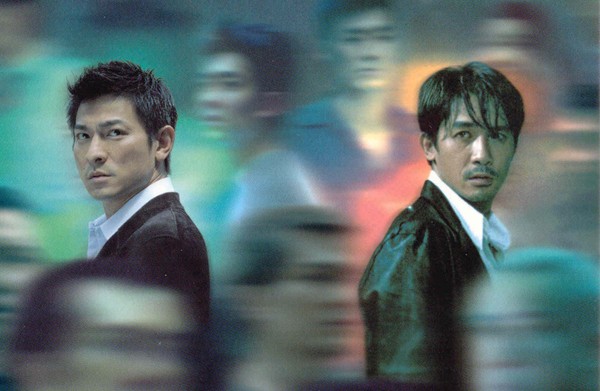
The first two Infernal Affairs movies are part of a tenth anniversary special presentation at the New York Asian Film Festival
INFERNAL AFFAIRS (MOU GAAN DOU) (Andrew Lau & Alan Mak, 2002)
Film Society of Lincoln Center, Walter Reade Theater
165 West 65th St. at Amsterdam Ave.
Friday, July 6, 6:00
212-875-5601
www.filmlinc.com
www.infernalaffairs.com
 In 2002-2003, directors Andrew Lau and Alan Mak crafted a marvelous gangster trilogy that is nothing short of the Hong Kong version of The Godfather. The first two parts are being presented at a special tenth anniversary screening July 6 as part of the New York Asian Film Festival at Lincoln Center, with actor Will Yun Lee on hand to participate in a panel about the film and the video game Sleeping Dogs. In the first film, Yan (Tony Leung Chiu Wai) and Ming (Andy Lau) are both cops with deadly secrets, one a mole in the police department, the other deep undercover in a powerful gang. We learn a little bit about their past, but most of the film takes place in the present, as both the good guys and the bad guys try to find out who’s on which side. Eric Tsang is awesome as Sam, Wo Fat with a different sense of humor. Much of the film is played out marvelously on cell phones, which is actually more exciting than it sounds. The ending is a gem. The only drawback is that the subtitles move past in a flash and are very small, problems that are corrected in the two sequels. The film was a huge hit, earning numerous Golden Horse and Hong Kong Film Awards, including Best Picture, Best Director, and Best Actor (Tony Leung); Martin Scorsese scored a huge hit with his outstanding remake, The Departed, which starred Leonardo DiCaprio and Jack Nicholson.
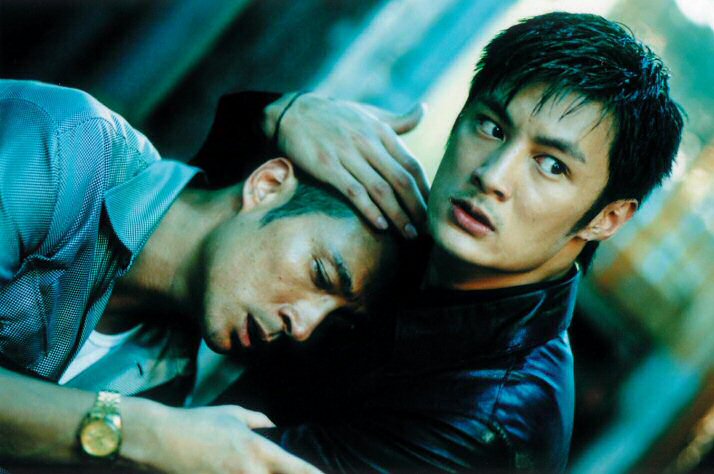
INFERNAL AFFAIRS 2 is a brilliant prequel about friendship and loyalty in a changing Hong Kong
INFERNAL AFFAIRS 2 (MOU GAAN DOU 2) (Andrew Lau & Alan Mak, 2003)
Film Society of Lincoln Center, Walter Reade Theater
165 West 65th St. at Amsterdam Ave.
Friday, July 6, 8:40
212-875-5601
www.filmlinc.com
www.infernalaffairs.com
 Andrew Lau and Alan Mak’s second Infernal Affairs film is reminiscent of The Godfather Part II, as the story moves back and forth through several pasts as we learn more about Ming (Edison Chen), Yan (Shawn Yue), Wong (Anthony Wong), and Sam (Eric Tsang). Some roles are played by the same actors as in the first film, and some are not, so pay close attention. As Hong Kong approaches the hand-over to Chinese rule, the Triad war is threatening to explode, with Ming and Yan caught in the middle. Infernal Affairs 2 is an unforgettable film, gorgeously shot by Lau (who cut his teeth as cinematographer on such films as Wong Kar-wai’s Chungking Express and Ringo Lam’s City on Fire) and Ng Man Ching (Once Upon a Time in China). Much like the second Godfather film, even though you know what becomes of many of these characters, finding out about what got them there is absolutely thrilling. We love every glorious second of this movie. Don’t miss it.
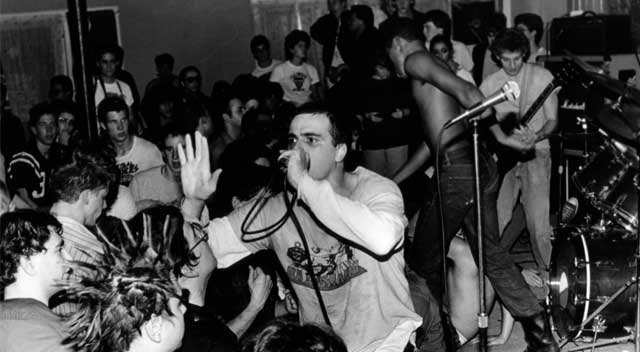
 A must-see for fans of loud, fast, angry music circa 1980-86, American Hardcore looks at one of the smaller but nonetheless influential movements in American music. A basic doc in the classic do-it-yourself sensibility that informed so much of the music scene it chronicles, American Hardcore features interviews with Henry Rollins, lead singer of Black Flag; H.R., the mercurial, difficult, but brilliant lead singer for the Bad Brains; Mike Watt of the Minutemen; and various personnel from the Circle Jerks, Minor Threat, and 7 Seconds. Tommy Stinson of the Replacements and Flea of the Red Hot Chili Peppers weigh in as well. The abundance of old concert footage is fabulous, but director Paul Rachman and writer Steve Blush discovered much of it in shoeboxes in basements during their low-budget cross-country trip while making the movie, so the overall production quality is not high ― which in some ways works better overall. The film does a good job of lovingly showing just how home-grown and amateurish the scene was and debating the importance of the scenes in Houston, Minneapolis, DC, Boston, and Southern California. The finale with a graphic artist and cover designer calling for the next generation of hardcore is a riot. American Hardcore is screening July 5 at 4:00 at Landmark Sunshine Cinema as part of the inaugural CBGB Festival and will be followed by a Q&A with Rachman and Blush. The festival runs July 5-8 at venues in Manhattan and Brooklyn and includes a bevy of concerts, film screenings, panel discussions, and other special events being held in honor of the classic Bowery club that hosted cutting-edge, alternative, punk, and indie bands from 1973 to 2006. Among the groups participating in the festival are the Dirty Pearls, Agnostic Front, Richard Llloyd, Tuff Darts, David Johansen, Glen Matlock, Tommy Ramone, Sic F*cks, Eric Ambel, Xylos, Popa Chubby, Dayna Kurtz, and Mike Peters of the Alarm, and that’s just on Thursday.
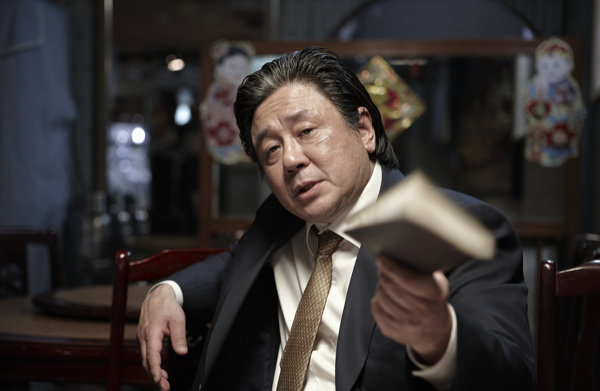
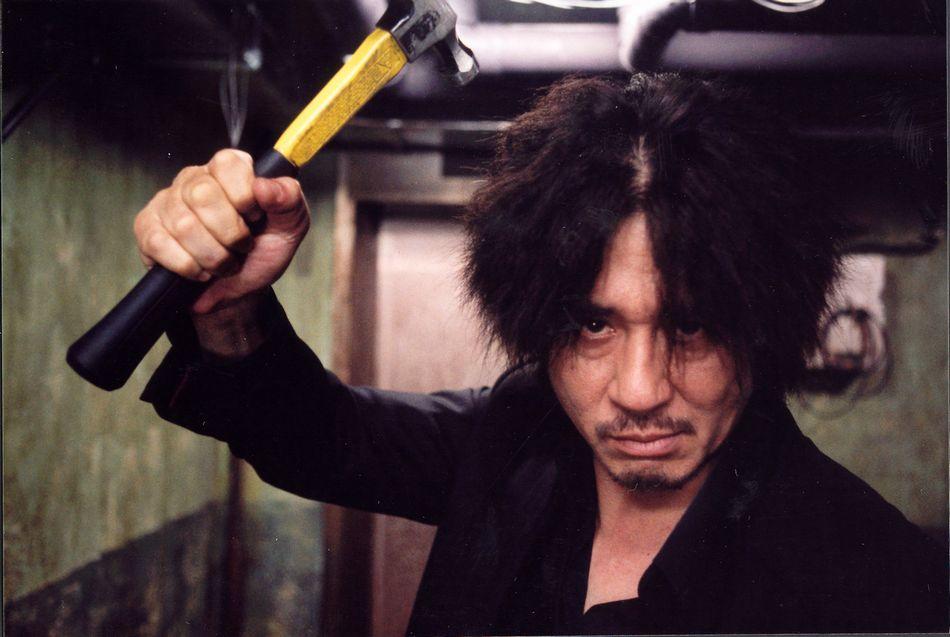
 In 1990, Roh Tae-woo, the thirteenth president of South Korea, officially declared war on organized crime. Writer-director Yun Jong-bin goes back to that dramatic period in the 2012 epic mob thriller Nameless Gangster: Rules of the Time. Korean star Choi Min-sik (Oldboy) put on a few pounds to play the roly-poly Choi Ik-hyun, a corrupt Customs inspector who soon immerses himself in Busan’s underworld culture. A goofy, pathetic figure who drinks too much and has no loyalty to anyone but himself, Choi seems to always find a way to survive despite his infuriatingly stupid decisions. He uses his family connections to team up with his godson, Choi Hyung-bae (Ha Jung-woo), a smooth, ultracool gangster who is continually suspicious of his godfather, and to convince determined prosecutor Choi Joo-dong (Kim Eung-soo) not to lock him up and throw away the key. Things come to a head when he gets involved with Kim Pan-ho (Jo Jin-woong) and a casino hotel, leading to violence, betrayal, and whimpering. Told primarily in flashback set in the 1980s, Nameless Gangster is a potent blend of mob drama and comedy, as Yun (The Moonlight of Seoul, The Unforgiven) mixes in elements of such genre classics as Goodfellas and The Godfather while also telling the story of a changing Korea. Choi Min-sik is a hoot as Choi Ik-hyun, a putz who just keeps on keepin’ on, his round face and puppy-dog eyes somehow helping to keep him alive even as he essentially demands to get whacked. Nameless Gangster is screening June 30 at 9:00 and July 3 at 1:00 at the New York Asian Film Festival at the Film Society of Lincoln Center, where it is part of the sidebar event “Choi Min-sik: Mr. Vengeance,” which also includes 2001’s Failan, 2003’s