twi-ny recommended events

STEREOPHONIC

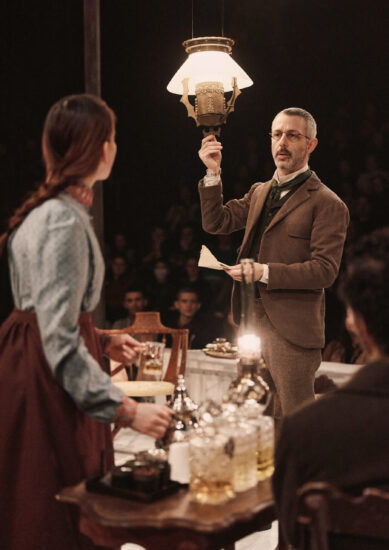
Engineers Grover (Eli Gelb) and Charlie (Andrew R. Butler) chew the fat as the band readies to record in David Adjmi’s Stereophonic (photo by Chelcie Parry)

STEREOPHONIC
Playwrights Horizons, Mainstage Theater
416 West 42nd St. between Ninth & Tenth Aves.
Through December 17, sold out
www.playwrightshorizons.org

In many ways, the creation of David Adjmi’s Stereophonic mimics the record that the fictional band is making in the play. Following such well-received works as Elective Affinities, Stunning, The Evildoers, and Marie Antoinette, Adjmi announced to friends and colleagues in 2013 that he was leaving the theater, but he immediately started receiving offers of grants and residencies. A three-year residency at Soho Rep resulted in what would become the widely hailed Stereophonic, which went from a seventy-minute play to a two-act, then three-act, and ultimately four-act, three-hour epic whose premiere was delayed because of the pandemic.

In the play, a successful, unnamed rock band suddenly has an eighteen-month-old song called “Dark Night” rising on the charts and are working on a new one, titled “Bright,” echoing the up-and-down nature of personal and professional partnerships. The band is in a Sausalito recording studio in the summer of 1976 for what was expected to be quick, low-budget sessions that start turning into much more.

The band consists of British bass player Reg (Will Brill), British keyboard player and singer Holly (Juliana Canfield), British drummer Simon (Chris Stack), American guitarist and lead singer Peter (Tom Pecinka), and American singer and tambourine player Diana (Sarah Pidgeon). Reg is getting lost in a haze of booze and coke; Simon, who also serves as manager, is having trouble keeping the beat; Holly, who is married to Reg, is reevaluating her living situation; and the controlling Peter is jealous of his girlfriend, Diana, as she brings another potential hit to the group.

Grover (Eli Gelb), who lied on his resume to get the gig, is the recording engineer, assisted by Charlie (Andrew R. Butler); while Grover, a stoner, is nervous and fidgety, worried that he is in over his head, especially when the discord within the band grows, Charlie is gentle and quiet, preferring to remain in the background, their relationship somewhat recalling that between Jay and Silent Bob in Kevin Smith’s films.

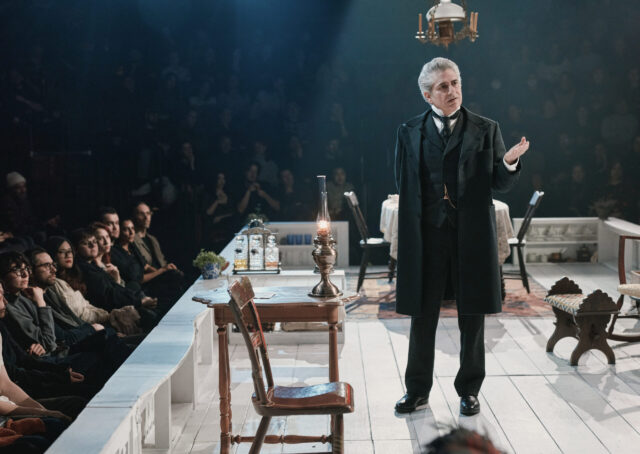
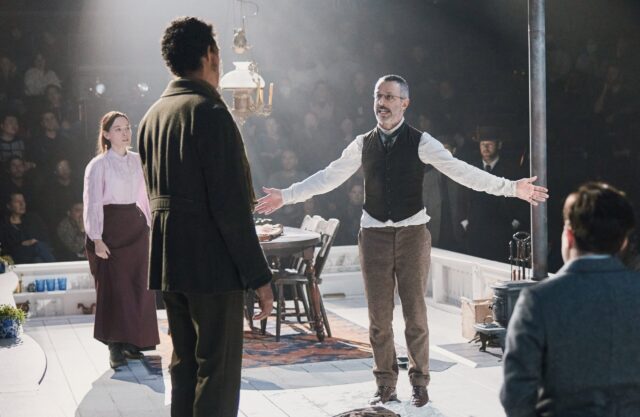
Band and crew members take a much-needed break in three-hour Stereophonic (photo by Chelcie Parry)

The show unfolds like a cool double, or even triple, LP. Not every play scene / LP song works, but the cast/band are uniformly excellent, as are the engineers/crew (with studio set by David Zinn, costumes by Enver Chakartash, lighting by Jiyoun Chang, sound by Ryan Rumery, and music direction by Justin Craig). The songs, by former Arcade Fire multi-instrumentalist and Grammy winner Will Butler, capture the essence of 1970s California rock as the angst increases among the members of the band and they attempt to balance professional and personal success. Director Daniel Aukin helms the play like a star album producer.

Sure, it’s too long at three hours in four parts, the equivalent of a quadruple album. At one point, concerned about the length of the record they’re making and one song in particular, Peter says, “We can’t fit everything. I know no one wants to cut anything and we’ve talked a whole lot about continuity. But I’m sorry. We need to have this conversation. We need to decide what we’re gonna do; we’re four minutes over and it’s not enough for a double album. . . . We need to cut stuff.” Reg asks, “Why can’t we do a double album?”

Younger audience members might not know that on cassettes and LPs, artists were limited to 22.5 minutes per side, and sometimes the songs on the cassette were in a different order than on the record, resulting in a loss of continuity. In addition, listeners had to flip the cassette or album to hear the other side; musicians couldn’t just make an album of any length that could stream online endlessly, complete with the ability to easily skip over songs they might not like.

You can’t do that in the theater. Thus, Stereophonic contains some fluff, repetition, and scenes that don’t seem to fit with the others, but for the most part it’s a fun and poignant behind-the-scenes look at artistic creation, collaboration, ego, and jealousy. We’re all the better with Adjmi deciding not to quit the band/theater; I’m looking forward to the several plays he has coming up, including an exploration, with Lila Neugebauer, of the making of Brian Wilson’s Smile album.

[Mark Rifkin is a Brooklyn-born, Manhattan-based writer and editor; you can follow him on Substack here.]
TAISHO ROMAN: FEVER DREAMS OF THE GREAT RECTITUDE

Teruo Ishii’s Horrors of Malformed Men is one of six wild and unpredictable films in Japan Society series (photo © 1969 Toei Co., Ltd)

TAISHO ROMAN: FEVER DREAMS OF THE GREAT RECTITUDE
Japan Society
333 East 47th St. at First Ave.
Friday, December 15, and Saturday, December 16, $12-$16 per film
212-715-1258
japansociety.org

“Taisho is the best,” legendary Japanese filmmaker Seijun Suzuki once said. I can’t disagree.

Japan Society is celebrating the Western-influenced Taisho period, which followed the Meiji and ran from 1912 to 1926, during the reign of the country’s 123rd emperor, Yoshihito, with the film series “Taisho Roman: Fever Dreams of the Great Rectitude.” As a general rule, I am always attracted to the most unusual, bizarre, and strange films of festivals, the kind most likely to be shown at midnight screenings. In the case of “Taisho Roman,” however, that would essentially mean all six movies.

The festival kicks into high gear Friday night with a half dozen wide-ranging works, beginning with a double feature at 6:00 of Teinosuke Kinugasa’s hourlong 1926 silent classic, A Page of Madness (the 1970s New Sound version of this previously lost silent film), about a man who takes a custodial job in a mental institution where his ailing wife is being treated, partly inspired by the director having met the emperor, and Shuji Terayama’s 1979 forty-minute Grass Labyrinth, a psychosexual memory tale based on the novel by Kyoka Izumi. At 9:00, Japan Society screens a thirty-fifth-anniversary 35mm print of Toshio Matsumoto’s 1988 Dogra Magra, a surreal drama of memory and identity from a story by detective novelist Kyusaku Yumeno.

On Saturday at 3:00, it’s time for Teruo Ishii’s wild and unpredictable 1969 Horrors of Malformed Men, in which the protagonist escapes an asylum and tries to figure out who he is. At 5:00 is the international premiere of Suzuki’s 1980 genre-defying Zigeunerweisen, a unique adaptation of Hyakken Uchida’s Disk of Sarasate and Yamataka-boshi. The series concludes at 8:00 with a thirty-fifth-anniversary screening of Akio Jissoji’s 1988 Tokyo: The Last Megalopolis, based on the first three volumes of Hiroshi Aramata’s 1980s epic Teito Monogatari, an occult reimagining of the history of Tokyo.

“Exploring one of Japan’s most fascinating periods, ‘Taisho Roman’ pulls from some of Japanese literature’s most occult and imaginative texts — writings that to this day remain untranslated,” Japan Society film programmer and series curator Alexander Fee said in a statement. “Featuring films that range from exploitation to avant-garde and angura, this series collects both well-known and forgotten works that envisage differing realities of the often-mythologized era of Japanese history.”

You might as well just movie in to Japan Society for a few days so you can also check out the current exhibition “Out of Bounds: Japanese Women Artists in Fluxus.”

[Mark Rifkin is a Brooklyn-born, Manhattan-based writer and editor; you can follow him on Substack here.]
ATMOSPHERES: ARTISTS ON FEMINISM AND THE ENVIRONMENT

Torkwase Dyson (photo by Suzie Howell), Candice Hopkins (photo by Thatcher Keats), and Joan Jonas (photo by Toby Coulson) will be at New Museum December 14 for special conversation

Who: Candice Hopkins, Torkwase Dyson, Joan Jonas
What: Artist talk inspired by Judy Chicago’s ecofeminist performances from the 1970s
Where: New Museum Theater, 235 Bowery at Rivington St.
When: Thursday December 14, $10, 6:30
Why: Between 1968 and 1974, Chicago-born multidisciplinary artist Judy Chicago staged a series of events, called “Atmospheres,” that used fireworks to bring feminist impulses to site-specific environments, sometimes involving butterflies; she revisited the works in 2012, 2015, 2020, and 2021. In conjunction with the New Museum career survey “Judy Chicago: Herstory,” the Bowery institution is hosting what should be a compelling discussion on December 14. “Atmospheres: Artists on Feminism and the Environment” brings together curator Candice Hopkins, abstract artist Torkwase Dyson, and multimedia installation pioneer Joan Jonas to discuss the incorporation of the natural world into works that explore ecofeminism, from the 1970s to today. Hopkins is the executive director of Forge Project, which “fosters relationships between the land and the built environment, creating spaces of kinship for the people who use them.” The exhibition, which covers four floors of the New Museum, continues through March 3; there will be a live virtual tour on January 9 at 2:00 and the conversation “Herstory: Responses to ‘The City of Ladies’” on January 11 at 6:30 with scholar Sophie Lewis, poet Simone White, novelist Kate Zambreno, and moderator and exhibition cocurator Madeline Weisburg.

[Mark Rifkin is a Brooklyn-born, Manhattan-based writer and editor; you can follow him on Substack here.]
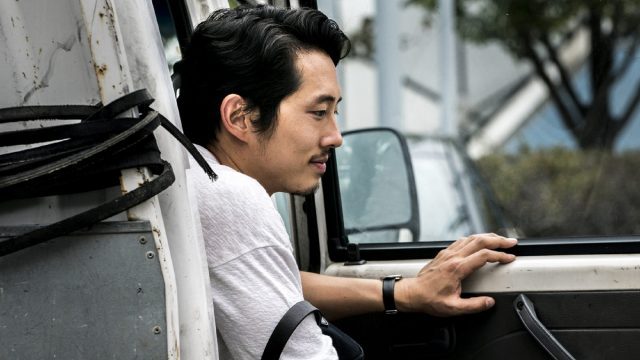
HOW TO DANCE IN OHIO

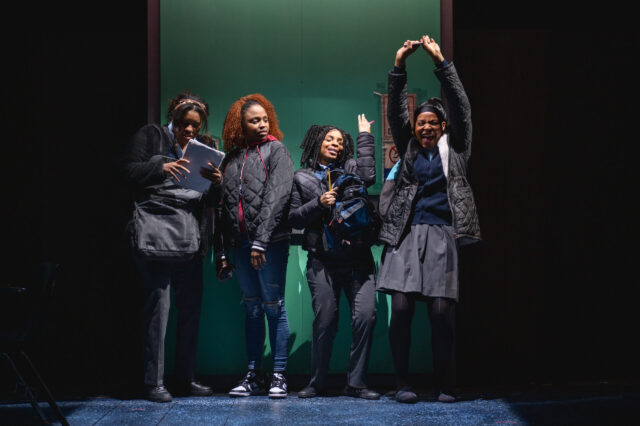
Seven autistic actors portray seven autistic characters in Broadway premiere (photo © Curtis Brown)

HOW TO DANCE IN OHIO
Belasco Theatre
111 West 44th St. between Sixth & Seventh Aves.
Tuesday – Sunday through February 11, $74 – $518
howtodanceinohiomusical.com

“Will I be totally humiliated if I mess it up?” Remy (Desmond Luis Edwards) asks in the Broadway premiere of Rebekah Greer Melocik and Jacob Yandura’s How to Dance in Ohio, which opened last night at the Belasco. It’s a question that we’ve all asked ourselves, and it’s a central theme of the musical, which focuses on seven autistic young adults trying to make connections while preparing for a spring formal, dealing with the same types of emotions as neurotypical people but facing a world that was not built with them in mind.

The two-and-a-half-hour show (with intermission), which was developed and first presented at Syracuse Stage, was inspired by Alexandra Shiva’s Peabody Award–winning documentary about Amigo Family Counseling in Columbus, Ohio, which provides “Respons· ability Social Therapy” for individuals with Autism Spectrum Disorder. The film featured more than two dozen child and adult clients — they avoid such words as “patients,” “sufferers,” and “victims” — but the musical has trimmed it down to seven young adults, each with one particular disorder. Although some of the characters are based on specific clients, they are all amalgams; none is an exact representation, with various changes made for dramatic purposes.

The clinic was founded by Dr. Emilio Amigo (Caesar Samayoa), who, in the show, runs it with the help of his daughter, Ashley (Cristina Sastre), a ballerina at Juilliard who is recovering from a fractured leg and reconsidering her future as a dancer. (The actual clinic has a handful of therapists, specialists, and aides covering several different groups.) AFC has seven clients: Remy (Desmond Luis Edwards), who wants to be a stylish viral superstar; Caroline (Amelia Fei), who is starting college and has her first boyfriend; Jessica (Ashley Wool), a dragon lover who wants to move out of her mother’s house; Drew (Liam Pearce), an electrical engineering wiz choosing which university to attend; Mel (Imani Russell), who is seeking a promotion at the pet store where she works; Tommy (Conor Tague), who hates collared shirts and is getting ready to take his driving test, excited to get behind the wheel of his brother’s new truck; and the newest member of the group, Maredith (Madison Kopec), who is obsessed with facts.

“I am going places / There are places I need to be,” the group sings. “But, most of the spaces / that I want to get to / were not designed for me.” They explain, “That’s what we do in Ohio: / Doing the same thing over and over.” Jessica says self-referentially, “Like lines of a play, or a song’s refrain.”

Terry (Haven Burton) and Johanna (Darlesia Cearcy) go dress shopping with their daughters in How to Dance in Ohio (photo © Curtis Brown)

At Maredith’s first session, Dr. Amigo tells everyone to “circle up!,” passing around a long white rope as each client shares something personal, slowly connecting them all, even if they’re not necessarily comfortable with it. The fears and anxieties they face range from tying shoelaces and answering telephones to speaking with strangers and being touched. Some have trouble showing emotions and setting boundaries, and most have repetitive habits. “Repetition creates reality,” Mel notes.

Dr. Amigo decides to hold a spring formal at the Encore nightclub, a dance where the group can face their social awkwardness while practicing communication skills and experiencing a rite of passage. It sounds like a terrible idea — especially when he encourages them to bring dates, whether from within the group or outside it — but Dr. Amigo wants his clients to take that next step.

“Disaster is always a possibility / Real life is loud, confusing, fast / We shelter our children because we care / But how long can childhood last?” he tells Columbus Gazette reporter Shauna Parks (Melina Kalomas), adding, “Because victory is also a possibility / Your odds improve each time you try / Your skin gets thicker, failure stings a bit less / and maybe that’s worth all the worry and stress.” The doctor is also meeting with blogger Rick Jenkins (Carlos L Encinias), who wants to do a big piece on the dance.

As the event nears, Drew’s parents, Amy (Melina Kalomas) and Kurt (Encinias), are concerned about Dr. Amigo’s influence over their son; Jessica’s mother, Terry (Haven Burton), and Caroline’s mom, Johanna (Darlesia Cearcy), take their daughters dress shopping at Macy’s while Maredith’s widowed father, Michael (Nick Gaswirth), can only afford discounted clothing at Dress Barn; and the clients consider how they will pair up for the formal.

How to Dance in Ohio is dedicated to Hal Prince, who was originally going to direct the production before he died in 2019 at the age of ninety-one. His granddaughter Lucy Chaplin is autistic and served as inspiration to Shiva. Melocik, who wrote the book and lyrics, has Tourette’s syndrome, and Yandura, who composed the music, has an autistic sister.

Directed by Sammi Cannold in her Broadway debut, the show moves like clockwork, at a swift, even pace, with evocative, if unspectacular, songs (“Today Is,” “Under Control,” “Drift,” “Terminally Human,” “Building Momentum,” “Two Steps Backward”) and choreography by Mayte Natalio, lighting by Bradley King, and sound by Connor Wang that all take into consideration how movement, noise, and flashing lights can affect not only the seven autistic actors but audience members as well. There are cool-down spaces in the mezzanine and lower lounge for anyone who might need to take a break, in addition to sensory bags with fidget toys and glasses that are available for borrowing at the merch stand. Robert Brill’s set consists of LED letters arranged in grids in the back and on columns on either side, along with rectangles of numbered dance steps; location changes either descend calmly from above or from the wings as the narrative shifts from a room in the clinic to stores, a nightclub, a bus stop, and several characters’ homes.

Dr. Emilio Amigo (Caesar Samayoa) prepares his clients for a spring formal in How to Dance in Ohio (photo © Curtis Brown)

Unfortunately, the book is laden with problems, primarily when Melocik strays from the documentary and invents subplots involving the reporters, class difference, and Dr. Amigo’s battles with parents over his possible interference in their children’s lives. The additions seek to give voice to the seven young adults and educate theatergoers about the right words and approach when talking about or to people with autism, but it displays a lack of confidence in the audience to figure that out by the action that unfolds in front of them; instead, we’re hit over the head with teaching moments that don’t ring true.

None of that detracts from the production itself; the seven autistic actors, all Broadway newcomers, are terrific, and they seem to be having the time of their lives onstage. When Edwards, as Remy, looks into his ring light and says, “This is the ‘Many Faces of Me,’ with me, Remy: live! I see you, Tommy! — Our first topic is: Nothing about us without us,” he is speaking for the neurodivergent community as a whole, celebrating their multifaceted existence. When Drew offers to lend a book about Pangea to Marideth, it’s a subtle metaphor for the seven clients: Pangea was the single land formation that eventually broke into the seven continents, evoking how the clients are unique individuals who should not merely be seen as a group unto themselves.

Samayoa (Come from Away, Sister Act) is the glue that holds it all together, with solid support from Sastre, Burton, Cearcy, Encinias, Gaswirth, and Kalomas, although some minor characters are underwritten, there just to push through a small, forced story point.

In a 1980s public service announcement for United Cerebral Palsy that has stuck with me for decades, actor Tony Danza asks, “How do you treat a person with a disability?” After receiving a variety of comments from several random people in the street, Danza shares the answer: “Like a person.” That essentially is what How to Dance in Ohio is attempting to convey in regard to autism, and it does so with an abundance of charm, even though it occasionally goes astray. But it gets to the heart of so much of what makes us all human, as we progress from children to teenagers to young adults: learning to drive a car, going out on a first date, selecting a college, choosing a social media presence, and building momentum to be able to eventually live on one’s own.

[Mark Rifkin is a Brooklyn-born, Manhattan-based writer and editor; you can follow him on Substack here.]
PSYCHIC CINEMA: EXPERIMENTAL FILMS — NICK DIDKOVSKY AND ROBERT KENNEDY

Who: Nick Didkovsky and Robert Kennedy
What: Experimental short films with live musical accompaniment
Where: The LetLove Inn, 21-27 Twenty-Third Ave., Astoria
When: Monday, December 11, free (donations accepted), 9:00
Why: On December 11 at the LetLove Inn in Astoria, Nick Didkovsky of Doctor Nerve and Robert Kennedy of the Flushing Remonstrance will team up for the next iteration of “Psychic Cinema,” an evening of classic experimental short films by Bill Morrison, Joel Schlemowitz, Stan Brakhage, Peter Tscherkassky, Barbara Hammer, Lawrence Jordan, and others, set to all-new experimental live scores. Kennedy will be on keyboards, electronics, and voice, Didkovsky on guitar. In May, the duo performed to a collection of surrealist and Dada works by Fernand Léger, Hans Richter, Man Ray, Władysław Starewicz, Slavko Vorkapich, Mary Ellen Bute, Joseph Cornell, Marie Menken, Wallace Berman, Tscherkassky, and Guy Maddin, which should provide insight into what awaits on December 11. Admission is free; donations are accepted.

[Mark Rifkin is a Brooklyn-born, Manhattan-based writer and editor; you can follow him on Substack here.]
MY HARRY

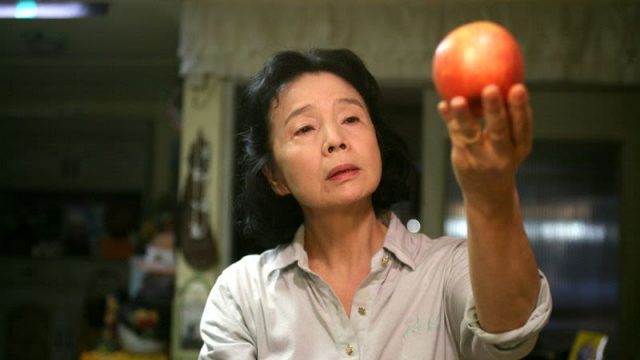
Photographer unknown, Harry Smith at Naropa Institute, gelatin silver print, 1990 (Harry Smith Papers, Getty Research Institute, Los Angeles; gift of the Harry Smith Archives)

MY HARRY
Whitney Museum of American Art, Education Center and Hess Family Theater
99 Gansevoort St.
December 8-10, $18-$25
212-570-3600
whitney.org

The Whitney celebrates the legacy of American polymath Harry Smith in the three-day festival “My Harry.” Held in conjunction with the multimedia exhibition “Fragments of a Faith Forgotten: The Art of Harry Smith,” which continues at the museum through January 28, the revelry features listening sessions, illustrated lectures, film screenings, conversations, live music, art workshops, and more, with appearances by friends and colleagues of Smith, who was born in Portland, Oregon, in 1923 and died in New York City in 1991 at the age of sixty-eight, leaving behind a treasure trove of music, art, and film that he both made and collected, as well as a lifelong interest in the occult. Among those participating in the weekend are Carol Bove, Ali Dineen, Bradley Eros, Raymond Foye, Andrew Lampert, April and Lance Ledbetter, James Inoli Murphy, Rani Singh, Peter Stampfel, Charles Stein, and Anne Waldman. Below is the full schedule.

My Harry: Magick and Mysticism
Friday, December 8, $8-$10, 5:30–9 pm

Listening Session: Harry Smith’s Field Recordings, 5:30

Fragments of a Faith Forgotten: A Presentation by Carol Bove, with Carol Bove and Andrew Lampert, 6:30

Screening of Harry Smith’s “Film No. 14: Late Superimpositions,” 7:30

Harry Smith and the Future of Magick: A Presentation by Charles Stein, with Charles Stein and Raymond Foye, 8:00

Harry Smith, Untitled [Zodiacal hexagram sctratchboard], ink on cardstock, ca 1952 (Lionel Ziprin Archive, New York)

My Harry: Stories, Songs, and Strings
Saturday, December 9, free with museum admission, 11:00 am – 6:00 pm

Stop Motion Animation Studio and Paper Airplane Workshop, hosted by Bradley Eros, 11:00 am – 3:00 pm

Singing Circle with Ali Dineen, 11:00 am

Peter Stampfel and the Atomic Meta-Pagan Posse, with Peter Stampfel, Eli Smith, Zoe Stampfel, Eli Hetko, Steve Espinola, Paul Nowinski, Sam Werbalowsky, Heather Wagner, and Dok Gregory, 12:00

String Figure Workshop with James Inoli Murphy, 12:00

Paper Airplane Contest with Bradley Eros, 2:00

On Mahagonny: A Presentation by Rani Singh, 5:00

My Harry: Affinities
Sunday, December 10, free with museum admission, 11:00 am – 5:00 pm

Listening Session: Harry Smith’s Field Recordings, 11:00 am

On Harry’s Trail: A Presentation by Dust-to-Digital, with Lance and April Ledbetter, 12:00

Screening: A selection of films and videos featuring Harry Smith by a variety of the artist’s friends and associates, 1:00

Friendly Rivals: The Art of Jordan Belson, a Presentation by Raymond Foye, 3:00

Anne Waldman, 4:00

[Mark Rifkin is a Brooklyn-born, Manhattan-based writer and editor; you can follow him on Substack here.]
EITHER/OR: TIME | AGAIN

TIME | AGAIN
Speyer Hall at University Settlement
184 Eldridge St. between Rivington & Delancey Sts.
Friday, December 8, $12.71-$23.41, 8:00
www.eitherormusic.org
www.universitysettlement.org

New York City–based flexible chamber ensemble Either/Or (EO) looks to the past and the future with its next performance, December 8 at 8:00 at Speyer Hall at University Settlement. The evening begins with the world premiere of the EO commission It only has shelves by Bronx-based multidisciplinary composer Victoria Cheah. Written for violin, cello, trombone, and electronics, the piece explores layering, depth, ritual, and preparation. “To know you have a place to put something, where something can belong, where the fact of its emptiness suggests its readiness to receive instead of impose, to me suggests the possibility of belonging,” Cheah said in a statement. The work will be performed by Pala Garcia on violin and John Popham on cello — the cofounders of progressive trio Longleash — Cheah on electronics, and event curator Chris McIntyre on trombone. Cheah, a Hunter and Brandeis graduate who is assistant professor at Berklee College of Music and Boston Conservatory and director of production of Talea Ensemble, has previously scored commissions or had pieces featured by Non-Event, Switch Ensemble, andPlay, Yarn/Wire, Wavefield Ensemble, Guerilla Opera, Ensemble Dal Niente, PRISM Quartet, and others, with such enigmatic titles as “Ocean into wire,” “We drank wine from the bottle on a rooftop next to god,” and “I watched her smile her hand.”

Either/Or presents Time | Again on December 8 at Speyer Hall at University Settlement

It only has shelves will be followed by the late Danish composer and visual artist Henning Christiansen’s 1973 Requiem of Art (NYC) (fluxorum organum II), a Fluxus “tape piece” realized for live ensemble by British-Lithuanian cellist, composer, and visual artist Anton Lukoszevieze for Ultima Festival New York in 2014. The work will be performed by the full ensemble, consisting of the aforementioned Garcia, Popham, and McIntyre joined by EO director Richard Carrick and Anthony Coleman on keyboards, Margaret Lancaster on voice and percussion, Dennis K. Sullivan on percussion, and sound technician Alex Lough on electronics as each minute provides unique experimental shifts in what we’re hearing.

Henning Christiansen (rear, left) collaborates with Joseph Beuys (in hat) at 1970 “Strategy: Gets Art” festival (photo courtesy Demarco Digital Archive)

In 2015, Ursula Reuter Christiansen, Henning’s widow — the Danish composer died in 2008 at the age of seventy-six — wrote of the work, “In the summer of 1969 we made a collective film, The Search, on the heath in Jutland, Denmark. Henning Christiansen made on site field recordings for the individual scenes with Peter Sakse as sound master. The music was first used during the performance at the festival ‘Strategy: Gets Art’ exhibition organised by Richard Demarco at Edinburgh College of Art, on August 21, 1970, with Joseph Beuys and Henning Christiansen. Henning Christiansen sampled the field recording into the organ music from [Beuys’s 1968 performance film] Eurasienstab. He gave this composition subsequently the title Requiem of Art fluxorum organum II Opus 50. That means a requiem over the role of art in the 1960s.” McIntyre adds that the original Requiem was “a sort of portrait of the sound world Christiansen conjured for Beuys’s real-space rituals.” Tickets to the event are $12.71 to $23.41 and available here.

[Mark Rifkin is a Brooklyn-born, Manhattan-based writer and editor; you can follow him on Substack here.]