
Nobuhiko Obayashi’s beautifully told tale, SEVEN WEEKS, concludes Japan Society retrospective this weekend
SEVEN WEEKS (NO NO NANANANOKA) (Nobuhiko Obayashi, 2014)
Japan Society
333 East 47th St. at First Ave.
Sunday, December 6, $12, 7:00
Series continues through December 6
212-715-1258
www.japansociety.org
 Japan Society’s two-weekend, ten-film series “Nobuhiko Obayashi: A Retrospective,” which has revealed the Japanese auteur to be so much more than just the director of the 1977 cult classic House, comes to a close December 6 at 7:00 with Obayashi’s latest, the 2014 epic family drama Seven Weeks. A tribute to Obayashi’s late friend and colleague Hyoji Suzuki, who started an independent film workshop in Ashibetsu in 1993 and died of pancreatic cancer four years later at the age of thirty-six, Seven Weeks was shot in and around that Hokkaido village over the course of five weeks. Ninety-two-year-old patriarch Mitsuo Suzuki (Toru Shinagawa), a local retired doctor who now runs the Starry Cultural Center gift shop (a nod to Hyoji Suzuki’s Hoshi no Furusato Ashibetsu Eiga Gakko, or Starry Beautiful Home Ashibetsu Film School), is on his deathbed, and various relatives are arriving to say goodbye and participate in the nanana no ka Buddhist ritual, in which they will hold memorials once a week for seven weeks following his death. The mourners include Mitsuo’s sister, Eiko (Tokie Hidari), grandchildren Fuyuki (Takehiro Murata), Haruhiko (Yutaka Matsuhige), Akito (Shunsuke Kubozuka), and Kanna (Saki Terashima), and great-granddaughter Kasane (Hirona Yamazaki), in addition to his nurse, Nobuko Shimizu (Takako Tokiwa). During the seven weeks, family members relive the past, uncovering surprising secrets about the young Mitsuo (Shusaku Uchida), his harmonica-playing friend Ono (Takao Ito), and the woman they both admire, Ayano (Yumi Adachi), as Obayashi weaves together past and present through flashbacks, the appearance of dead characters, and painting and poetry (several of the characters share a love of the poems of Nakahara Chuya).
But the film, shot in lush, fairy-tale-like colors by cinematographer Hisaki Mikimoto and featuring a sweeping score by Kôsuke Yamashita and a kind of Greek chorus embodied by the unusual Japanese band the Pascals, is not merely about the travails of one extended family; it is also very much about the rebuilding of Japanese society in the wake of WWII, the earthquake and tsunami of March 11, 2011, and the ensuing Fukushima nuclear disaster. In fact, all of the clocks and watches in Seven Weeks are perpetually stopped at 2:45 pm, the exact time the horrific 3/11 events began. Obayashi also investigates the Soviet invasion of Sakhalin Island in August 1945 and the abuse of Korean migrant workers in Japanese mines as he explores the complex issue of the meaning of home. Seven Weeks is a beautifully told tale of memory and loss, of art and war, a summing up not only of Obayashi’s career but of twentieth-century Japan, with plenty of the director’s unique trademark style. “How do I paint the world?” Mitsuo asks at one point, something Obayashi has achieved in this deeply involving and wonderfully mysterious film. Fortunately for all of us, the seventy-seven-year-old auteur is not quite done painting the world, already hard at work on his next picture, continuing a legacy that is at last being celebrated here in the West. The final weekend of “Nobuhiko Obayashi: A Retrospective” also includes 1988’s The Discarnates, 1989’s Beijing Watermelon, and 2004’s Reason.
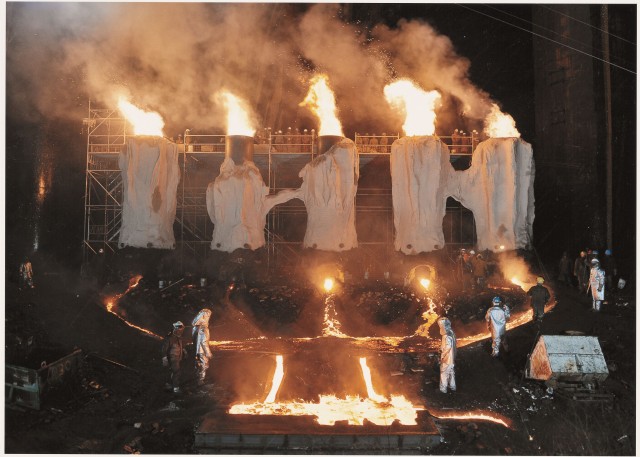



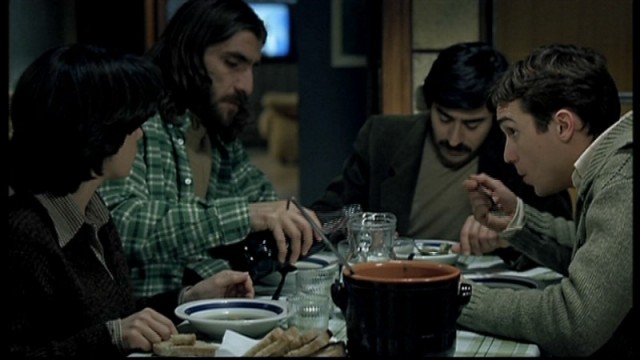
 Italian auteur Marco Bellocchio reimagines the kidnapping of Aldo Moro from the inside in Good Morning, Night, a taut, slow-paced drama that won the Little Golden Lion at the 2003 Venice Film Festival. Moro, a former Italian prime minister and president of the Christian Democratic Party, was boldly grabbed by members of the radical Red Brigades, who left a bloody mess in their wake. Bellocchio focuses on the three men and one woman who orchestrated the plot and kept Moro locked in a hidden room inside their large rented apartment. While Mariano (Luigi Lo Cascio), Ernesto (Pier Giorgio Bellocchio), and Primo (Giovanni Calcagno) take turns guarding Moro and Mariano spews Socialist rhetoric at him, Chiaras (Maya Sensa), who is Primo’s girlfriend but is pretending to be Ernesto’s wife as a cover, goes to work every day, buys supplies and newspapers, and dreams at night of Moro coming to her as a father figure. Chiaras is the moral conscience of the movie, and a complete invention on the part of Bellocchio, who has said, “I’m not interested in the factual truth.” Even so, much of the real story is still not known, and like the JFK assassination, there are lots of conspiracy theories out there about an event that shocked a nation. Pink Floyd fans get a bonus by Bellocchio’s powerful use of “The Great Gig in the Sky” and “Shine On You Crazy Diamond.” Good Morning, Night is screening on December 5 and 16 as part of the MoMA series “Italian Film, 21st-Century Style: A Tribute to Rai Cinema,” a two-week retrospective that consists of ten films from the last fifteen years released by the Italian studio, including Ermanno Olmi’s Il Mestiere delle armi (The Profession of Arms), Gianni Amelio’s Le Chiavi di casa (The Keys to the House), Emanuele Crialese’s Terraferma, and

 Winner of the Grand Prix at the 2008 Cannes Film Festival, Gomorra is a violent, intimate look at the modern-day Camorra crime syndicate in Naples and Caserta. Based on the nonfiction novel by investigative journalist Roberto Saviano — who has been living under police protection since the fall of 2006 — Matteo Garrone’s epic follows five distinct yet interrelated stories set around a dilapidated concrete-block housing project, a sort of Godfather meets The Sopranos filtered through Italian Neo-realism. Pasquale (Salvatore Cantalupo) is a tailor who considers sharing his secrets with a Chinese sweatshop to make some much-needed extra cash. Roberto (Carmine Paternoster) is having second thoughts training under Franco (The Great Beauty’s Toni Servillo), who runs a toxic waste dumping business. Don Ciro (Gianfelice Imparato) has to deal with a delicate, difficult situation when Maria’s (Italian singing star Maria Nazionale) young son joins the secessionists, a rival gang. Marco (Marco Macor) and Ciro (Ciro Petrone) are loose cannons who keep messing with the wrong people. And Totò (Salvatore Abruzzese) is a thirteen-year-old boy who is helping out the Camorra against his mother’s wishes — and is soon faced with a life-changing decision. Beautifully shot by Marco Onorato and featuring a cast of primarily nonprofessional actors, Gomorra is a deeply involving crime drama, all the more frightening because it’s based on real, current situations. Gomorra is screening December 6 & 15 as part of the MoMA series “Italian Film, 21st-Century Style: A Tribute to Rai Cinema,” which kicks off with Garrone’s latest, Il Racconto dei racconti (Tale of Tales). The two-week retrospective consists of ten films from the last fifteen years released by the Italian studio, including Ermanno Olmi’s Il Mestiere delle armi (The Profession of Arms), Gianni Amelio’s Le Chiavi di casa (The Keys to the House), Emanuele Crialese’s Terraferma, and

 Winner of the Palme D’Or at the 2001 Cannes Film Festival, The Son’s Room is a moving look at life, love, and loss. Italian writer-director-actor Nanni Moretti stars as Giovanni, a psychiatrist who can’t control the dissolution of his family following a terrible tragedy. Moretti (Caro Diario, Ecce Bombo) has made a heart-wrenching work that will always be compared with Todd Field’s powerful In the Bedroom, which came out the same year. Both films examine family tragedy with honesty and believability, but whereas the family in In the Bedroom considers revenge, the father in The Son’s Room, achingly played by Moretti, can’t get over wrongly blaming himself, while his wife (Laura Morante, who won the Best Actress award at Cannes for the role) seeks solace in her son’s girlfriend (Sofia Vigliar), whom she had not known about. Moretti is a deeply personal filmmaker; at times you will feel like you are watching a documentary, and it will break your heart. The Son’s Room is screening December 5 & 17 as part of the MoMA series “Italian Film, 21st-Century Style: A Tribute to Rai Cinema,” comprising ten films from the last fifteen years released by the Italian studio. Other films in the two-week retrospective are Matteo Garrone’s Il Racconto dei racconti (Tale of Tales) and Gomorra, Marco Bellocchio’s Buongiorno, notte (Good Morning, Night), the Taviani brothers’ Cesare deve morire (Caesar Must Die), and Gianfranco Rosi’s Sacro GRA.