Brooklyn Museum
200 Eastern Parkway at Washington St.
Saturday, December 5, free, 5:00 – 11:00
212-864-5400 www.brooklynmuseum.org
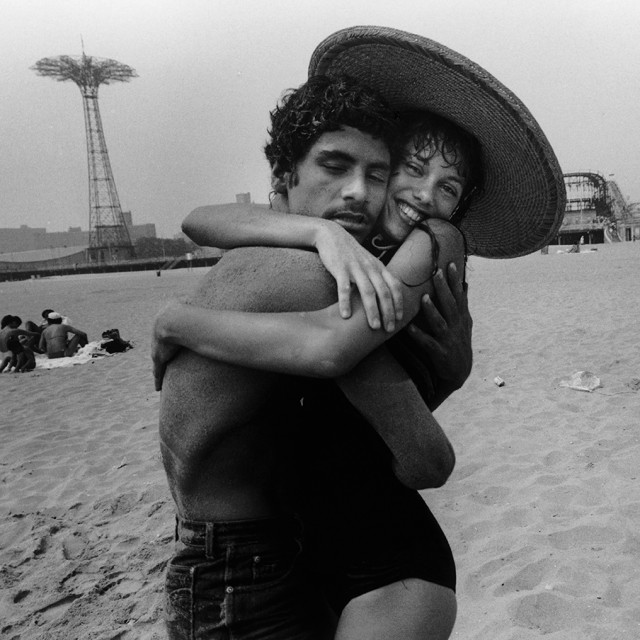
The Brooklyn Museum is honoring the most dramatic, historic, and entertaining part of the world’s greatest borough for the December edition of its monthly free First Saturday program. On the always eclectic bill are live music by Fright Barker and Sons and Raya Brass Band, a theatrical drawing performance by Amour Obscur, sideshow acts curated by Adam Rinn, the issues-oriented BodySpeak by Brown Girls Burlesque, a curator talk and Q&A about the new exhibition “Coney Island: Visions of an American Dreamland, 1861–2008” with Robin Jaffee Frank, a wire workshop where you can make your own Coney Island ride, a book club discussion with Harvey Stein about his photography book Coney Island: 40 Years, 1970–2010, a screening of Sidney Lumet’s The Wiz, and a Visual AIDS screening of Radiant Presence, followed by a discussion with Ted Kerr, Shawn Torres, Rusti Miller-Hill, and Jawanza Williams held in conjunction with World AIDS Day/Day With(out) Art. In addition, the galleries are open late so you can check out such other exhibitions as “Stephen Powers: Coney Island Is Still Dreamland (To a Seagull),” “Forever Coney: Photographs from the Brooklyn Museum Collection,” “Impressionism and the Caribbean: Francisco Oller and His Transatlantic World,” and “KAWS: ALONG THE WAY.”
“In 1962, while in New York to present Jules and Jim, I noticed that every journalist asked me the same question: ‘Why do the critics of Cahiers du Cinéma take Hitchcock so seriously? He’s rich and successful, but his movies have no substance,’” French Nouvelle Vague auteur François Truffaut wrote in the preface to the second edition of what he called “the hitchbook,” the seminal film bible Truffaut/Hitchcock. “In the course of an interview during which I praised Rear Window to the skies, an American critic surprised me by commenting, ‘You love Rear Window because, as a stranger to New York, you know nothing about Greenwich Village.’ To this absurd statement, I replied, ‘Rear Window is not about Greenwich Village, it is a film about cinema, and I do know cinema.’” Truffaut was determined to change the prevailing belief that British director Alfred Hitchcock was a maker of studio fluff. “In examining his films,” Truffaut continued, “it was obvious that he had given more thought to the potential of his art than any of his colleagues. It occurred to me that if he would, for the first time, agree to respond seriously to a systematic questionnaire, the resulting document might modify the American critics’ approach to Hitchcock. That is what this book is all about.” The tome compiled a weeklong series of conversations between the thirty-year-old Truffaut and the sixty-three-year-old Hitchcock — the talks began on Hitch’s birthday — in the latter’s Hollywood studio office, with Helen Scott serving as translator. Although the interviews were recorded for audio, no film was shot; instead, Philippe Halsman took still photos. The story of the unique relationship between Truffaut, who as of 1962 had made only The 400 Blows and Shoot the Piano Player (he was in the midst of finalizing Jules and Jim), and Hitchcock, who was preparing his forty-eighth film, The Birds, is told in the splendid documentary Hitchcock/Truffaut, which cleverly reverses the order of their names from the book it’s based on. Writer-director Kent Jones (head of the New York Film Festival), cowriter Serge Toubiana (former editor in chief of Cahiers du Cinéma) and editor Rachel Reichman lovingly combine Halsman’s pictures, audio clips from the original sessions, scenes from many of Hitchcock’s films (and a few of Truffaut’s), close-ups of dozens of pages from the book, rare archival footage, and new interviews with ten directors from around the world who weigh in on what makes Hitchcock’s work so special, so illuminating, so influential.
Sharing their praise are Martin Scorsese, Wes Anderson, David Fincher, Olivier Assayas, Peter Bogdanovich, Arnaud Desplechin, James Gray, Kiyoshi Kurosawa, Richard Linklater, and Paul Schrader, as they shed light on such classic films as Vertigo, Psycho, I Confess, The Wrong Man, Sabotage, Marnie, Rear Window, and others, with detailed shot-by-shot analysis while also praising the importance of “the hitchbook” itself. It all makes for an eye-opening crash course in cinema, and it’s likely to change the way you look and think about motion pictures. “It was a window into the world of cinema that I hadn’t had before, because it was a director simultaneously talking about his own work but doing so in a way that was utterly unpretentious and had no pomposity,” Gray (Little Odessa, Two Lovers) says about the book. “There was starting to be these kind of erudite conversations about the art form, but Truffaut was the first one where you really felt that they were talking about the craft of it,” Schrader (American Gigolo, Mishima) points out. “It’s not just that Truffaut wrote a book about Hitchcock. The book is an essential part of his body of work,” Olivier Assayas (Clouds of Sils Maria, Carlos) explains. “I think it conclusively changed people’s opinions about Hitchcock, and so Hitchcock began to be taken much more seriously,” Bogdanovich (The Last Picture Show, Paper Moon) asserts. And Scorsese (Taxi Driver, Raging Bull) sums up, “It was almost as if somebody had taken a weight off our shoulders and said yes, we can embrace this, we could go.” Of course, the book not only created a critical reassessment of Hitchcock but also helped Truffaut’s budding career. Narrated by Bob Balaban, the film places the work of the two men, who remained good friends until Hitchcock’s death in 1980 at the age of eighty (sadly, Truffaut died four years later at the age of fifty-two), in context of the history of cinema. “Why do these Hitchcock films stand up well? Well, I don’t know the answer,” Hitchcock is heard saying at the beginning of the documentary. By the end of the documentary, you will surely know the answer. Following its recent screening at DOC NYC with Jones and Scorsese present, Hitchcock/Truffaut will be playing at Film Forum December 2-17.
Who: Joseph O’Neill What: Award-winning author Joseph O’Neill reading from and discussing his latest novel, The Dog (Vintage Contemporaries, June 2015, 415.95) Where: Donaghy Theatre, Irish Arts Center, 553 West 51st St. between Tenth & Eleventh Aves., 866-811-4111 When: Wednesday, December 2, $12, 7:30 Why: “Perhaps because of my growing sense of the inefficiency of life lived on land and in air, of my growing sense that the accumulation of experience amounts, when all is said and done and pondered, simply to extra weight, so that one ends up dragging oneself around as if imprisoned in one of those Winnie the Pooh suits of explorers of the deep, I took up diving. As might be expected, this decision initially aggravated the problem of inefficiency.” So begins Joseph O’Neill’s latest novel, The Dog, a satire of the modern world as only he can tell it. O’Neill, who is a professor at Bard and won the 2009 Pen/Faulkner Wward and the Kerry Fiction Prize for the marvelous Netherland, will be at the Irish Arts Center on December 2 to discuss The Dog, about a man who tries to rediscover himself in Dubai. And he should know be quite the expert on international relations, having been born in Ireland and raised in Mozambique, South Africa, Iran, Turkey, and Holland.
Clindor (Loïc Corbery) is caught in various personal and professional triangles in THE SCREEN ILLUSION
CinéSalon: THE SCREEN ILLUSION (L’ILLUSION COMIQUE) (Mathieu Amalric, 2010)
French Institute Alliance Française, Florence Gould Hall
55 East 59th St. between Madison & Park Aves.
Tuesday, December 1, $14, 7:30
Series continues Tuesdays through December 15
212-355-6100 www.fiaf.org
In 2010, French actor-director Mathieu Amalric was commissioned by la Comédie-Française to make a television version of one of the plays the legendary company had recently staged. The rules were both limiting and freeing: He had to use the same cast, could not add any words to the script (but could make cuts), and had to shoot the film in twelve days without using the theater itself. Amalric had the credentials for such a daunting assignment; he had previously starred in such films as Munich, The Diving Bell and the Butterfly, and Kings and Queen and directed Mange ta soupe and On Tour, in which he also starred and for which he won the Best Director prize at Cannes. He decided to adapt Pierre Corneille’s 1636 play, L’Illusion comique, a melodrama written just as the Baroque style was shifting into the Classical period. The film takes place in and around a hotel in 2011, where concierge/sorcerer/detective Alcandre (Hervé Pierre) is showing surveillance video to Pridamant (Alain Lenglet), who is searching for his long-missing son, Clindor (Loïc Corbery). Clindor is working for video-game executive Matamore (Denis Podalydès); both men, as well as Adraste (Adrien Gamba-Gontard), are vying for the attention of the lovely but cold Isabelle (Suliane Brahim), daughter of corporation head Géronte (Jean-Baptiste Malartre). Meanwhile, Adraste’s coworker, Lyse (Julie Sicard), is desperately in love with Clindor. It all comes to a head one night following a dinner party, when a fierce battle takes place on a rooftop. “When all hope is gone, one has nothing more to fear,” Isabelle says.
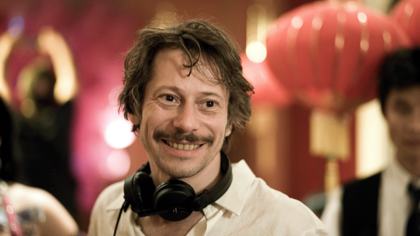
Mathieu Amalric on the set of his Pierre Corneille adaptation for la Comédie-Française
The Screen Illusion is a clever and inventive, if at times confusing and overly farcical, adaptation of Corneille’s tale. The actors recite their lines in verse, which takes a little getting used to. Production designer Hervé Dajon and cinematographer Isabelle Razavet bathes the hotel in deep, lurid greens and reds, echoing the greed, envy, jealousy, and lust that surround the characters. The film is very much about the act of viewing; just as we watch theater and movies, becoming lost in their magic, Pridamant watches his son via CCTV cameras, and Amalric actually brings the camera — and the viewer — inside the recordings as the story unfolds before our eyes as well. “Believe only what you see,” Alcandre warns at the beginning of the film, looking into a mirror and talking to himself as well as the audience, hinting at what is to follow and foreshadowing a surprise twist at the end. Inspired by such works as Jean-Luc Godard’s Détective and Jean-Pierre Melville’s Le Samourai, Amalric, an accomplished stage performer in addition to being a film director and actor, melds all of those elements into The Screen Illusion, a tidy little tale that is more than what it first appears. The Screen Illusion is being shown at 7:30 on December 1 in Florence Gould Hall as part of FIAF’s CinéSalon series “Mathieu Amalric: Renaissance Man” and will be introduced by film critic Nicholas Elliott. The series continues through December 15 with Late September, Early Spring; Fantastic Mr. Fox; and The Diving Bell and the Butterfly.
AMERICAN DANCE GUILD 2015 PERFORMANCE FESTIVAL
The Ailey Citigroup Theater
The Joan Weill Center for Dance
405 West 55th St. at Ninth Ave.
December 3-6, $15-$50
800-838-3006 ext1 americandanceguild.org
This year’s American Dance Guild Performance Festival takes place December 3-6 at the Ailey Citigroup Theater, consisting of nearly three dozen artists and companies in addition to tributes to living legends Liz Lerman, Doug Varone, and Alice Teirstein. Lerman will present a video history of her career on December 3 and 4, Varone will perform in Lux on December 3 and 5, and Teirstein’s Young Dancemakers will perform a short piece on December 3 and 6. The festival also features Jacqulyn Buglisi’s Sospiri on December 4 and Merce Cunningham’s Suite for Two on December 5. Among the other dancers and choreographers presenting programs are Imana Gunawan, Cherylyn Lavagnino, Dominic Duong, Daniel Gwirtzman, Nancy Zendora, Kaoru Ikeda, Jessica Gaynor, Rebecca Rice, and Jin-Wen Yu.
It’s hard to believe, but John Lennon would have turned seventy-five this past October 9. It would be fascinating to hear what he would have to say about what’s going on in the world today, but we’ll have to suffice with such special events as the thirty-fifth annual John Lennon Tribute, when a diverse group of musicians will gather to honor the Smart Beatle’s legacy of peace. “It’s always joyous to ‘come together over John.’ His songs and message are timeless, and as relevant as ever,” said tribute creator and MAD magazine senior editor Joe Raiola. Presented by Theatre Within and Music Without Borders, this year’s show features Martin Sexton, Joan Osborne, Joseph Arthur, Bettye LaVette, Willie Nile, Lucy Kaplansky, Richard Shindell, Jonatha Brooke, Nicole Atkins, Toshi Reagon, Dan Bern, and music director Rich Pagano. In addition, Vagina Monlogues playwright and activist Eve Ensler will receive the second annual John Lennon Real Love Award. The evening benefits Theatre Within’s John Lennon Real Love Project, which “offers children and young adults in medical care centers, schools, and communities in need the unique opportunity to compose their own songs.”
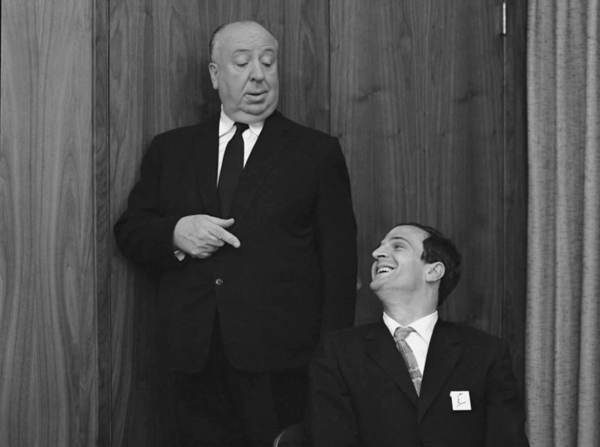
 “In 1962, while in New York to present Jules and Jim, I noticed that every journalist asked me the same question: ‘Why do the critics of Cahiers du Cinéma take Hitchcock so seriously? He’s rich and successful, but his movies have no substance,’” French Nouvelle Vague auteur François Truffaut wrote in the preface to the second edition of what he called “the hitchbook,” the seminal film bible Truffaut/Hitchcock. “In the course of an interview during which I praised Rear Window to the skies, an American critic surprised me by commenting, ‘You love Rear Window because, as a stranger to New York, you know nothing about Greenwich Village.’ To this absurd statement, I replied, ‘Rear Window is not about Greenwich Village, it is a film about cinema, and I do know cinema.’” Truffaut was determined to change the prevailing belief that British director Alfred Hitchcock was a maker of studio fluff. “In examining his films,” Truffaut continued, “it was obvious that he had given more thought to the potential of his art than any of his colleagues. It occurred to me that if he would, for the first time, agree to respond seriously to a systematic questionnaire, the resulting document might modify the American critics’ approach to Hitchcock. That is what this book is all about.” The tome compiled a weeklong series of conversations between the thirty-year-old Truffaut and the sixty-three-year-old Hitchcock — the talks began on Hitch’s birthday — in the latter’s Hollywood studio office, with Helen Scott serving as translator. Although the interviews were recorded for audio, no film was shot; instead, Philippe Halsman took still photos. The story of the unique relationship between Truffaut, who as of 1962 had made only The 400 Blows and Shoot the Piano Player (he was in the midst of finalizing Jules and Jim), and Hitchcock, who was preparing his forty-eighth film, The Birds, is told in the splendid documentary Hitchcock/Truffaut, which cleverly reverses the order of their names from the book it’s based on. Writer-director Kent Jones (head of the New York Film Festival), cowriter Serge Toubiana (former editor in chief of Cahiers du Cinéma) and editor Rachel Reichman lovingly combine Halsman’s pictures, audio clips from the original sessions, scenes from many of Hitchcock’s films (and a few of Truffaut’s), close-ups of dozens of pages from the book, rare archival footage, and new interviews with ten directors from around the world who weigh in on what makes Hitchcock’s work so special, so illuminating, so influential.


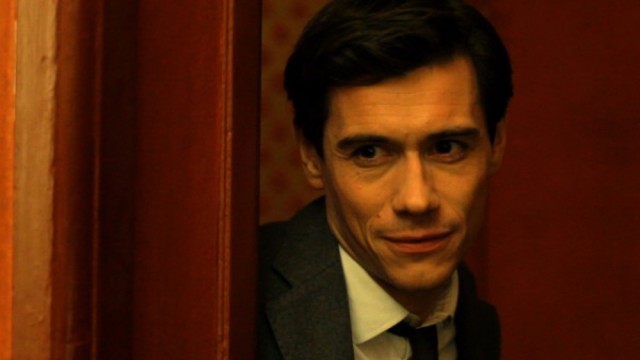
 In 2010, French actor-director Mathieu Amalric was commissioned by la Comédie-Française to make a television version of one of the plays the legendary company had recently staged. The rules were both limiting and freeing: He had to use the same cast, could not add any words to the script (but could make cuts), and had to shoot the film in twelve days without using the theater itself. Amalric had the credentials for such a daunting assignment; he had previously starred in such films as Munich, The Diving Bell and the Butterfly, and Kings and Queen and directed Mange ta soupe and On Tour, in which he also starred and for which he won the Best Director prize at Cannes. He decided to adapt Pierre Corneille’s 1636 play, L’Illusion comique, a melodrama written just as the Baroque style was shifting into the Classical period. The film takes place in and around a hotel in 2011, where concierge/sorcerer/detective Alcandre (Hervé Pierre) is showing surveillance video to Pridamant (Alain Lenglet), who is searching for his long-missing son, Clindor (Loïc Corbery). Clindor is working for video-game executive Matamore (Denis Podalydès); both men, as well as Adraste (Adrien Gamba-Gontard), are vying for the attention of the lovely but cold Isabelle (Suliane Brahim), daughter of corporation head Géronte (Jean-Baptiste Malartre). Meanwhile, Adraste’s coworker, Lyse (Julie Sicard), is desperately in love with Clindor. It all comes to a head one night following a dinner party, when a fierce battle takes place on a rooftop. “When all hope is gone, one has nothing more to fear,” Isabelle says.