featured

COMPANY: KATRINA LENK, PATTI LuPONE & CHRIS HARPER

Who: Katrina Lenk, Patti LuPone, Chris Harper, Jessica Shaw
What: Virtual discussion about current Broadway revival of Company
Where: The Temple Emanu-El Streicker Center online
When: Thursday, February 10, free with advance RSVP, 12:30
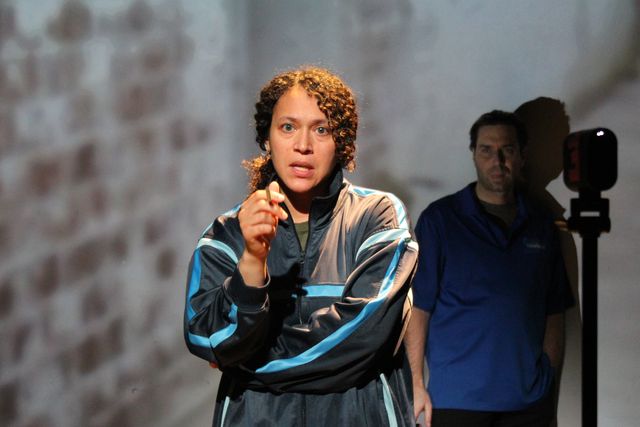
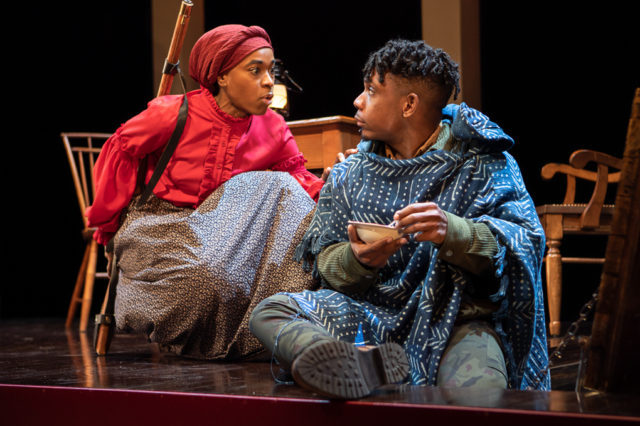
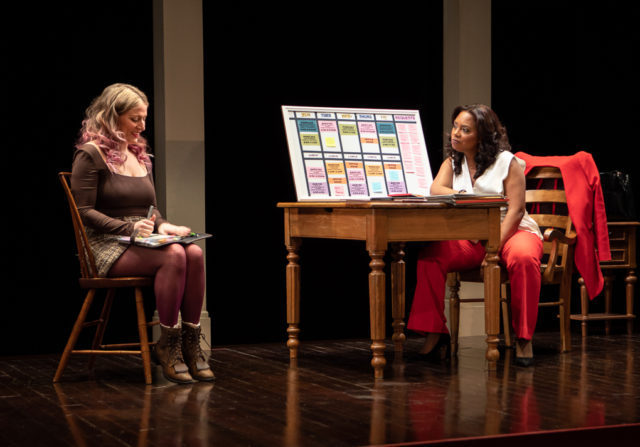
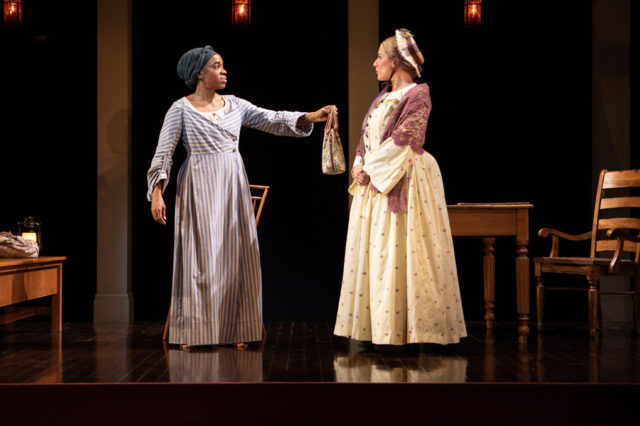
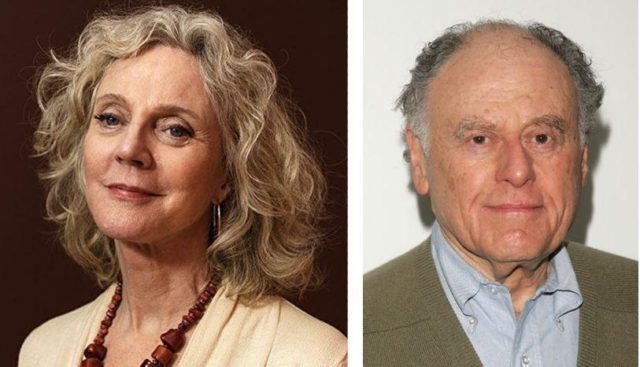
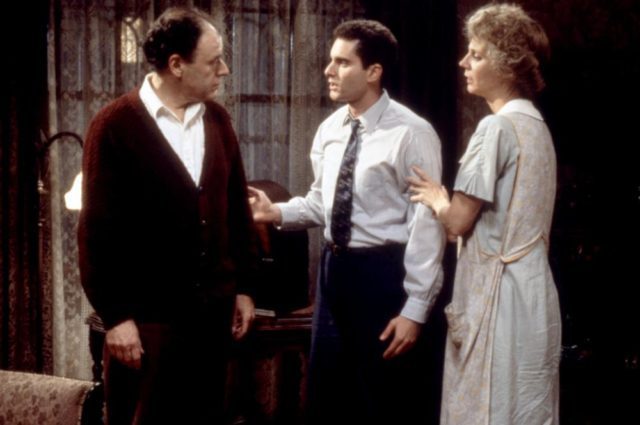
Why: In my review of the current, controversial revival of Stephen Sondheim and George Furth’s beloved Company, I wrote, “Two-time Tony winner Marianne Elliott has reconceptualized Company in ways that go beyond mere gender switching and diverse casting; this Company emphasizes individuality, confinement, isolation, and fear through magnificent staging.” You can hear what some of the key participants have to say about the show when the Temple Emanu-El Streicker Center hosts a live, virtual discussion with Tony and Grammy winner Katrina Lenk (The Band’s Visit, Indecent), who plays Bobby, previously always portrayed as a man; two-time Tony and two-time Grammy winner Patti LuPone (Evita, Gypsy), who delivers the classic “Ladies Who Lunch”; and Olivier-winning producer Chris Harper (Elliott’s War Horse and The Curious Incident of the Dog in the Night-Time). SiriusXM’s Jessica Shaw will moderate the free talk.

DAVID BYRNE AND JOHN WILSON — HOW WE LEARNED ABOUT NON-RATIONAL LOGIC: A CONVERSATION ON HUMOR AND BOOKMAKING

John Wilson talks with David Byrne about his latest Pace show and new book on February 7

Who: David Byrne, John Wilson
What: Live virtual discussion
Where: Pace Gallery, 540 West Twenty-Fifth St., Pace Gallery YouTube
When: Monday, February 7, free (online), 7:00
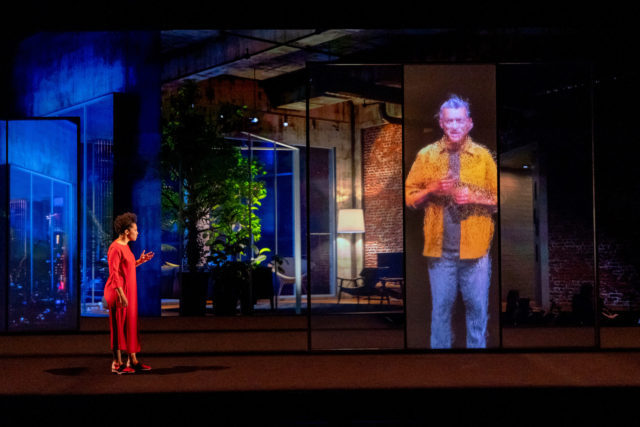
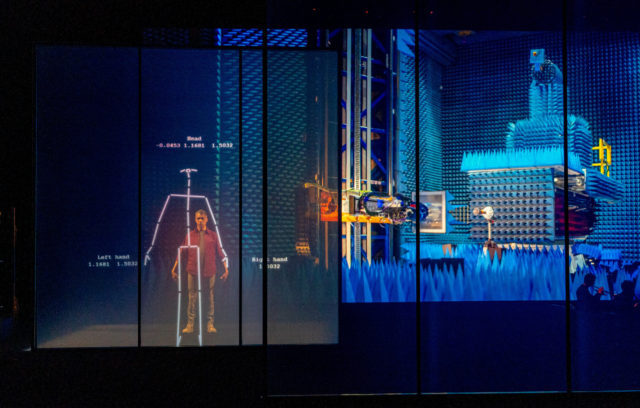
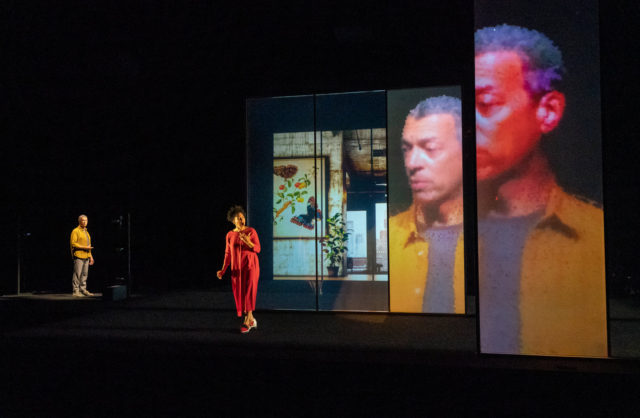
Why: In his endlessly creative and fun HBO docuseries How To with John Wilson, Astoria native John Wilson uses footage shot all around New York City to delve into such issues as small talk, scaffolding, memory improvement, finding a parking spot, and making the perfect risotto. In his endlessly creative and fun career, British-born musician, singer, playwright, and visual artist David Byrne has made albums (solo and with Talking Heads), given concerts, directed films, and had gallery shows; currently, his brilliant American Utopia continues on Broadway at the St. James Theatre through April 3, and his latest exhibition, “How I Learned About Non-Rational Logic,” is running at Pace’s Twenty-Fifth St. space through March 19. The show consists of several series of drawings Byrne has done over the last twenty years, including his unusual depictions of dingbats sketched during the pandemic. (He describes his fascination with dingbats here.)

Byrne and Wilson have previously collaborated on the 2015 true crime concert documentary Temporary Color; they now will sit down together for a discussion at Pace in conjunction with the publication of Byrne’s new book, A History of the World (in Dingbats) (Phaidon, March 9, $39.95). “How We Learned About Non-Rational Logic: A Conversation on Humor and Bookmaking” takes place in person at Pace, where attendees will receive a signed copy of the book; the event will also be streamed for free over YouTube. “This idea of non-rational logic was not something I made up, but I realized that it kind of resonated with both the fact that I make music and the fact that these drawings follow a kind of logic that isn’t kind of based on logical or rational thinking,” Byrne notes in the above behind-the-scenes video. There should be plenty of such non-rational logic in what promises to be a very funny and illuminating talk.

FOUR QUARTETS

Pam Tanowitz Dance’s Four Quartets makes its New York City debut February 10–12 at BAM (photo by Maria Baranova)

FOUR QUARTETS
BAM Howard Gilman Opera House
Peter Jay Sharp Building
230 Lafayette Ave.
February 10–12, $25-$95, 7:30
718-636-4100
www.bam.org
pamtanowitzdance.org

T. S. Eliot’s 1936–42 epic Four Quartets poem begins with a two-part epigraph from Greek philosopher Heraclitus that warns, “Although logos is common to all, most people live as if they had a wisdom of their own. . . . The way upward and the way downward are the same.” Those words sound particularly relevant today as America battles through a pandemic and socioeconomic and racial inequality and injustice that are threatening the stability of our democracy. Heraclitus also wrote, “It is better to conceal ignorance than to expose it.” Meanwhile, Friedrich Nietzsche claimed, “Heraclitus was an opponent of all democratic parties.”

In 2018, Bronx-born, Westchester-raised choreographer Pam Tanowitz debuted her take on Eliot’s poem, as Four Quartets made its world premiere at Bard SummerScape; it is now coming to the BAM Howard Gilman Opera House for three performances, February 10–12. The seventy-five-minute piece features all-star collaborators, with music by Finnish composer Kaija Saariaho played by NYC orchestral collective the Knights, images by American abstract minimalist Brice Marden, costumes by Reid Bartelme and Harriet Jung, sets and lighting by Clifton Taylor, sound by Jean-Baptiste Barriére, and text performed live by Tony nominee and multiple Obie winner Kathleen Chalfant. (Bard’s recording of the audio was the first authorized version by a woman and an American.) The dancers are Kara Chan, Jason Collins, Dylan Crossman, Christine Flores, Zachary Gonder, Lindsey Jones, Victor Lozano, Maile Okamura, and Melissa Toogood.

“Making Four Quartets has changed me as an artist forever,” Tanowitz says in the above behind-the-scenes Bard documentary, There the Dance Is, which was filmed during the pandemic. “I’m not scared of failure. I’m not scared to imagine. And I’m not scared to take risks. I was before.”

“Burnt Norton,” the first section of Four Quarters, is an eerie reminder of what is happening in the United States and around the world today as we look toward a fraught future: “Time present and time past / Are both perhaps present in time future / And time future contained in time past. / If all time is eternally present / All time is unredeemable. / What might have been is an abstraction / Remaining a perpetual possibility / Only in a world of speculation. / What might have been and what has been / Point to one end, which is always present. / Footfalls echo in the memory / Down the passage which we did not take / Towards the door we never opened / Into the rose-garden. My words echo / Thus, in your mind. / But to what purpose / Disturbing the dust on a bowl of rose-leaves / I do not know. / Other echoes / Inhabit the garden. Shall we follow?”

Tickets are going fast for the show, which is part of BAM’s “New York Season,” consisting of works by local creators, so act now if you want to see this widely praised production. Up next at BAM are Kyle Abraham’s An Untitled Love at BAM Strong’s Harvey Theater, running February 23–26, and longtime favorite SITI Company’s final physical theater presentation, The Medium, at BAM Fisher March 15–20. You can also catch Tanowitz’s Bartók Ballet, her first commission for New York City Ballet, at Lincoln Center’s David H Koch Theater on February 22 and 23, a work for eleven dancers set to Béla Bartók’s String Quartet No. 5.

SKELETON CREW

Dominique Morisseau’s Skeleton Crew takes place in an auto stamping plant on the brink in 2008 (photo by Matthew Murphy)

SKELETON CREW
Samuel J. Friedman Theatre
261 West Forty-Seventh St. between Broadway & Eighth Ave.
Tuesday – Sunday through February 20, $59-$159 ($49-$99 with code FAFCREW)
www.manhattantheatreclub.com

When the audience enters MTC’s Samuel J. Friedman Theatre for the Broadway premiere of Dominique Morisseau’s Skeleton Crew, a sizzling tale of socioeconomic ills in 2008 Detroit, they see Michael Carnahan’s set, the dingy, dirty breakroom of an auto stamping plant, filled with handwritten and preprinted signs detailing various rules and regulations, advising employees that there is no smoking, when the next union meeting is, what their OSHA rights are, what they can and can’t do with the refrigerator, coffeemaker, and microwave. However, there are also multiple reminders, on paper and yellow caution floor signs, to wear a mask and turn off cellphones; those warnings are for the audience in 2022, of course, but the effect is an immediate feeling of equality between the performers and the characters they portray. We are them, and they are us, especially as we all continue to deal with a global pandemic.

The cast then heads onstage and removes all the contemporary signs with a resolute vigilance that, we soon find out, applies to the company admonitions that still remain. “I don’t abide by no rules but necessity. I do what I do til’ I figure out another thing and do that. And that’s all I got to say about it,” Faye (Phylicia Rashad) declares.

Rumors are swirling that the plant might be on the chopping block, which would wreak havoc in a city that we know is about to pay dearly during the coming subprime mortgage crisis. Faye, a divorced single mother, is the union leader with twenty-nine years on the job, intent on making it to thirty to receive more substantial retirement benefits. Despite having survived breast cancer, she smokes constantly; she also has a penchant for gambling with her much younger colleagues: Dez (Joshua Boone), a loose cannon hoping to start his own repair garage, and Shanita (Chanté Adams), a pregnant woman who is one of the line’s best workers. Both in their mid-to-late twenties, Dez ceaselessly flirts with Shanita, whose baby daddy is absent.

Their foreman, Reggie (Brandon J. Dirden), a close family friend of Faye’s since he was a child, used to be one of them before being promoted. He often finds himself in the middle, caught between the employees and his bosses upstairs, walking a tightrope that becomes even more tenuous when he admits to Faye that the plant will indeed be shutting down within a year.

Reggie (Brandon J. Dirden) and Faye (Phylicia Rashad) face a crisis in Broadway premiere of Skeleton Crew (photo by Matthew Murphy)

He tries to convince her to stay quiet about it, which she is hesitant to do. “It’s my job to protect these folks,” Faye says. Reggie responds, “Faye, I’m confiding in you. I’m putting myself on the line for you cuz I’m on your side. But I need you on mine. I need your guidance. Help me figure this out without sounding the alarm.” She agrees but feels guilty keeping the news from Dez and Shanita, who have their own issues with management.

“You youngins don’t have no respect for the blood been spilled so yo’ ass have some benefits,” Faye says to Dez, who she regularly calls “stupid.” Dez shoots back, “What benefits? I don’t hardly see no benefits.”

When materials start disappearing from the plant, Dez, who brings a gun to work and has been acting suspiciously, is a prime suspect. Meanwhile, Faye has hit some hard times and hides a secret from her colleagues. And Shanita shares her complex dreams with the others and plans on working as long as she can, piling on the overtime, before she gives birth. The tension is so thick that something has to eventually give, and when it does, everybody better stand back.

Skeleton Crew premiered at the Atlantic’s Stage 2 in January 2016, then moved to the bigger Linda Gross Theater in May of that year. It’s the first play of Morisseau’s to be produced on Broadway; she also wrote the book for Ain’t Too Proud to Beg: The Life and Times of the Temptations. The play completes her Detroit Projects trilogy, three works set in her hometown in the twentieth century, beginning with 2013’s Detroit ’67 and continuing with 2015’s Paradise Blue. Seen as a whole, the plays explore the Black experience in America in a way that evokes both August Wilson and Lynn Nottage; specific plays that immediately come to mind are Wilson’s Jitney and Nottage’s Sweat and Clyde’s as well as Erika Dickerson-Despenza’s recent Cullud Wattah, about the Flint water crisis.

Director Ruben Santiago-Hudson shows a firm confidence in Morisseau’s language and themes; he previously directed the world premiere of Paradise Blue at the Signature. He also was a close friend of Wilson’s and starred in and/or directed many of his plays, including Jitney and The Piano Lesson, both of which featured Dirden. In addition, Santiago-Hudson knows the Samuel J. Friedman well; his one-man show, Lackawanna Blues, was the previous production at the theater, completing its run in November.

Adesola Osakalumi dances between scenes in Dominique Morisseau’s Skeleton Crew (photo by Matthew Murphy)

Morisseau (Pipeline, Blood Rot) masterfully avoids any specific discussion about race, instead letting the story play out with that subtext hovering over everything like an ominous cloud. The audience knows that Detroit has had a history of race riots — from 1833 and 1849 to 1943 and 1967 — and in 2007-8, nearly twenty thousand Black men and women lost their jobs in car factories. “African Americans earn much higher wages in auto industry jobs than in other parts of the economy, and the loss of these solid, middle-class jobs would be a devastating blow,” the Economic Policy Institute reported at the time.

Tony winner and six-time Emmy nominee Rashad (A Raisin in the Sun, August: Osage County), who has directed three Wilson plays, is a powerhouse as Faye, a tired but strong-willed woman who is determined to not let a system she’s been fighting against her entire life beat her down. Rashad delivers her quips with an uncanny assuredness, her eyes revealing the wear and tear of years of battle, both personal and professional. Boone (Actually, All the Natalie Portmans) is a fireball as Dez, ready to explode at any moment but with a soft side underneath. Adams (Roxanne, Roxanne, Wilson’s Ma Rainey’s Black Bottom, directed by Santiago-Hudson) is charming as Shanita, who is wise beyond her years. And Dirden, who played Sly in the original New York production of Detroit ’67, gives a rousing performance as Reggie, a kindhearted man who has to make hard decisions that rip him up inside.

In between scenes, choreographer Adesola Osakalumi (Cullud Wattah, Fela!) dances at the front of the stage or behind the breakroom windows, moving robotically to hip-hop music that mimics the motion of the machines in the plant, which are seen almost abstractly in projections by Nicholas Hussong lit by Rui Rita. (The sound and music is by Robert Klapowitz, with original songs by J. Keys.) It equates humans with automation, as if people are interchangeable with machines. It might not be a new idea, but it is beautifully laid bare in Morisseau’s searing, intimate drama.

(MTC is currently hosting Detroit Week on Broadway, beginning February 4 at 8:00 with “Detroit Comes to Broadway,” celebrating the people and culture of the Motor City. On February 6 at 5:00, Morisseau, Dr. Michael Eric Dyson, and Michael Dinwiddie will take part in the free virtual discussion “Black Theatre: Radical Longevity.” And on February 7 at 6:00, “Morisseau Moment” fêtes the playwright with proclamations and presentations from her three latest shows, Skeleton Crew, Ain’t Too Proud to Beg, and Confederates, livestreaming from the Harlem School of the Arts.)

SoloDuo DANCE FESTIVAL

In-person SoloDuo Dance Festival is set for February 6-7 at Dixon Place

SoloDuo DANCE FESTIVAL
Dixon Place
161A Chrystie Pl. between Rivington & Delancey Sts.
Sunday, February 6, 6:00 & 8:00, and Monday, February 7, 7:30, $15-$25
212-219-0736
dixonplace.org
www.whitewavedance.org

In November 2020, Young Soon Kim’s Brooklyn-based White Wave troupe had to go virtual with its SoloDuo Dance Festival, presenting filmed excerpts of its long-running work-in-progress iyouuswe II. This year, White Wave will be holding its sixth annual SoloDuo Dance Festival at Dixon Place, with three in-person shows on February 6 and 7. The festival features solos and duets by more than two dozen emerging and midcareer choreographers, from companies and individuals from across the country. Below is the full lineup.

Sunday, February 6, 6:00
CoreDance Contemporary (NY)
Corian Ellisor Dance (GA)
Scott Autry (NY)
Yu.S.Artistry (NY)
THE MARK dance company (NC)
sk|dancers (IN)
Santiago Rivera (CA)
Kevin Toyo (NY)
Li Chiao-Ping Dance (WI)
Obremski/Works (NY)

Sunday, February 6, 8:00
Elizabeth Shea Dance (IN)
New York Theatre Ballet (NY)
FUSE Dance Company (CA)
East by North Dance Theatre (NY)
John Beasant III (TX)
University of Arizona School of Dance (AZ)
Metanoia Dance (NY)
Constance Nicolas Vellozzi (NY)
Koin & Co (NY)
Charlotte Adams & Dancers (AZ)
WHITE WAVE Young Soon Kim Dance Company (NY)

Monday, February 7, 7:30
ZINC Movement Co. (NH)
Quianna Simpson (OH)
Smutek Dance (MI)
Amos Pinhasi (NY)
DiMauro Dance (NY)
HR Dance (NY)
Alison Cook Beatty Dance (NY)
Lindsey Bramham Howie (NC)
Elise Knudson (NY)
WHITE WAVE Young Soon Kim Dance Company (NY)

CICELY TYSON

Cicely Tyson won an Emmy for her masterful performance in The Autobiography of Miss Jane Pittman

CICELY TYSON
BAMfilm, BAM Rose Cinemas
30 Lafayette Ave. between Ashland Pl. & St. Felix St.
February 4-10
718-636-4100
www.bam.org

In her bestselling 2021 memoir, Just as I Am (Harper, $28.99), actress and activist Cicely Tyson writes, “The era I grew up in both deepened my racial wound and soothed it with the healing balm of the arts. My childhood spanned the 1920s and 1930s, two of the most economically memorable and culturally rich decades in American history — a period when Negro literature, music and culture flourished. The Roaring ’20s rollicked joyously with jazz, decadence and illegal whiskey, while the thunderous market crash of 1929 rattled nerves throughout the ’30s. What these shifts meant to daily life, or whether they had any noticeable consequence at all, depended upon where you lived and how much you were able to earn, both of which were inextricably tied to the color of your skin.” She continues, “The United States has never been ‘one nation under God’ but several nations gazing up at him, dissimilar faces huddled beneath a single flag. In white America, the ’20s may have roared, but in my Black world — in what has been called the Other America — the decade also moaned. The fact that the Great Depression was given a name just meant that enough whites were now suffering alongside us to warrant an official title.”

Born in the Bronx in 1924 and raised in Harlem, Tyson set a new standard for class and quality. As a young boy, I was transfixed by her performances in the 1974 television movie The Autobiography of Miss Jane Pittman, for which she won an Emmy; Roots, in which she portrays Binta, the mother of Kunta Kinte, earning her an Emmy nomination; and Sounder, the first film I saw based on a book I had read. (Her role as the matriarch of a southern sharecropper family nabbed her an Oscar nod; she was given an honorary Academy Award in 2018 for her body of work.) In addition, I was fortunate to see her onstage several times, in The Trip to Bountiful in 2013, for which she won the Tony for Best Actress, and The Gin Game with James Earl Jones in 2015. She has also been celebrated with the Presidential Medal of Freedom and a Kennedy Center Honor.

Cicely Tyson earned an Oscar nomination for Sounder

Tyson passed away in January 2021 at the age of ninety-six, and BAM is paying tribute to her February 4-10 with a short retrospective that includes The Autobiography of Miss Jane Pittman, in which she plays a 110-year-old former slave involved in the civil rights movement; Sounder, one of the all-time-great dog movies; Bustin’ Loose, the 1981 Richard Pryor comedy in which she plays a schoolteacher; the 1956 Key West-set drama Carib Gold, in which she and Geoffrey Holder made their screen debuts; Hoodlum, Bill Duke’s 1997 Harlem crime flick with Laurence Fishburne and Vanessa Williams (Tyson would later appear with Williams in Bountiful); and Bryan Barber’s 2006 musical Idlewild, costarring Terrence Howard, Ben Vereen, Patti LaBelle, Ving Rhames, Macy Gray, André 3000, and Big Boi.

In 2016, Tyson received the inaugural Sir Sidney Poitier Tribute Award at the Bahamas International Film Festival. (Tyson had appeared on Broadway in 1968 with Louis Gossett Jr. and Diane Ladd in Robert Alan Aurthur’s Carry Me Back to Morningside Heights, the only play Poitier ever directed; it lasted only seven performances.) “This award, in recognition of my dear friend and colleague, delights my heart,” she said at the time of the announcement. “Both Sydney and I have always tried to use our career to not only entertain, and enlighten, but to educate as well.” Poitier, who was also class personified, passed away last month at the age of ninety-four, but both their legacies will live on.

AIR DOLL

Nozomi (Bae Doona) dreams that there’s more to life in Hirokazu Kore-eda’s Air Doll

AIR DOLL (Hirokazu Kore-eda, 2009)
IFC Center
323 Sixth Ave. at West Third St.
Opens Friday, February 4
www.ifccenter.com

Over the last twenty-five years, Japanese filmmaker Hirokazu Kore-eda has compiled a remarkable resume, directing more than a dozen narrative features and five documentaries that investigate such themes as memory and loss. His 2009 film, Air Doll, examines loneliness through the eyes of a blow-up doll come to life. Bae Doona stars as Nozomi, a plastic sex toy owned by Hideo (Itsuji Itao), a restaurant worker who treats her like his wife, telling her about his day, sitting with her at the dinner table, and having sex with her at night. But suddenly, one morning, Nozomi achieves consciousness, discovering that she has a heart, and she puts on her French maid costume and goes out into the world, learning about life by wandering through the streets and working in a video store, always returning home before Hideo and pretending to still be the doll.

Adapted from Yoshiie Goda’s twenty-page manga The Pneumatic Figure of a Girl and inspired by the myth of Galatea, Air Doll is a compelling contemplative study of emptiness and connection. Nozomi’s wide-eyed innocence at the joys of life comes sweet and slowly, played with a subtle wonderment by South Korean model and actress Bae (Sympathy for Mr. Vengeance, The Host); the cast also includes Arata, Joe Odagiri, Susumu Terajima, and Kimiko Yo. Gorgeously photographed by Mark Lee Ping-Bing (In the Mood for Love, Flowers of Shanghai), the film does take one nasty turn, but it’s still another contemplative gem from the masterful director of Maborosi, Nobody Knows, Still Walking, and Like Father, Like Son. Air Doll has played numerous festivals over the years but is finally getting its long-overdue official US theatrical release courtesy of Dekanalog, opening February 4 at IFC Center.