featured

ASSASSINS

Lynette “Squeaky” Fromme (Tavi Gevinson) and Sara Jane Moore (Judy Kuhn) share their distaste for President Ford and KFC in Assassins (photo by Julieta Cervantes)

ASSASSINS
Classic Stage Company
Lynn F. Angelson Theater
136 East 13th St. between Third & Fourth Aves.
Tuesday – Sunday through January 30 [Ed. note: All performances have been canceled as of January 25]
www.classicstage.org

The late Stephen Sondheim, who passed away in November at the age of ninety-one, is currently represented in New York City by two musicals, Marianne Elliott’s stirring, gender-switching Broadway revival of the beloved Company at the Jacobs and John Doyle’s far less exciting adaptation of the much less worshiped Assassins at Classic Stage.

Kicking off his final year as artistic director at Classic Stage, Doyle, who began there in 2016, won a Tony for directing Sondheim’s Sweeney Todd in 2005; he also staged a Tony-winning revival of Company in 2006 and helmed Merrily We Roll Along at Watermill in 2008. Despite his familiarity with Sondheim, his Assassins, which sold out almost instantly and has been extended through January 30, misses its mark. [Ed. note: All performances have been canceled because of a Covid outbreak in the company on January 25.]

The show was initially scheduled to open in March 2020, so anticipation only built higher during the pandemic lockdown before it eventually began its run in November 2021. Although no tickets are available, you might be able to grab a cancellation because of the omicron variant; the night I went, there were more than twenty vacant seats, a sign of the times.

Assassins brings together nine men and women who have tried to kill the president of the United States (photo by Julieta Cervantes)

The musical, featuring a book by librettist and TV writer John Weidman, who also collaborated with Sondheim on Pacific Overtures and Road Show, gives nine men and women the opportunity to defend their attempts to assassinate the president of the United States. The carnival atmosphere is facilitated by the Proprietor (Eddie Cooper), on a stage jutting out with the audience on three sides. In addition to directing, Doyle designed the set, which boasts the American flag spread across the floor under a large monitor on which photos of the presidents are posted like targets.

“Hey, pal — feelin’ blue? / Don’t know what to do? / Hey, pal — / I mean you — / Yeah. C’mere and kill a president,” the Proprietor sings in “Everybody’s Got the Right,” continuing, “No job? Cupboard bare? / One room, no one there? / Hey, pal, don’t despair — / You wanna shoot a president? / C’mon and shoot a president . . . Some guys / think they can’t be winners. / First prize / often goes to rank beginners.”

A terrific cast can’t breathe enough life into the choppy narrative, which goes back and forth among the assassins, who are joined by an ensemble of backup singers and musicians. Ethan Slater stands out as the Balladeer, a kind of traveling troubadour, and is almost unrecognizable as Lee Harvey Oswald, the man who killed JFK. Judy Kuhn adds comic relief as Sara Jane Moore, who took a shot at Gerald Ford in September 1975, a few weeks after Manson Family member Lynette “Squeaky” Fromme (Tavi Gevinson) botched her attempt at the Nixon pardoner. Steven Pasquale tries to steal the show as Lincoln killer John Wilkes Booth but is overly dominant while Adam Chanler-Berat is barely there as Ronald Reagan shooter John Hinckley Jr.

Steven Pasquale plays John Wilkes Booth in Sondheim-Weidman revival at Classic Stage (photo by Julieta Cervantes)

Will Swenson is well-educated James A. Garfield murderer Charles Guiteau; Wesley Taylor is naturalized citizen Giuseppe Zangara, who fired at FDR but killed Chicago mayor Anton Cermak instead; Andy Grotelueschen (now replaced by Danny Wolohan) is Samuel Byck, who tried to hijack a plane and fly it into the White House to kill Richard Nixon; and Brandon Uranowitz is anarchist Leon Czolgosz, who shot and killed William McKinley in 1901. The show perhaps works best as an argument for stronger gun control laws.

The assassins are all in period costumes except for Byck, who wears a Santa suit; the ensemble of singers and musicians (Brad Giovanine, Bianca Horn, Whit K. Lee, Rob Morrison, and Katrina Yaukey) wear red, white, or blue jumpsuits. (The effective costumes are by Ann Hould-Ward, with wigs by Charles G. LaPointe.) Some of the cast also have American flag masks that they whisk off when they sing.

Presidential assassins make their case in off-Broadway musical (photo by Julieta Cervantes)

The musical numbers, which range from “Gun Song” and “Unworthy of Your Love” to “Another National Anthem” and “Something Just Broke” and have unconventional orchestrations, don’t stick with you; they simply come and go. The idea itself is a grand one; watching these assassins mix and mingle is at times fascinating, but there is little flow to the book, which too often wilts or becomes confusing as it tries to neither celebrate nor revile the characters, who chose a dangerous path to change the country and their own place in it.

“So many people confuse the right to happiness with the right to the pursuit of happiness,” Sondheim said in Classic Stage’s 2021 “Tell the Story” virtual gala, in which he and Weidman relate the show to the January 6 insurrection, during which the lives of the vice president and the Speaker of the House were under threat. Even given the newfound relevance, though, the show feels dated.

To find out more about Assassins, you can check out Classic Stage’s ongoing Classic Conversations series, which during the lockdown featured members of the cast and crew discussing the revival.

BALLETS WITH A TWIST: MIRAGE

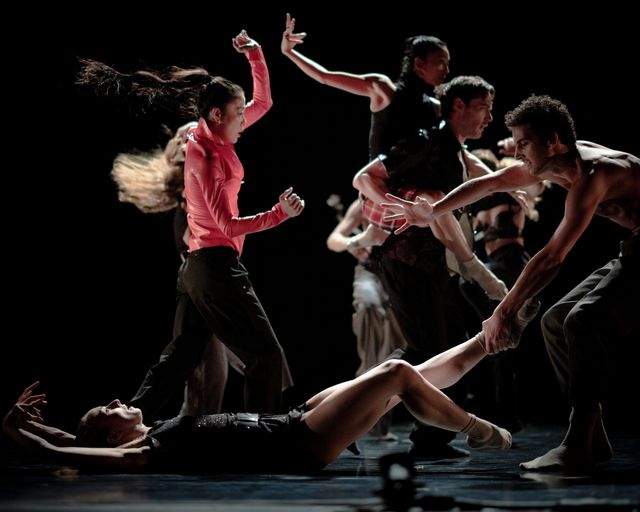
Double Vision is one of several new works being previewed in Ballets with a Twist watch parties

Who: Ballets with a Twist
What: Virtual watch parties for short-film series
Where: Twist Theater online
When: Friday, January 21, 8:00 & 10:00; Saturday, January 22, 2:00, 8:00 & 10:00, free
Why: Tribeca-based Ballets with a Twist has been offering a unique twist on ballet for more than twenty-five years. The company’s short works are all named for and inspired by potent potables, performed together as Cocktail Hour: The Show. Among the pieces that combine drama, humor, mystery, and romance are Absinthe, Grappa, Martini, Zombie, Champagne, Boilermaker, Cuba Libre, and Hot Toddy.

Because of the pandemic lockdown and the continuing spread of various variants, the troupe, founded in 1996 by artistic director and choreographer Marilyn Klaus, has moved outdoors for its latest presentation, Mirage, a four-part suite being livestreamed for free on January 21-22 at 8:00 and 10:00, with an additional matinee viewing on Saturday at 2:00. The short film was directed, photographed, and edited by Emma Huibregtse, with choreography by Klaus, original music by Stephen Gaboury, and costumes by designer Catherine Zehr.

In Ranch Water, Dorothea Garland struts with a top hat on the troupe’s roof. In La Paloma, Garland glories across an old airstrip in Brooklyn, almost floating away in colorful costumes. In Smooth Criminal, Andres Neira channels Michael Jackson at the historic Queens Unisphere. And in Double Vision, real-life partners Claire Mazza and Alejandro Ulloa promenade at a masked ball on the steps of an abandoned castle in Harlem.

After the performances, members of the cast and crew in the studio discuss their process, including Klaus, Gaboury, Zehr, Jennifer Buonamia, Mackenzie Frey, Tori Hey, Margaret Hoshor, Amy Gilson, and Haley Neisser. Mirage is a mere aperitif for the upcoming stage version to be held later this year, which will also feature animated projections by Huibregtse and lighting by Dan Hansell. So grab your cocktail of choice, settle in, and join one of the watch parties taking place this weekend.

THE SEARCH FOR SIGNS OF INTELLIGENT LIFE IN THE UNIVERSE

Cecily Strong makes her New York stage debut in The Search for Signs of Intelligent Life in the Universe (photo by Kate Glicksberg for the Shed)

THE SEARCH FOR SIGNS OF INTELLIGENT LIFE IN THE UNIVERSE
Griffin Theater at the Shed, the Bloomberg Building
545 West 30th St. at Eleventh Ave.
Tuesday – Sunday through February 6, $49-129
646-455-3494
theshed.org

Covid-19 has changed the way we experience live theater. Simply lining up to get in, theatergoers run into different rules at different venues, some more invasive and slow going than others.

So when I whisked right into the Shed’s Griffin Theater to see Cecily Strong in a revival of The Search for Signs of Intelligent Life in the Universe, I was initially disappointed to see so many empty seats fairly close to curtain time. I couldn’t help but wonder if people were staying away because of the omicron variant, because they were waiting for the reviews to come out, because Strong was not a big enough theatrical name (which I doubted), or because there had been some kind of bad word of mouth that hadn’t made it my way.

Fortunately, I was wrong in all cases, as the crowd streamed in to nearly fill the place. The opening lines of the play recognize the integral relationship between performer and audience as Strong, as the unnamed star of the show, says, “Thank you all for coming tonight. I can’t tell you how happy I am to see you here. There’s always the chance that you might not show up. I think most actors worry about playing to an empty house. I also worry about playing to a full house and leaving the audience empty.”

The audience is not left empty in the ninety-minute one-woman show, written by Jane Wagner specifically for her partner, Lily Tomlin. It was first seen on Broadway in 1985 at the Plymouth, earning Tomlin a Tony; it was turned into a film in 1991 and revived at the Booth in 2000. All along, Wagner has been tweaking the script; the 2022 edition features new quips about the climate crisis, cybersex, Elon Musk, and GPS, but its focus on fear, false hopes, and interconnectedness as humanity tries to find meaning in its everyday existence is still front and center.

Strong portrays eleven characters, going through small wardrobe changes — Anita Yavich’s costumes include a rainbow umbrella hat, an overcoat laden inside with post-it notes, and various other minor touches — as she moves back and forth on a ratty stage occupied by a cart of neverending acquired objects. (The set is by Christine Jones and Mary Hamrick, with lighting by Stacey Derosier, sound and music by Elisheba Ittoop, and choreography by James Alsop.)

Cecily Strong embodies eleven characters in one-woman show (photo by Kate Glicksberg for the Shed)

Our guide is Trudy, a homeless woman, now squatting in the theater — Strong wears a black Shed T-shirt under all her outfits — who formerly was a successful corporate designer and creative consultant but now wanders the streets of New York City conversing with alien creatures, helping them collect data.

“Those shock treatments seemed to give me new electrical circuitry,” Trudy explains. “I get like these time-space continuum shifts. My brain is so far beyond, it’s staggering. Suddenly it was like my central nervous system had a patio addition out back. Not only do I have a linkup to extraterrestrial channels, I also got a hookup to humanity as a whole.” These shifts, in which Strong becomes other characters, are accompanied by a flash of light and crash of sound.

Agnus Angst is a fourteen-year-old punk performance artist and “new bio-form” with a negative attitude whose parents have locked her out of the house. (“We are all micro-SPECKS on SPECK-ship Earth.”) Chrissy is a seminar hopper looking for a job and self-awareness while thinking about suicide. (“Whooo! I got fired from that telemarketing place. No, they gave me no notice at all . . . just . . . warnings.”)

Kate is a gossipy, bored woman who has uneven hair and has lost the tip of a finger in a cooking class accident. (“I am sick of being the victim of trends I reflect but don’t even understand.”) Paul is a divorced father and sperm donor who is feeling burned out. (“What’s the point of being a hedonist if you’re not having a good time?”)

Brandy and Tina are street prostitutes who get picked up by a writer who wants to talk to them for research. (“You’re the second guy this month wants to take out trade in this fashion. Last one ended up wanting my life history and a blowjob,” Brandy says. Tina adds: “I got news, what’s between her legs is her life history.”)

Lyn, Marge, and Edie are suburban friends evaluating their status, particularly as women. (Lyn: “I worry sometimes, maybe Bob has gotten too much in touch with his feminine side. Last night, I’m pretty sure he faked an orgasm.” Edie: “I look at myself . . . I don’t see any flaws.” Marge: “I’ve discovered a great medical cure for sobriety — alcoholism!”)

The homeless, endearing Trudy leads the search for signs of intelligent life with the help of unseen aliens (photo by Kate Glicksberg for the Shed)

In her New York theatrical debut, Strong, the ten-year SNL vet who also starred in the Apple TV musical parody series Schmigadoon!, eases right into the role made famous by Tomlin. Having seen the original Broadway production, I at first couldn’t stop thinking about whether two-time Emmy nominee Strong, whose August 2021 memoir, This Will All Be Over Soon, dealt with personal loss and the pandemic, was living up to Tomlin’s legend, but it wasn’t long before I was sucked into the characters, forgetting about both Strong and Tomlin. Strong makes the role her own, which is the strongest kind of praise one could give; she’s immensely likable, warm and friendly, and, very, very funny.

It was director Leigh Silverman’s idea to revive the work at the Shed as the lockdown was lifted, and she chose Strong after watching her portray Fox News host Jeanine Pirro jumping into a glass box of wine on Weekend Update last May. Silverman has helmed such Broadway plays as Grand Horizons and The Lifespan of a Fact in addition to the off-Broadway solo shows Harry Clarke and On the Exhale, and that experience keeps Signs energetic and exciting.

Whenever suicide was mentioned, I found it hard not to think about the Vessel, the twisting structure outside the Shed from which four people have jumped to their death since February 2020. Harsh reality is always right around the corner. Some of the New Agey feminist banter feels a bit dusty, but it always picks itself up in the hands of Strong, an improv specialist who just might be having even more fun than we are. What might feel like randomness at times all comes together by the end in surprising ways, emphasizing the interdependence of humanity. Wagner (Appearing Nitely, J.T.) and Tony, Grammy, and Emmy winner Tomlin (Nashville, Grace and Frankie) have given their blessing to this revival — they are serving as executive producers — and their faith has been rewarded, as has ours. As Trudy tells us, giving each of our lives meaning, “The good news is: In the future, they are still making plans for the future.”

VIRTUAL SYMPOSIUM: SURREALISM BEYOND BORDERS

Koga Harue, Umi (The Sea), oil on canvas, 1929 (The National Museum of Modern Art, Tokyo / photo courtesy MOMAT/DNPartcom)

Who: MetSpeaks
What: Two-day virtual symposium on Met exhibition “Surrealism Beyond Borders”
Where: Metropolitan Museum of Art Zoom
When: Thursday, January 20, 1:00–5:30; Friday, January 21, 10:00 am – 1:00 pm, free with advance RSVP
Why: While walking through the Met’s must-see “Surrealism Beyond Borders” exhibit, which continues through January 30, I bumped into an old friend of mine who was not impressed by the show, disappointed that it was lacking in big-name familiar works. However, that’s part of the point. While the exhibition does feature works by Max Ernst, Giorgio de Chirico, René Magritte, Salvador Dalí, Leonora Carrington, Wifredo Lam, Dorothea Tanning, and Joan Miró, it explores the development of surrealism around the world, from Belgrade, Mexico City, the Netherlands, Haiti, South Korea, and Portugal to Egypt, England, Colombia, South America, Cuba, and Canada, where surrealism was often part of sociocultural movements toward freedom and justice.

Divided into such sections as “Collective Identities,” “The Work of Dreams,” “Beyond Reason,” “Thoughts in Transition,” “The Fantasy and Phallacy of Elsewhere,” “Bodies of Desire,” and “Automatism,” the show finds commonalities in different cultures in painting and sculpture and broadens the idea of what qualifies as surreal. Marcel Jean’s oil on wood Armoire surréaliste (Surrealist Wardrobe), made while the French artist was living in exile with his wife in Budapest, welcomes visitors with open doors. Koga Harue’s Umi (The Sea) prefigures Thomas Hart Benton. Ramses Younan’s 1939 untitled painting of a twisted Nut, the goddess of the sky, was a direct response to Magritte and Dalí. Ithell Colquhoun called her double-phallic Scylla “a pictorial pun.” There’s also an experimental film by Maya Deren, Cage by Alberto Giacometti, a copy of the 1941 Martinique arts journal Tropiques, Pierre Alechinsky’s depiction of Central Park, and a corner dedicated to surrealism in Chicago in the 1960s, with protest posters, manifestos, and blues music by Elmore James, Buddy Guy, and others. “Surrealism fights for the TOTAL LIBERATION OF MAN!” the Chicago Surrealist Group declared in 1971. The show indeed goes well beyond borders.

In conjunction with the final days of the show, MetSpeaks is hosting a two-day free virtual symposium consisting of four panel discussions with professors, publishers, artists, and art historians exploring various aspects of surrealism, focusing on time and place. Admission is free with RSVP; below is the schedule.

Thursday, January 20
Surrealism and Place, with Lori Cole, Krzysztof Fijalkowski, Talinn Grigor, fahima ife, and Mark Polizzotti, moderated by Joan Kee, 1:00 – 3:00

On Black, Brown, & Beige, with Robin D. G. Kelley and Fred Moten, moderated by Zita Cristina Nunes, 4:00 – 5:30

Friday, January 21
Surrealism and Time, with Sam Durant, Marie Mauzé, Partha Mitter, and Michael Stone-Richards, moderated by Dawn Adès, 10:00 am – 12:00 pm

Closing Discussion, with Dawn Adès, Joan Kee, and Zita Cristina Nunes, 12:00 – 12:45 pm

MOLLY LIEBER & ELEANOR SMITH: GLORIA REHEARSAL (excerpt)

Who: Molly Lieber & Eleanor Smith, James Lo, Tatyana Tenenbaum
What: Streaming performance and live virtual discussion
Where: Baryshnikov Arts Center online
When: Live Zoom discussion January 19, free with RSVP, 5:00; performance available on demand through January 24 at 5:00, free
Why: Molly Lieber and Eleanor Smith, who have been creating dance works together for more than fifteen years, debuted their latest piece, Gloria, made during the pandemic, outdoors at Abrons Arts Center this past May. The indoor premiere is scheduled for April 8-9 at New York Live Arts. In the meantime, you can catch an extensive rehearsal of Gloria — a name shared by Lieber’s baby — as part of Baryshnikov Arts Center’s excellent digital programming. In the ninety-minute work, Lieber and Smith redefine female objectification, incorporating microphones and mic stands, large mirrors on wheels, and folding chairs as they move about BAC’s rehearsal space, asserting control over their physical form as women. The soundtrack evolves from a long silence, interrupted by screams from Lieber, Smith singing “Getting to Know You” from The King and I, and Lieber mumbling Dan Hill’s “Sometimes When We Touch,” to snippets of patriotic marches, traffic, birds, and Laura Branigan’s 1982 hit, “Gloria.” (The wide-ranging sound design is by James Lo.)

Molly Lieber and Eleanor Smith’s Gloria rehearsal excerpt continues online through January 24 (photo by Maria Baranova)

At one point, Lieber puts the microphone all over Smith’s skin, giving voice to her body. “It’s too much,” Smith repeats later, reflecting on the expectations of others. Lieber and Smith entwine themselves on the floor, take off and put back on their costumes, morph into emotional positions that often evoke sexual contact, and dare the patriarchal system to question who they are and what they want out of life, determined to survive amid all the maelstrom, especially the mass grief caused by the coronavirus crisis. As in such earlier works as Body Comes Apart, Basketball, Rude World, Tulip, and Beautiful Bone, Gloria is emotionally and physically exhausting as Lieber and Smith push each other to the extreme — and then keep going.

The piece was filmed and edited by the extraordinary Tatyana Tenenbaum, whose previous virtual work for BAC includes Holland Andrews’s Museum of Calm, River L. Ramirez’s Ghostfolk, and a celebration of the fiftieth anniversary of Merce Cunningham’s Landrover. Gloria is available for streaming through January 24 at 5:00. On January 19 at 5:00, Lieber and Smith will take part in a live discussion over Zoom, joined by Lo and moderated by Tenenbaum.

MARTHA GRAHAM DANCE COMPANY WINTER 2022 STUDIO SERIES: NEW@GRAHAM WITH HOFESH SHECHTER

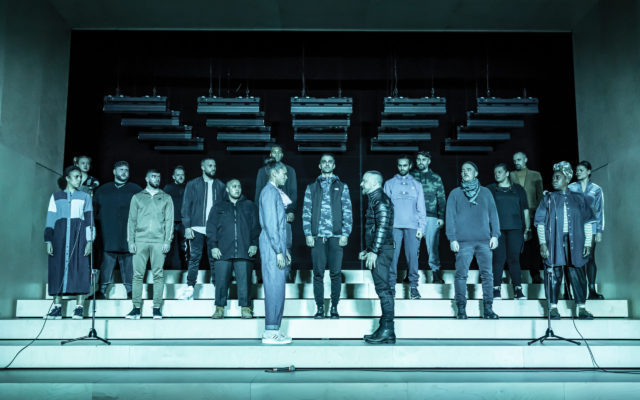
Hofesh Shechter will present an inside look at his new work for Martha Graham in January 19 livestream

Who: Hofesh Shechter
What: NEW@Graham with Hofesh Shechter
Where: Martha Graham Dance Company online or via Patreon
When: Wednesday, January 19, $25, 7:00
Why: Over the past few months, the Martha Graham Dance Company’s Studio Series has featured “GrahamDeconstructed”: Acts of Light with original cast member Peggy Lyman, New@Graham with Andrea Miller discussing her new work (Scavengers) for the troupe, and a holiday event with Graham 2 that included highlights from Appalachian Spring. Jerusalem-born, London-based choreographer Hofesh Shechter was scheduled to present in-person New@Graham open rehearsals of his new MGDC piece January 18-19 at the Martha Graham Studio Theater at 55 Bethune St., but because of the omicron surge, the event will be livestreamed only on January 19 at 7:00. Shechter will offer an inside look at the work-in-progress commission, set to premiere in April at City Center.

Shechter, who has also choreographed works for the Alvin Ailey American Dance Theater, Batsheva Ensemble, Candoco Dance Company, Cedar Lake Contemporary Ballet, Nederlands Dans Theater 1, Paris Opera Ballet, Royal Ballet, and Royal Ballet Flanders, has said, “I want audiences to be awakened, to experience my work from the gut. Trusting the gut is to me like trusting nature, or God, or a sense of purpose; a source, a spark. Trusting a higher and better force than our limited oppressed cultured minds.” We’ll have to do that virtually January 19 in preparation for the spring in-person season.

The Studio Series continues February 22-23 with an exploration of the reimagining of Graham’s 1952 Canticle for Innocent Comedians by eight choreographers (Sonya Tayeh, Kristina and Sadé Alleyne, Sir Robert Cohan, Jenn Freeman, Juliano Nunes, Micaela Taylor, and Yin Yue), which will also be part of the City Center season.

THE 2022 JUDITH CHAMPION NEW VOICES READING SERIES

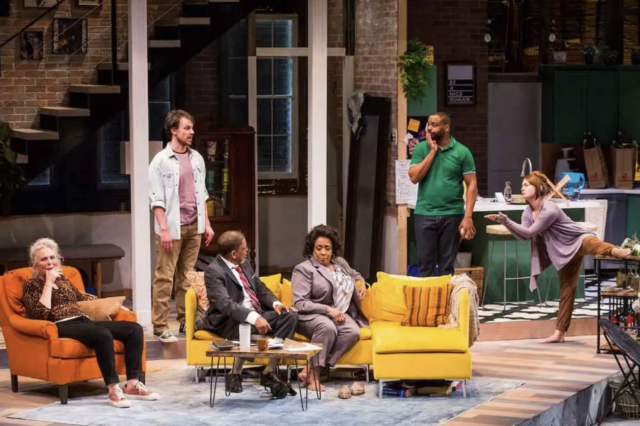
Works by Vivian J. O. Barnes, Danny Tejera, and Susan Xu are part of Second Stage’s Judith Champion New Voices Reading Series

Who: Second Stage Theater
What: Staged readings of new plays
Where: Tony Kiser Theater, 305 West 43rd St. between Eighth & Ninth Aves.
When: January 18, 24, 31, free with RSVP, 6:30
Why: Second Stage Theater’s 2022 Judith Champion New Voices Reading Series is set to take place January 18, 24, and 31, featuring professionally produced staged readings of three works by emerging artists. “We’re thrilled to be presenting the second year of our New Voices series — and to do so in person at the Tony Kiser Theater,” Second Stage president and artistic director Carole Rothman said in a statement. “Supporting early career writers is central to Second Stage’s mission, and I can’t wait for the Second Stage audience to be the first to experience these great plays by Danny, Vivian and Susan.”

First up is Danny Tejera’s Toros on January 18, about three twentysomethings and a dog hanging out in a garage in Madrid, directed by David Mendizábal, followed on January 24 by Vivian J. O. Barnes’s The Sensational Sea Mink-ettes, about a dance team preparing for homecoming, directed by Cristina Angeles, and concluding on January 31 with Susan Xu’s Yellow Dream$, a dark comedy about diversity, directed by May Adrales. “Support what is most important to you,” series underwriter Judith Champion added in a statement, “and one thing that is important to me is to nurture new playwriting talent so that theater flourishes for future generations.”