Documentary looks at escalating conflict between Israelis and Palestinians in Hebron
THIS IS MY LAND . . . HEBRON (Giulia Amati & Stephen Natanson, 2010)
Film Society of Lincoln Center, Walter Reade Theater
165 West 65th St. at Amsterdam Ave.
Monday, June 27, 4:00; Tuesday, June 28, 6:30; Wednesday, June 29, 9:00
Series runs through June 30
212-875-5601
www.filmlinc.com
www.thisismylandhebron.com
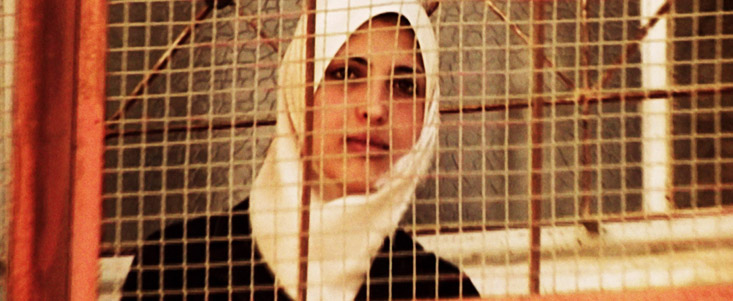
 While teaching a video course in the historic city of Hebron, Giulia Amati was struck by the intense battle going on between Israeli settlers and Palestinians in the burial place of Abraham. Following the Six-Day War in 1967, a small group of Jews moved into the city, deciding to take it back from the Palestinians, whose families had been there for generations. Today, some five hundred settlers, mostly European Jews, have gained control of the embattled territory in the southern West Bank, trying to force out the 150,000 Palestinians who live there. “There is no place under the occupation that I hate more than Hebron,” Haaretz reporter Gideon Levy says in Amati and Stephen Natanson’s stirring documentary, This Is My Land . . . Hebron, adding, “It is really the place of evil.” Presenting both sides of the story, the filmmakers speak with such Jewish settlers as Miriam Grabovsky, Miriam Levinger, and spokesmen Noam Arnon and David Wilder, who believe in their God-given right to the land, and such Palestinian residents as Hamed Quashmeh and Osaid Rasheed, who don’t want to leave their homes and businesses. Jewish children in Hebron are raised to hate their Palestinian neighbors, throwing rocks and cursing them in the street. Palestinian houses are surrounded by wire fences that make it look like the families are living in cages. Former Israeli soldier Yehuda Shaul now leads “Breaking the Silence” tours of the area, revealing exactly what is going on. While some Israelis consider him a traitor, others see what he is doing as heroic, trying to get the truth out and establish peace. While much of what goes on in the Middle East is extremely complex and often sensationalized in the media, with the actions of the Israeli military and government often improperly misconstrued and wrongly criticized, the situation in Hebron seems to be clear, as Israeli Jews such as Shaul, Levy, and former Knesset member Ure Avnery explain in the film. Although This Is My Land . . . Hebron reveals the dark side of fundamentalism and racism, it should not be viewed as a microcosm in the continuing fight between the Israelis and the Palestinians but instead as a terrible side effect of an age-old conflict. Part of the “Times of Conflict and Responses to Terrorism” section of the Human Rights Watch Festival at Lincoln Center, which also includes “Migrants’ and Women’s Rights,” “Human Dignity, Discrimination, and Resources,” and “Truth, Justice, and Accountability,” This Is My Land . . . Hebron will have its North American premiere June 27-29 at the Walter Reade Theater, with all three screenings followed by a discussion with the filmmakers.

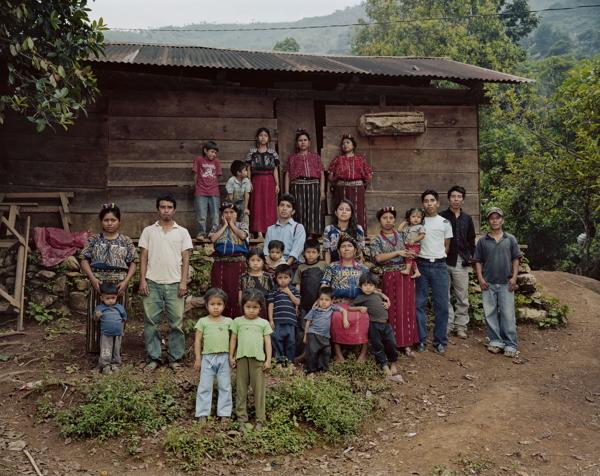
 The opening-night selection of the twenty-second Human Rights Watch Film Festival, Granito: How to Nail a Dictator is an illuminating, if at times overly self-referential, examination of the power of documentary filmmaking. In 1982, Pamela Yates and Newton Thomas Sigel made When the Mountains Tremble, which told the inside story of civilian massacres of the indigenous Maya people as government forces and guerrilla revolutionaries fought in the jungles of Guatemala; one of the film’s subjects, Rigoberta Menchú, became an international figure and went on to win the Nobel Peace Prize. “When I made that film, I had no idea I was filming in the middle of a genocide,” Yates says at the beginning of Granito. A quarter-century after When the Mountains Tremble, Yates was contacted by lawyer Almudena Bernabeu, who asked Yates to comb through her reels and reels of footage to find evidence of the Guatemalan genocide and help bring charges again dictator Ríos Montt, whom Yates had met with back in 1982. In researching the case, Yates speaks with Menchú, forensic archivist Kate Doyle, journalist liaison Naomi Roht-Arriaza, forensic anthropologist Fredy Peccerelli, Spanish national court judge Santiago Pedraz, victims’ rights leader and genocide survivor Antonio Caba Caba, and Gustavo Meoño, a founding member of the Guerrilla Army of the Poor, each of whom sheds light on the proceedings from various different angles, from digging up bones in mass graves to discussing redacted documents that reveal U.S. involvement in Guatemala. Several of them are risking their lives by both continuing to fight the government and appearing on camera. Part of the “Truth, Justice, and Accountability” section of the Human Rights Watch Festival, which also includes “Times of Conflict and Responses to Terrorism,” “Human Dignity, Discrimination, and Resources,” and “Migrants’ and Women’s Rights,” Granito, which Yates directed with Peter Kinoy and Paco de Onís and is her sixth film to be shown at the festival, is a compelling look at how individuals can make a difference. The music is often overly melodramatic, and Yates does seem to like to show herself both in outtakes from her first film and in serious poses in the new film, but its ultimate point overrides those tendencies. Granito will be shown June 17 at 7:00 and June 18 at 1:00; both screenings will be followed by a discussion with the filmmakers as well as subjects Kate Doyle, Alejandra Garcia, and Fredy Peccerelli. The June 17 screening will also be followed by a reception, while the June 18 screening will be followed by a special presentation of When the Mountains Tremble (1982). The festival, which runs June 16-30, features nineteen films from twelve countries that deal with human rights issues around the world. Keep watching twi-ny for further select reviews.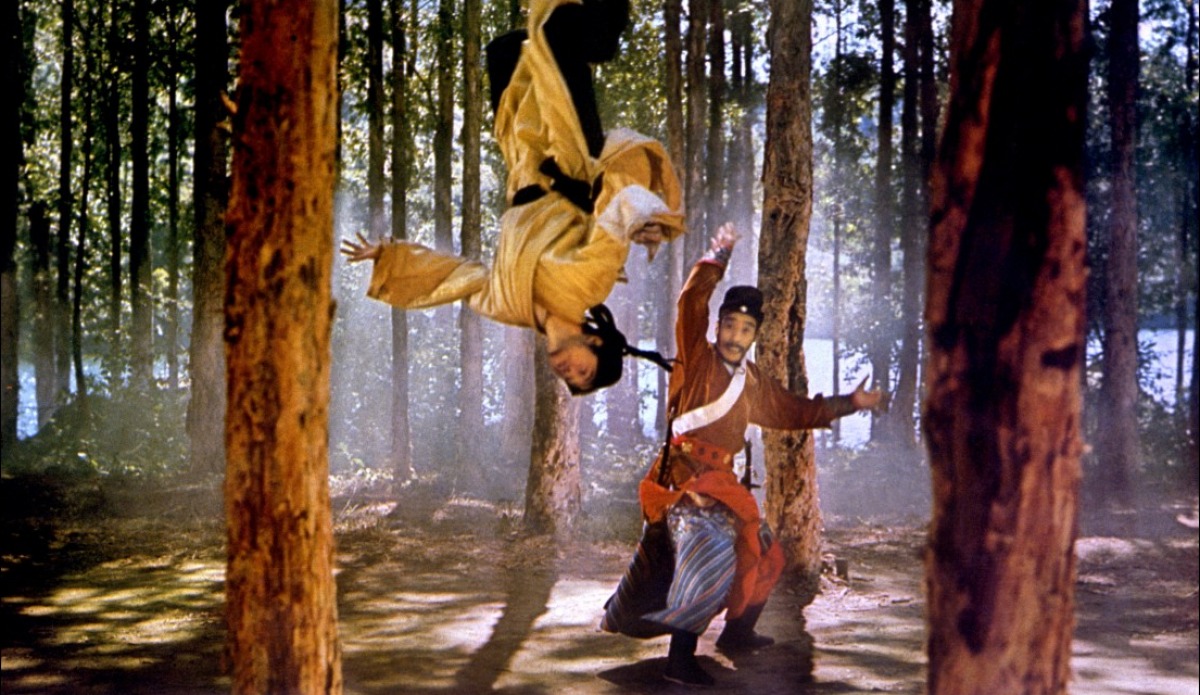
 Watching King Hu’s 1969 wuxia classic, A Touch of Zen, brings us back to the days of couching out with Kung Fu Theater on rainy Saturday afternoons. The highly influential three-hour epic features an impossible-to-figure-out plot, a goofy romance, wicked-cool weaponry, an awesome Buddhist monk, a bloody massacre, and action scenes that clearly involve the overuse of trampolines. Still, it’s great fun, even if it is way too long. (The film, which was initially shown in two parts, earned a special technical prize at the 1975 Cannes Film Festival.) Shih Jun stars as Ku Shen Chai, a local calligrapher and scholar who is extremely curious when the mysterious Ouyang Nin (Tin Peng) suddenly show up in town. It turns out that Ouyang is after Miss Yang (Hsu Feng) to exact “justice” for the corrupt Eunuch Wei, who is out to kill her entire family. Hu (Come Drink with Me, Dragon Gate Inn) fills the film with long, poetic establishing shots of fields and the fort, using herky-jerky camera movements (that might or might not have been done on purpose) and throwing in an ultra-trippy psychedelic mountain scene that is about as 1960s as it gets. A Touch of Zen is ostensibly about Ku’s journey toward enlightenment, but it’s also about so much more, although we’re not completely sure what that is. The film is screening May 15 and May 19 as part of the Film Society of Lincoln Center’s “Taiwan Stories: Classic and Contemporary Film from Taiwan” series, which continues through May 19 with such classic works as Pai Ching-jui’s Home Sweet Home (1970), Li Xing and Li Jia’s Oyster Girl (1964), and Tsai Ming-liang’s Rebels of the Neon God (1992) as well as such more modern films as Doze Niu’s Monga (2008), Chen Wen-tang’s Tears (2009), and Chen Yu-Hsun, Hou Chi-jan, and Shen Ko-Shang’s Juliets (2010).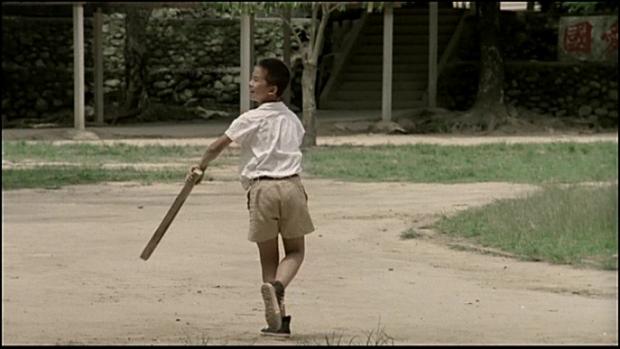
 Hou Hsiao-hsien’s Taiwanese New Wave masterpiece, A Time to Live, a Time to Die, is a bittersweet, nostalgic look back at his childhood, after his father’s government job moves the family from Mainland China just as the Cultural Revolution is taking effect. The semiautobiographical film is seen through the eyes of young Ah-ha (You Anshun) as his father (Tien Feng) suffers ill health, his older brother gets harassed by a local gang, his mother (Mei Fang) tries to maintain the household, and his grandmother (Tang Ju-yun) keeps getting lost, being brought back by rickshaw drivers who demand ever-larger payments. The family lives in a Japanese-style home that is beautifully photographed by cinematographer Mark Lee Ping-bing, with Hou favoring long shots with limited camera movement, calmly shifting from scene to scene as Ah-ha grows up into a teenager (Hsiao Ai) and discovers a whole new set of problems and reality. The middle film in Hou’s coming-of-age trilogy (in between 1984’s A Summer at Grandpa’s and 1986’s Dust in the Wind), A Time to Live is a deeply personal, intimate, unforgettable story of life, death, and the bonds of family. The film is screening May 15 as part of the Film Society of Lincoln Center’s “Taiwan Stories: Classic and Contemporary Film from Taiwan” series, which continues through May 19 and also includes such classic works as Pai Ching-jui’s Home Sweet Home (1970), Li Xing and Li Jia’s Oyster Girl (1964), and King Hu’s A Touch of Zen (1969) as well as such modern films as Doze Niu’s Monga (2008), Chen Wen-tang’s Tears (2009), and Chen Yu-Hsun, Hou Chi-jan, and Shen Ko-Shang’s Juliets (2010).