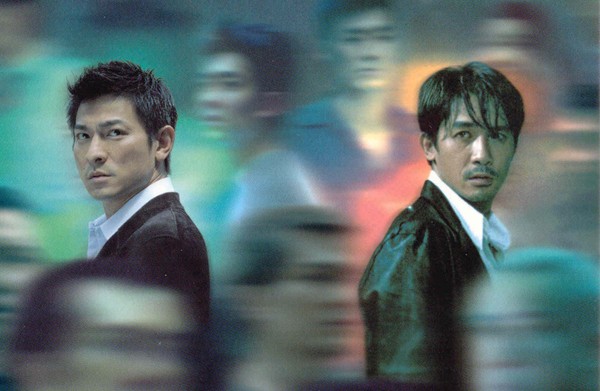
The first two Infernal Affairs movies are part of a tenth anniversary special presentation at the New York Asian Film Festival
INFERNAL AFFAIRS (MOU GAAN DOU) (Andrew Lau & Alan Mak, 2002)
Film Society of Lincoln Center, Walter Reade Theater
165 West 65th St. at Amsterdam Ave.
Friday, July 6, 6:00
212-875-5601
www.filmlinc.com
www.infernalaffairs.com
 In 2002-2003, directors Andrew Lau and Alan Mak crafted a marvelous gangster trilogy that is nothing short of the Hong Kong version of The Godfather. The first two parts are being presented at a special tenth anniversary screening July 6 as part of the New York Asian Film Festival at Lincoln Center, with actor Will Yun Lee on hand to participate in a panel about the film and the video game Sleeping Dogs. In the first film, Yan (Tony Leung Chiu Wai) and Ming (Andy Lau) are both cops with deadly secrets, one a mole in the police department, the other deep undercover in a powerful gang. We learn a little bit about their past, but most of the film takes place in the present, as both the good guys and the bad guys try to find out who’s on which side. Eric Tsang is awesome as Sam, Wo Fat with a different sense of humor. Much of the film is played out marvelously on cell phones, which is actually more exciting than it sounds. The ending is a gem. The only drawback is that the subtitles move past in a flash and are very small, problems that are corrected in the two sequels. The film was a huge hit, earning numerous Golden Horse and Hong Kong Film Awards, including Best Picture, Best Director, and Best Actor (Tony Leung); Martin Scorsese scored a huge hit with his outstanding remake, The Departed, which starred Leonardo DiCaprio and Jack Nicholson.
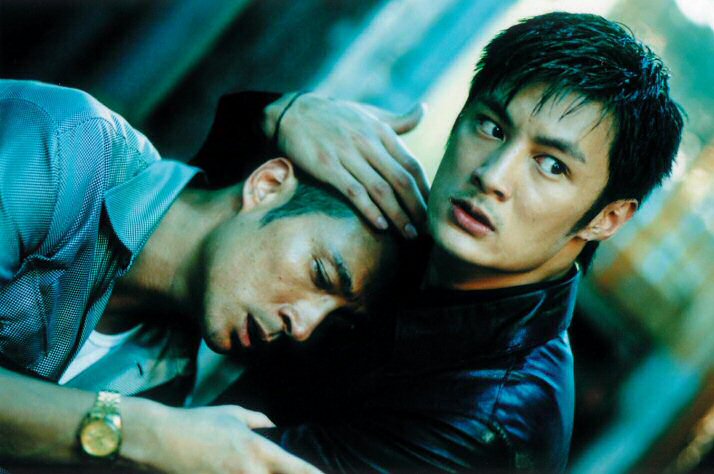
INFERNAL AFFAIRS 2 is a brilliant prequel about friendship and loyalty in a changing Hong Kong
INFERNAL AFFAIRS 2 (MOU GAAN DOU 2) (Andrew Lau & Alan Mak, 2003)
Film Society of Lincoln Center, Walter Reade Theater
165 West 65th St. at Amsterdam Ave.
Friday, July 6, 8:40
212-875-5601
www.filmlinc.com
www.infernalaffairs.com
 Andrew Lau and Alan Mak’s second Infernal Affairs film is reminiscent of The Godfather Part II, as the story moves back and forth through several pasts as we learn more about Ming (Edison Chen), Yan (Shawn Yue), Wong (Anthony Wong), and Sam (Eric Tsang). Some roles are played by the same actors as in the first film, and some are not, so pay close attention. As Hong Kong approaches the hand-over to Chinese rule, the Triad war is threatening to explode, with Ming and Yan caught in the middle. Infernal Affairs 2 is an unforgettable film, gorgeously shot by Lau (who cut his teeth as cinematographer on such films as Wong Kar-wai’s Chungking Express and Ringo Lam’s City on Fire) and Ng Man Ching (Once Upon a Time in China). Much like the second Godfather film, even though you know what becomes of many of these characters, finding out about what got them there is absolutely thrilling. We love every glorious second of this movie. Don’t miss it.
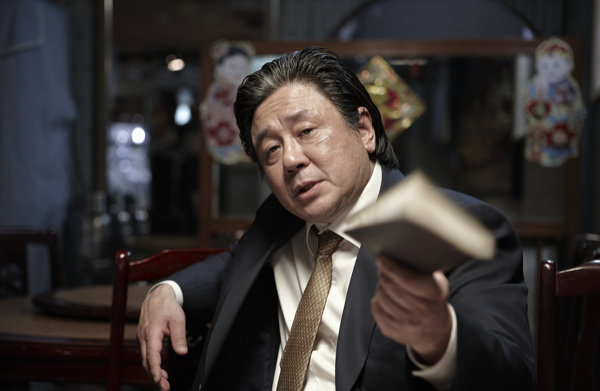
 In 1990, Roh Tae-woo, the thirteenth president of South Korea, officially declared war on organized crime. Writer-director Yun Jong-bin goes back to that dramatic period in the 2012 epic mob thriller Nameless Gangster: Rules of the Time. Korean star Choi Min-sik (Oldboy) put on a few pounds to play the roly-poly Choi Ik-hyun, a corrupt Customs inspector who soon immerses himself in Busan’s underworld culture. A goofy, pathetic figure who drinks too much and has no loyalty to anyone but himself, Choi seems to always find a way to survive despite his infuriatingly stupid decisions. He uses his family connections to team up with his godson, Choi Hyung-bae (Ha Jung-woo), a smooth, ultracool gangster who is continually suspicious of his godfather, and to convince determined prosecutor Choi Joo-dong (Kim Eung-soo) not to lock him up and throw away the key. Things come to a head when he gets involved with Kim Pan-ho (Jo Jin-woong) and a casino hotel, leading to violence, betrayal, and whimpering. Told primarily in flashback set in the 1980s, Nameless Gangster is a potent blend of mob drama and comedy, as Yun (The Moonlight of Seoul, The Unforgiven) mixes in elements of such genre classics as Goodfellas and The Godfather while also telling the story of a changing Korea. Choi Min-sik is a hoot as Choi Ik-hyun, a putz who just keeps on keepin’ on, his round face and puppy-dog eyes somehow helping to keep him alive even as he essentially demands to get whacked. Nameless Gangster is screening June 30 at 9:00 and July 3 at 1:00 at the New York Asian Film Festival at the Film Society of Lincoln Center, where it is part of the sidebar event “Choi Min-sik: Mr. Vengeance,” which also includes 2001’s Failan, 2003’s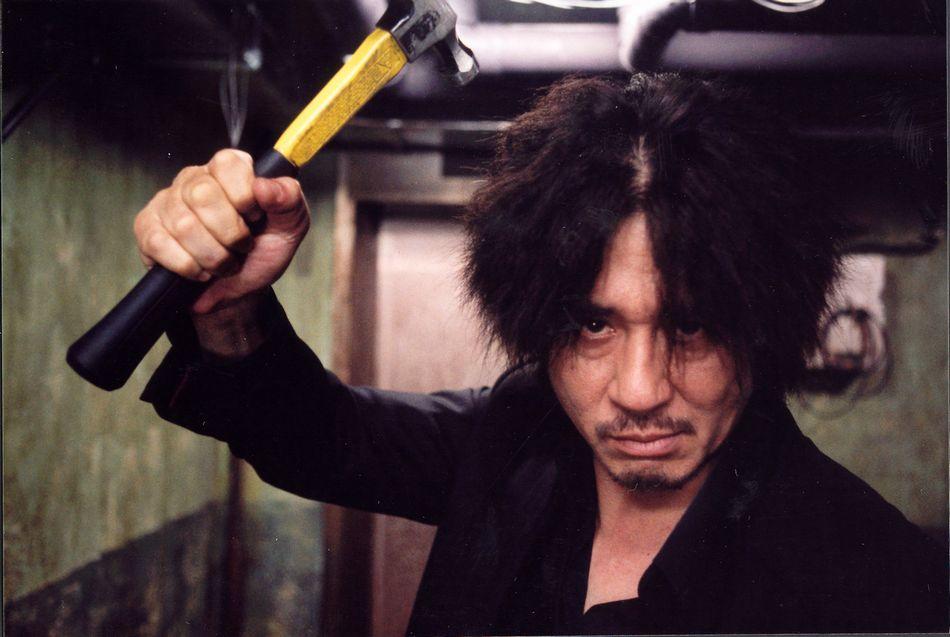

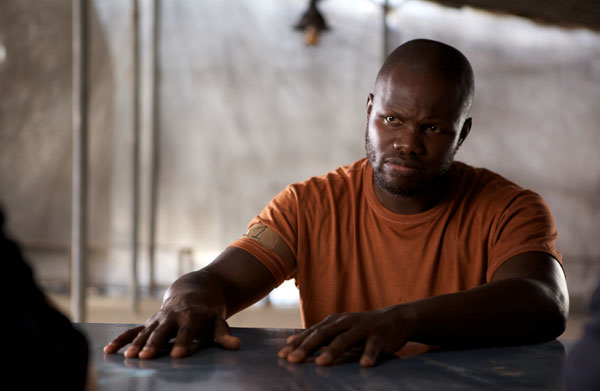
 Inspired by the real-life dilemma of Senegalese refugees illegally arriving on the shores of the Canary Islands seeking a new life, only to be put into internment camps and sent back — if they even survive the harrowing journey at all — Maggie Peren’s Color of the Ocean is a searing examination of poverty and the lengths people will go to achieve freedom. As a boat filled with more dead than living refugees pulls onto a beach, German tourist Nathalie (Sabine Timoteo) tries to help Zola (Hubert Koundé) and his son, Mamadou (Dami Adeeri), but is ordered to leave by cynical border policeman José (Alex González). The jaded José, who is facing his own personal problems involving his twin sister’s (Alba Alonso) drug addiction, is brutally straightforward about his lack of compassion for the Senegalese men, women, and children seeking asylum in Spain, much to the consternation of his more sympathetic partner, Carla (Nathalie Poza). After escaping from the camp, Zola and Mamadou turn to Nathalie for help, but her husband, Paul (Friedrich Mücke), insists she stay out of the potentially dangerous situation. The various stories soon come together in powerful ways as the characters reach deep inside themselves and discover that there are severe consequences to their actions — or inaction. Although it pulls at the heartstrings too much and too often takes the easy way out, Color of the Ocean is a compelling film that tells an important story that’s even more relevant given the current battle over immigration rights and deportation here in America. Writer-director Peren’s (Special Escort) focus on Nathalie lies at the heart of the film, with the character serving as a kind of representative for the audience, making viewers wonder what they would do if suddenly faced with similar life-altering — and life-threatening — decisions. Color of the Ocean is screening June 23 and 24 at the Human Rights Watch Film Festival, which runs through June 28 at the Film Society of Lincoln Center, highlighting seventeen works divided into five categories: “Health, Development, and the Environment,” “Lesbian, Gay, Bisexual, and Transgender (LGBT) and Migrants’ Rights,” “Personal Testimony and Witnessing,” “Reporting in Crises,” and “Women’s Rights,” with this year’s theme centering on how one individual or a small group of individuals can help make a difference.