Tense thriller based on award-winning book is part of Icelandic film series at Lincoln Center
CLASSIC & CONTEMPORARY ICELANDIC CINEMA: JAR CITY (MYRIN) (Baltasar Kormákur, 2006)
Film Society of Lincoln Center, Walter Reade Theater
165 West 65th St. at Amsterdam Ave.
Friday, April 20, 6:15; Tuesday, April 24, 2:00
Series runs April 18-26
212-875-5601
www.filmlinc.com
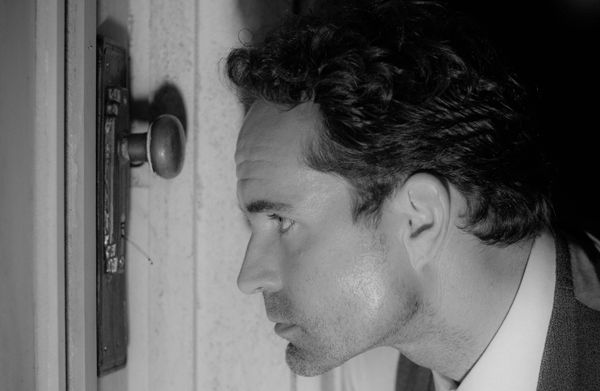
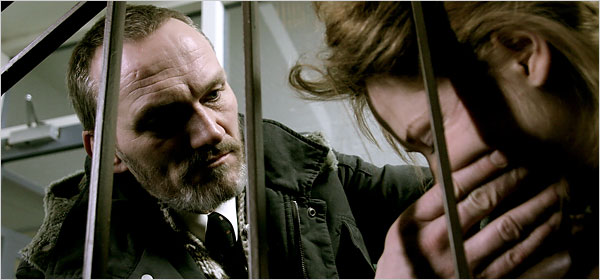
 Writer-director Baltasar Kormákur’s adaptation of Arnaldur Indriðason’s award-winning novel Jar City (Myrin) is a bleak but compelling police procedural that focuses on a fact-based controversial government initiative that is cataloging genetic research on all Icelandic families. When an aging man named Holberg (Thorsteinn Gunnarsson) is murdered in his home, brooding inspector Erlendur (Ingvar E. Sigurdsson) heads the investigation into the death, leading him to a thirty-year-old rape, a dirty cop, a trio of criminals (one of whom has been missing for a quarter century), a woman who killed herself shortly after her four-year-old daughter died, and a doctor who collects body parts. The divorced Erlendur also has to deal with his troubled daughter (Augusta Eva Erlendsdottir), a pregnant drug addict who hangs out with some very sketchy company. Meanwhile, a mysterious man (Atli Rafn Sigurdarson) is up to something following the traumatic death of his young daughter. Kormakur weaves together the story line of the two fathers side by side — in the book, the unidentified man appears only near the conclusion, although who he is still remains a mystery for most of the film — centering on the complex relationship between parents and children and what gets passed down from generation to generation, both on the outside and the inside. Sigurdsson plays Erlendur with a cautious seriousness, the only humor coming from the way he treats his goofy partner, Sigurdur Oli (Bjorn Hlynur Haraldsson). Iceland’s entry for the 2007 Foreign-Language Oscar and winner of the Crystal Globe at the Karlovy Vary International Film Festival, Jar City is a dark, tense intellectual thriller. Indriðason has turned Erlendur into a continuing character in such follow-ups as Silence of the Grave and Voices; here’s hoping Kormákur and Sigurdsson do the same. Jar City will be screening on April 20 and 24 at the Film Society of Lincoln Center’s “Images from the Edge: Classic & Contemporary Icelandic Cinema” series, comprising nineteen works from Iceland ranging from Loftur Guðmundsson’s 1949 Between Mountain and Shore and Ævar Kvaran’s 1950 The Last Farm in the Valley to Árni Ásgeirsson’s 2010 Undercurrent and Hafsteinn Gunnar Sigurðsson’s 2011 Either Way, with the directors present for many of the screenings, including Kormákur following the 6:15 showing of Jar City on April 20.
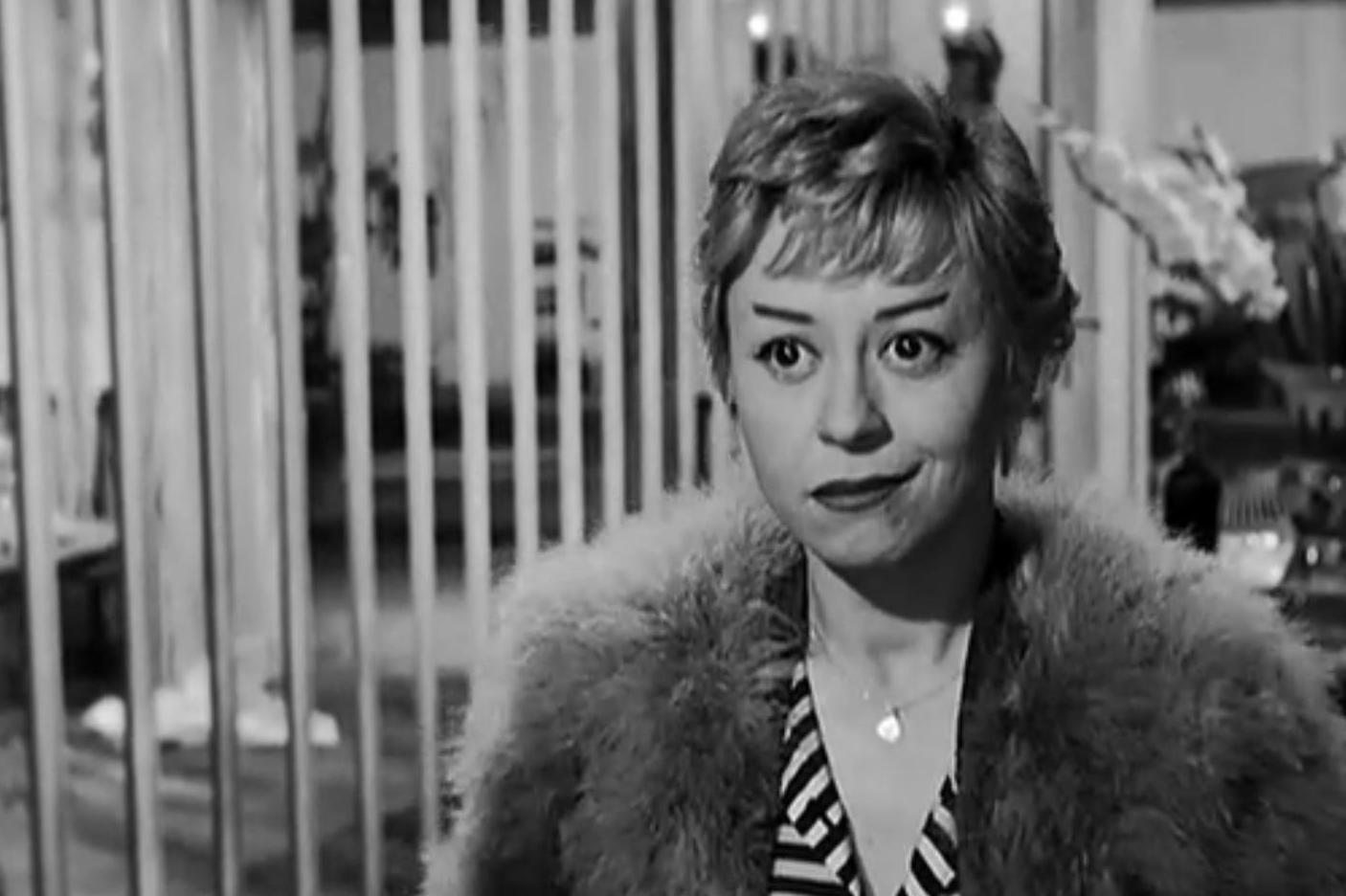
 Giulietta Masina was named Best Actress at Cannes for her unforgettable portrayal of a far-too-trusting street prostitute in Nights of Cabiria. Directed by her husband, Federico Fellini, produced by Dino De Laurentiis, and written in collaboration with Pier Paolo Pasolini, the film opens with Cabiria taking a romantic stroll by the river with her boyfriend, Giorgio (Franco Fabrizi), who suddenly snatches her purse and pushes her into the water, running off as she nearly drowns. Such is life for Cabiria, whose sweet, naive nature can turn foul tempered in an instant. Over the course of the next few days, she gets picked up by movie star Alberto Lazzari (Amedeo Nazzari), goes on a religious pilgrimage with fellow prostitutes Wanda (Franca Marzi) and Rosy (Loretta Capitoli), gets hypnotized by a magician (Ennio Girolami), and falls in love with a tender stranger named Oscar (François Périer). But nothing ever goes quite as expected for Cabiria, who continues to search for the bright side even in the direst of circumstances. Masina is a delight in the film, whether yelling at a neighbor, dancing the mambo with Alberto, or looking to confess her sins, her facial expressions a work of art in themselves, ranging from sly smiles and innocent glances to nasty smirks and angry stares. Fellini’s second film to win the Oscar for Best Foreign Language Film (after La Strada), Nights of Cabiria is screening March 28 as part of the Film Society of Lincoln Center’s “15 for 15: Celebrating Rialto Pictures” series honoring the fifteenth anniversary of the art-house distributor founded by Film Forum programmer extraordinaire Bruce Goldstein, who also worked on the updated translation for the 1998 restoration of this Fellini masterpiece.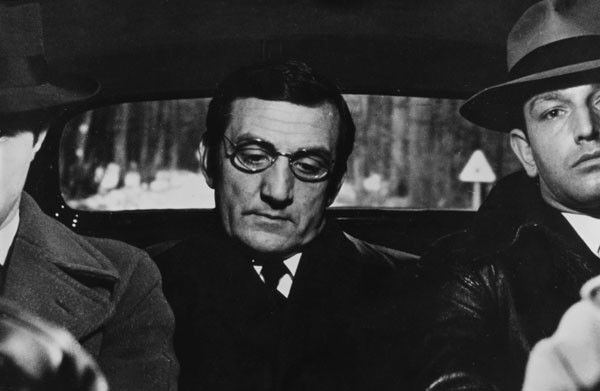
 Based on the novel by Joseph Kessel (Belle de Jour), Jean-Pierre Melville’s 1969 WWII drama Army of Shadows got its first U.S. theatrical release some thirty-five years later, in a restored 35mm print courtesy of Rialto Pictures and supervised by the film’s cinematographer, Pierre Lhomme, who shot it in a beautiful blue-gray palette. The film centers on a small group of French resistance fighters, including shadowy leader Luc Jardie (Paul Meurisse), the smart and determined Mathilde (Simone Signoret), the nervous Jean-François (Jean-Pierre Cassel), the steady and dependable Felix (Paul Crauchet), the stocky Le Bison (Christian Barbier), the well-named Le Masque (Claude Mann), and the unflappable and practical Gerbier (Lino Ventura). Although Melville, who was a resistance fighter as well, wants the film to be his personal masterpiece, he is too close to the material, leaving large gaps in the narrative and giving too much time to scenes that don’t deserve them. He took offense at the idea that he portrayed the group of fighters as gangsters, yet what shows up on the screen is often more film noir than war movie. However, there are some glorious sections of Army of Shadows, including Gerbier’s escape from a Vichy camp, the execution of a traitor to the cause, and a tense Mission Impossible–like (the TV series, not the Tom Cruise vehicles) attempt to free the imprisoned Felix. But most of all there is Ventura, who gives an amazingly subtle performance that makes the overly long film (nearly two and a half hours) worth seeing all by itself. Army of Shadows is screening March 26 as part of the Film Society of Lincoln Center’s “15 for 15: Celebrating Rialto Pictures” series honoring the fifteenth anniversary of the art-house distributor founded by Film Forum programmer extraordinaire Bruce Goldstein.
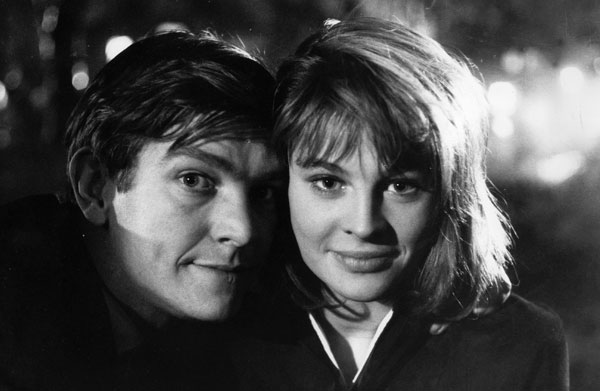
 Based on the novel by Keith Waterhouse (which he also adapted into a play with Willis Hall and which later became a musical), John Schlesinger’s Billy Liar is a prime example of the British New Wave of the 1950s and 1960s, which features work by such directors as Lindsay Anderson, Joseph Losey, Ken Russell, Nicolas Roeg, and Karel Reisz. Tom Courtenay stars as William Fisher, a ne’er-do-well ladies’ man who drudges away in a funeral home and dates (and lies to) multiple women, all the while daydreaming of being the president of the fictional country of Ambrosia. Billy lives in his own fantasy world where he can suddenly fire machine guns at people who bother him and be cheered by adoring crowds as he leads a marching band. Reminiscent of the 1947 American comedy The Secret Life of Walter Mitty, in which Danny Kaye dreams of other lives to lift him out of the doldrums, Billy Liar is also rooted in the reality of post-WWII England, represented by Billy’s father (Wilfred Pickles), who thinks his son is a no-good lazy bum. Shot in black-and-white, the film glows every time Julie Christie appears playing Liz, a modern woman who takes a rather fond liking to Billy. The film made Christie a star; Schlesinger next cast her in Darling, for which she won the Oscar for Best Actress. Billy Liar is screening March 23 as part of the Film Society of Lincoln Center’s “15 for 15: Celebrating Rialto Pictures” series honoring the fifteenth anniversary of the art-house distributor founded by Film Forum programmer extraordinaire Bruce Goldstein. “When I first encountered Billy Liar in the early 1970s, I’d never heard of it,” Goldstein wrote in a 2011 Criterion essay. “I’d somehow acquired a 16mm panned-and-scanned print, and was intrigued by both the title and cast. I certainly knew who Julie Christie was, and I vaguely remembered Tom Courtenay in The Loneliness of the Long Distance Runner, so I ran it. I then ran it a second time. And then again and again, until I fell in love with it.”