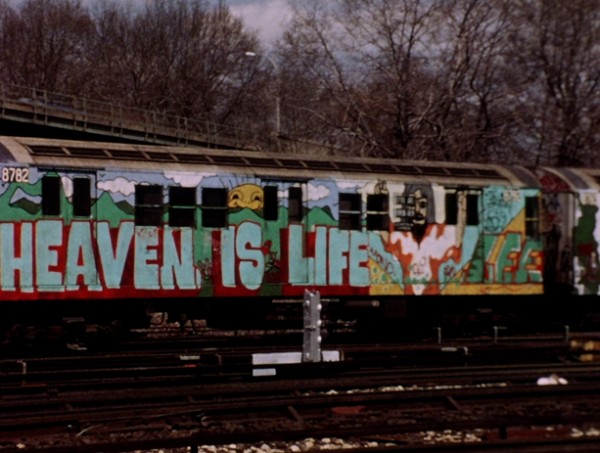
Cult subway graffiti film Stations of the Elevated is part of hip-hop series at Film Forum
STATIONS OF THE ELEVATED (Manfred Kirchheimer, 1981)
Film Forum
209 West Houston St.
Thursday, September 20, 8:50
Series runs through October 20
212-727-8110
filmforum.org
 In October 2014, thirty-three years after screening at the New York Film Festival, Manfred Kirchheimer’s Stations of the Elevated finally got its official U.S. theatrical release, in a gorgeous restoration that was shown at BAMcinématek and will be presented this week at Film Forum. In 1977, Manfred Kirchheimer, whose family escaped Nazi Germany in 1936, went to the Bronx and filmed graffiti-covered subway cars at the train depot and rushing across the elevated tracks, kids playing in a burned-out housing project, and giant billboards advertising hamburgers, cigarettes, alcohol, and suntan lotion. Shot on 16mm reversal stock, Stations of the Elevated is more than just a captivating document of a bygone era; it is a deeply poetic socioeconomic journey into class, race, art, and freedom of expression, told without a single word of narration or onscreen text. Instead, producer, director, editor, and photographer Kirchheimer (Colossus on the River, Bridge High with Walter Hess) shifts from the natural sound of the environment to a superb jazz score by Charles Mingus while cutting between shots of trains covered in tags and illustrations (and such phrases as “Heaven Is Life,” “Invasion of the Earth,” “Never Die,” and “Earth Is Hell”) by such seminal figures as Blade, Daze, Lee, Pusher, Shadow, and Slave and views of colorful billboards filmed peeking through the geometric architecture of the elevated railways and set against bright blue skies. Most often, the camera focuses on the painted eyes in the ads, looking right back at the viewer as they dominate the scene, evoking the optician’s ad in that famous novel of American class, The Great Gatsby. (The concentration on the eyes also predicts how Madison Ave. was watching the graffiti movement, eventually coopting the imagery into mainstream advertising.) Through this dichotomy of meaning and execution, Kirchheimer reveals similarities in artistic styles and how the elements influenced each other; a particularly telling moment occurs when a man is shown hand painting a billboard who could have just as well been spray painting a subway car.
Kirchheimer remains outside during the course of the forty-five-minute documentary, never venturing into the tunnels, capturing the elevated train lines as if they’re just another part of New York City architecture, which of course they are. And it’s especially powerful because it was made at a time when the city was in the midst of a severe economic crisis and rampant crime epidemic, as Mayor Koch sought to eliminate the scourge of graffiti, while Kirchheimer celebrates its beauty (and New York-ness) in this glorious little film. Stations of the Elevated, which elevates the station of subway graffiti artistry with an entrancing calmness, is screening September 20 at 8:50 in the Film Forum series “Hip Hop on Film 1979-1986” and will be followed by a Q&A with Kirchheimer and a live graffiti presentation by David “CHINO” Villorente. The series continues through October 20 with such other hip hop gems as Beat Street, featuring DJ Jazzy Jay, Kool Herc, Grandmaster Melle Mel, and Rae Dawn Chong, and the genre classic Wild Style, with director Charlie Ahearn participating in a Q&A after the 8:15 show on September 27.
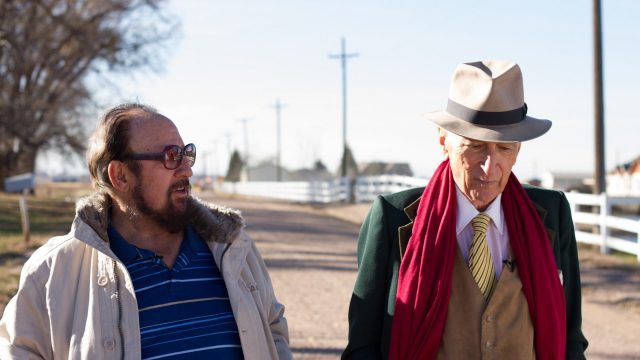
 “I’m a natural person to write about a voyeur because I’m a voyeur myself,” award-winning, bestselling journalist Gay Talese says in Myles Kane and Josh Koury’s Voyeur, which is getting a bonus screening at the New York Film Festival on October 15 prior to debuting on Netflix on December 1. The documentary makes a voyeur of the viewer as well as it follows the thirty-five-year journalistic relationship and offbeat friendship between Talese, longtime New York Times and Esquire writer and author of such books as Honor Thy Father and Thy Neighbor’s Wife, and Gerald Foos, the owner of a Colorado motel who claims he spent decades spying on people from a special crawl space he built above the rooms. In January 1980, Foos, owner of the Manor House Motel, wrote a letter to Talese, offering him a story about what he was doing; Foos considered himself a researcher, not a pervert or a peeping Tom. Using archival footage, news reports, and new interviews, Kane and Koury follow Foos, his second wife, Anita, and Talese as the journalist prepares to write a major piece for the New Yorker in advance of the release of his latest book, The Voyeur’s Motel. New Yorker articles editor Susan Morrison considers Foos a disturbed sociopath in need of attention, while Grove/Atlantic senior editor Jamison Stoltz and publisher Morgan Entrekin have their doubts about the veracity of Foos’s eerily specific tale. So as questions arise about key facts and Talese’s professional ethics, Foos wonders if he should have remained silent — “I’m used to private spaces, places that nobody could see me and I could see them,” he explains — and an angry Talese faces a potentially tarnished legacy.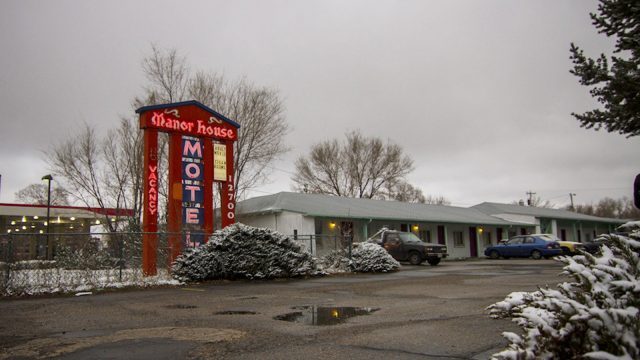


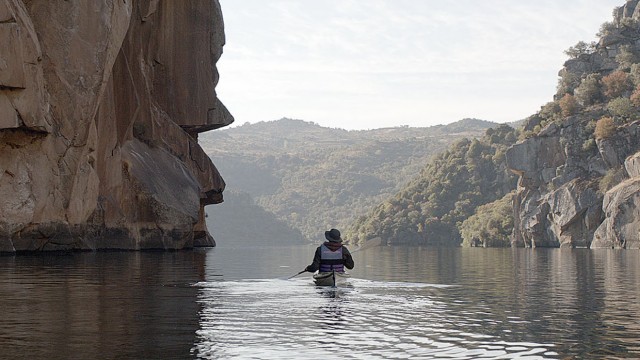
 João Pedro Rodrigues reimagines the story of Fernando Martins de Bulhões, also known as Anthony of Lisbon and Saint Anthony of Padua, in the utterly bizarre and infectiously weird adventure drama The Ornithologist. Rodrigues, who also dealt with the thirteenth-century priest’s legacy in the 2013 zombie short Morning of Saint Anthony’s Day, puts ornithologist Fernando (Paul Hamy) through a series of tests after his canoe capsizes while he’s on a bird-watching expedition. He is found near death on the shore by a pair of Chinese pilgrims (Han Wen and Chan Suan), walking Camino de Santiago, who decide to do something very odd with him. His Stations of the Cross journey continues as he meets a deaf and mute goatherd (Xelo Cagiao), a group of colorful, masked caretos, and a trio of topless women on horseback (Juliane Elting, Isabelle Puntel, and Flora Bulcao), who in different ways challenge his sexuality and spirituality. Rodrigues (The Last Time I Saw Macao, To Die Like a Man) infuses the wild tale with references to Christianity, paganism, ritual, superstition, and Greek mythology as Fernando’s physical and psychological strength is tested in oddball events that get stranger and stranger until the director, who was already dubbing in Hamy’s Portuguese lines with his own, starts switching places with the actor.