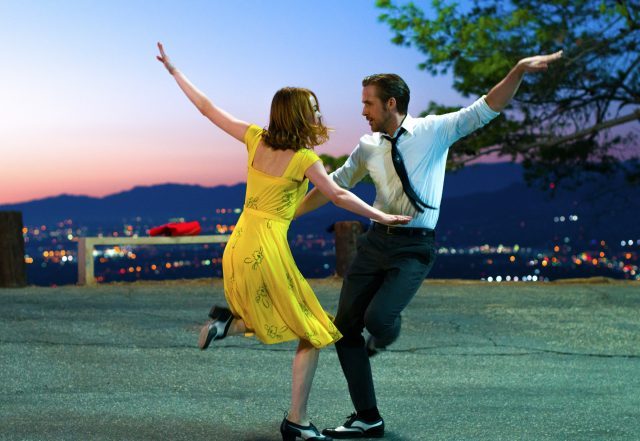
Emma Stone and Ryan Gosling sing and dance up a CinemaScope storm in Damien Chazelle’s LA LA LAND
LA LA LAND (Damien Chazelle, 2016)
MoMA Film, Museum of Modern Art
11 West 53rd St. between Fifth & Sixth Aves.
Wednesday, January 4, $15, 7:30
Series runs through January 12
Tickets: $12, may be applied to museum admission within thirty days
212-708-9400
www.lalaland.movie
www.moma.org
 Call it Blah Blah Bland. La La Land, writer-director Damien Chazelle’s follow-up to his Oscar-nominated Whiplash, is an overwrought tribute to the old-fashioned romance musical, a genre homage that lacks the energy and chemistry of the films that it directly evokes, including the Hollywood classics Singin’ in the Rain, Funny Face, and An American in Paris, Jacques Demy’s French favorites The Umbrellas of Cherbourg and The Young Girls of Rochefort, Paul Thomas Anderson’s Boogie Nights, and Chazelle’s own 2009 black-and-white indie musical, Guy and Madeline on a Park Bench. (Look for a billboard of Chazelle’s debut that passes by quickly.) In La La Land, Emma Stone stars as Mia Dolan, a studio barista with dreams of becoming a successful actress; Ryan Gosling is Sebastian Wilder, a down-on-his-luck jazz pianist with dreams of opening his own club. The film opens with a fabulous number on a Hollywood freeway, as hundreds of men and women in a traffic jam get out of their cars and sing and dance, announcing that it’s “Another Day of Sun.” It’s also the first of several awkward, accidental meet-cute scenes between Mia and Sebastian before they get involved with each other. Chazelle, a drummer, knows the source material well, as do composer (and Chazelle’s Harvard classmate) Justin Hurwitz, lyricists Benj Pasek and Justin Paul (Dear Evan Hansen, A Christmas Story, the Musical), and So You Think You Can Dance choreographer Mandy Moore. Mary Zophres’s costumes are thoroughly delightful, as is David Wasco’s production design, bathing the film in bright, eye-catching primary colors. Cinematographer Linus Sandgren (American Hustle, The Hundred-Foot Journey) shoots the film in throwback CinemaScope, with the musical numbers done in a single take.
La La Land also features Rosemarie DeWitt as Sebastian’s kind but pushy sister, J. K. Simmons as a restaurant manager who hires Sebastian to play Christmas songs on piano, Finn Wittrock as Mia’s handsome but boring boyfriend, and John Legend as a jazzman who offers Sebastian the chance to play in a real band. Chazelle overmanipulates some alternate-universe twists, a fantasy scene in the Griffith Observatory from Rebel without a Cause makes no sense, and Stone and Gosling are not exactly Ginger Rogers and Fred Astaire. Of the two — who’ve previously costarred in Crazy, Stupid Love and Gangster Squad — Stone avails herself significantly better; it’s impossible to stop gazing at her big, puppy-dog eyes, which continually dominate the screen. La La Land has its share of lovely, clever moments, but it never quite comes together, like a jazz song filled with great improvised solos but just doesn’t know how to end. La La Land is screening January 4 at 7:30 in MoMA’s annual series “The Contenders,” which consists of films the institution believes will stand the test of time; the festival continues through January 12 with such other 2016 works as J. Clay Tweel’s Gleason, Amir Naderi’s Monte, and James Schamus’s Indignation, followed by a discussion with Schamus. (La La Land is also currently playing at AMC Empire 25, Regal Union Square Stadium 14, Cinépolis Chelsea, and AMC Loews Lincoln Square 13.)
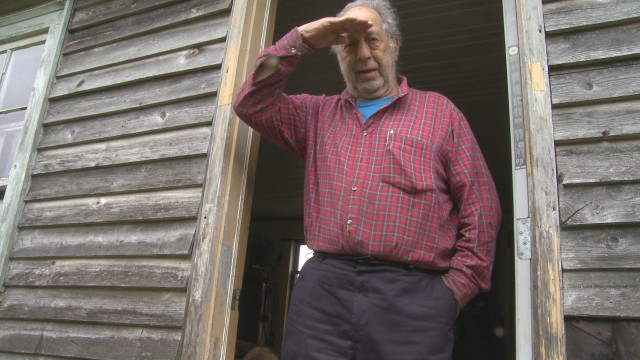
 “I hate these fucking interviews,” innovative, influential, ornery, and iconoclastic photographer and filmmaker Robert Frank says while preparing to be interviewed in 1984; the scene is shown in Laura Israel’s new documentary, Don’t Blink — Robert Frank. “I’d like to walk out of the fucking frame,” he adds, then does just that. But in Don’t Blink, Frank finds himself walking once more into the frame as Israel, his longtime film editor, attempts to get him to open up about his life and career. Born in Zurich in 1924, Frank immigrated to the United States in 1947, became a fashion photographer, and had his artistic breakthrough in 1958 with the publication of the controversial photo book The Americans, which captured people unawares from all over the country, using no captions, just image, to get his point across. (In 2009,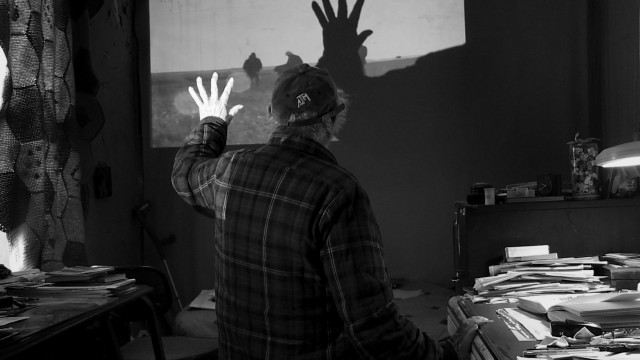
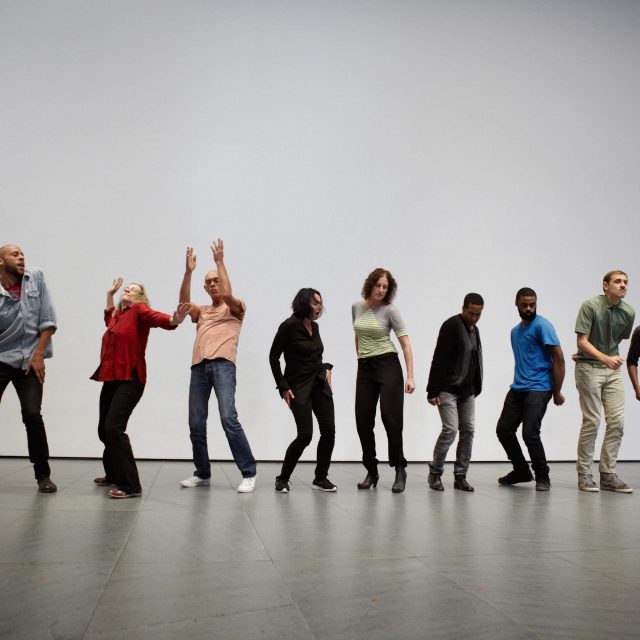
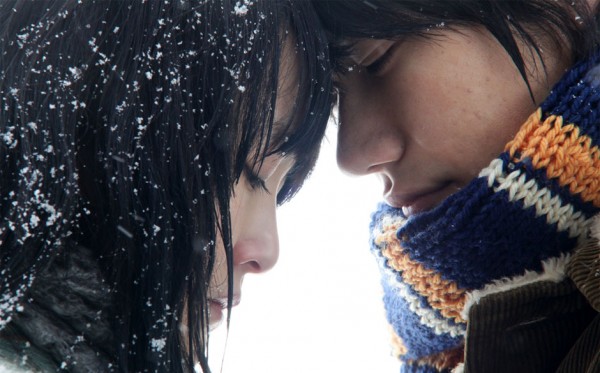
 First it took a long time for French-Vietnamese writer-director Tran Anh Hung (The Scent of Green Papaya) to convince Japanese novelist Haruki Murakami to let him adapt his 1987 novel, Norwegian Wood — Tran had been interested in turning the book into a movie ever since he first read it in 1994, but Murakami notoriously does not allow his novels to become films — and then, once the film was made and played at prestigious festivals in Venice, Toronto, and Dubai, still took more than a year to find a U.S. distributor. Norwegian Wood is a moving, faithful adaptation of Murakami’s elegiac novel about unrequited love, romantic communication, and death. After his best friend, Kizuki (Kengo Kora), commits suicide, Watanabe (Death Note’s Ken’ichi Matsuyama) and Kizuki’s girlfriend, Naoko (Babel’s Rinko Kikuchi), who previously were part of an inseparable trio with Kizuki, go their separate ways. After a short time, they meet up accidentally in Tokyo, where Watanabe is attending university and Naoko is trying to get over her loss. But an event on her twentieth birthday causes Naoko to take off again, this time seeking professional help at a sanitarium. Watanabe can’t stop thinking about Naoko, jeopardizing a possible relationship with the aggressive, sexually open Midori (Kiko Mizuhara), who already has a boyfriend but is extremely interested in Watanabe. Meanwhile, Watanabe disapproves of how his friend Nagasawa (Tetsuji Tamayama) continually cheats on his girlfriend, Hatsumi (Eriko Hatsune), who is devoted to him. With the student riots of the late 1960s swirling around them, Watanabe, Naoko, Midori, Nagasawa, Hatsumi, and Naoko’s roommate, Reiko (Reika Kirishima), take long, hard looks at what they want out of life and love, and they don’t always like what they find. Beautifully shot by Mark Lee Ping-Bing and featuring a subtle score by Radiohead’s Jonny Greenwood (There Will Be Blood), Norwegian Wood is a slow-paced, psychologically intense drama. Watanabe and Naoko are often shown walking amid vast natural landscapes of green forests and snow-covered mountains, but they are tied up tight within themselves, trapped in their own memories. The carefully composed sex scenes give depth and intelligence to the main characters without overplaying their emotions. The story itself might be relatively slight — it lacks the range of Murakami’s later books — but Tran has done a fine job bringing it to the screen. Norwegian Wood is screening at MoMA on June 17 and 29 at 7:30 in the series “Luminosity: The Art of Cinematographer Mark Lee Ping-Bing,” which runs June 16-30 and includes such other Lee-lensed treasures as Yang Chao’s Crosscurrent, Wang Tung’s Strawman, Tran’s The Vertical Ray of the Sun, and Hou Hsiao-hsien’s Flowers of Shanghai, Dust in the Wind, The Assassin, and The Puppetmaster. In addition, Lee will sit down with Department of Film associate curator La Frances Hui for