
Film Forum
209 West Houston St.
Friday, August 19, through Tuesday, September 13, $14
212-727-8110
filmforum.org
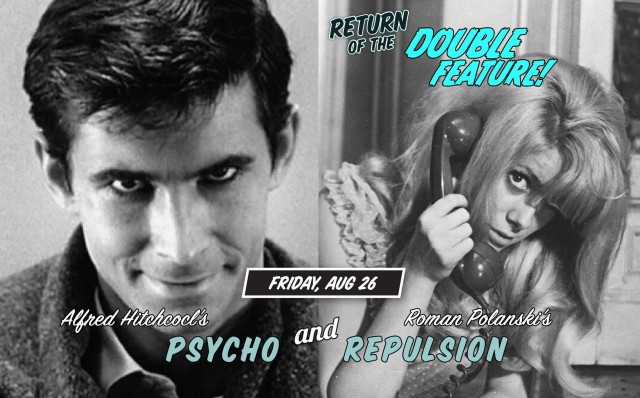
Once upon a time, in a land far, far away, you could pay one single admission and see two professional baseball games, called a double header. “Let’s play two!” Mr. Cub, Ernie Banks, famously said in July 1969. And you could stay and watch both games for one regular price, without having to clear out after the first contest. Also in that magical land of long ago, you see two movies for the price of one, known as a double feature. As Richard O’Brien sings in The Rocky Horror Picture Show, “I wanna go — oh oh oh oh / to the late night, double feature, picture show.” Film Forum, which often hosts double features, is now honoring the two-pack with “Return of the Double Feature,” twenty-six pairings of fifty-two classic movies, brought together by director, star, theme, writer, or other reason. Master programmer Bruce Goldstein gets things going with the Alfred Hitchcock / Jimmy Stewart duo of Vertigo and Rear Window, followed by Jean-Luc Godard’s Contempt and Breathless, Stanley Kubrick’s Paths of Glory and The Killing, and F. W. Murnau’s Sunrise and Nosferatu. After that, the double bills become more conceptual, such as Akira Kurosawa’s Yojimbo with Sergio Corbucci’s Django, Nicholas Ray’s In a Lonely Place with Fritz Lang’s The Big Heat, and, perhaps best of all, Hitchcock’s Psycho with Roman Polanski’s Repulsion.
You can catch Ruth Gordon in Harold and Maude and Where’s Poppa?, Orson Welles in Carol Reed’s The Third Man and his own The Lady from Shanghai, and Gene Tierney in Otto Preminger’s Laura and John Stahl’s Leave Her to Heaven. There are double features by Robert Altman, Charlie Chaplin, Terrence Malick, Alain Resnais, and Luis Buñuel; based on novels by James M. Cain and Raymond Chandler; and starring Marlon Brando, Humphrey Bogart, Toshiro Mifune, and Cary Grant. Among the other dynamic duos are Vittorio De Sica’s The Bicycle Thief with Tim Burton’s Pee Wee’s Big Adventure, Burton’s Ed Wood with Wood’s Plan 9 from Outer Space, and Hitchcock’s Dial M for Murder with André de Toth’s House of Wax, both shown in 3-D. Instead of bingeing on Netflix, you might as well just settle in for the long haul at Film Forum and take in as much of this superb master class in cinema as you can, presented two flicks at a time, just like in the good old days.
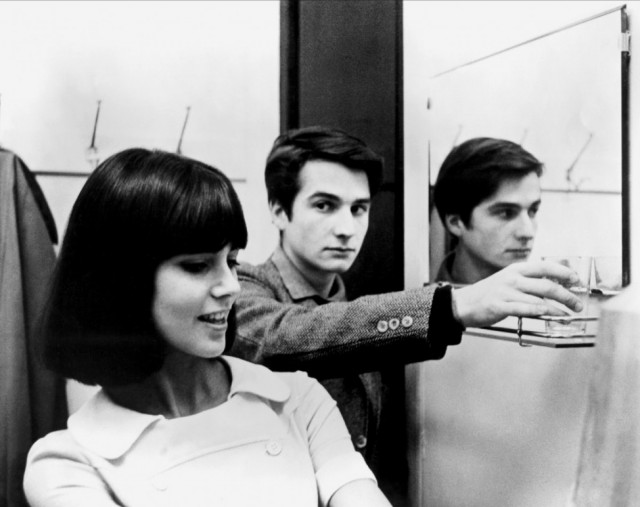
 In a 1966 interview with Pierre Daix about Masculin feminin, director Jean-Luc Godard said, “When I made this film, I didn’t have the least idea of what I wanted.” Initially to be based on the Guy de Maupassant short stories “The Signal” and “Paul’s Mistress,” the film ended up being a revolutionary examination of the emerging youth culture in France, which Godard identifies as “the children of Marx and Coca-Cola.” Godard threw away the script and worked on the fly to make the film, which stars Jean-Pierre Léaud as Paul, a peculiar young man who quickly becomes obsessed with budding pop star Madeleine, played by real-life Yé-yé singer Chantal Goya. (Godard discovered her on a television variety show.) Paul chases Madeleine, getting a job at the same company, going to the movies and nightclubs with her and her friends, and meeting her in cafés, where he wants to talk about the troubles of contemporary society and she just wants to have a good time. “Man’s conscience doesn’t determine his existence. His social being determines his conscience,” Paul proclaims. He continually argues that there is nothing going on even as strange events occur around him to which he is completely oblivious, including a lover’s spat in which a woman guns down a man in broad daylight. (Sounds of rapid-fire bullets can be heard over the intertitles for each of the film’s fifteen faits précis, evoking a sense of impending doom.) Paul has bizarre conversations with his best friend, Robert (Michel Debord), a radical who asks him to help put up anarchist posters. Posing as a journalist, Paul brutally interviews Miss 19 (Elsa Leroy), a young model with a very different view of society and politics. Godard has also included a playful battle of the sexes in the center of it all: Paul wants Madeleine, much to the consternation of Madeleine’s roommate, Elisabeth (Marlène Jobert), who also has designs on her; meanwhile, Robert goes out with another of Madeleine’s friends, the more grounded Catherine (Catherine-Isabelle Duport), who is interested in Paul. It all makes for great fun, taking place in a surreal black-and-white world dominated by rampant consumerism.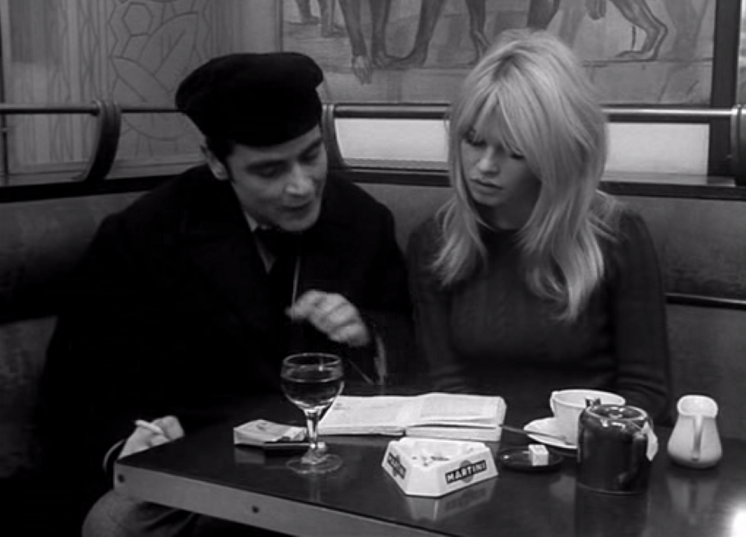
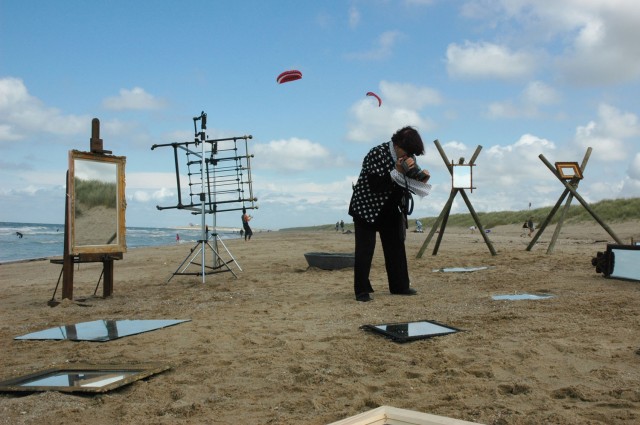
 “The whole idea of fragmentation appeals to me,” filmmaker, photographer, and installation artist Agnès Varda says in the middle of her unusual cinematic autobiography, the César-winning documentary The Beaches of Agnès. “It corresponds so naturally to questions of memory. Is it possible to reconstitute this personality, this person Jean Vilar, who was so exceptional?” She might have been referring to her friend, the French actor and theater director, but the exceptional Belgian-French Varda might as well have been referring to herself. Later she explains, “My memories swarm around me like confused flies. I hesitate to remember all that. I don’t want to.” Fortunately for viewers, Varda (Jacquot de Nantes, The Gleaners and I) does delve into her past in the film, sharing choice tidbits from throughout her life and career, in creative and offbeat ways that are charmingly self-effacing. Using cleverly arranged film clips, re-creations, photographs, and an array of frames and mirrors, the eighty-year-old Varda discusses such colleagues as Jean-Luc Godard, Chris Marker, and Alain Resnais; shares personal details of her long relationship with Jacques Demy; visits her childhood home; rebuilds an old film set; speaks with her daughter, Rosalie Varda, and son, Mathieu Demy; talks about several of her classic films, including La Pointe Courte,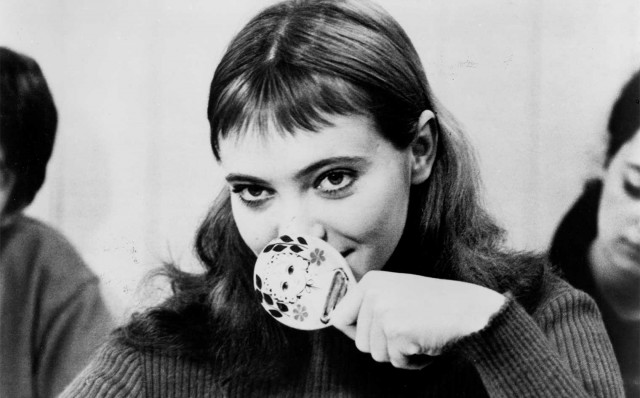
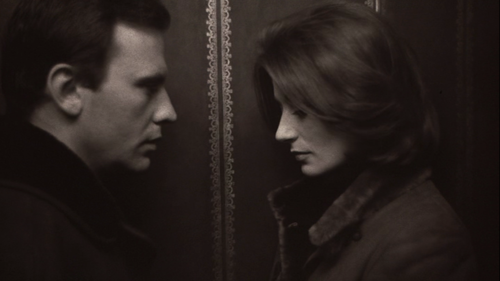
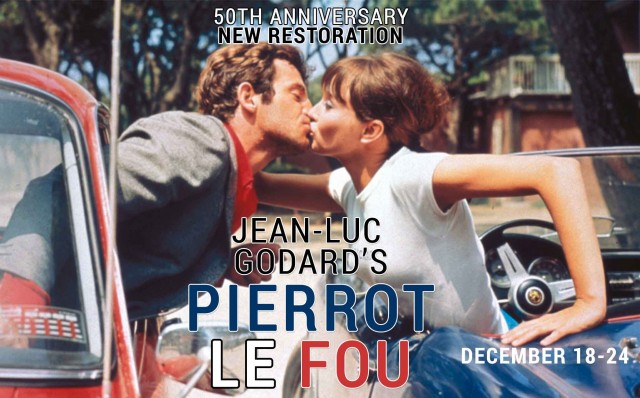
 Winner of both the Oscar for Best Foreign Language Film and the Palme d’Or at Cannes, Claude Lelouch’s A Man and a Woman is one of the most popular, and most unusual, romantic love stories ever put on film. Oscar-nominated Anouk Aimée stars as Anne Gauthier and Jean-Louis Trintignant as Jean-Louis Duroc, two people who each has a child in a boarding school in Deauville. Anne, a former actress, and Jean-Louis, a successful racecar driver, seem to hit it off immediately, but they both have pasts that haunt them and threaten any kind of relationship. Shot in three weeks with a handheld camera by Lelouch, who earned nods for Best Director and Best Screenplay (with Pierre Uytterhoeven), A Man and a Woman is a tour-de-force of filmmaking, going from the modern day to the past via a series of flashbacks that at first alternate between color and black-and-white, then shift hues in curious, indeterminate ways. Much of the film takes place in cars, either as Jean-Louis races around a track or the protagonists sit in his red Mustang convertible and talk about their lives, their hopes, their fears. The heat they generate is palpable, making their reluctance to just fall madly, deeply in love that much more heart-wrenching, all set to a memorable soundtrack by Francis Lai. Lelouch, Trintignant, and Aimée revisited the story in 1986 with A Man and a Woman: 20 Years Later, without the same impact and success. A recently restored print of the original will be shown on March 2 at 7:30 as part of the BAMcinématek series “BAMcinématek: Gallic 60s,” in honor of the film’s fiftieth anniversary. The two-day treat continues March 3 with Jean-Luc Godard’s Pierrot le Fou.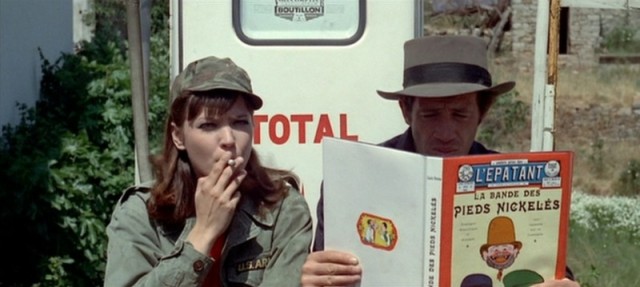
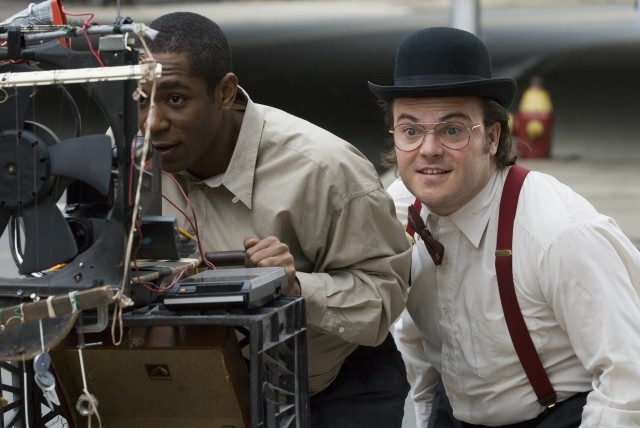
 When old man Fletcher (Danny Glover) takes off for a week, leaving Mike (Mos Def) in charge of his soon-to-be-demolished video store called Be Kind Rewind (they don’t have any DVDs or recent movies), his most important rule is to “Keep Jerry Out.” Jerry (Jack Black) is a crazy conspiracy theorist who covers himself in metal to ward off alien rays. After a botched attack on the local power plant, Jerry becomes a walking magnet (in a laugh-out-loud hysterical scene) and unknowingly erases all the videos in the store. Taking a page from the Little Rascals plots when Spanky and Alfalfa would suddenly put on a show for some local cause, Mike and Jerry recruit Alma (Melonie Diaz) as they proceed on their very strange attempts at Sweding — making their own versions of such films as Ghostbusters, Rush Hour 2, and Robocop and renting them out as if they were the real thing. Following the brilliant Eternal Sunshine of the Spotless Mind and the extremely strange The Science of Sleep, writer-director Michel Gondry has fashioned a really stupid movie that has an overabundance of heart and charm. Glover and Mos Def are soft and gentle in this Capra-esque comedy, offsetting Black’s hyperactivity. Every time you’re ready to write the film off as being just too silly and ridiculous, something comes along to make you double over in laughter. Be Kind Rewind kicks off the Museum of the Moving Image series “Walkers: Hollywood Afterlives in Art and Artifact,” being held in conjunction with the