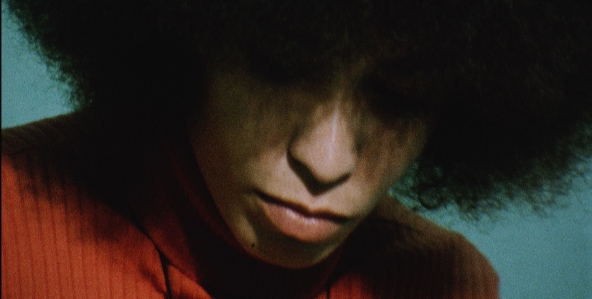
Angela Davis speaks out about the Black Power movement in compelling documentary
THE BLACK POWER MIXTAPE 1967-1975 (Göran Hugo Olsson, 2011)
IFC Center, 323 Sixth Ave. at Third St., 212-924-7771
Lincoln Plaza Cinemas, 1886 Broadway at 63rd St., 212-757-2280
Opens Friday, September 9
www.blackpowermixtape.com
 From 1967 to 1975, a group of more than two dozen Swedish journalists came to America to document the civil rights movement. More than thirty years later, director and cinematographer Göran Hugo Olsson discovered hours and hours of unused 16mm footage — the material was turned into a program shown only once in Sweden and seen nowhere else — and developed it into The Black Power Mixtape 1967-1975, a remarkable visual and aural collage that focuses on the Black Panthers and the Black Power movement, a critical part of American history that has been swept under the rug. Olsson and Hanna Lejonqvist have seamlessly edited together startlingly intimate footage of such seminal figures as Eldridge Cleaver, Bobby Seale, Huey P. Newton, Dr. Martin Luther King, Jr., and Stokely Carmichael, including a wonderfully personal scene in which Carmichael interviews his mother on her couch. But the star of the film is the controversial political activist Angela Davis, who allowed the journalists remarkable access, particularly in a jailhouse interview shot in color. (Most of the footage is in black and white.) Davis also adds contemporary audio commentary, sharing poignant insight about that tumultuous period, along with Abiodun Oyewole of the Last Poets, singer Erykah Badu, professor, poet, and playwright Sonia Sanchez, Roots drummer Ahmir Questlove Thompson (who also composed the film’s score with Om’Mas Keith), and rapper Talib Kweli, who discusses specific scenes in the film with a thoughtful grace and intelligence. The Black Power Mixtape 1967-1975 is an extraordinary look back at a crucial moment in time that has long been misunderstood, if not completely forgotten. The filmmakers will be at the IFC Center for the 8:15 and 10:20 shows on Friday and Saturday night to talk about the work. In conjunction with the film’s opening, Third Streaming at 10 Greene St. is hosting an art exhibition through October 15 featuring film stills and additional footage from The Black Power Mixtape 1967-1975. And for more on the Black Power movement, the Maysles Institute in Harlem will be holding the third annual Black Panther Party Film Festival from September 30 through October 8; this year’s theme is “Remembering Our Political Prisoners,” celebrating the forty-fifth anniversary of the founding of the party.
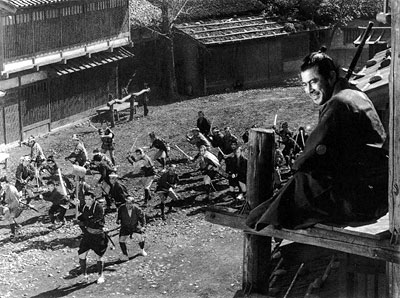
 Toshirō Mifune is a lone samurai on the road following the end of the Tokugawa dynasty in Akira Kurosawa’s unforgettable masterpiece. Mifune comes to a town with two warring factions and plays each one off the other as a hired hand. Neo’s battles with myriad Agent Smiths are nothing compared to Yojimbo’s magnificent swordfights against growing bands of warriors that include one man with a gun. Try watching this film and not think of several Clint Eastwood Westerns (particularly Sergio Leone’s A Fistful of Dollars, since this is a direct remake of that 1964 Italian flick) as well as High Noon. Yojimbo will be screening at 11:00 am on September 2-5 as part of the IFC Center’s Weekend Classics — Kurosawa series, which continues next week with the Kurosawa-Mifune follow-up Sanjuro.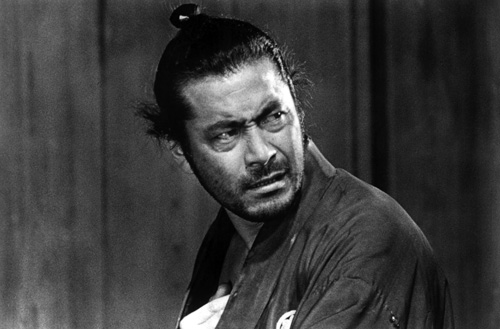
 In this Yojimbo-like tale, Toshirō Mifune shows up in a small town looking for food and fast money and takes up with a rag-tag group of wimps who don’t trust him when he says he will help them against the powerful ruling gang. Funnier than most Kurosawa samurai epics, the film is unfortunately brought down a notch by a bizarre soundtrack that ranges from melodramatic claptrap to a jazzy big-city score. Sanjuro will be screening at 11:00 am September 9-11 as part of the IFC Center’s Weekend Classics — Kurosawa series, with half of the proceeds from all festival screenings benefiting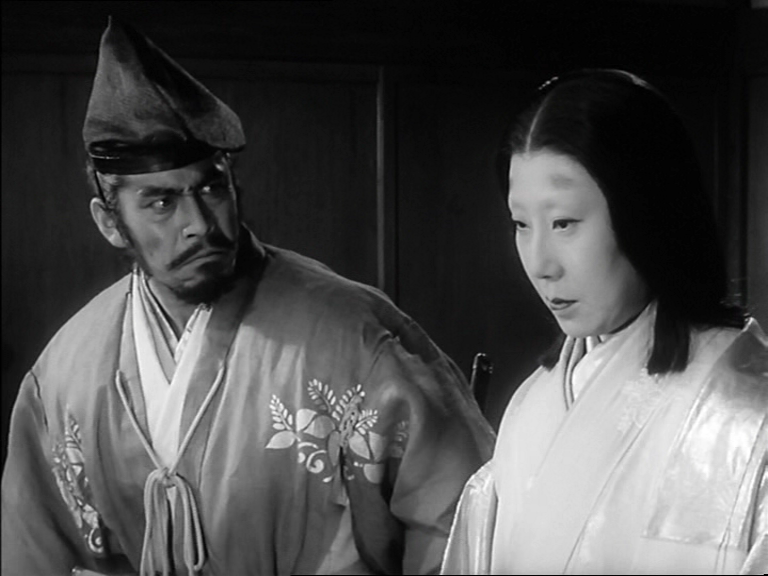

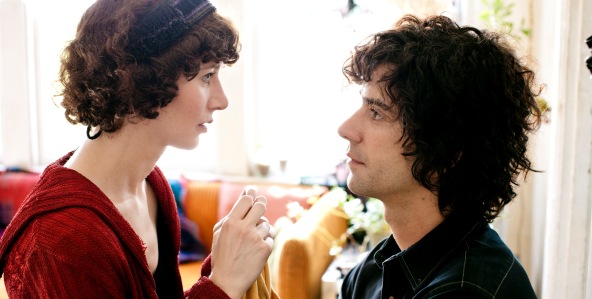
 Multimedia performance artist and indie darling Miranda July scored a major breakthrough with her 2005 cinematic debut, the utterly charming romantic comedy Me and You and Everyone We Know. While her follow-up, The Future, lacks many of the endearing qualities that made her first film such a success, it is still a quirky, beguiling drama that offers a breath of fresh air from the usual summer movie doldrums — er, blockbusters. July stars as Sophie, a children’s dance teacher living with Jason (Hamish Linklater), a work-at-home IT dude. The slackers spend their time sitting on the couch, both on their laptops, having offbeat conversations and pretending they can stop time. But when they are told that the sick cat they want to adopt won’t be well enough to leave the veterinary hospital for another month, they decide that this will be their last thirty days of freedom, thinking that the arrival of the feline will confer upon them the responsibilities of adulthood they have been so good at avoiding up to now. Given this last bastion of hope, they quit their jobs to pursue their dreams: Jason starts going door-to-door selling trees, while Sophie sets out to perform a dance a day and post them on YouTube. No, this oddball, somewhat freakish couple doesn’t exactly dream big. And, of course, their idea of freedom doesn’t turn out to be exactly what they had hoped. The Future veers off in way too many directions, some good, some bad, but it is held together by July’s bright eyes and lanky, comedic body even as she explores the horrors of mainstream suburban living. As with much of her performance art, she challenges the audience to stay with her as she defies standard narrative and turns to the surreal, including a talking moon. The film is nearly stolen by Joe Putterlik, an elderly man whom Jason meets through a Pennysaver ad for a three-dollar used hair dryer; Putterlik, who also is the voice of the moon, was actually discovered by July through a Pennysaver ad, and much of his dialogue is improvised and set in his own apartment as he talks about his real life. Sadly, he died immediately after shooting was concluded. The film is narrated by the ill cat, Paw Paw (voiced by July in a creepy monotone), who dreams of her own freedom, wanting desperately to get out of her cage and be taken in by people who will love her. And after all, isn’t that what we all want? As an added treat, the California-based July, who installed the fun installation “Eleven Heavy Things” in Union Square Park last year and has also written the terrific short-story collection No one belongs here more than you, will be at the IFC Center for the 6:10 and 8:20 screenings on July 29 & 30.