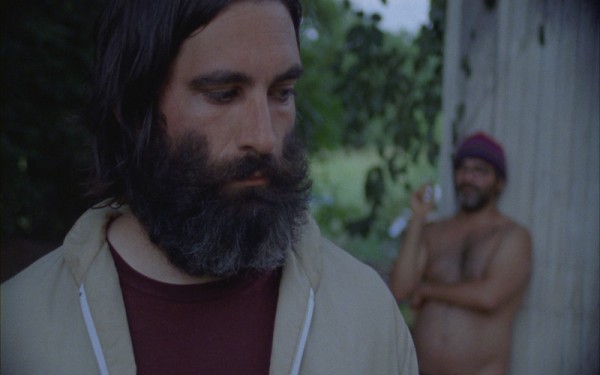
Michael Tully wrote, directed, and stars in the creepy southern Gothic dysfunctional family drama SEPTIEN
SEPTIEN (Michael Tully, 2011)
IFC Center
323 Sixth Ave. at West Third St.
July 6-14
212-924-7771
www.ifccenter.com
www.septienfilm.com
We first met Michael Tully eleven years ago, when he was an aspiring filmmaker working with us at an informational movie database company. A good-natured guy who loves talking about sports and films, Tully has gone on to direct the gritty Cocaine Angel (2006), the documentary Silver Jew (2007), about David Berman and his band, the Silver Jews, and the Web series Superego (2010). In his latest feature, the southern Gothic Septien, Tully is a triple threat, serving as writer and director as well as star. Tully plays Cornelius Rawlings, a prodigal son who walked away from his family eighteen years earlier and suddenly returns home, to the delight and concern of his two brothers, Ezra (executive producer Robert Longstreet), who has become the small clan’s rather odd and obsessive matriarch, and Amos (Onur Tukel), a hairy, shirtless artist whose weird drawings just might be predicting the future. Cornelius, in a hoodie and sporting out-of-control facial hair, is hiding a dark secret as he wanders around behaving oddly, challenging strangers to one-on-one sporting contests and pretending he’s floating dead in a lake. Darkly atmospheric and extremely funny, Septien is not afraid to take chances, much like Tully himself, who discussed the film, basketball, and more with us as he prepared for its theatrical release July 6 at the IFC Center; he will participate in a Q&A following the 8:00 screening on Wednesday night.
twi-ny: You’ve been writing about film for many years, including when we worked together back in 2000. What’s it like on the other side of things, being the interviewee instead of the interviewer, the filmmaker instead of the critic?
Michael Tully: Those were the good ol’ days, weren’t they? Actually, no they weren’t. Seriously, Mark, you were a genuinely cool boss and so many fun people worked at that company that life wasn’t as bad as it could have been. But looking back on those years now, I am down-on-my-knees happy to have escaped my confused, frustrated twenties with nothing more than too many hangovers and too much thumb-twiddling. Back then, I didn’t think I’d ever actually have the courage to make a film. But by doing this interview, I guess that means that the wheels have finally been set in motion!
As for the question of existing on two sides of the camera, it really all comes down to the fact that I love movies. I don’t have an extreme, clinically diagnosable attention deficit disorder, yet I find that I tend to get restless in a general sense, so this floating from filmmaker to film writer is simply a way for me to stay connected to things and, frankly, not be bored. Getting interviewed is fun, and I would be a liar and an idiot if I didn’t say that it’s more personally rewarding to attend a festival wearing a filmmaker badge as opposed to a press badge. That said, this year at Sundance I walked around Park City wearing a double-sided lanyard (filmmaker and press), and I made it a point to spend as much time seeing and talking about other movies as I could. I find that knowing what it’s like to be both an interviewee and an interviewer helps to keep me humble and grounded. The world needs more somewhat well-adjusted, less wholly self-absorbed filmmakers in it.
twi-ny: Silver Jew premiered at SXSW, Cocaine Angel at Rotterdam, and now Septien at Sundance. What were those film festival experiences like?
MT: I learned early on that if you’re seeing the glass as half empty at any stage of the filmmaking process, you’re looking at the wrong half of the glass. This certainly applies to the film festival experience as well. Merely getting accepted into a film festival—not just the more prestigious ones that you mentioned but any festival—is a real honor, so I look at everything as icing on the cake. If only three tickets are sold for a 150-seat theater, my view is, “Cool, three people showed up to watch our movie!” At that point, the film is finished, which is really all one can control, so to have the legitimacy of presenting it on a big screen to friends and strangers . . . that’s more of a victory than one could ever hope for. Of course, people don’t ever tell you the depths to which they did not like your movie, but you can tell when someone has an especially positive reaction. If I can leave each festival with one of those, I consider it a smash success. At the above fests, that happened to some extent at every screening I attended.

MIchael Tully, Onur Tukel, and Robert Longstreet play the severely dysfunctional Rawlings brothers in SEPTIEN
twi-ny: You’ve worked on a number of films with your good friend David Gordon Green. What have you learned from him on and off those sets?
MT: David is such a helpful and positive energy source. An outlandish brainstorm over Irish coffees at the 2010 Sundance Film Festival turned the seed of Septien into a pretty sturdy skeleton, so he actually had a direct creative impact on this particular project. But in a personal sense, David’s consistent need for laughter, as well as his boundless, childlike enthusiasm for movies, is always infectious and inspiring. In a professional sense, he likes to keep his sets as casual and fun as possible, and I am 100% in support of that as well. Working on those early films—George Washington, All The Real Girls—helped me to realize that there doesn’t have to be fighting and tension and high stress in order to make a good movie. David treats everyone the same way, and that tends to create an enthusiastic atmosphere that becomes especially helpful on a particularly rough day, or especially at the tail end of a shoot. I’ve never understood directors or producers who look down upon the PAs. (Mind you, I felt this way before I had the humiliating experience of being a looked-down-upon PA.) We’re all there for a reason. Of course, there’s a hierarchy, but if everybody didn’t do their job, these movies would never get made. Any set of David’s I’ve either worked on or visited, I’ve never felt that ugly tension.
twi-ny: In Septien, you are shown to be an exceptional athlete even though you look like the Unabomber. Were you a high school star, and if so, in what sports? Do you still play any sports today?
MT: I was never even somewhat close to being a “star” in sports. I always played backyard football but I was too much of a wimp to play for real. I was on the basketball traveling team as an adolescent and showed more potential to be something special when I was younger, but everyone grew beyond and ran past me by tenth grade or so. Sports were always recreational for me. I still play co-ed bball on Sunday mornings in the winter in Carroll Gardens, and I try my best to play as much tennis as possible in the spring, summer, and fall, though I’ve refused to buy a tennis permit this year since they raised the fee 100% from $100 to $200.
With regard to Septien, let me make two things clear: 1) The actors I hustled in the sports scenes in the movie would have absolutely destroyed me if we had played for real. That said: 2) I did actually make those trick shots!
Should the Knicks have let Donnie Walsh go?
MT: I have lost my affinity for the NBA and I don’t have an opinion either way, except to say that my usual natural aversion to the Knicks—I know, shame on me, but don’t worry, it’s nowhere near comparable to my disdain for the Lakers—has been softened by their reigning inadequacy on the court. They’ve fallen so low recently that I’ve actually begun to feel sorry for them. The real sports question that has been consuming me this summer is what will it feel like to not see Gary Williams on the bench next season as head coach of my beloved Maryland Terrapins, and will Mark Turgeon be able to forge a better bond with the coaches and kids in the Baltimore/DC area to land some more top-notch recruits. It’s gonna be so weird to watch the Terps next season. But the record had begun to skip, and I applaud Gary for getting out before his heart and brain exploded on the court during one of his especially raucous tirades.
(On July 5 at 8:00, the night before Septien opens at the IFC Center, Tully will be at 92YTribeca presenting a rare public screening of Buzz Kulik’s 1974 cult classic Bad Ronald, which stars Scott Jacoby as the deeply troubled title character. “Though they are very different,” Tully explains on the Y’s website, “one of our primary goals in making Septien was to capture that same ‘five-year-old-discovering-a-movie-that-he-probably-shouldn’t-be-watching’ spirit that I felt when I stumbled upon this strangely alluring gem.” And the artwork that Onur Tukel created for his Septien character will be on display at the Pennington Gallery at 355 West Broadway from 10:00 am to 8:00 pm through July 14.)
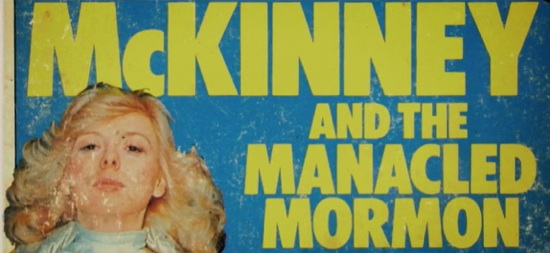
 Award-winning documentarian Errol Morris’s ninth feature-length film is a lighthearted look at self-delusion, tabloid journalism, and just how far someone might go for love. In 1977, a story broke in England about Joyce McKinney, a young woman accused of kidnapping a Mormon missionary, chaining him to a bed, and forcing him to have sex with her for three days. But the former beauty queen claimed that it was completely consensual, that she and Kirk Anderson were in love but that he was being brainwashed by his religious leaders. Morris speaks at length with the vivacious and engaging McKinney, who clearly loves talking about herself and her sex life. Morris also interviews two of the British journalists who originally covered the sordid story, the Mirror’s Kent Gavin and the Daily Express’s Peter Tory; while one bought McKinney’s tale hook, line, and sinker, the other discovered that there was a lot more to this crazy character. Much of the charm of Tabloid, which Morris calls a return to the “sick, sad, and funny” genre he explored in such earlier works as 1978’s Gates of Heaven and 1981’s Vernon, Florida, involves the many twists and turns the tale takes; just wait until cloning enters the picture. Along the way, Morris eschews the re-creations he often uses in his films in favor of unrelated clips that heighten the tone and mood but often feel like unnecessary overkill. In the end, it doesn’t really matter who’s telling the truth; as with so much tabloid journalism, it’s all in the salacious details. While the misnamed Tabloid — the film is really about McKinney herself much more than British journalism in general — doesn’t hit the serious notes of such Morris gems as The Thin Blue Line, The Fog of War, and Standard Operating Procedure, it’s still a hell of a lot of fun.
 In the stunning Dersu Uzala, director-cowriter Akira Kurosawa has fashioned one of cinema’s greatest characters, a worldly-wise, deceptively simple charming man who understands life, nature, responsibility, and helping others. Tuvan actor Maksim Munzuk gives a marvelously understated performance as the title character, a hunter who is suddenly taken out of his quiet life of solitude when Russian army troops come to Siberia. Based on the 1923 memoir of Russian explorer Vladimir Klavdiyevich Arsenyev, the dazzling achievement focuses on the friendship between Uzala and Arsenyev (Yuri Solomin) as they battle the elements from Siberia to the city of Khabarovsk. Winner of the 1975 Academy Award for Best Foreign Language Film, Dersu Uzala will be screening at 11:00 am on July 14, 15, and 16 as part of the IFC Center’s Weekend Classics — Kurosawa series, which continues with Ran (July 22-24), Dreams (July 29-31), and Rhapsody in August (August 5-7); ticket sales benefit
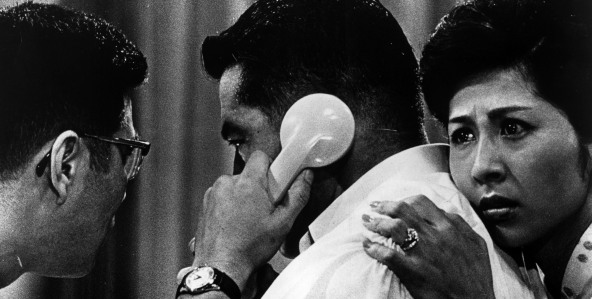
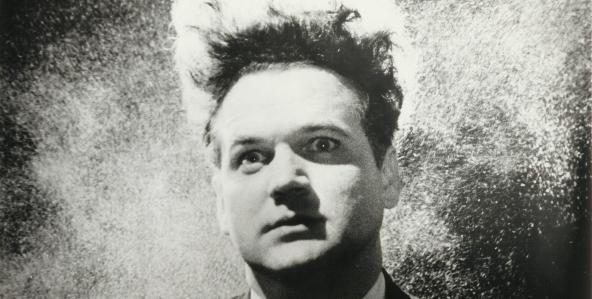
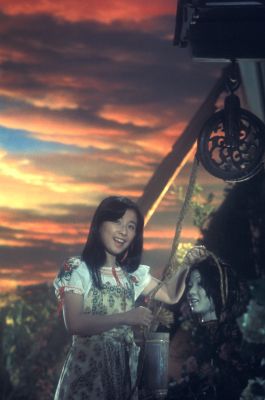
 One of the craziest movies ever made, Nobuhiko Obayashi’s 1977 cult classic, House (Hausu), is finally getting its first-ever U.S. theatrical release, in a new 35mm print at the IFC Center. Truly one of those things that has to be seen to be believed, House is a psychedelic black horror comedy musical about Gorgeous (Kimiko Ikegami) and six of her high school friends who choose to spend part of their summer vacation at Gorgeous’s aunt’s (Yoko Minamida) very strange house. Gorgeous, whose mother died when she was little and whose father (Saho Sasazawa) is about to get married to Ryoko (Haruko Wanibuchi), brings along her playful friends Melody (Eriko Ikegami), Fantasy (Kumiko Oba), Prof (Ai Matsubara), Sweet (Masayo Miyako), Kung Fu (Miki Jinbo), and Mac (Mieko Sato), who quickly start disappearing like ten little Indians. House is a ceaselessly entertaining head trip of a movie, a tongue-in-chic celebration of genre with spectacular set designs by Kazuo Satsuya, beautiful cinematography by Yoshitaka Sakamoto, and a fab score by Asei Kobayashi and Mickie Yoshino. The original story actually came from the mind of Obayashi’s eleven-year-old daughter, Chigumi, who clearly has one heck of an imagination. Oh, and we can’t forget about the evil cat, a demonic feline to end all demonic felines. The film was released last year prior to its appearance on DVD from Janus, the same company that puts out such classic fare as Federico Fellini’s Amarcord, Akira Kurosawa’s Rashomon, Jacques Tati’s M. Hulot’s Holiday, François Truffaut’s Shoot the Piano Player, Jean Renoir’s The Rules of the Game, and Jean-Luc Godard’s Vivre sa Vie, so House has joined some very prestigious company. And who are we to say it doesn’t deserve it?