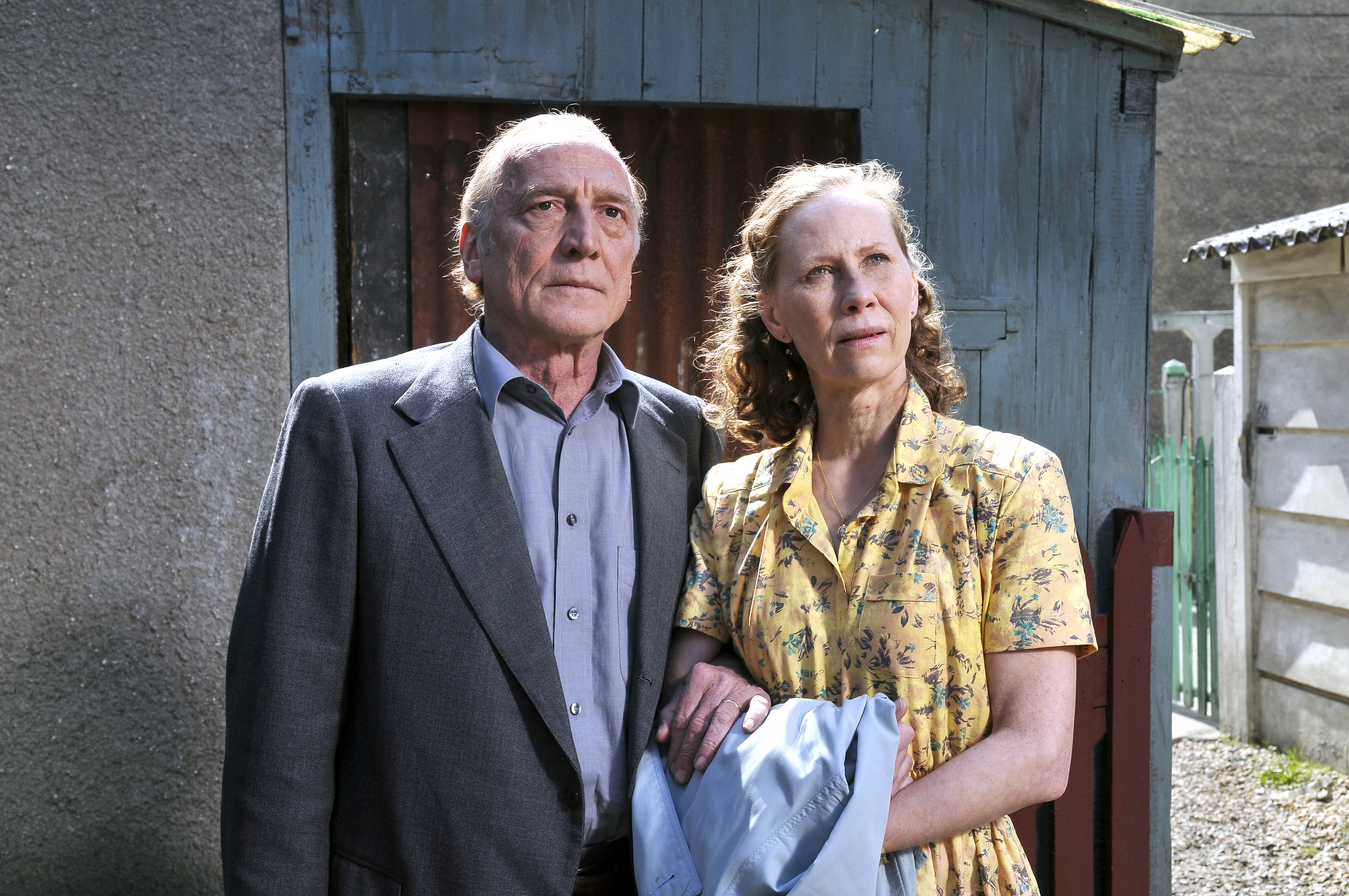
Marcel (André Wilms) and Arletty Marx (Kati Outinen) face life with a deadpan sense of humor in Aki Kaurismäki’s LE HAVRE
LE HAVRE (Aki Kaurismäki, 2011)
IFC Center, 323 Sixth Ave. at West Third St., 212-924-7771
Lincoln Plaza Cinema, 1886 Broadway between 62nd & 63rd Sts., 212-757-2280
Opens Friday, October 21
www.ifccenter.com
www.lincolnplazacinema.com
 For nearly thirty years, Finnish auteur Aki Kaurismäki (Leningrad Cowboys Go America, The Man Without a Past) has been making existential deadpan black comedies that are often as funny as they are dark and depressing. Has there ever been a film as bleak as 1990’s The Match Factory Girl, in which a young woman (Kati Outinen) suffers malady after malady, tragedy after tragedy, embarrassment after embarrassment, her expression never changing? In his latest film, the thoroughly engaging Le Havre, Kaurismäki moves the setting to a small port town in France, where shoeshine man Marcel Marx (André Wilms), a self-described former Bohemian, worries about his seriously ill wife (Outinen) while trying to help a young African boy (Blondin Miguel), who was smuggled into the country illegally on board a container ship, steer clear of the police, especially intrepid detective Monet (Jean-Pierre Darroussin), who never says no to a snifter of Calvados. Adding elements of French gangster and WWII Resistance films with Godardian undercurrents — he even casts Jean-Pierre Léaud in a small but pivotal role — Kaurismäki wryly examines how individuals as well as governments deal with illegal immigrants, something that has taken on more importance than ever amid the growing international economic crisis and fears of terrorism. Through it all, Marcel remains steadfast and stalwart, quietly and humbly going about his business, deadpan every step of the way. Wouter Zoon’s set design runs the gamut from stark grays to bursts of color, while longtime Kaurismäki cinematographer Timo Salminen shoots scene after scene with a beautiful simplicity. Winner of a Fipresci critics award at Cannes this year and Finland’s official entry for the Best Foreign Language Film Oscar, Le Havre is another marvelously unusual, charmingly offbeat tale from a master of the form. A selection of this year’s New York Film Festival, Le Havre opens October 21 at Lincoln Plaza and the IFC Center, which is also hosting a Kaurismäki festival on weekends through December 18, showing nine of the director’s works; up next is The Match Factory Girl (October 28-30), followed by Leningrad Cowboys Go America (November 11-13), Leningrad Cowboys Meet Moses (November 18-20), and The Man Without a Past (November 24-27).
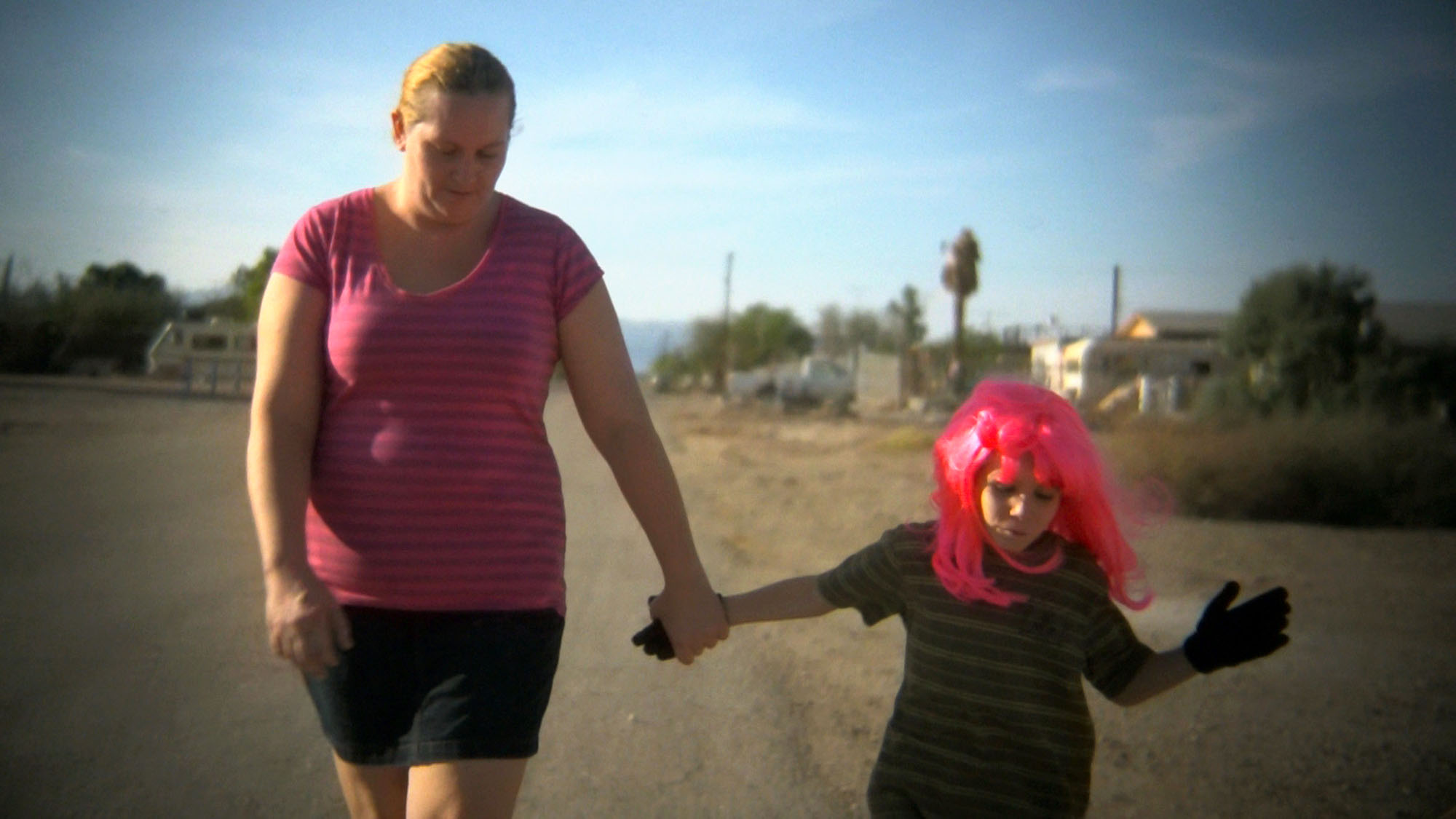
 Created by an overflow of the Colorado River in 1905, the highly salinic Salton Sea became a fashionable vacation destination in the 1950s, “the new recreational capital of the world,” as archival footage announces at the beginning of Alma Har’el’s feature-length documentary, Bombay Beach. “The future is now,” a promotional film proclaims, but over the years the “miracle sea in the desert” has instead come to represent the underside of the American dream. Currently an environmental disaster resembling a postapocalyptic landscape, the area is home to a motley crew of people just trying to get by. Har’el, a video director for such bands as Beirut, focuses her handheld camera on three protagonists: Red, a grizzled old white man who makes money by purchasing cigarettes at a nearby Indian reservation and selling them for a profit to his friends and neighbors and who doesn’t hide his racist upbringing; CeeJay, a black high school student who left the gang-ridden streets of South Central L.A. for Bombay Beach, where he hopes to star on the football team and make it to the NFL; and Benny Parrish, a young white boy who is fed medications to control his mood swings and whose parents recently served time for various weapons charges. Har’el intercuts scenes of the community’s daily life, from heartwarming stories to invasive moments, with choreographed dance vignettes that range from charming to manipulative, set to original music by Beirut’s Zach Condon and two songs by Bob Dylan. Har’el’s cinema verité style sometimes feels like it’s straining its neck out the window, gazing on a car wreck on the highway as it tells the story of these very poor people who have extremely limited resources, education, and access to health care. Winner of the Best Documentary Feature award at the 2011 Tribeca Film Festival, Bombay Beach opens October 14 at the IFC Center, where Har’el will attend the 8:20 shows on Friday, Saturday, and Sunday night.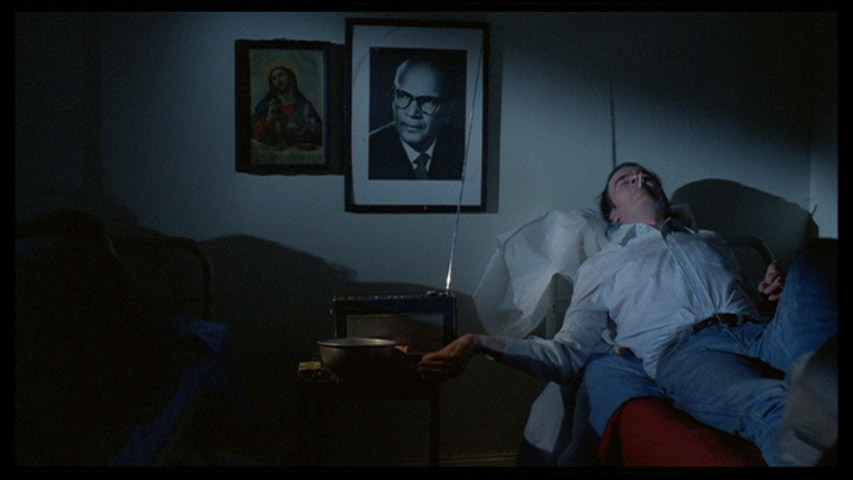
 Following last weekend’s screenings of the first part of Aki Kaurismäki’s Proletariat Trilogy, 1986’s Shadows in Paradise, the IFC Center will be showing the second part, 1988’s Ariel, Friday through Sunday at 11:00 am. More of a conceptual sequel than a continuing narrative, Ariel stars Turo Pajala as Taisto Kasurinen, a Finnish miner who has just lost his job because the mine has closed. Sitting at a diner with his father/coworker, Taisto barely flinches as the elder Kasurinen tells him that there is nothing for him here, gives him the keys to his white Cadillac convertible, and goes into the bathroom and shoots himself. Taisto, with ever-changing facial hair in the beginning, quickly gets mugged, his meager life savings stolen from him. He seeks day work on the docks and sort of starts dating single mother Irmeli Pihlaja (Susanna Haavisto), who has never met a job she couldn’t quit that day. Taisto soon finds himself in prison for a ridiculous reason — and one he doesn’t really fight, as he generally just sits back and lets things happen to him — and meets fellow inmate Mikkonen (Shadows in Paradise’s Matti Pellonpää), and the two decide it’s time to take action and break out. A very dark, very black comedy that mixes in elements of romance and noir, Ariel is an absurdist existential feast, following Taisto and his compatriots as they make their very strange way through a very bizarre world. The third part of the trilogy, The Match Factory Girl (1990), will screen October 28-30, taking a week off as Kaurismäki’s latest, the wonderful Le Havre, opens at the IFC on October 21.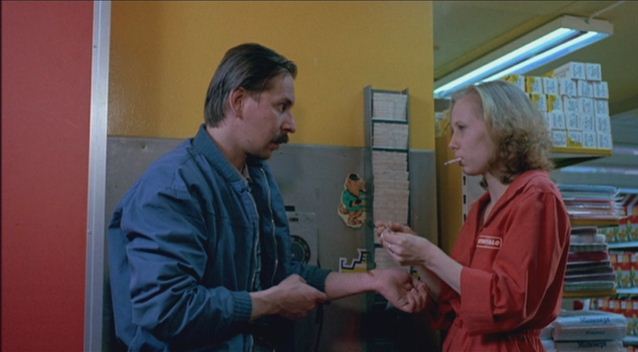

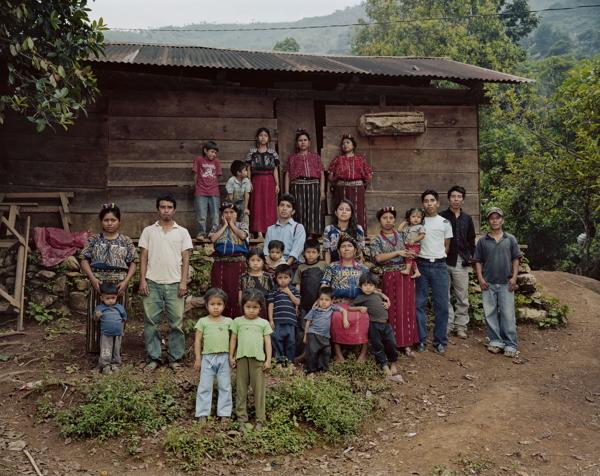
 The opening-night selection of the 2011 Human Rights Watch Film Festival, Granito: How to Nail a Dictator is an illuminating, if at times overly self-referential, examination of the power of documentary filmmaking. In 1982, Pamela Yates and Newton Thomas Sigel made When the Mountains Tremble, which told the inside story of civilian massacres of the indigenous Maya people as government forces and guerrilla revolutionaries fought in the jungles of Guatemala; one of the film’s subjects, Rigoberta Menchú, became an international figure and went on to win the Nobel Peace Prize. “When I made that film, I had no idea I was filming in the middle of a genocide,” Yates says at the beginning of Granito. A quarter-century after When the Mountains Tremble, Yates was contacted by lawyer Almudena Bernabeu, who asked Yates to comb through her reels and reels of footage to find evidence of the Guatemalan genocide and help bring charges again dictator Ríos Montt, whom Yates had met with back in 1982. In researching the case, Yates speaks with Menchú, forensic archivist Kate Doyle, journalist liaison Naomi Roht-Arriaza, forensic anthropologist Fredy Peccerelli, Spanish national court judge Santiago Pedraz, victims’ rights leader and genocide survivor Antonio Caba Caba, and Gustavo Meoño, a founding member of the Guerrilla Army of the Poor, each of whom sheds light on the proceedings from various different angles, from digging up bones in mass graves to discussing redacted documents that reveal U.S. involvement in Guatemala. Several of them are risking their lives by both continuing to fight the government and appearing on camera. Granito, which Yates directed with Peter Kinoy and Paco de Onís and was her sixth film to be shown at the Human Rights Watch festival, is a compelling look at how individuals can make a difference. The music is often overly melodramatic, and Yates does seem to like to show herself both in outtakes from her first film and in serious poses in the new film, but its ultimate point overrides those tendencies. Granito opens September 14 at the IFC Center, with the filmmakers present to talk about their work at the 7:40 showings Wednesday through Sunday as well as the 10:00 show Friday and Saturday night.