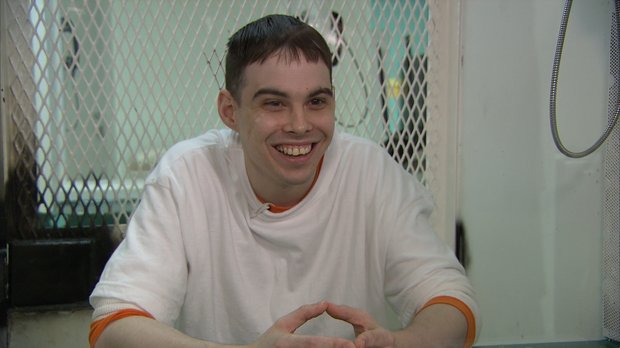
Werner Herzog speaks with Death Row inmate Michael Perry in INTO THE ABYSS
INTO THE ABYSS: A TALE OF DEATH, A TALE OF LIFE (Werner Herzog, 2011)
IFC Center, 323 Sixth Ave. at Third St., 212-924-7771
Lincoln Plaza Cinema, 1886 Broadway at 63rd St., 212-757-2280
Opens Friday, November 11
www.wernerherzog.com
 Upon meeting convicted murderer Michael James Perry on Death Row eight days before the twenty-eight-year-old was going to be executed by the state of Texas, master filmmaker Werner Herzog tells him, “I have the feeling that destiny, in a way, has dealt you a very bad deck of cards. It does not exonerate you, and when I talk to you, it doesn’t necessarily mean that I have to like you, but I respect you, and you are a human being, and I think human beings should not be executed.” After explaining his personal view on capital punishment, Herzog then lets the rest of the compelling documentary Into the Abyss: A Tale of Death, a Tale of Life play out like a police procedural as he investigates how and why two teenage boys murdered three people in October 2001. Herzog opens the film by speaking with Death House chaplain Rev. Richard Lopez in a potter’s field graveyard, then follows that with four sections that detail the crime, the community in which it occurred, and the family members on both sides of the law affected by the grisly, senseless murders. Herzog divides the film into four primary chapters — “The Crime,” “The Dark Side of Conroe,” “Time and Emptiness,” and “A Glimmer of Hope” — as he talks with the often smiling Perry and his cohort, Jason Aaron Burkett; Lt. Damon Hall, who shares the specific aspects of the murders of Sandra Stotler, her seventeen-year-old son, Adam, and Adam’s friend Jeremy Richardson, supplemented by original crime-scene video; Charles Richardson, Jeremy’s older brother; Lisa Stotler-Balloun, Adam’s sister, who has seen more than her fair share of loss; Melyssa Thompson-Burkett, who fell in love with Burkett after he was incarcerated; Delbert Burkett, Jason’s stepfather, who is also behind bars; and Captain Fred Allen, who oversaw executions in the Huntsville prison. Herzog asks penetrating but not leading questions that get the subjects to talk openly and honestly about the crime and its aftermath and their lives in general, many of which seem trapped in a vicious cycle of violence, jail, poor education, and other endless hardships. Into the Abyss is a powerful film that, because of Herzog’s extremely sensitive handling of an extremely controversial topic, is not nearly as polemical or political as it could have been. Into the Abyss, which was the opening-night gala selection of the recent “Doc NYC” festival, opens November 11 at the IFC Center and Lincoln Plaza.

 For The Interrupters, director, producer, and editor Steve James (Hoop Dreams, At the Death House Door) teamed up with journalist Alex Kotlowitz (There Are No Children Here) to hit the dangerous inner-city streets of Chicago with the men and women of CeaseFire, a grass-roots organization of former gang members who are now trying to stop the violence. Inspired by Kotlowitz’s New York Times Magazine article, the two men concentrate on three primary stories. Ameena Matthews, the Muslim daughter of notorious gang leader Jeff Fort, is working with a deeply troubled young woman who’d rather fight than flee, even if it means being sent back to prison. Cobe Williams has his hands full with the angry, recently released Flamo, who thinks the whole world is against him. And Eddie Bocanegra is attempting to come to grips with a cold-blooded revenge murder he committed when he was a teenager by visiting schools and talking about turning his life around. One of the most poignant moments of the film occurs when Williams brings Lil Mikey back to the barbershop he and several of his cohorts robbed at gunpoint as he again faces some of his victims. Matthews, Williams, and Bocanegra are paid employees of CeaseFire, which was founded by Dr. Gary Slutkin, an epidemiologist who believes that violence is a disease that can be treated in similar ways, and is run by Tio Hardman, who handles his extremely tough task with intelligence and dignity as he deals with what he calls “the madness.” But in a society in which “words’ll get you killed,” as Matthews says early on, these tireless violence interrupters put their own lives on the line every day, battling a sickness that seems to have no end in sight. The award-winning film, a hit at numerous film festivals, felt a bit long at its original 144 minutes, but James edited it down to a more streamlined 124 minutes for its recent theatrical release. The Interrupters is screening November 9 at 9:00 as part of the Short List section of the Doc NYC festival, running at the IFC Center through November 10.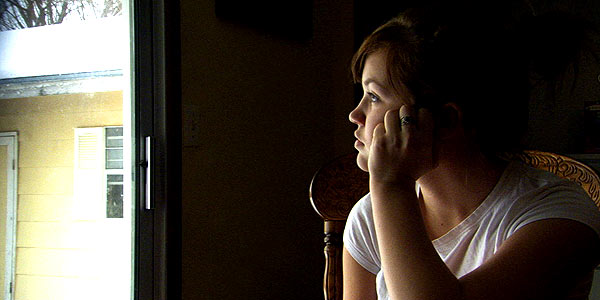
 In a Republican debate in September, presidential hopeful Michele Bachmann called Gardasil, Merck’s HPV vaccine to prevent cervical cancer, “dangerous,” setting off a firestorm across the country and in the scientific community over the safety of childhood vaccinations in general, with groups taking to the streets and the airwaves fighting against government-mandated vaccines. Thus, Kendall Nelson and Chris Pilaro’s The Greater Good comes along at just the right time. In the ninety-minute documentary, the directors speak with individuals on all sides of the now controversial issue. They speak with the Swank, King, and Christner families, who claim that vaccinations specifically led to their children either becoming autistic, suffering strokes, or, dying. While Dr. Paul Offit declares vaccinations safe and bemoans so many people deciding not to have their children vaccinated against anything, which led to a recent outbreak of measles at Children’s Hospital of Philadelphia, Drs. John Green and Lawrence B. Palevsky come out strongly against vaccinations. And experts such as Robert W. “Dr. Bob” Sears, author of The Vaccine Book: Making the Right Decision for Your Child, and Barbara Loe Fisher, cofounder and president of the National Vaccine Information Center, are firmly in the middle, demanding that more testing be done on vaccines before they hit the market and that parents should have the choice of what vaccinations their children receive. Nelson and Pilaro supplement the film with a not-overwhelming amount of relevant data and some playful yet serious animation as they examine corporate influence on public health, the science behind the controversy, government regulation, the growing anti-vaccination movement, and the sad stories of three families dealing with harrowing personal circumstances. The Greater Good is screening November 5 at 6:45 at NYU’s Kimmel Center and November 7 at 1:30 at the IFC Center as part of the “Viewfinders” section of the Doc NYC festival, which continues through November 10, with the codirectors expected to be in attendance to discuss the film.