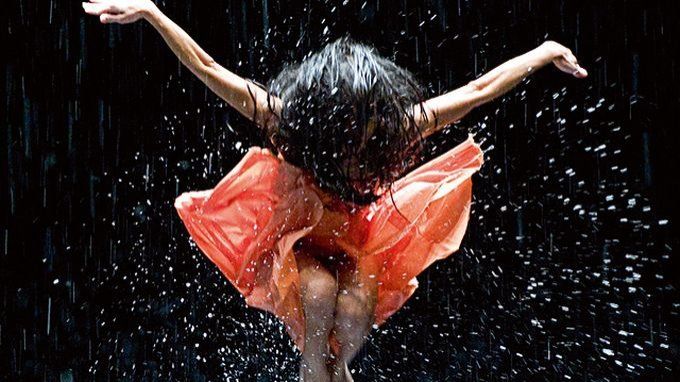
PINA is a 3-D celebration of seminal choreographer Pina Bausch and Tanztheater Wuppertal
PINA: DANCE, DANCE, OTHERWISE WE ARE LOST (Wim Wenders, 2011)
BAM Rose Cinemas, 30 Lafayette Ave. between Ashland Pl. & St. Felix St., through January 5, 718-636-4100, $15
IFC Center, 323 Sixth Ave. at West Third St., extended run, 212-924-7771, $17.50
www.sundanceselects.com
 Back in 2004, in reviewing Pina Bausch’s Fur Die Kinder von Gesern, Heute und Morgen (For the Children of Yesterday, Today, and Tomorrow) at BAM, we wrote, “You don’t have to be a dance fan to love the always engaging Pina Bausch.” The same holds true for Wim Wenders’s loving 3-D documentary, Pina. The longtime director of Tanztheater Wuppertal, German choreographer Bausch created uniquely entertaining pieces for more than thirty years, combining a playful visual language with a ribald sense of humor, cutting-edge staging, diverse music, and a stellar cast of men and women of varying ages and body sizes, resulting in a new kind of dance theater. A friend of hers for more than twenty years, Wenders (Wings of Desire, Paris, Texas) was collaborating with Bausch on a film when she suddenly died of cancer in 2009 at the age of sixty-eight, two days before rehearsal shooting was to begin. Wenders decided to proceed, making a film for Pina instead of with her. Using the latest 3-D technology, including a specially developed camera rig mounted on a crane, Wenders invites audiences onstage as he captures thrilling, intimate performances of several of Bausch’s seminal works, 1975’s Le Sacre du printemps, 1978’s Café Müller, 1978 and 2000’s Kontakthof (Contact Zone), 2002’s Fur Die Kinder, and 2006’s Vollmond (Full Moon), which were selected by Bausch and Wenders together. The dancers seem to be more motivated than ever, reveling in Bausch’s building, repetitive vocabulary of movement and discussing how she inspired them with just a few words. As a bonus, Wenders includes footage of Bausch dancing Café Müller. Some members of the company also dance personal memories on the streets, in a factory, and aboard a monorail in and around Wuppertal. Pina is not a biopic; Wenders does not delve into Bausch’s personal life or have random talking heads discuss her contribution to the world. Instead, he focuses on how she used movement to celebrate humanity and get the most out of the men, women, and children who worked with her. In the September 2009 memorial ceremony held for Bausch at the Wuppertal Opera House, Wenders said, “I would like to ask all of you, finally, to cherish this treasure of Pina’s gaze. . . . appreciating that you knew Pina, that we all knew her gaze and were fortunate enough to experience such a priceless gift.” With Pina, Wenders has given us a beautiful gift, a wonderful tribute to his great friend. Pina is screening through January 10 at the IFC Center [ed. note: It continues to be extended there and is still running as of mid-June] and January 12 at BAM, where Tanztheater Wuppertal regularly performed since 1984, including most of the pieces featured in the film. Wenders will be appearing at a handful of screenings at IFC on January 6-7 and BAM on January 8 for intros, a book signing, and Q&As.
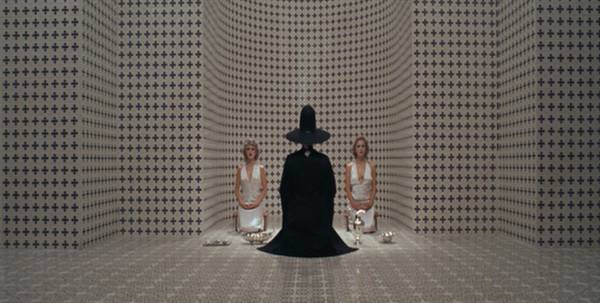
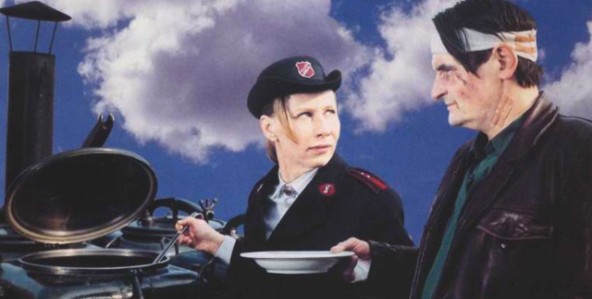
 While churches around the city are filling up for midnight mass on Christmas Eve, you can have a completely different kind of religious experience at the IFC Center, one of New York’s cinematic temples. Inspired by Rene Daumal’s Mount Analogue: A Novel of Symbolically Authentic Non-Euclidean Adventures in Mountain Climbing, Alejandro Jodorowsky’s The Holy Mountain also involves symbolically non-Euclidean adventures in mountain climbing, funneled through Carlos Castaneda, Stanley Kubrick’s 2001: A Space Odyssey, and magic mushrooms and LSD galore. What passes for narrative follows a Jesus look-alike thief (Horacio Salinas) and an alchemist with a thing for female nudity (Jodorowsky) on the path to enlightenment; along the way they encounter the mysterious Tarot, stigmata, stoning, eyeballs, frogs, flies, cold-blooded murder, naked young boys, chakra points, life-size plaster casts, Nazi dancers, sex, violence, blood, gambling, turning human waste into gold, death and rebirth, and the search for the secret of immortality via representatives of the planets, each with their own extremely bizarre story to tell. Jodorowsky, who is credited with having invented the midnight movie with the acid Western El Topo (1970), literally shatters religious iconography in a kaleidoscopic whirlwind of jaw-droppingly gorgeous and often inexplicable imagery composed from a surreal color palette, set to a score by free jazz trumpeter Don Cherry and Archies keyboardist Ron Frangipane. (Frangipane also worked with John Lennon and Yoko Ono, who produced this film with their business manager, Allen Klein.) The Holy Mountain — which brings a whole new insight to Matthew Barney’s Cremaster Cycle — is filled with psychedelic mysticism centered around the human search for transcendence in a wilderness of the sacred and profane. Jodorowsky’s work can move you deeply, but don’t expect it to make much sense. Sit back and let in pour in and over you — you’ll feel it. You may hate it, but you’ll feel it. Although you’ll definitely hate the very end. The film is also screening on Christmas night and New Year’s weekend at the IFC Center, offering one helluva way to welcome in 2012.
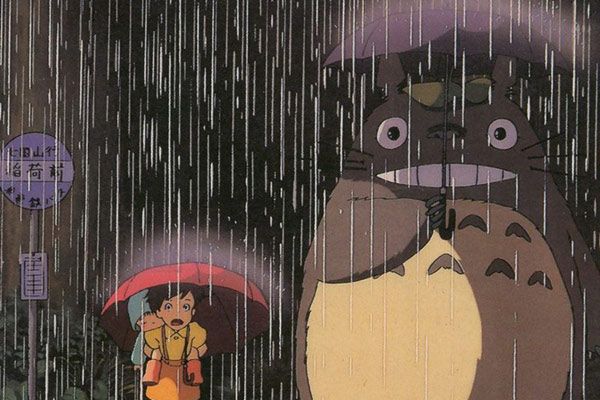
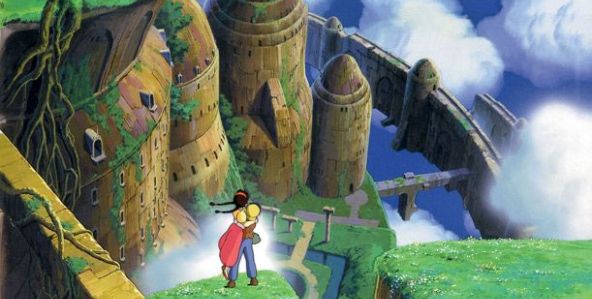
 In many ways a precursor to Hayao Miyazaki’s masterpiece, Spirited Away, the magical My Neighbor Totoro is a fantastical trip down the rabbit hole, a wondrous journey through the sheer glee and universal fears of childhood. With their mother, Yasuko, suffering from an extended illness in the hospital, Satsuki and her younger sister, Mei, move to a new house in a rural farming community with their father, anthropology professor Tatsuo Kusakabe. Kanta, a shy boy who lives nearby, tells them the house is haunted, and indeed the two girls come upon a flurry of black soot sprites scurrying about. Mei also soon discovers a family of totoros, supposedly fictional characters from her storybooks, living in the forest, protected by a giant camphor tree. When the girls fear their mother has taken a turn for the worse, Mei runs off on her own, and it is up to Satsuki to find her. Working with art director Kazuo Oga, Miyazaki paints the film with rich, glorious skies and lush greenery, honoring the beauty and power of nature both visually as well as in the narrative. The scene in which Satsuki and Mei huddle with Totoro at a bus stop in a rainstorm is a treasure. (And just wait till you see Catbus’s glowing eyes.) The movie also celebrates the sense of freedom and adventure that comes with being a child, without helicopter parents and myriad rules suffocating them at home and school. The multi-award-winning My Neighbor Totoro is screening in a new 35mm print December 16 to January 5 as part of the series “Castles in the Sky: Miyazaki, Takahata & the Masters of Studio Ghibli,” a dual presentation of the IFC Center and GKIDS’ New York International Children’s Film Festival. The 2006 rereleased dubbed version, featuring the voices of Dakota Fanning (Satsuki), Elle Fanning (Mei), Lea Salonga (Yasuko), Tim Daly (Tatsuo), and Frank Welker (Totoro and Catbus), will be shown at all morning and afternoon screenings; the original Japanese version with English subtitles will be shown 6:00 and later.