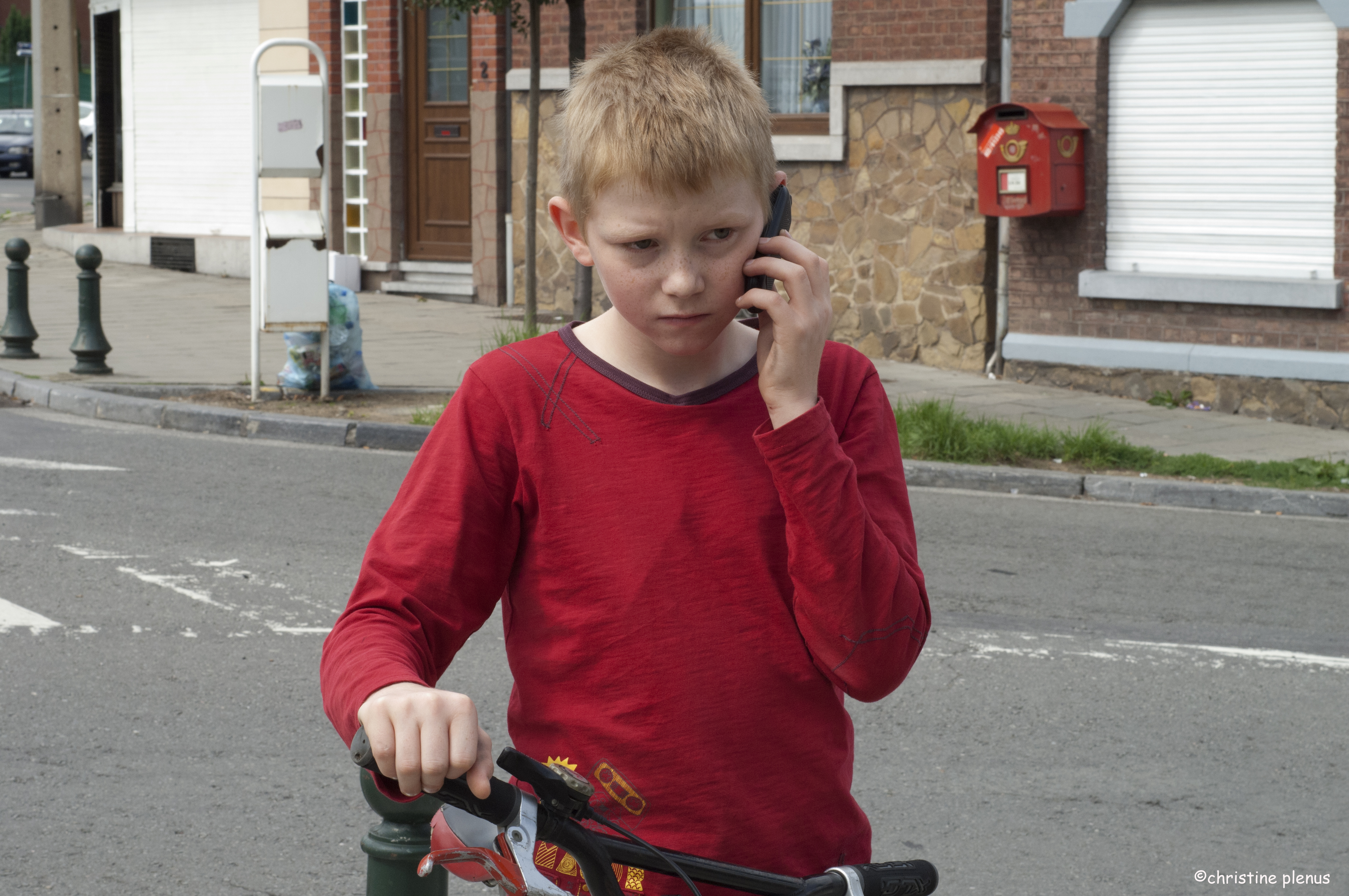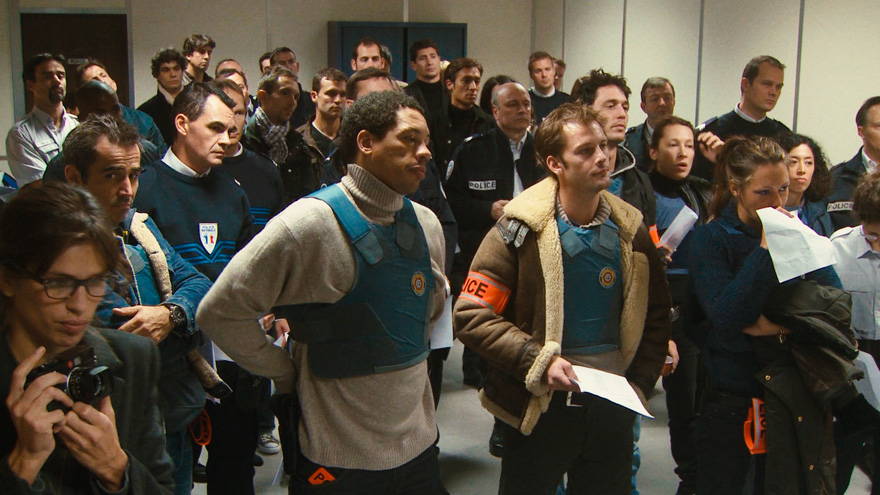
POLISSE follows a Child Protection Unit as it performs its daily duties in Paris
POLISSE (Maïwenn, 2011)
IFC Center, 323 Sixth Ave. at Third St., 212-924-7771
Lincoln Plaza Cinema, 1886 Broadway at 63rd St., 212-757-2280
Opens Friday, May 18
www.sundanceselects.com
 Winner of the Jury Prize at the 2011 Cannes Film Festival and nominated for thirteen Césars, Polisse is an intimate portrait of the men and women who work in the Child Protection Unit of a Paris police precinct. After seeing a television documentary about the CPU, French writer-director-producer-actress Maïwenn (Le bal des actrices, Pardonnez-moi) spent time with the team, basing the screenplay, which she wrote with Emmanuelle Bercot, on her own experiences as well as the stories she heard while embedded with the plainclothes officers. Maïwenn plays a fictionalized version of herself in the film, starring as Mélissa, a young woman who has been embedded with the CPU, taking photographs of the unit in the station house, out on calls, and even in their off time. Polisse does a fabulous job depicting the myriad intricacies of investigating claims of child abuse and pedophilia, showing how careful the team must be when speaking with the children as well as the adults, knowing that the slightest misunderstanding could result in devastating circumstances. Maïwenn includes only bits and pieces of the interrogations, placing the audience in the position of wondering what the truth is and understanding how hard it is to make those decisions. The first half of Polisse is absolutely gripping, but the second half gets bogged down in the soap-opera relationships of the members of the unit as well as a special detail they get assigned to that makes little sense. The large cast, which also features Karin Viard, Joeystarr, Marina Foïs, Nicolas Duvauchelle, Karole Rocher, Frédéric Pierrot, Frédéric Pierrot, and Bercot as Sue Ellen, do a terrific job creating the camaraderie among the officers, from supporting one another to going out drinking to getting into serious arguments, like an extended family that, in this case, spends much of its time investigating dangerous problems in other families.
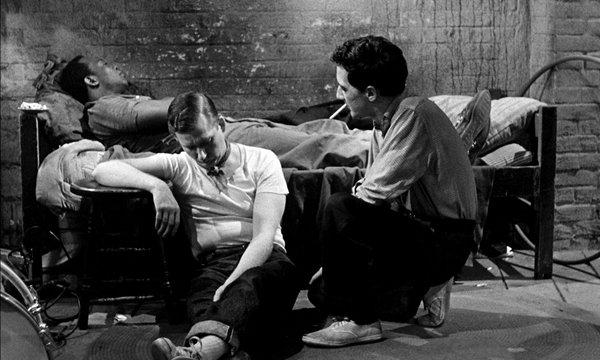
 “Now look, you cats may know more about junk, see,” square film director Jim Dunn (William Redfield) says midway through The Connection, “but let me swing with this movie, huh?” Adapted by Jack Gelber from his play and directed and edited by Shirley Clarke, The Connection is a gritty tale of drug addicts awaiting their fix that was banned for obscenity after only two matinee screenings back in October 1962. It opens in a sharp new fiftieth-anniversary print on May 4 at the IFC Center, beautifully restored by Ross Lipman of the UCLA Film & Television Archive. In a New York City loft, eight men are waiting for their man: Leach (Warren Finnerty), the ringleader who has an oozing scab on his neck; Solly (Jerome Raphael), an intelligent philosopher who speaks poetically about the state of the world; Ernie (Garry Goodrow), a sad-sack complainer who has pawned his horn but still clutches tight to the mouthpiece as if it were a pacifier; Sam (Jim Anderson), a happy dude who tells rambling stories while spinning a hula hoop; and a jazz quartet consisting of real-life musicians Freddie Redd on piano, Jackie McLean on sax, Larry Richie on drums, and Michael Mattos on bass. Dunn and his cameraman, J. J. Burden (Roscoe Lee Browne), are in the apartment filming the men as Dunn tries to up the drama to make it more cinematic as well as more genuine. “Don’t be afraid, man,” Leach tells him. “It’s just your movie. It’s not real.” When Cowboy (Carl Lee) ultimately shows with the stuff, Bible-thumping Sister Salvation (Barbara Winchester) at his side, things take a decidedly more drastic turn. Mixing elements of the French New Wave with a John Cassavetes sensibility and cinema verité style, Clarke has made an underground indie classic that moves to the beat of an addict’s craving and eventual fix. Shot in a luridly arresting black-and-white by Arthur Ornitz, The Connection is like one long be-bop jazz song, giving plenty of time for each player to take his solo, with standout performances by McLean musically and Raphael verbally. The film-within-a-film narrative allows Clarke to experiment with the mechanics of cinema and challenge the audience; when Dunn talks directly into the camera, he is speaking to Burden, yet he is also breaking the fourth wall, addressing the viewer. Cutting between Burden’s steady camera and Dunn’s handheld one, Clarke adds dizzying swirls that rush past like a speeding subway train. A New York City native, Clarke made such other films as The Cool World and Portrait of Jason and won an Academy Award for her 1963 documentary Robert Frost: A Lover’s Quarrel with the World. This new print of The Connection is part of Milestone Films’ Shirley Clarke Project, which will preserve and restore a quartet of her best work, with the 1985 documentary Ornette: Made in America up next.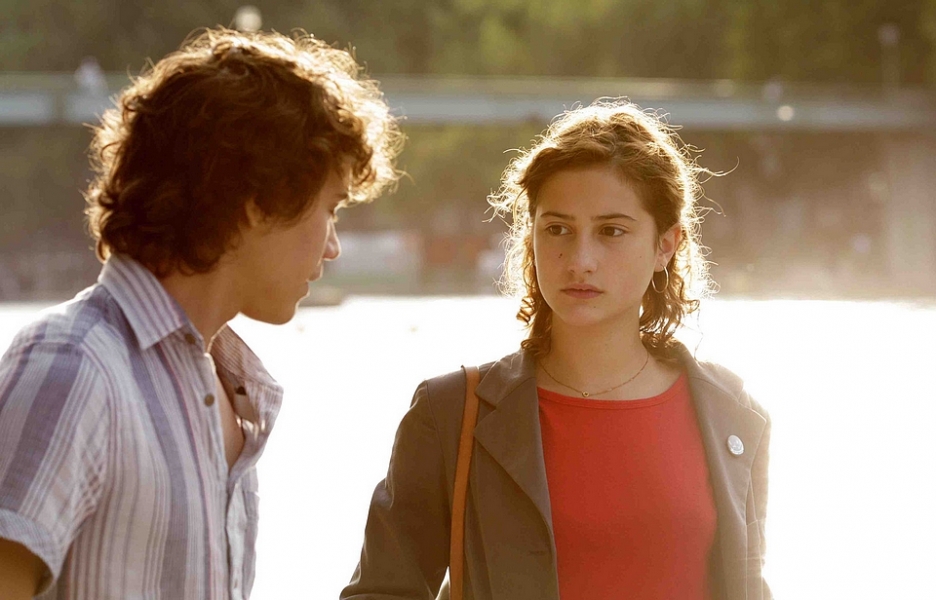
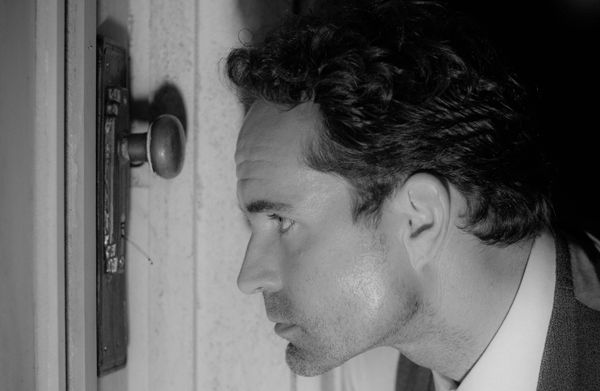
 Inspired by Homer’s Odyssey, Gaston Bachelard’s The Poetics of Space, and the Bowery Boys’ Spooks Run Wild, Canadian experimental filmmaker
 Winner of the Palme D’Or at the 2001 Cannes Film Festival, The Son’s Room is a moving look at life, love, and loss. Italian writer-director-actor Nanni Moretti stars as Giovanni, a psychiatrist who can’t control the dissolution of his family following a terrible tragedy. Moretti (Caro Diario, Ecce Bombo) has made a heart-wrenching work that will always be compared with Todd Field’s powerful In the Bedroom, which came out the same year. Both films examine family tragedy with honesty and believability, but whereas the family in In the Bedroom considers revenge, the father in The Son’s Room, achingly played by Moretti, can’t get over wrongly blaming himself, while his wife (Laura Morante, who won the Best Actress award at Cannes for the role) seeks solace in her son’s girlfriend (Sofia Vigliar), whom she had not known about. Moretti is a deeply personal filmmaker; at times you will feel like you are watching a documentary, and it will break your heart. The Son’s Room is screening Saturday and Sunday as part of the IFC Center series “La Vita e Cinema: The Films of Nanni Moretti,” being held in conjunction with the U.S. theatrical release of Moretti’s latest, We Have a Pope, which opens at the IFC Center on April 6. Moretti will discuss the film at the 7:30 screening on March 31. Other films in the retrospective include I Am Self-Sufficient, Bianca, Sweet Dreams, and The Mass Is Ended.