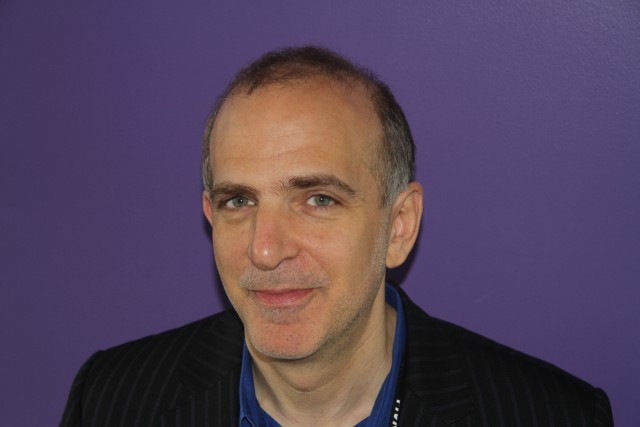
Eric Beckman founded the New York International Children’s Film Festival with his wife in 1997
NEW YORK INTERNATIONAL CHILDREN’S FILM FESTIVAL
Multiple venues throughout Manhattan
[Not for] Children Film Festival Benefit: February 28, $300 – $1,000
March 1-24, $13 (opening-night $20-$40)
All-Access VIP Pass: $400
www.gkids.com
Since its beginnings in 1997, the New York International Children’s Film Festival has been dedicated to bringing more intelligent movies to kids ages three to eighteen. Part of GKIDS (Guerrilla Kids International Distribution Syndicate), NYICFF hosts programs year-round, but its bigger-than-ever sixteenth annual festival is scheduled to take place March 1-24, spread out across such venues as Asia Society, the IFC Center, Tribeca Cinemas, FIAF, the Film Society of Lincoln Center, Scholastic, the DGA Theater, and the SVA Theatre. More than one hundred features, shorts, documentaries, and animated films will be presented from France, Belgium, Canada, India, Japan, the Netherlands, Italy, Taiwan, America, and other nations, in addition to workshops, a filmmaking camp, a prefestival not-for-children benefit (showing films that were submitted to NYICFF but are clearly not for kids), and the opening-night gala, the U.S. premiere of Benjamin Renner’s animated Ernest & Celestine, followed by a catered reception. This year’s jury, which includes such actors, writers, directors, and producers as Geena Davis, Gus Van Sant, Susan Sarandon, Jeffrey Wright, Christine Vachon, and Michael Modine, has also selected such films as Laurent Boileau and Jung Henin’s Approved for Adoption, Enzo D’Alò’s Pinocchio, the English-language premiere of Koji Masunari’s Welcome to the Space Show, and the Spanish-language version of Wreck-It Ralph called ¡Rompe Ralph! Eric Beckman, who cofounded NYICFF in 1997 with his wife, Emily Shapiro, was only too happy to discuss this year’s festival and the state of children’s films in general.
twi-ny: What prompted you to form GKIDS and NYCIFF in the first place?
Eric Beckman: NYICFF was formed to fill a void in the marketplace for exciting, meaningful, diverse, nuanced, eye-opening, thought-provoking film for young people. At the time we launched back in the late 1990s, the indie film movement was in full swing, and on any given weekend in New York City you could see maybe one hundred different films for adults — edgy indie films, French art films, romantic comedies, teen sex comedies, high-brow Oscar bait, action pictures, silent film retrospectives, and so on — literally any kind of film you could imagine was on tap for adults. But for kids there would be just one movie playing, which seemed just wrong for a city like New York. So the germinating idea for the festival was that we would bring a hugely exciting world of film to NYC every winter so that for four weeks during the festival, there would be the same kind of cinematic diversity and creativity and range of experience for kids that there is for adults.
twi-ny: How has the festival changed over the years, since its debut in 1997?
Eric Beckman: We’re much bigger (the largest in North America). NYICFF is now an Oscar qualifying festival, we have more films — and perhaps equally important we have a paid staff. We have also secured a reputation as a significant industry event on par with the prestige “adult” festivals in terms of important feature premieres and our record of introducing significant new directors to U.S. audiences and debuting future Oscar nominees. But the core concept is still exactly the same — uncompromising, excellent film for ages three to eighteen, including shorts, features, animation, live action, docs, and experimental films from six continents.
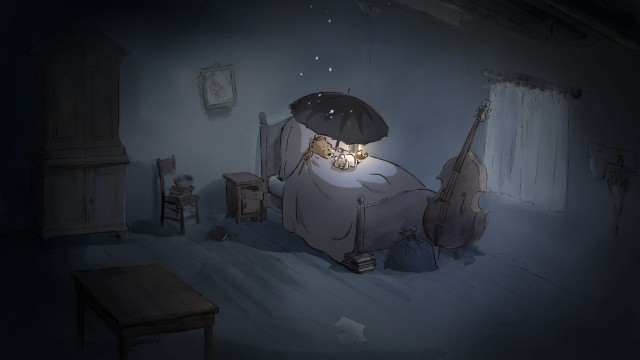
Benjamin Renner’s ERNEST & CELESTINE will open the 2013 New York International Children’s Film Festival
twi-ny: Do you think children’s films themselves have changed over the last sixteen years?
Eric Beckman: Yes and no. The Pixar animated CGI picture has supplanted Pocahontas/Lion King as the model to emulate. And more recently, with companies like Laika and others producing pictures every few years, there has been a wider variety of films out there — which has been great. But the underlying market forces that limit what is available for children have remained, and if anything have gotten stronger. Unlike films for adults, there is no independent circuit for children’s movies, so pretty much everything that is released is engineered to reach a mass audience. Amour at $4 million box office gross is a critical and financial success — but The Pirates! at $31 million is a potential write-down, even though it is a wonderful movie. So this pressure to reach mass audience to achieve $150 million domestic box office continues to affect the types of children’s films that get made in the U.S. — and severely limits the number of independent or foreign titles that can get a release. NYICFF and GKIDS are working to build that indie-for-kids circuit — and we have had some notable success at the Oscars and getting films attention and distribution, a trend we expect to continue.
twi-ny: With everyone, including children, having more access to films of all kinds over the internet, on cable, and on handheld devices, should parents worry more than ever about what their kids are watching?
Eric Beckman: This is a parenting question, so I will take off my film festival director hat for a moment. I have three children, and to be honest I am not overly worried about content. I am more concerned with limiting screen time, making room for reading, exploring art, theater, music, and other activities — and encouraging creative use of technology rather than passive consuming. Yes, there is some terrible stuff out there, but hopefully you raise your kids to make good choices rather than making the choices for them.
twi-ny: You have another prestigious jury this year. What do you look for in a jurist?
Eric Beckman: That is an often-asked question — as clearly Gus Van Sant and James Schamus do not jump to mind when you think of children’s films. But it is exactly that take we are looking for. We reach out to jurors who love and understand and are involved in creating great films. Not great children’s films, but great films period. Our jurors generally fall into one or more of three categories: actors or filmmakers (many of them parents) who we saw were coming to the festival so were already fans and supporters; innovative and provocative filmmakers who support a wider and more interesting range of film being made for young people; and renowned foreign filmmakers whose works first found U.S. audiences through the festival.
twi-ny: On February 28, there’s a specifically “not for children” benefit. What can adults expect from that?
Eric Beckman: The NY Int’l [Not for] Children’s Film Festival is a really, really fun and slightly naughty event. Every year NYICFF receives submissions that are so “not for kids” that you have to wonder what the person submitting the film was thinking. This began at the very first festival, with a film made with Barbie dolls that would definitely garner an NC-17 rating. So a few years ago, we decided to show a few of these films at a private cocktail party we were doing for board members, staff, and other friends of the festival. Everyone had so much fun we made it the theme of our fundraiser that year, and thus began the tradition.
The event takes place Feb 28, the night before Opening Night. You will want to reserve your babysitter now! It is at Tribeca Film Center and involves a screening of very inappropriate films that were submitted to the festival, plus food, cocktails, drinking games, prizes (courtside Knicks tickets, racecar driving school, all-access family passes to the festival . . .) and more things that I am not even aware of, since I am not on the benefit committee. The proceeds benefit the festival’s FilmEd program, which assures that economically disadvantaged New York City families have access to the festival’s programs and filmmaking classes. So it is a great event for a great cause.

 All work and no play makes Jack a not-so-quite dull boy in Stanley Kubrick’s classic horror story, based on the Stephen King novel. One of the all-time-great frightfests, The Shining is a truly scary movie about a writer named Jack Torrance (Jack Nicholson at his overacting best) who has agreed to become the caretaker of the old Overlook Hotel in Colorado during the snowy winter when the enormous mountain resort closes down for the season. He is joined by his perpetually nervous wife, Wendy (Shelley Duvall), and their young son, Danny (Danny Lloyd), who seems to have brought along his invisible friend, Tony, who speaks through Danny’s finger. Between taking care of the Overlook and working on his novel, Jack finds a whole bunch of other folks to hang out with, people who have populated the place during the ritzy establishment’s golden age, including a strange woman in room 237. Kubrick plays with horror conventions as he seeks to scare the crap out of the audience, something he accomplishes time and time again as Jack grows more disturbed, Wendy’s shrieks become more and more ear piercing and annoying, and Danny’s visions get more and more bloody. No matter how many times you’ve seen it, it still gets you, even when you know exactly what’s lurking around that corner. Only those who went to the film during its opening weekend, as we did, got to see the two-minute finale that Kubrick cut out immediately thereafter, which involved the iconoclastic director riding his bicycle to various theaters, armed with a pair of scissors. A DCP projection of The Shining is being shown March 20-28 as part of the IFC Center series “The Films of Stanley Kubrick,” which is screening every one of the Bronx-born ex-pat’s feature works in preparation for the March 29 theatrical release of Rodney Ascher’s Room 237, which delves into the many metamysteries surrounding the making of The Shining.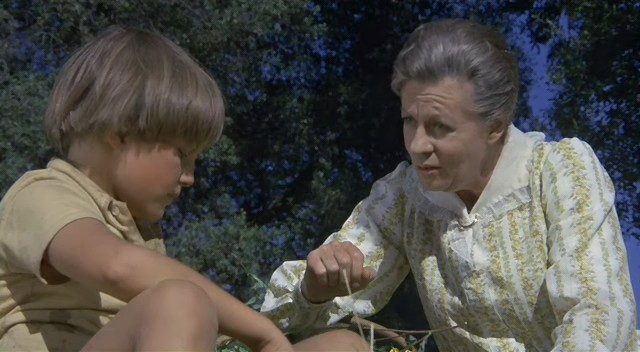
 Twins Niles (Chris Udvarnoky) and Holland (Martin Udvarnoky) do everything together, playing around their family’s farm with a reckless abandon that gets them into a lot of trouble — especially when they leave a body or two lying around. Their mother (Diana Muldaur) has become sort of a walking zombie since the sudden death of her husband, so their grandmother, Ada (Uta Hagen), watches out for the kinder. Ada has taught Niles to play what she calls the Game, which involves psychic phenomena, but the Game goes bad very quickly. Director Robert Mulligan (To Kill a Mockingbird, Summer of ’42) keeps things very creepy, especially as Niles tries to understand what makes Holland do the things he does. The screenplay is by Thomas Tryon, based on his bestselling novel. The boys’ uncle, Rider, is played by a young John Ritter, while Victor French, Agent 44 on Get Smart and Mark Gordon on Highway to Heaven, is Angelini the handyman. The Other is screening on March 15 & 16 as part of the IFC Center’s Waverly Midnights series “The Scary ’70s,” which continues March 22-23 with Alfred Hitchcock’s Frenzy, March 29-30 with Mel Brooks’s Young Frankenstein, and April 5-6 with Nobuhiko Obayashi’s cult classic House.
 French writer-director Léos Carax (
 In 2010, filmmaker and Gallatin School professor Keith Miller made a short film,