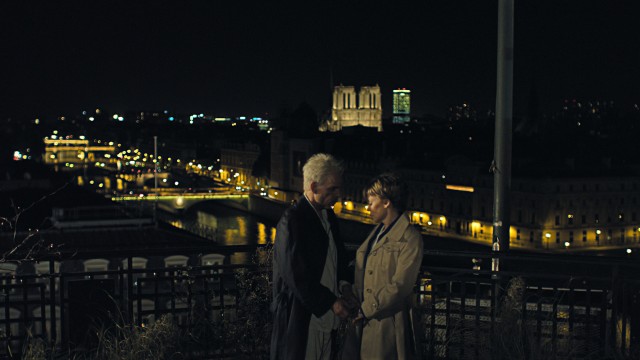
Léos Carax’s HOLY MOTORS is a dazzling tribute to Paris, cinema, and the art of storytelling
LATE-NIGHT FAVORITES: HOLY MOTORS (Léos Carax, 2012)
IFC Center
323 Sixth Ave. at West Third St.
Friday, April 26, and Saturday, April 27, 12:05 am
212-924-7771
www.ifccenter.com
www.holymotorsfilm.com
 French writer-director Léos Carax (Boy Meets Girl, Mauvais Sang) has made only five feature films in his thirty-plus-year career, a sadly low output for such an innovative, talented director, but he has now given birth to his masterpiece, the endlessly intriguing, confusing, and exhilarating Holy Motors. His first film since 1999’s POLA X, the new work is a surreal tale of character and identity, spreading across multiple genres in a series of bizarre, entertaining, and often indecipherable set pieces. Holy Motors opens with Carax himself playing le Dormeur, a man who wakes up and walks through a hidden door in his room and into a movie theater where a packed house, watching King Vidor’s The Crowd, is fast asleep. The focus soon shifts to Carax alter ego Denis Lavant as Monsieur Oscar, a curious character who is being chauffeured around Paris in a white stretch limo driven by the elegant Céline (Édith Scob). Oscar has a list of assignments for the day that involve his putting on elaborate costumes — including revisiting his sewer character from Merde, Carax’s contribution to the 2009 omnibus Tokyo! that also included shorts by Michel Gondry and Bon Joon-ho — and becoming immersed in scenes that might or might not be staged, blurring the lines between fiction and reality within, of course, a completely fictional world to begin with. It is as if each scene is a separate little movie, and indeed, Carax, whose middle name is Oscar, has said that he made Holy Motors after several other projects fell through, so perhaps he has melded many of those ideas into this fabulously abstruse tale that constantly reinvents itself. The film is also a loving tribute to Paris, the cinema, and the art of storytelling, with direct and indirect references to Franz Kafka, E. T. A. Hoffman, Charlie Chaplin, Lon Chaney, Eadweard Muybridge, Georges Franju, and others. (Scob, who starred in Franju’s Eyes Without a Face, at one point even pulls out a mask similar to the one she wore in that classic thriller.) The outstanding cast also features Kylie Minogue, who does indeed get to sing; Eva Mendes as a robotic model; and Michel Piccoli as the mysterious Man with the Birthmark. Holy Motors returns for a pair of midnight screenings at the IFC Center following its four-month run there; catch it while you can on the big screen and prepare to be dazzled.
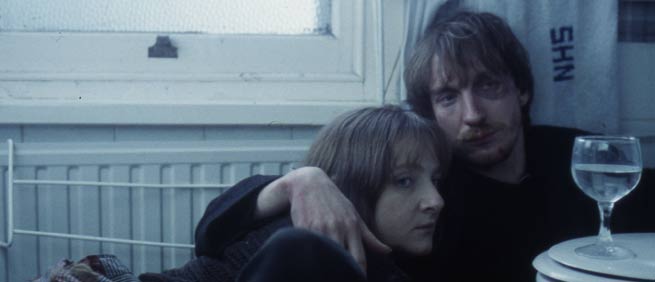
 In writer-director Mike Leigh’s controversial Naked, David Thewlis is mesmerizing as Johnny, a drifter on the run from Manchester who shows up at the London apartment of an old girlfriend, Louise (Lynda Steadman), and develops a strange attraction for Louise’s roommate, Sophie (the excellent Katrin Cartlidge). Leigh, who earned Best Director honors at Cannes for the film, fills Naked with desperate characters, desolate streets, and plenty of graphic, lurid detail. Thewlis won numerous acting awards for his brilliant portrayal of a very difficult character for the audience to care about, especially in a film that runs more than two hours. Sitting through Naked is an exhausting, infuriating, ultimately rewarding experience; among the best scenes are the philosophical conversations Johnny has with the night watchman (Peter Wight). Naked is screening in a high-definition digital projection on April 25 as part of the IFC Center series “The Modern School of Film” and will be followed by a discussion with Iron & Wine’s Sam Beam.

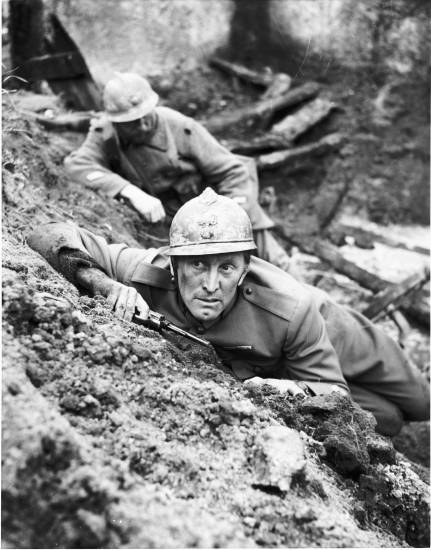

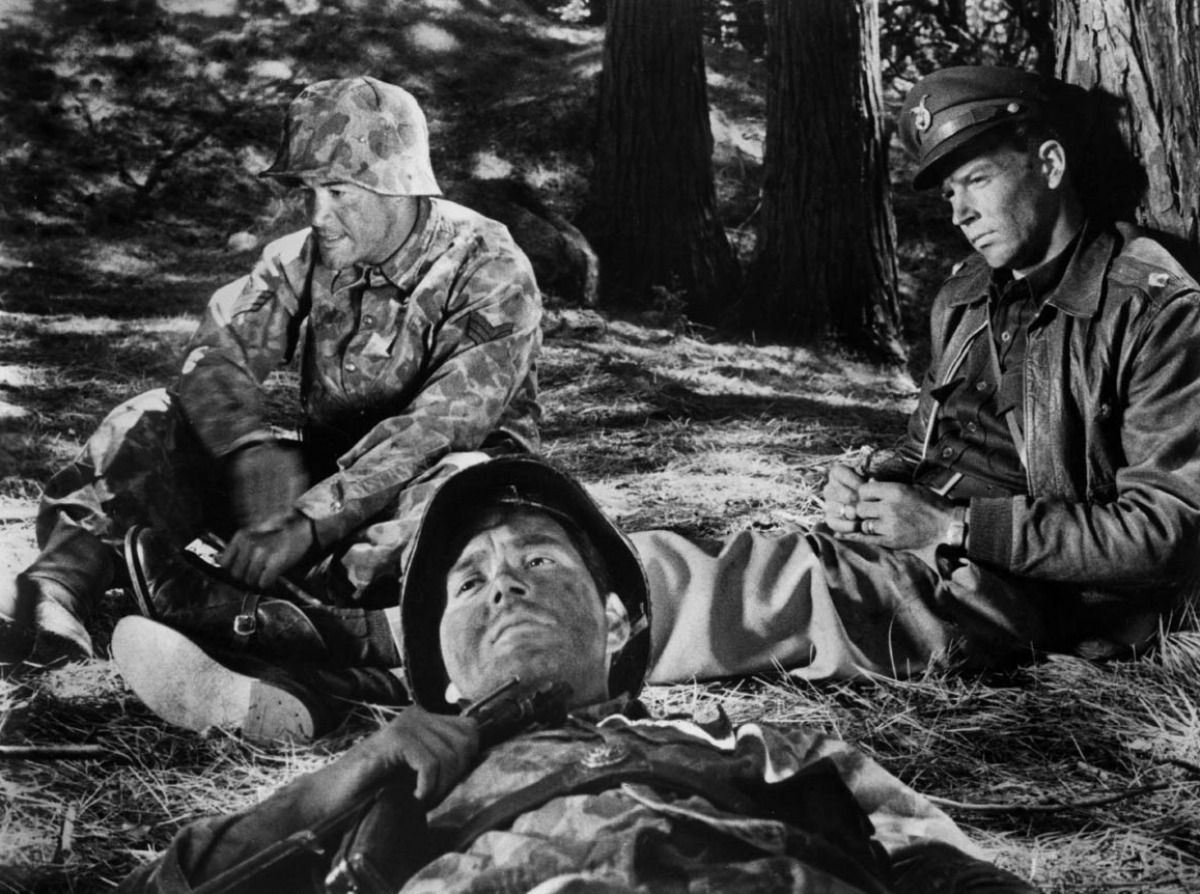
 The IFC Center is preparing for the March 29 theatrical release of Rodney Ascher’s documentary Room 237, which delves into metamysteries surrounding Stanley Kubrick’s The Shining, with the terrific series “The Films of Stanley Kubrick,” screening every one of the Bronx-born ex-pat’s feature works, most of which are being projected in DCP. Kubrick’s 1953 seldom-seen psychological war drama, Fear and Desire, will be shown March 20-25 in high definition. His first full-length film, made when he was twenty-four, Fear and Desire is a curious tale about four soldiers (Steve Coit, Kenneth Harp, Paul Mazursky, and Frank Silvera) trapped six miles behind enemy lines. When they are spotted by a local woman (Virginia Leith), they decide to capture her and tie her up, but leaving Sidney (Mazursky) behind to keep an eye on her turns out to be a bad idea. Meanwhile, they discover a nearby house that has been occupied by the enemy and argue over whether to attack or retreat. Written by Howard Sackler, who was a high school classmate of Kubrick’s in the Bronx and would later win the Pulitzer Prize for The Great White Hope, and directed, edited, and photographed by the man who would go on to make such war epics as Paths of Glory, Full Metal Jacket, and Dr. Strangelove, or How I Learned to Stop Worrying and Love the Bomb, Fear and Desire features stilted dialogue, much of which is spoken off-camera and feels like it was dubbed in later. Many of the cuts are jumpy and much of the framing amateurish. Kubrick was ultimately disappointed with the film and wanted it pulled from circulation; instead it was preserved by Eastman House in 1989 and restored twenty years later, which is good news for film lovers, as it is fascinating to watch Kubrick learning as the film continues. His exploration of the psyche of the American soldier is the heart and soul of this compelling black-and-white war drama that is worth seeing for more than just historical reasons. “There is a war in this forest. Not a war that has been fought, nor one that will be, but any war,” narrator David Allen explains at the beginning of the film. “And the enemies who struggle here do not exist unless we call them into being. This forest then, and all that happens now, is outside history. Only the unchanging shapes of fear and doubt and death are from our world. These soldiers that you see keep our language and our time but have no other country but the mind.” Fear and Desire lays the groundwork for much of what is to follow in Kubrick’s remarkable career, all of which can be seen March 20-28 at IFC.