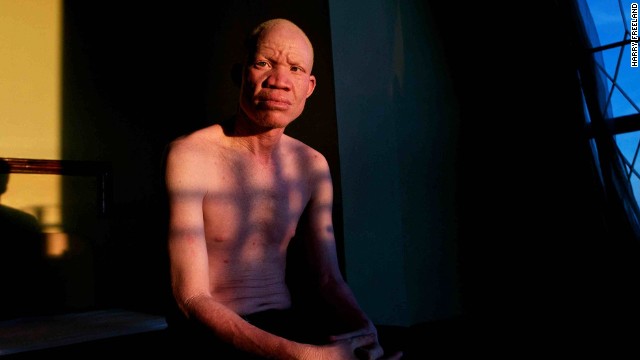
Josephat Torner is traveling across Tanzania to stop the dismemberment and killing of albinos for profit
IN THE SHADOW OF THE SUN (Harry Freeland, 2012)
Saturday, June 15, 9:15, IFC Center, 323 Sixth Ave. at West Third St.
Sunday, June 16, 6:00, Film Society of Lincoln Center, Elinor Bunin Munroe Film Center, Francesca Beale Theater, 144 West 65th St. at Amsterdam Ave.
Festival runs June 13-23
212-875-5601
www.intheshadowofthesun.org
www.ff.hrw.org
 One of the themes of the twenty-fourth edition of the Human Rights Watch Film Festival is Traditional Values and Human Rights, and it is exemplified by the frightening yet inspiring documentary In the Shadow of the Sun. In January 2007, Josephat Torner, one of an estimated 170,000 albinos living in Tanzania, told his wife and kids that he was setting off for two months to travel the country to educate local communities about albinism in the wake of a series of dismemberments and killings brought on by witch doctors claiming that the body parts of albinos will bring people wealth and success. “This is what our lives have become,” Torner tells director, producer, editor, and cameraman Harry Freeland at the beginning of the film. “One of the many things we have had to learn is to live in danger.” Two months turned into years as Torner battled Tanzanians’ fears that albinos were white ghosts or demons, forcing them to live in camps or hiding them from public view. Freeland also focuses on Vedastus Chinese Zangule, a teenager who wants to go to school to become an electrician, but his efforts to get an education are continually thwarted by red tape and discrimination. Torner becomes a mentor to the open and honest Vedastus, trying to help him achieve his goals against the odds. The documentary, which features beautiful vistas in Tanzania, particularly on Ukerewe Island, where a community of albinos live as if in exile from the mainland, is narrated by Torner and Vedastus, both of whom are determined not to give up. Torner continually risks his life, going into the neighborhoods where maimings and killings have taken place, trying to prove to the men, women, and children who live there that albinos are just people, not monsters to be exploited as good-luck charms. Meanwhile, more albinos are murdered as Torner continues his journey.
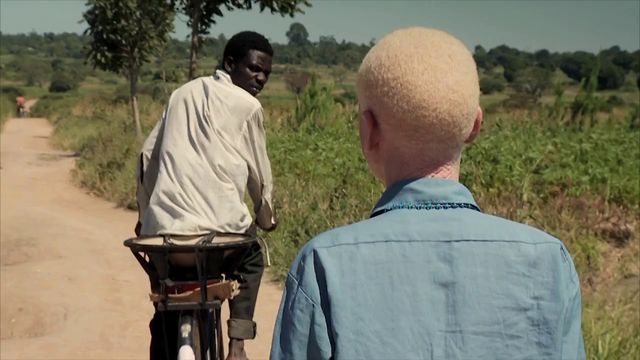
Documentary examines the public misperception of albinism in Tanzania
In the Shadow of the Sun is a powerful, shattering examination of discrimination and racism in the twenty-first century as well as a testament to the strength and determination of the individual spirit; Freeland (Waiting for Change) lets these two extraordinary figures, Torner and Vedastus, tell their intermingling stories with both grace and a kind of poetry while sharing the many faces of albinism, showing both the inherent cruelty and beauty of humanity as well as the importance of education. In the Shadow of the Sun is screening June 15 at the IFC Center and June 16 at the Elinor Bunin Munroe Film Center, followed by Q&As with Freeland. The Human Rights Watch Film Festival runs June 13-23, comprising nineteen narrative and nonfiction works that examine such themes as Women’s Rights, LGBT Rights, Journalism, Human Rights in the United States, and Crises and Migration, including the New York and/or U.S. premiere of such films as Raoul Peck’s Fatal Assistance, Shaun Kadlec and Deb Tullmann’s Born This Way, Joshua Oppenheimer’s The Act of Killing, and Mike Lerner and Maxim Pozdorovkin’s Pussy Riot: A Punk Prayer.
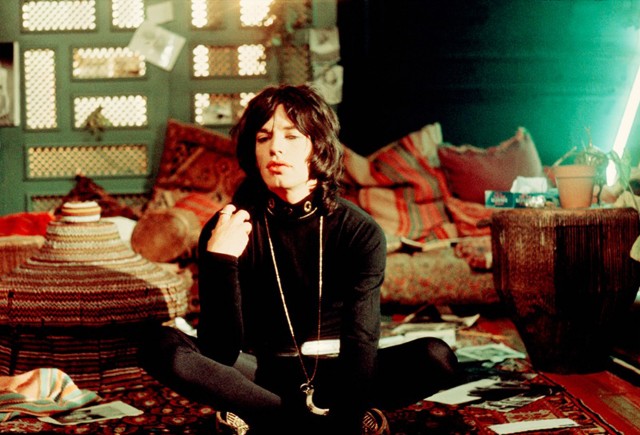
 A British gangster on the run hides out with a psychedelic rock star in this strangely enticing film from Donald (The Demon Seed) Cammell and Nicolas Roeg (making his big-screen directorial debut). James Fox didn’t know what he was getting into when he signed on to play Chas, a mobster who finds sanctuary with mushroom-popping rock-diva has-been Turner, played with panache by Mick Jagger. Throw in Anita Pallenberg, a fab drug trip, and the great “Memo to Turner” scene and you have a film that some consider the real precursor to MTV, some think a work of pure demented genius, and others find to be one of the most pretentious and awful pieces of claptrap ever committed to celluloid. We fall somewhere in the middle of all of that. Performance is screening in a 35mm print June 3 at 8:00 as part of the IFC Center series “Queer/Art/Film” and will be followed by a discussion with artist, writer, documentarian, and activist Gregg Bordowitz. The monthly series, which consists of films selected by gay New York City artists, continues July 22 with Julia Loktev’s Day Night Day Night, chosen by Amadéus Leopold, and August 19 with Stephen Frears’s My Beautiful Laundrette, picked by Chitra Ganesh.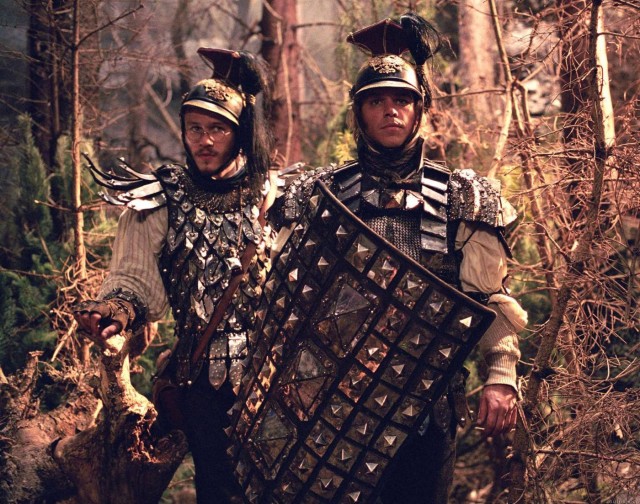
 A director of extremes, Terry Gilliam has made big-budget disasters and low-budget gems, overhyped tripe and underhyped masterpieces. The former Python’s 2005 take on the Brothers Grimm is, unfortunately, another dreadful excursion, a cold, distant reimagining of Will and Jake Grimm, who gave the world myriad fairy tales that are still beloved (and still rather frightening) today. (And this one had its share of problems with the studio again — this time with Bob and Harvey Weinstein.) Will (Matt Damon) and Jacob (Heath Ledger), the brothers Grimm, here are portrayed as con artists who travel French-occupied Germany pretending to slaughter made-up ghosts and goblins for money. But they’re soon captured by French general Delatombe (a disappointing Jonathan Pryce) and his right-hand man, the inexplicably Italian commander Cavaldi (a ridiculously overacting Peter Stormare). They are ordered to solve the real mystery of the disappearance of a group of young girls from the small village of Marbaden — or else they will be killed themselves. Screenwriter Ehren Kruger, who previously gave us such winners as Reindeer Games (John Frankenheimer, 2000) and The Ring Two (Hideo Nakata, 2005), fills the movie with references to Hansel and Gretel, Little Red Riding Hood, Sleeping Beauty, Snow White, Rapunzel, the Frog Prince, and Cinderella, but that doesn’t help save the film’s own lack of believable, endearing characters. You won’t care about anyone or anything that happens in Gilliam’s two-hour mess, which looks as if it was hacked to bits in the editing room like your mother’s chopped liver. The Brothers Grimm is screening in a 35mm print at 12:20 am on May 31 & June 1 as part of the IFC Center’s Waverly Midnights series “Terry Gilliam,” which continues through July 20 with such better Gilliam fare as Jabberwocky, The Fisher King, and Brazil.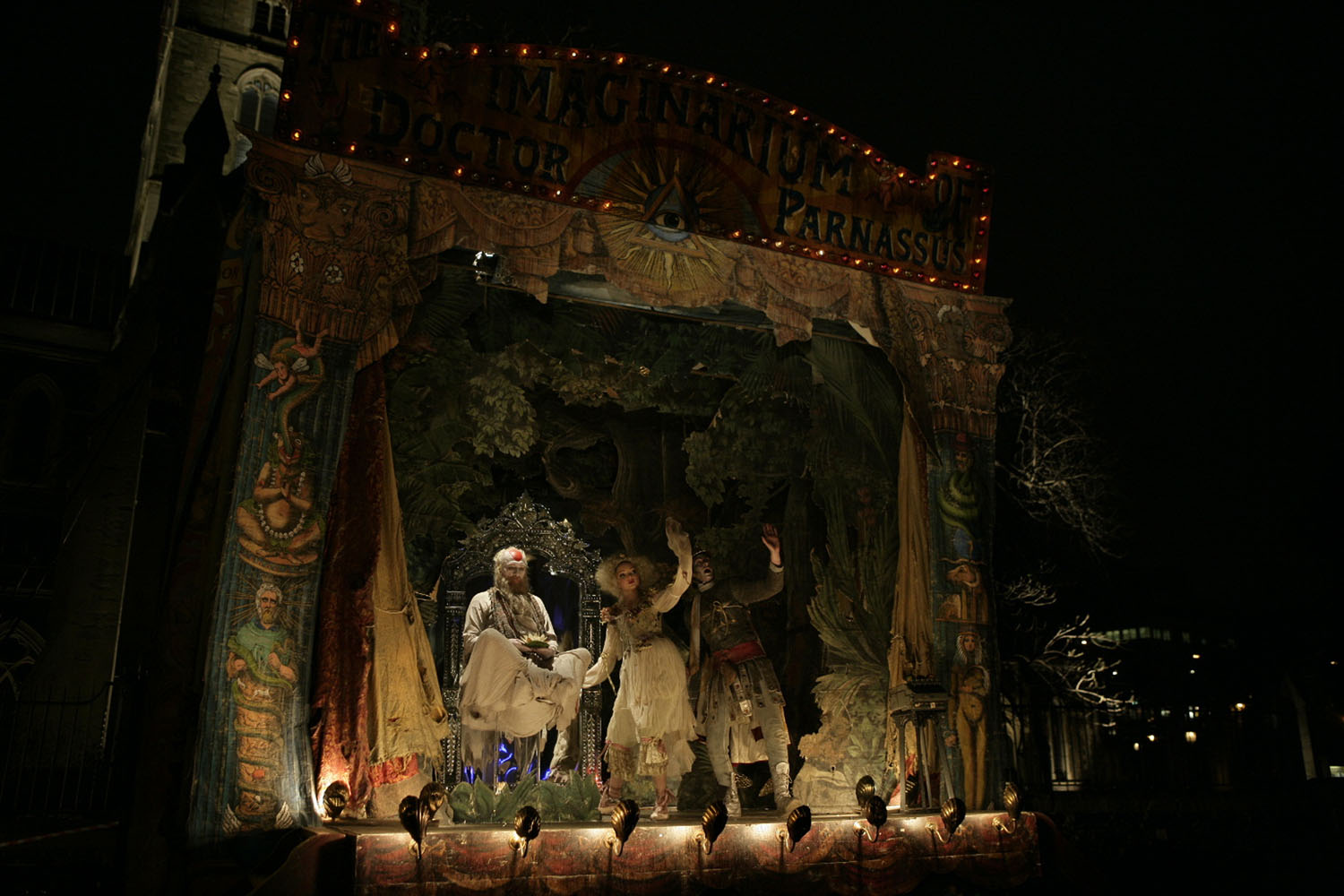
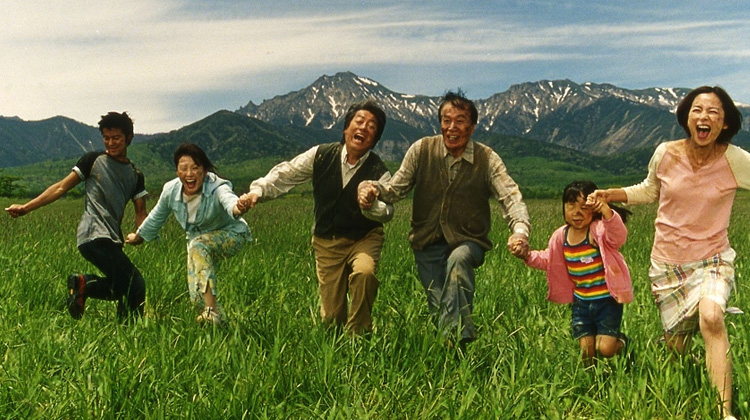
 Japanese genre king Takashi Miike, who has made more than one hundred films in his twenty-two-year career, outdoes himself in The Happiness of the Katakuris, an endlessly inventive tale of the Katakuris, a family that moves to the middle of nowhere to run a country inn. The only problem is that when guests finally arrive, they all end up dead — in bizarre, ridiculous ways — and the father decides to bury them instead of reporting the incidents, in order to protect the inn and the family’s future. Miike (Ichi The Killer, Audition, Thirteen Assassins) masterfully mixes comedy, romance, Claymation, music, murder, and mayhem in this enormously entertaining and highly original movie that is filled with a never-ending bag of surprises. The Happiness of the Katakuris is screening in a 35mm print May 7 at 8:15 as part of the IFC Center series “The Modern School of Film” and will be followed by a discussion with Brooklyn-based choreographer Mark Morris; the series continues May 9 with John M. Stahl’s 1945 melodrama Leave Her to Heaven, with Neil LaBute on hand to talk about it, May 13 with Andrei Tarkovsky’s The Mirror and Bill T. Jones, and May 28 with Vittorio De Sica’s Miracle in Milan and Laurie Anderson.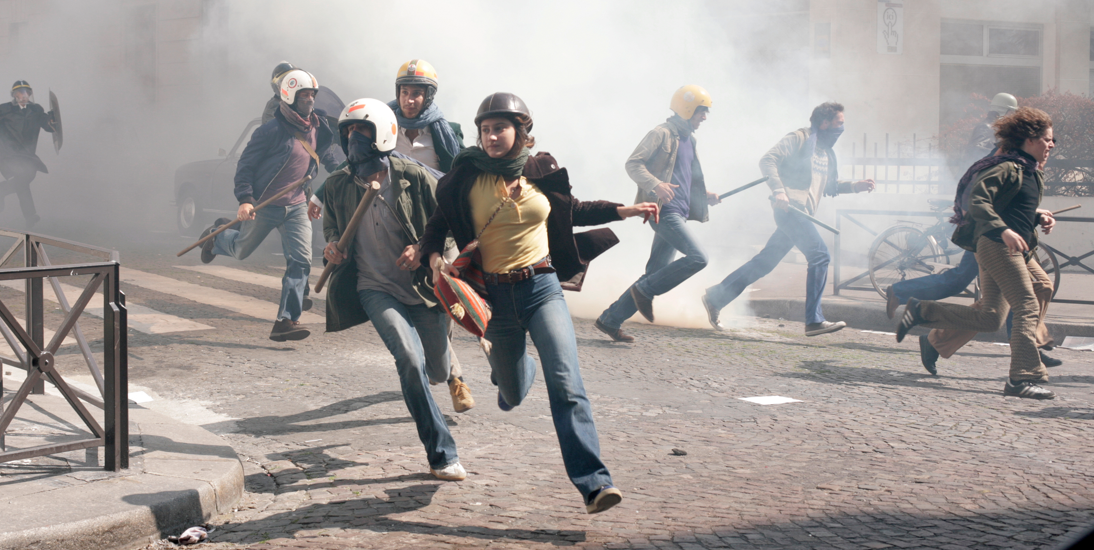
 Olivier Assayas’s autobiographical coming-of-age tale Something in the Air is a fresh, exhilarating look back at a critical period in twentieth-century French history. In this sort-of follow-up to his 1994 film about 1970s teenagers, Cold Water, which starred Virginie Ledoyen as Christine and Cyprien Fouquet as Gilles, Something in the Air features newcomer Clément Métayer as a boy named Gilles and Lola Créton (