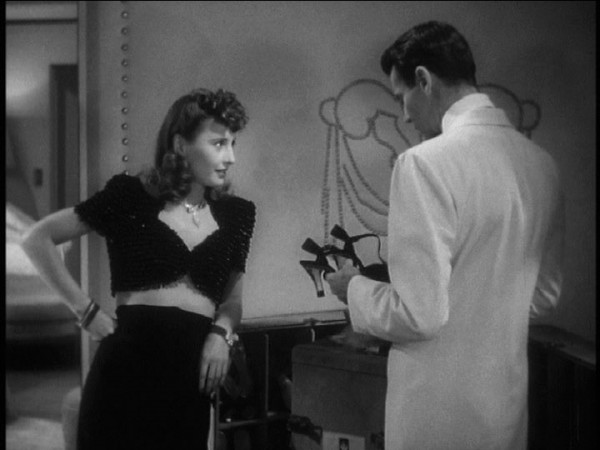
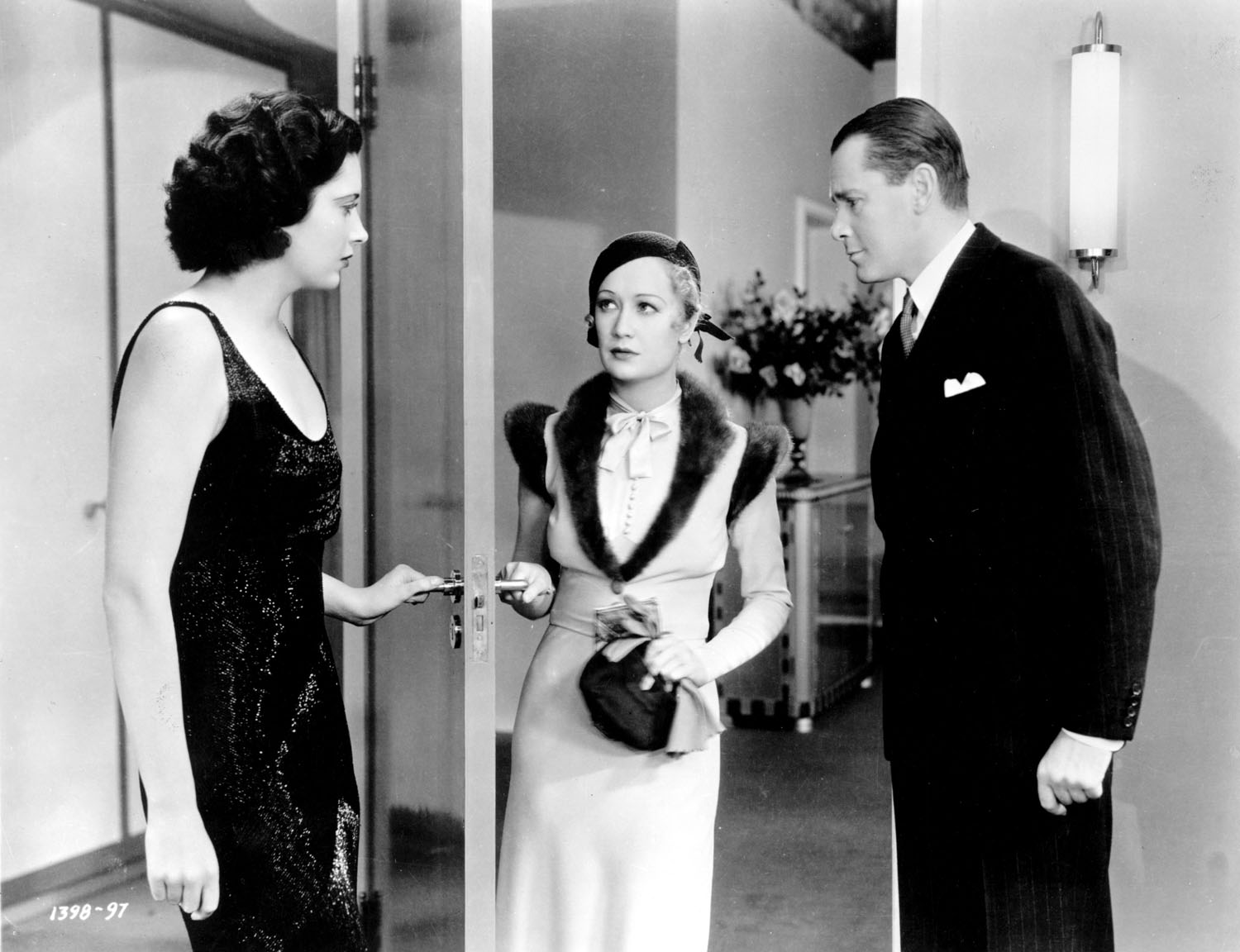
Barbara Stanwyck lures an unsuspecting Henry Fonda into her alluring trap in THE LADY EVE
THE LADY EVE (Preston Sturges, 1941)
IFC Center
323 Sixth Ave. at West Third St.
April 25-27, 11:00 am
Series continues through May 4
212-924-7771
www.ifccenter.com
 Barbara Stanwyck delivers one of her most nuanced and beguiling performances as the tough-talking title character in The Lady Eve. Usually lumped in with her classic screwball comedies, Preston Sturges’s black-and-white film, based on an original story by Irish playwright Monckton Hoffe (who was nominated for an Oscar), is much darker and slower than its supposed brethren. A brunette Stanwyck is first seen as Jean Harrington, a con artist looking to trick a wealthy man on a cruise ship. At her side is her father, “Colonel” Harrington (Charles Coburn), a gambler and a cheat. As soon as Jean sees rich ale scion Charles Pike (a wonderfully innocent Henry Fonda), she digs her claws into the shy, humble man, challenging the Hays Code as she shows off her gams and leans into him with a heart-pounding sexiness. Pike of course falls for, but when his right-hand man, Muggsy (William Demarest), discovers that she regularly preys on suckers, Charles is devastated. However, in this case, Jean’s feelings might actually be real, forcing her to go to extreme circumstances to try to get him back. Stanwyck is, well, a ball of fire as Jean/Eve, determined to win at all costs. Fonda, not usually known for his comedic abilities, is a riot as poor Hopsie, as Jean calls him; the looks on his face when she ratchets up the sex appeal are priceless, and a later scene when he keeps falling down at a party displays a surprising flair for physical comedy. The opening and closing credits feature a corny animated snake in the Garden of Eden; in The Lady Eve, Stanwyck offers the apple, and Fonda can’t wait to take a bite. And there’s nothing shameful about that. The Lady Eve is screening April 25-27 at 11:00 am as part of the IFC Center series “American Hustlers: Grifters, Swindlers, Scammers & Cheats” series, which concludes May 2-4 with Stephen Frears’s The Grifters.
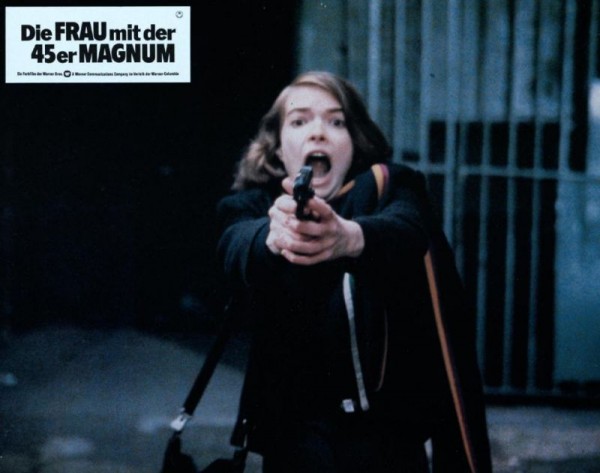
 If you missed the new digital restoration of Ms. 45 at BAMcinématek’s “Vengeance Is Hers” festival in February, you have another chance to catch it this weekend when it screens as part of the IFC Center’s weekly “Waverly Midnights: Late-Night Favorites” series on April 11-12. Abel Ferrara’s third film, following the 1976 pornographic 9 Lives of a Wet Pussy Cat and the 1979 gorefest The Driller Killer, is a low-budget grindhouse female revenge fantasy set on the gritty streets of New York City. In Ms. 45 (also known as Angel of Vengeance), Zoë Tamerlis Lund makes her screen debut as Thana, a mute woman working as a seamstress in the Garment District. After being raped twice in one day on separate occasions, she soon goes all Death Wish / Taxi Driver on men seeking a little more from women. Thana — named after Freud’s death instinct, Thanatos, the opposite of the sex instinct, Eros — grabs herself a .45 and quickly proves she is one helluva shot as she goes out in search of potential victims in Chinatown, Central Park, and the very place where Woody Allen and Diane Keaton sat on a bench, romantically looking out at the Queensboro Bridge in an iconic moment from Manhattan. Ferrara, who plays the masked rapist, captures the nightmarish feel of the city at the time, where danger could be lurking around any corner, with the help of James Lemmo’s lurid, pornlike cinematography and Joe Delia’s jazz-disco soundtrack. Lund would go on to cowrite Ferrara’s Bad Lieutenant, in which she plays a junkie named Zoë, before drugs killed her in 1999 at the age of thirty-seven. Ms. 45 is a cult classic that keeps getting better with age — and yes, that is a man dressed as Mr. Met at the Halloween party.
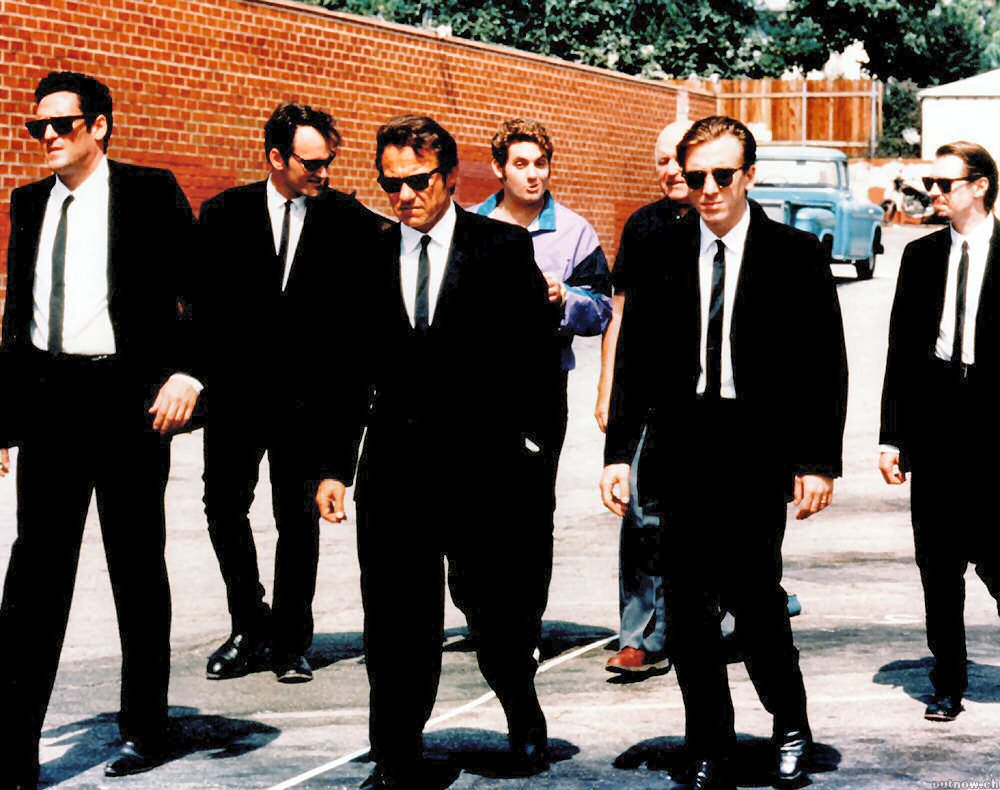
 Why does Steve Buscemi have to be Mr. Pink? Because Quentin Tarantino said so. Former video-store clerk Tarantino burst onto the indie film scene with the ultraviolent genre picture Reservoir Dogs, about a diamond heist gone horribly wrong, with big nods to Stanley Kubrick’s The Killing, Joseph Sargent’s The Taking of Pelham One Two Three, and other American noirs. You know there’s a problem if Mr. White (Harvey Keitel) has to be called in to clean up the mess made by Mr. Blonde (Michael Madsen), Mr. Blue (Eddie Bunker), Mr. Brown (Tarantino), Mr. Orange (Tim Roth), and, of course, Mr. Pink, all of whom are dressed in ultra-cool black-and-white suits, which makes all the red look that much richer. The robbery was organized by Joe (Lawrence Tierney) and his son, Nice Guy Eddie (Chris Penn), who has some pretty serious issues of his own. Double crosses, Madonna discussions, and a torture scene set to the Stealers Wheel song “Stuck in the Middle with You” make things go from funny to frightening in hysterical blasts of bloody irony as tensions mount and the criminals debate whether they were set up. Reservoir Dogs served as quite a debut for writer-director Tarantino, instantly making him an indie-film hero and sending him on his way, to be followed by his great script for True Romance and his Palme d’Or winner, Pulp Fiction, pulling off quite a triple play in three awesome years to start a career. Reservoir Dogs is screening at midnight on March 14 & 15 as part of the IFC Center’s “Late-Night Favorites” series, which continues with David Lynch’s Eraserhead March 21-22 and Kubrick’s The Shining March 28-29.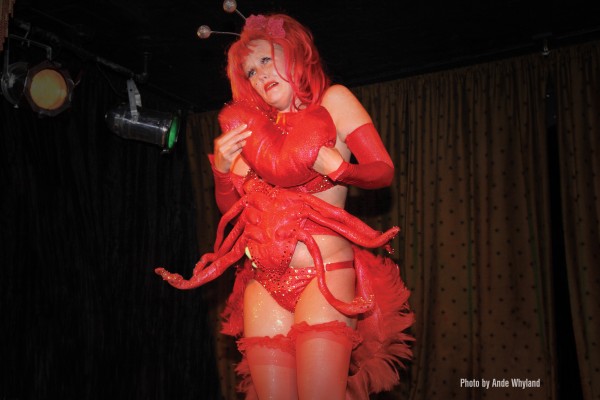
 In Exposed, visual artist Beth B, who got her start in the 1970s underground scene in New York City, invites viewers into the inner world of burlesque, going behind the scenes with eight current performers who share intimate details about their lives and their shows. Beth B (Two Small Bodies, An Unlikely Terrorist), who wrote, directed, produced, edited (with Keith Reamer), and photographed (with Dan Karlok) the seventy-six-minute documentary, goes backstage at such New York venues as the Slipper Room, Le Poisson Rouge, the Cutting Room, Dixon Place, P.S. 122, Galapagos Art Space, and Coney Island’s Sideshows by the Seashore as burlesque performers discuss issues of gender, control, freedom, disabilities, power, nudity, femininity, personal and professional identity, and more. “What the world projects as normal, it’s just such an illusion, it’s such a fantasy,” Bunny Love says, “and I love that fantasy.” UK comedian and cabaret performer Mat Fraser, who was born with “flippers” for hands, explains, “If you can make them laugh and make a political point that fuels your outrage, all the better.” And Rose Wood adds, “I’ve tried to present my audience with an indelible picture of the body seen in another way, seen in a way that’s different than they see themselves. They have ideas of what’s normal — what a man does, what a woman does, what a heterosexual does, what a gay person does — and I try to present them with another way of seeing the body.” Among the other performers who share their stories are Tigger!, who uses burlesque as a kind of sexual political theater; Dirty Martini, who pays tribute to such early stars of the wordless art form as Dixie Evans and Vickie Lynn; Bambi the Mermaid, who produces Coney Island’s popular Burlesque at the Beach series; Julie Atlas Muz, who honors Pina Bausch in her performance art; and World Famous *BOB*, who points out, “I never lie to people. People would say, ‘Are you a man or a woman?’ And I would say yes. That quick wit was something that I learned from my drag family, that quick wit, that ability to turn anything that hurts you inside into something that’s funny.”