Tag Archives: ifc center

PULP: A FILM ABOUT LIFE, DEATH AND SUPERMARKETS

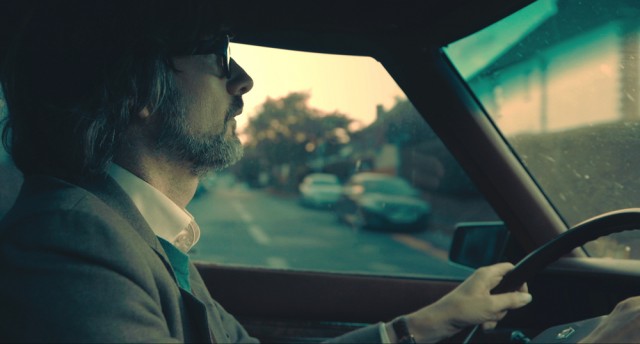
Jarvis Cocker takes a ride through his hometown of Sheffield as he prepares for Pulp farewell concert

Jarvis Cocker takes a ride through his hometown of Sheffield as he prepares for Pulp farewell concert

PULP: A FILM ABOUT LIFE, DEATH & SUPERMARKETS (Florian Habicht, 2013)
IFC Center
323 Sixth Ave. at West Third St.
Opens Wednesday, November 19
212-924-7771
www.ifccenter.com
www.pulpthefilm.com

Florian Habicht’s Pulp: A Film About Life, Death & Supermarkets is a brilliant inside look at the long-lasting relationship between a band and its hometown. In December 2012, British alternative band Pulp returned to the place of its birth, the rugged, working-class city of Sheffield in the north of England, for what was being billed as its last-ever concert on dry land. Pulp frontman Jarvis Cocker hooked up with Habicht (Love Story, Woodenhead), conceiving a project in which the time and place, along with the fans, would be just as important as the band and its music, if not more so. In the nonchronological film, Habicht cuts between archival footage of Pulp, clips from the final concert, interviews on the street with old and young fans, and brief chats with Pulp tour manager Liam Rippon and the other band members: guitarist Mark Webber, keyboardist Candida Doyle, bassist Steve Mackey, and drummer Nick Banks, who are pretty much taking it all in stride. But at the center of it all is the soft-spoken, enigmatic Cocker, who founded Pulp back in 1978 when he was fifteen years old.

Habicht shows Cocker biking and driving through Sheffield, discussing his first job working for a fishmonger in a mall, and, most thrillingly, fixing a flat tire on his less-than-fancy car. The theme song of the documentary is Pulp’s “Common People,” in which a woman tells Cocker, “I want to live like common people / I want to do whatever common people do / I want to sleep with common people / I want to sleep with common people like you.” Is it possible for a rock star to be “common people”? It doesn’t really matter as Cocker reestablishes his connection to Sheffield. “We stopped playing in 2001 or 2002 or whatever it was, and I did feel that the way it finished was kind of a bit, I don’t know, not right,” he says in the film. “It didn’t feel like a good ending. . . . So I know that tidying up isn’t the greatest rock-and-roll motivation, but I did want to kind of tidy things up and give the story a happy ending.” It is all very happy indeed, as Habicht also delves into such Pulp favorites as “This Is Hardcore” and “Help the Aged” as well as “Disco 2000,” “Underwear,” and “Sheffield: Sex City.” The band, which released seven studio albums during its career, from 1983’s It through 2001’s We Love Life, has no arguments or complaints, just positive attitudes that make Pulp a thoroughly exhilarating experience.

DOC NYC: FLORENCE, ARIZONA

FLORENCE, ARIZONA

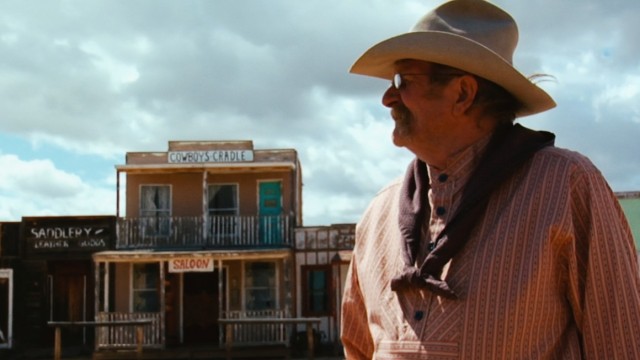
Gunny Jackson is just one of the many characters who populate the prison town of FLORENCE, ARIZONA

FLORENCE ARIZONA (Andrea B. Scott, 2014)
IFC Center
323 Sixth Ave. at West Third St.
Friday, November 14, 12:30, and Wednesday, November 19, 7:30
Festival runs November 13-20
212-924-7771
www.florencearizonafilm.com
www.docnyc.net

Brooklyn-based documentarian Andrea B. Scott reveals the soft underbelly of contemporary America in Florence, Arizona, which is having its world premiere this week at the annual DOC NYC festival. Scott heads to the small desert town of Florence in the Grand Canyon State, an area that was a farm community until a nearby 1875 silver boom led to its becoming a more wild West kind of place. Today the town revolves around the prison system; there are twice as many prisoners in Florence as there are residents, and a call to privatize more of the jails is part of the battle for mayor between the New Age-y Lina Austin and former police chief Tom Rankin, both of whom speak openly and honestly with Scott. Scott, who directed, produced, coedited, and photographed the film — which includes gorgeous shots of sunrises and vast landscapes — also meets with prison barber and former inmate Andy Celaya, who remembers the respect ex-cons used to get after serving their time; another former prisoner, young Marcus Seitz, who can’t wait to turn twenty-one so he can work inside the prison, explaining, “That would be pretty cool”; and grizzled prison detention officer Gunny Jackson, who runs the Semper Fi Ranch with his wife, Lois, and considers himself a “dove” who can be “a very vicious man when I want to be; I know how to inflict pain.” Scott also visits the Pinal County Historical Society, which features a section on all of the people who have been executed in Florence’s prisons.

Originally called Good Men, Bad Men, and a Few Rowdy Ladies during its successful Kickstarter campaign, Florence, Arizona is a pure slice of Americana, casting no judgments on a small cowboy town now beholden to the prison industrial complex. “What I found there was so much richer and nuanced than I ever could have expected — a prison town, yes, but also a deeply American town, full of colorful characters with universal stories,” Scott has said about her first visit to Florence, in December 2010. “On that trip, we began to spin an intricate web of people and places and stories — and before long, like any well-made web, we got stuck there, drawn into the town, its history, and its characters.” Florence, Arizona is screening November 14 and 19 at the IFC Center, with Scott, producer Devorah Brand, and executive producers David Menschel and Julie Goldman on hand to talk about the making of the film. DOC NYC runs November 13-20 at the IFC Center, Bow Tie Chelsea Cinemas, and the SVA Theatre, consisting of more than 150 screenings of new and old films, panel discussions, Q&As, and workshops.

GOODBYE TO LANGUAGE

GOODBYE TO LANGUAGE

Jean-Luc Godard’s GOODBYE TO LANGUAGE speaks for itself

GOODBYE TO LANGUAGE (ADIEU AU LANGAGE) (Jean-Luc Godard, 2014)
Film Society of Lincoln Center, Elinor Bunin Munroe Film Center, Francesca Beale Theater, 144 West 65th St., 212-875-5050
IFC Center, 323 Sixth Ave. at West Third St., 212-924-7771
Opens Wednesday, October 29
212-875-5050
www.kinolorber.com

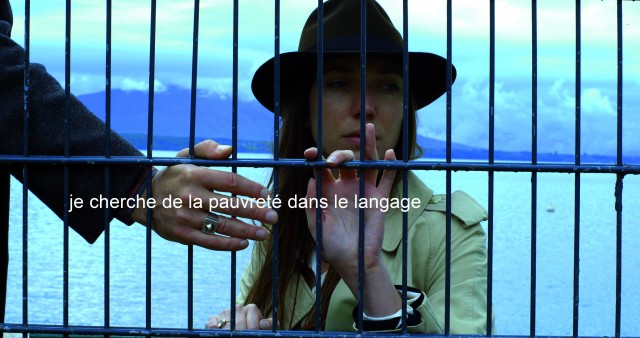
After the New York Film Festival advance press screening of Jean-Luc Godard’s 3D Goodbye to Language, a colleague turned to me and said, “If this was Godard’s first film, he would never have had a career.” While I don’t know whether that might be true, I do know that Goodbye to Language is the 3D flick Godard was born to make, a 3D movie that couldn’t have come from anyone else. What’s it about? I have no idea. Well, that’s not exactly right. It’s about everything, and it’s about nothing. It’s about the art of filmmaking. It’s about the authority of the state and freedom. It’s about extramarital affairs. It’s about seventy minutes long. It’s about communication in the digital age. (Surprise! Godard does not appear to be a fan of the cell phone and Yahoo!) And it’s about a cute dog (which happens to be his own mutt, Miéville, named after his longtime partner, Anne-Marie Miéville). In the purposefully abstruse press notes, Godard, now eighty-three, describes it thusly: “the idea is simple / a married woman and a single man meet / they love, they argue, fists fly / a dog strays between town and country / the seasons pass / the man and woman meet again / the dog finds itself between them / the other is in one / the one is in the other / and they are three / the former husband shatters everything / a second film begins / the same as the first / and yet not / from the human race we pass to metaphor / this ends in barking / and a baby’s cries.” Yes, it’s all as simple as that. Or maybe not.
Jean-Luc Godard has fun with 3D in GOODBYE TO LANGUAGE

Jean-Luc Godard has fun with 3D in GOODBYE TO LANGUAGE

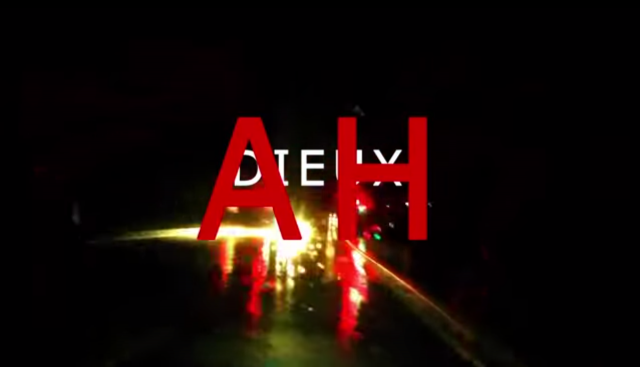
Godard divides the film into sections labeled “La Nature” and “La Métaphore,” cutting between several ongoing narratives, from people reading Dostoyevsky, Pound, and Solzhenitsyn at an outdoor café to an often naked man and woman in a kitchen to clips of such old movies as Dr. Jekyll and Mr. Hyde and The Snows of Kilimanjaro to Lord Byron and the Shelleys on Lake Geneva. Did I say “narrative”? It’s not really a narrative but instead storytelling as only Godard can do it, and this time in 3D, with the help of cinematographer Fabrice Aragno. Godard has a blast with the medium, which he previously used in a pair of recent shorts. He has fun — and so do we — as he toys with the name of the film and the idea of saying farewell (he plays with the French title, Adieu au langage, forming such puns as “Ah, dieu” and “Ah, dieux,” making the most of 3D layering); creates superimpositions and fast-moving shots that blur the image, making the glasses worthless; changes from sharp color to black-and-white to wild pastel-like bursts of red, blue, and green; evokes various genres, with mystery men in suits and gunshots that might or might not involve kidnapping and murder; and even gets a kick out of where he places the subtitles. These games are very funny, as is the voiceover narration, which includes philosophy from such diverse sources as Jacques Ellul (his essay “The Victory of Hitler”) and Claude Monet (“Paint not what we see, for we see nothing, but paint that we don’t see”). And for those who, like my colleague, believe the film to be crap, Godard even shows the man sitting on the bowl, his girlfriend in the bathroom with him, directly referencing Rodin’s The Thinker and talking about “poop” as he noisily evacuates his bowels. So, in the end, what is Godard saying farewell to? Might this be his last film? Is he saying goodbye to the old ways we communicated? Is he bidding adieu to humanity, leaving the future for the dogs, the trees, and the ocean? Does it matter? A hit at Cannes, Goodbye to Language opens October 29 at the IFC Center and Lincoln Center after screening at the New York Film Festival earlier in the month. You can check out the NSFW French trailer here.

THE BLUE ROOM

Mathieu Amalric

Mathieu Amalric stars as a husband and father in deep trouble in film he also directed and cowrote

THE BLUE ROOM (LA CHAMBRE BLEUE) (Mathieu Amalric, 2014)
IFC Center
323 Sixth Ave. at West Third St.
Opens Friday, October 3
212-924-7771
www.ifccenter.com
www.lachambrebleue-lefilm.com

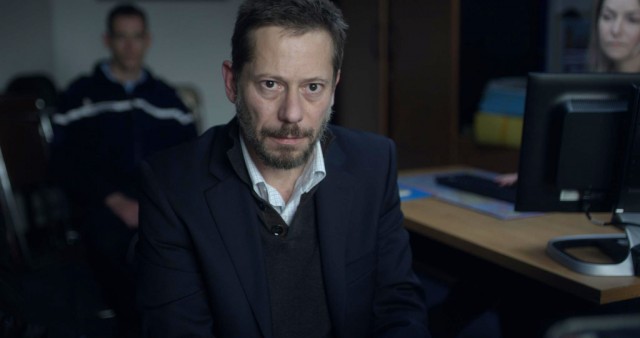
Real-life partners Mathieu Amalric and Stéphanie Cléau strip Georges Simenon’s short 1955 novel The Blue Room to its bare essentials — and we do mean bare — in their intimate, claustrophobic modern noir adaptation, which made its North American premiere at the New York Film Festival last week. In addition to being one of the world’s most talented actors, starring in such films as Kings and Queen, The Diving Bell and the Butterfly, A Christmas Tale, and Venus in Fur, Amalric has directed several previous works, including On Tour, which earned him the Best Director prize at Cannes. In The Blue Room, Amalric plays Julien Gahyde, a successful agriculture equipment salesman whose passionate affair with a local pharmacist’s wife, Esther Despierre (Cléau, who cowrote the script with Amalric), appears to have ended in murder. The film opens with Grégoire Hetzel’s lush, sweeping music as the camera makes its way to a blue hotel room where Julien and Esther have just made love offscreen. “Did I hurt you?” she asks. “No,” he responds. “You’re angry,” she says. “No,” he repeats as she laughs and a drop of blood falls on a creamy white sheet. Only then do we see the naked, sweaty couple, whose lurid tale has been succinctly revealed by this highly stylized, beautifully orchestrated scene. Next we hear Julien being interrogated by a magistrate (Laurent Poitrenaux) about a suspicious death, and soon we see Julien in handcuffs in the police station. We don’t know exactly what crime he has been accused of, nor do we know the victim — it could be Julien’s wife, Delphine (Léa Drucker), Esther’s husband, Nicolas (Olivier Mauvezin), or maybe even Esther herself. But as director Amalric, cinematographer Christophe Beaucarne, and editor François Gedigier cut between the past and the present, the details slowly unfold — although that doesn’t mean they ever become completely clear.

Amalric fills The Blue Room with bold splashes of color amid all the darkness and muted skin tones, from the red towel that signals Julien and Esther’s illicit rendezvous to Delphine’s blue bikini to the strikingly red hair of Nicolas’s mother (Véronique Alain) and the shiny green and yellow John Deere equipment he sells. Amalric and Cléau trim so much out of the original story that it too often feels overly cold and calculating, the manipulation too clear and obvious. The nudity also lacks subtlety; Amalric and Cléau might be comfortable with each other sans clothing, but it seems to be a bit of an obsession with Amalric the director. Nonetheless, The Blue Room, shot in the old-fashioned aspect ratio of 1:33 and running a mere seventy-six minutes, is a gripping yarn, a lurid tale of sex and murder, pain and passion, and femmes fatale, told from the point of view of a relatively quiet, reserved man who never thought his world could just fall apart like it does. With such plot elements as adultery and murder and even the presence of a young daughter (Mona Jaffart), the story cannot fail to call to mind French author Gustave Flaubert’s classic novel of provincial France and misplaced passion, Madame Bovary, but the near-echoes never become too loud, merely adding a somewhat puzzling flavor to the film, like a dream half remembered. Following its screenings earlier this week at the New York Film Festival, The Blue Room opens October 3 at the IFC Center.

1939 — HOLLYWOOD’S GOLDEN YEAR: NINOTCHKA

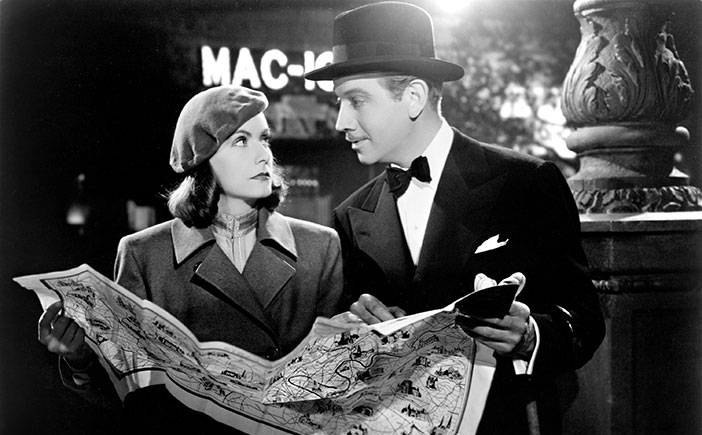
Greta Garbo and Melvyn Douglas get involved in a battle of wits and ideologies in Ernst Lubitsch’s classic romantic comedy NINOTCHKA

WEEKEND CLASSICS: NINOTCHKA (Ernst Lubitsch, 2012)
IFC Center
323 Sixth Ave. at West Third St.
October 3-5, 11:00 am
Series continues through November 9
212-924-7771
www.ifccenter.com

Greta Garbo laughs — and says she doesn’t want to be alone — in Ernst Lubitsch’s magnificent pre-Cold War comedy Ninotchka, which is being shown October 3-5 in a DCP projection as part of the IFC Center Weekend Classics series “1939 — Hollywood’s Golden Year.” In her next-to-last film, Garbo is sensational as Nina Ivanovna “Ninotchka” Yakushova, a Russian envoy sent to Paris to clean up a mess left by three comrade stooges, Iranov (Sig Ruman), Buljanov (Felix Bressart), and Kopalsky (Alexander Granach). The hapless trio from the Russian Trade Board had been sent to France to sell jewelry previously owned by the Grand Duchess Swana (Ina Claire) and now in the possession of the government following the 1917 Russian Revolution. But the duchess’s lover, Count Léon d’Algout (Melvyn Douglas), gets wind of the plan and attempts to break up the deal while also introducing the three men to the many decadent pleasures of a free, capitalist society. Then in waltzes the stern, by-the-book Ninotchka, who wants to set the Russian men straight, as well as Léon. “As basic material, you may not be bad,” she tells him atop the Eiffel Tower, “but you are the unfortunate product of a doomed culture.” At first, Ninotchka speaks robotically, spouting the company line, but she loosens up considerably once Léon shows her what communism has been depriving her of, yet it’s difficult for her to turn her back on the cause, leading to numerous hysterical conversations — the razor-sharp script was written by Charles Brackett, Walter Reisch, and Billy Wilder, based on a story by Melchior Lengyel — that serve as both a battle of the sexes and social commentary on the Russian and French ways of life. “I’ve heard of the arrogant male in capitalistic society. It is having a superior earning power that makes you that way,” Ninotchka tells Léon shortly after meeting him on a Paris street. “A Russian! I love Russians! Comrade, I’ve been fascinated by your Five-Year Plan for the last fifteen years,” Léon responds, to which Ninotchka tersely replies, “Your type will soon be extinct.” Nominated for four Academy Awards, including Best Picture, Best Actress, Best Original Story, and Best Screenplay, Ninotchka is one of the most delightful romantic comedies ever made, filled with little surprises every step of the way (including a serious cameo by Bela Lugosi), serving up a blueprint that has been followed by so many films for three-quarters of a century ever since. The IFC Center series celebrating Hollywood’s most spectacular year continues through November 9 with such other splendid fare as Wuthering Heights, The Wizard of Oz, and Gone with the Wind.

HIGH ART: HAROLD AND KUMAR GO TO WHITE CASTLE

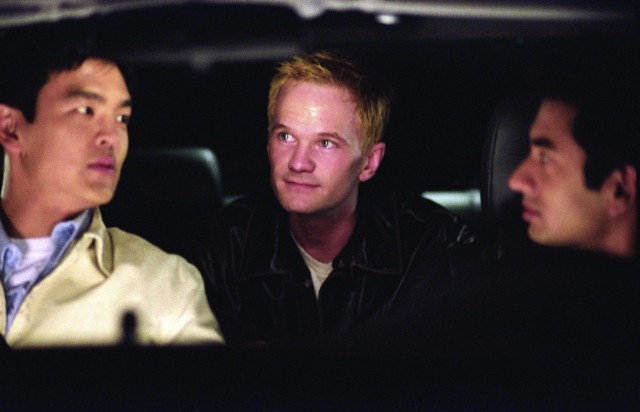
Harold and Kumar and Neil Patrick Harris are on a mission not quite from God as they search for White Castle

Harold, Kumar, and the NPH are on a mission not quite from God as they search for a White Castle to feed their buzz

WAVERLY MIDNIGHTS: HAROLD & KUMAR GO TO WHITE CASTLE (Danny Leiner, 2004)
IFC Center
323 Sixth Ave. at Third St.
Friday, September 19, and Saturday, September 20, 12 midnight
212-924-7771
www.ifccenter.com

Harold (John Cho) is a hardworking Asian who is taken advantage of by the men in his office, forced to do their work and have no fun while having no idea how to talk to hot neighbor Maria (Paula Garcés). Kumar (Kal Penn) comes from a family of doctors and is expected to follow in the same direction. But all Kumar likes to do is get blasted on beer and pot and chase girls. So one night he convinces the much more straitlaced Harold that they have to go to White Castle to fill their craving for major munchies. Unfortunately, the nearest White Castle branch is no more, so they set out on a rowdy all-night adventure in search of the next WC, in Cherry Hill, and on the way they get sidetracked by college parties, strange bathroom incidents, the ugliest man in the world, a team of extreme idiots, cops with attitude, and Doogie Howser. Harold & Kumar Go to White Castle knows exactly what it is, and it does it extremely well, expertly directed by Danny Leiner, who also brought us the unforgettable classics Dude, Where’s My Car? and Balls Out: Gary the Tennis Coach. The film also features a bevy of cool cameos, including David Krumholtz as Goldstein and Eddie Kaye Thomas as Rosenberg, Harold and Kumar’s drug-addled sloth friends; Fred Willard as Dr. Willoughby, who has one hell of an interview with Kumar; Ryan Reynolds as a male nurse; Anthony Anderson as a fast-food employee; Christopher Meloni and Malin Åkerman as Mr. & Mrs. Freakshow; and, yes, Neil Patrick Harris as the ultimate Neil Patrick Harris. You’ll start out hating yourself for laughing so much, but eventually you’ll just come around to accepting that this is just a damn funny movie that you understand far too well. Harold & Kumar Go to White Castle — which led to a pair of lesser sequels, Harold & Kumar Escape from Guantanamo and A Very Harold & Kumar 3D Christmas — is screening in a tenth anniversary 35mm print September 19-20 as part of the IFC Center’s Waverly Midnights: High Art series, which continues through November 8 with such other highbrow drug-related fare as Fast Times at Ridgemont High, Dazed & Confused, True Romance, and Reefer Madness.

ROCKS IN MY POCKETS

ROCKS IN MY POCKETS

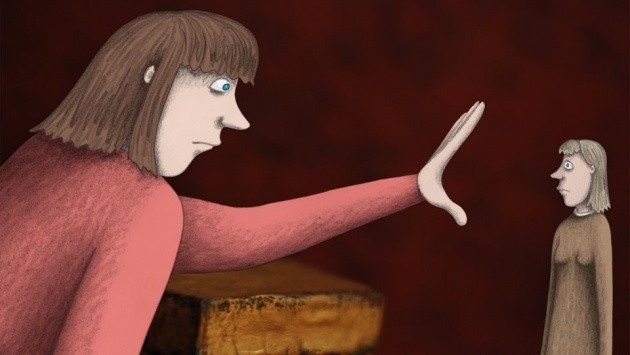
Signe Baumane examines her family history of suicide and depression in ROCKS IN MY POCKETS

ROCKS IN MY POCKETS: A CRAZY QUEST FOR SANITY (Signe Baumane, 2014)
IFC Center
323 Sixth Ave. at West Third St.
Opens Wednesday, September 3
212-924-7771
www.ifccenter.com
www.rocksinmypocketsmovie.com

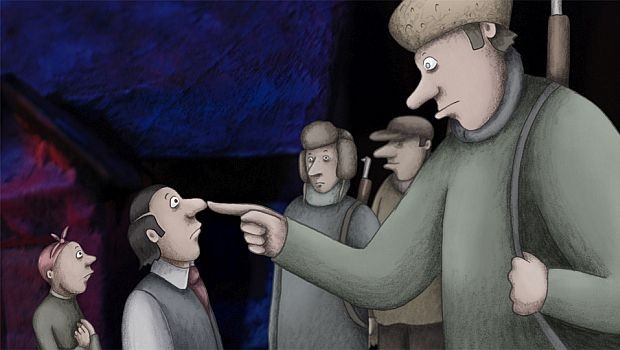
The recent suicide of Robin Williams shook the nation, once again pointing out that depression is no laughing matter. But Latvian-born, Brooklyn-based writer-director-producer-animator Signe Baumane takes a unique approach to depression and suicide in the darkly twisted animated film Rocks in My Pockets: A Crazy Quest for Sanity. Influenced by such animation giants as Jan Švankmajer and Bill Plympton in addition to Lithuanian-Polish illustrator Stasys Eidrigevicius and Russian animator Yuri Norstein, Baumane, a self-described “Master of Self Pity,” incorporates hand-drawn animation, papier-mâché constructions, and stop-motion animation in telling the story of her family’s long history of mental illness and suicide. Inspired by her own thoughts of ending it all, Baumane (Teat Beat of Sex), in her feature-length debut, divides the film into segments about her suicidal relatives. She narrates the tales of Indulis, an entrepreneur and failed counterfeiter with an “idea-generating brain”; Anna, a university graduate and secretary who falls in love with Indulis, her married boss; Miranda, who looks at the world as if everything were a work of art; Linda, a medical student with big dreams; Irbe, a lonely music teacher who hears voices in her head; and herself as they all experience various aspects of severe depression while facing the trials and tribulations of everyday life in a changing sociopolitical climate in Eastern Europe.

ROCKS IN MY POCKETS

ROCKS IN MY POCKETS uses twisted humor to explore some very serious subjects

Despite the serious topics and events — and the regular appearance of nooses tempting the protagonists — Rocks in My Pockets is filled with clever jokes, imaginative visual puns, beautiful imagery, and a playful score by Kristian Sensini; Baumane refers to it as “a funny film about depression,” and that’s just what it is. The animated characters make their way through lush forests, across a real chess board, and past other colorful backgrounds as reality strikes them hard. The personal nature of the film is enhanced by Baumane’s own narration, in her thick Latvian accent. (Her mother attempted to talk her out of doing the narration, thinking it was a bad idea.) “I want to survive, but I don’t want to live,” Baumane says halfway through the film. “When my brain is idle, it starts eating itself.” Fearing that depression and suicide are part of her DNA, she’s unsure how she can get away from it — and prevent it from affecting future generations of her family. Winner of the International Critics (FIPRESCI) Prize at the 2014 Karlovy Vary Film Festival and financed in part by a Kickstarter campaign (where you can learn more about the making-of process), Rocks in My Pockets opens September 3 at the IFC Center, with Baumane taking part in Q&As following the 6:30 and 8:30 shows on Wednesday and Thursday, with more to be announced; in addition, original drawings from the film will be given away at select screenings.