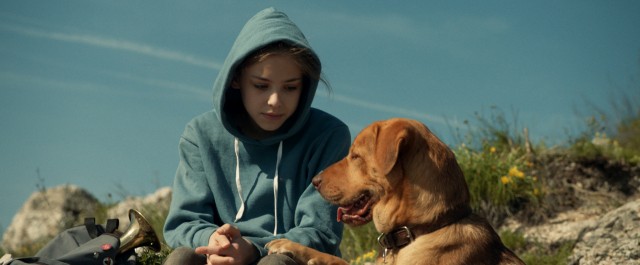
There are tough times ahead for Lili (Zsófia Psotta) and Hagen in WHITE GOD
WHITE GOD (FEHÉR ISTEN) (Kornel Mundruczó, 2014)
IFC Center, 323 Sixth Ave. at Third St., 212-924-7771
Lincoln Plaza Cinema, 1886 Broadway between 62nd & 63rd Sts., 212-757-2280
Opens Friday, March 27
www.magpictures.com
 You can add Hagen, the protagonist of Kornel Mundruczó’s White God, to the list of great canine characters in film, joining such esteemed company as Lassie, Benji, Beethoven, Sounder, Old Yeller, and, of course, Cujo. Played by year-old siblings Luke and Bodie, who were discovered by animal coordinator Teresa Miller in the classifieds, Hagen is man’s prototypical best friend — or in this case, the constant companion of thirteen-year-old classical trumpeter Lili (Zsófia Psotta) — smart and caring, loyal and loving, until things go really, really wrong. (Miller trained under her father, Karl Lewis Miller, who worked on such films as They Only Kill Their Masters, Dracula’s Dog, Call of the Wild, Babe, Cujo, and the Beethoven movies.) When her mother (Lili Horváth) and her new husband go away for a few months, Lili is forced to stay with her bitter, unhappy father (Zsótér Sándor), who refuses to register Hagen with the authorities and pay the dog tax. (In Hungary, mixed-breed dogs are taxed but purebred are not in an effort to control the feral population.) He throws Hagen out of their car, leaving him by the side of the road. At first Lili and Hagen try to find each other, but soon the dog becomes entangled in a series of dangerous situations, fighting for his life — and then fighting back, for mistreated mutts everywhere.
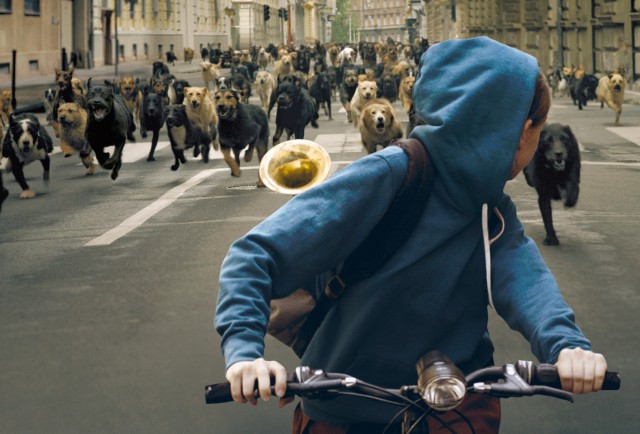
Dogs are on the march and out for revenge in Kornel Mundruczó’s Hungarian parable
Winner of the Un Certain Regard Prize at the 2014 Cannes Film Festival, White God is a powerful parable about the treatment of the homeless, of immigrants, of all those eking out existence on the fringes of society, the dogs representing slaves and other victims of colonialism, racism, and persecution. However, it is also overly manipulative and heavy-handed, the story line echoing the Planet of the Apes series but without enough nuance. (The film also evokes such classics as Spartacus and The Birds in theme and A Clockwork Orange in format.) Mundruczó (Pleasant Days, Johanna), who cowrote the film with regular collaborators Kata Wéber and Viktória Petrányi, shows tremendous skill with the dogs, particularly Hagen (who shares his name with a global pet product company) and his stray friend, an adorable Jack Russell Terrier (Marlene), making them deep, believable characters, but as the film grows more technically adept, it also gets colder, more distant, the human characters less realistic. The last half hour or so goes back and forth between being fierce and terrifying to overbearing and preachy. It certainly makes its point, though — and it’s likely to leave you thinking twice before you yell at your dog again.
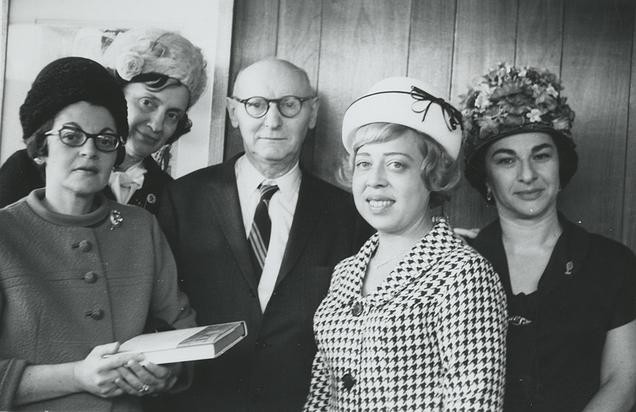
 Who ever thought that little old Yiddish mensch Isaac Bashevis Singer was such a horndog? Asaf Galay and Shaul Betser begin The Muses of Bashevis Singer, their light and playful documentary, with the following quote from the Nobel Prize-winning author: “In my younger days I used to dream about a harem full of women. Lately I’m dreaming of a harem full of translators. If those translators could be women in addition, this would be paradise on earth.” Well, it seems that Singer, who was born in Poland in 1902, emigrated to the United States in 1935, and died in Florida in 1991 at the age of eighty-eight, found that paradise, as Galay and Betser meet with a series of women who were among many hand-picked by Singer, the man who nearly singlehandedly preserved Yiddish literature in the twentieth century, to serve as his translators, and not necessarily because of their language skills. “There were certain women who were more than just translators to him. It happened quite often,” says his Swedish publisher, Dorothea Bromberg, who also talks about Alma, Singer’s wife of more than fifty years. “He loved her, I’m sure, in his own way,” she adds. “She was very jealous of him, and she was completely right.” Galay and Betser meet with translators Eve Fridman, Evelyn Torton Beck, Dvorah Telushkin, Marie-Pierre Bay, Duba Leibell, and Dr. Bilha Rubenstein as well as Singer biographers Florence Noiville and Janet Hadda, his granddaughters Hazel Karr and Merav Chen-Zamir, Yentl the Yeshiva Boy playwright Leah Napolin, and his longtime secretary and proofreader, Doba Gerber, who share intimate, surprising tales about the author of such books as The Family Moskat, The Magician of Lublin, Shosha, and Enemies, a Love Story and such short stories as “Gimpel the Fool,” “A Friend of Kafka,” and “Zlateh the Goat.”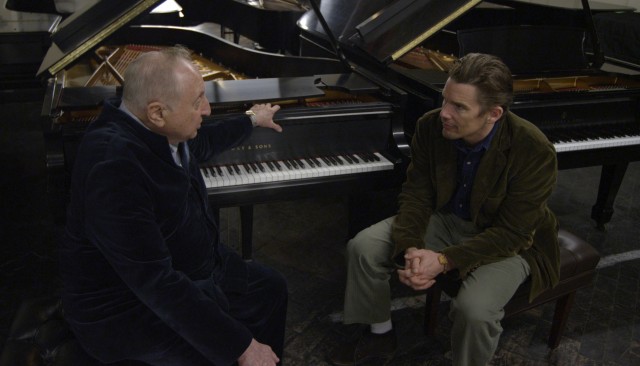
 No, with Seymour: An Introduction, Ethan Hawke hasn’t managed the nearly impossible, filming an adaptation of the J. D. Salinger story about a young man who commits suicide. Instead, Hawke uses the title for his beautifully touching, life-affirming portrait of octogenarian composer and musician Seymour Bernstein. An extraordinary pianist, the Newark-born Bernstein started playing when he was three, began giving lessons when he was fifteen, and, when he turned fifty, decided to stop performing recitals despite great critical success, in order to concentrate on teaching and composing and to avoid his stage fright and the negative aspects of commercial fame. After meeting at a dinner party, Hawke and Bernstein hit it off and agreed to collaborate on the project, which was filmed over the course of two years. Hawke, in his first documentary and third feature as director (following Chelsea Walls and The Hottest State), shows Bernstein holding master classes in auditoriums, teaching in his cramped New York City apartment, talking in a café with former student and current New York Times architecture critic Michael Kimmelman, and selecting just the right piano for a recital Hawke convinces him to give at the Steinway & Sons showroom on West Fifty-Seventh St.; in addition, Hawke speaks with such other Bernstein friends as writer and scholar Andrew Harvey, pianist and lecturer Joseph Smith, and musician and songwriter Kimball Gallagher.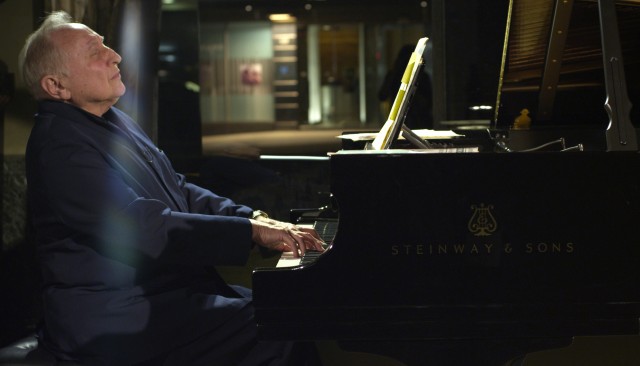

 Director David Cronenberg just might have made the best film of his career with the brilliant A History of Violence. Set to the marvelously tense music of Howard Shore — which threatens to explode at any moment — the film stars Viggo Mortensen as Tom Stall, a quiet, calm family man who runs a local diner in a small town in Indiana. Stall reluctantly becomes the town hero (and media darling) after a dangerous, bloody incident in his diner, which leads to the arrival of Carl Fogaty (the excellent Ed Harris), an East Coast mob kingpin who insists that Tom is actually Joey Cusack, a former Mafia goon who is in witness protection. As Fogaty and his men harass Tom and his family (wife Maria Bello and kids Ashton Holmes and Heidi Hayes), Stall desperately fights to protect his simple, happy life. William Hurt excels in a small role near the end of the film. A History of Violence is as suspenseful as they come, a simmering masterpiece that blows up the American dream. The film is loosely based on the graphic novel by John Wagner and Vince Locke, but as Cronenberg explained at the 2005 San Diego Comic-Con, he didn’t even know the book existed until the production was well under way, and Josh Olson’s outstanding screenplay ultimately veers far away from its source. A History of Violence is screening February 6 & 7 as part of the IFC Center’s Waverly Midnights “Cronenberg” series, which continues February 13-15 with Eastern Promises before concluding February 20-21 with Cosmopolis.