The wonderful LOVES OF A BLONDE is part of Cannes Film Festival tribute at FIAF and will be introduced by director Miloš Forman
CinémaTuesdays: LOVES OF A BLONDE (LÁSKY JEDNÉ PLAVOVLÁSKY) (Miloš Forman, 1965)
French Institute Alliance Française, Florence Gould Hall
55 East 59th St. between Madison & Park Aves.
Tuesday, July 16, $10, 12:30, 4:00, 7:30
212-355-6100
www.fiaf.org
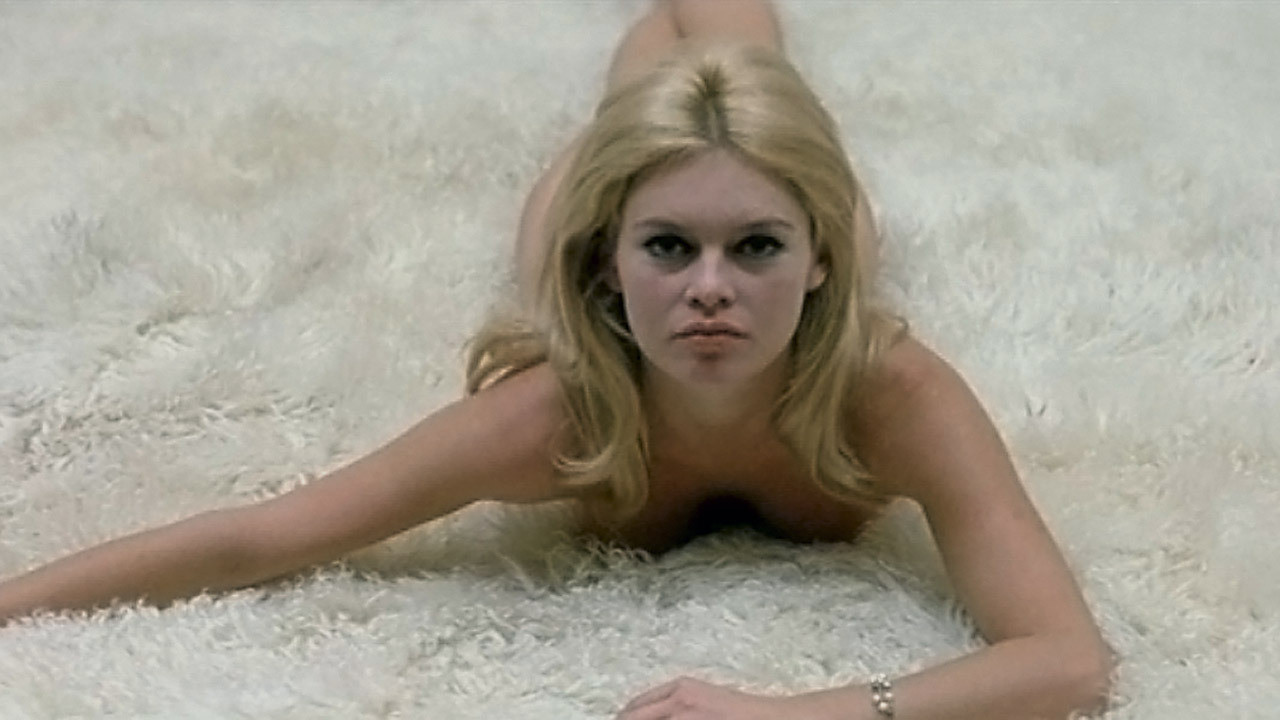
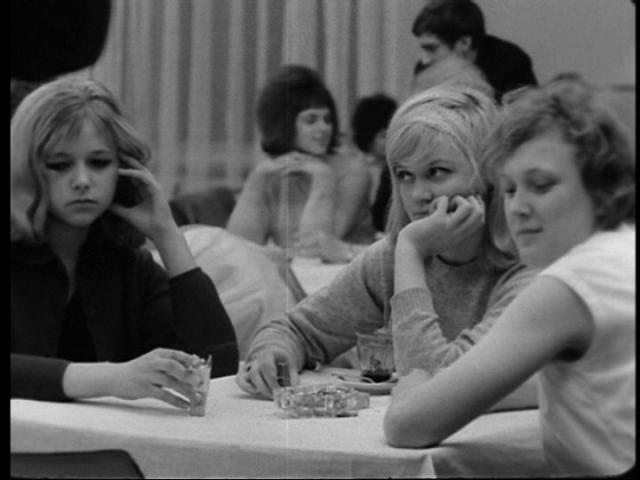
 Released a few years before the Summer of Love and Prague Spring, Miloš Forman’s Loves of a Blonde is a very funny romantic black comedy that also has a lot to say about women’s burgeoning sexual freedom. The delightful Hanu Brejchovou stars as Andula, a young factory worker whose sexual liberation is ahead of its time in an old-fashioned small town. When a trainload of military reservists arrives, most of the single women do their best to attract the uniformed men at a big party, but Andula is more interested in pianist Milda (Vladimíra Pucholta). In a scene for the ages, three men try to pick up Andula and her two friends, with hysterical results. Later, when Andula visits Milda in Prague, she meets the piano player’s parents (Milada Jezková and Josef Sebánek), who are a droll riot. A Czech New Wave classic that evokes Godard and Truffaut, Loves of a Blonde, which was nominated for an Oscar for Best Foreign Language Film, caused a sensation when it played the New York Film Festival and introduced Forman (One Flew Over the Cuckoo’s Nest, Amadeus) to the world. Notably, assistant director and cowriter Ivan Passer, who also worked with Forman on the Oscar-nominated The Firemen’s Ball, defected to America following Prague Spring and went on to make such films as Born to Win and Cutter’s Way. Loves of a Blonde is screening July 16 as part of the FIAF CinémaTuesdays series “Highlights of Cannes Film Festival with Gilles Jacob,” comprising works chosen by festival president Jacob in honor of the glamorous event’s sixty-fifth anniversary, and the one and only Forman himself will be at Florence Gould Hall to introduce the 7:30 show. [ed note: Unfortunately, Forman has had to cancel his appearance.] The series continues July 23 with Luis Buñuel’s Viridiana before concluding July 30 with Robert Bresson’s Pickpocket.
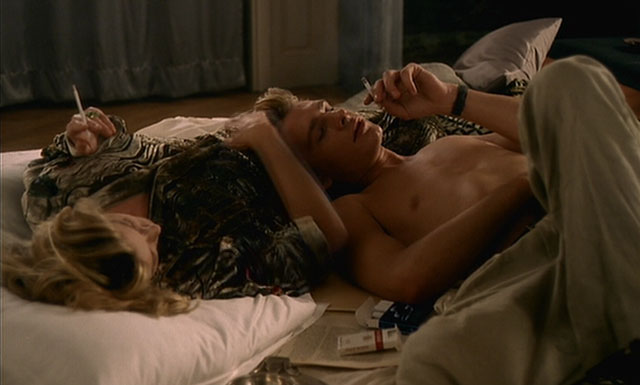
 French auteur Leos Carax’s adaptation of Herman Melville’s controversial 1852 novel, Pierre: or, The Ambiguities, is a dour, plodding tale of family dysfunction reaching ridiculous heights. Named after the first letter of each word in the French title of Melville’s tome, Pierre ou les ambiguities, and the tenth and final draft of the script, POLA X follows the trials and tribulations of an aristocratic clan facing its ultimate demise. The patriarch, a cold war diplomat, has died, and his beautiful blonde wife, Marie (Catherine Deneuve), is going through his boxes of papers. Their son, novelist Pierre (Guillaume Depardieu), who refers to his mother as his sister and is not uncomfortable talking to her while she is naked, is engaged to the prim and proper Lucie (Delphine Chuillot). Pierre, Lucie, and his very serious cousin, Thibault (Laurent Lucas), form a sort of Jules and Jim trio. But Pierre is haunted by a dark-haired woman lurking in his dreams, a somewhat feral creature who ends up claiming to be his half-sister, Isabelle (Yekaterina Golubeva), the result of an indiscretion their father had while on an assignment. Angered by the story Isabelle tells him, Pierre takes off with her and her companions, Razerka (Petruta Catana) and Razerka’s young daughter (Mihaella Silaghi). Pierre and Isabelle grow too close very quickly, soon finding themselves posing as husband and wife while living with an underground radical organization. And it only gets crazier from there. POLA X attempts to be epic in scope, its central tale of incest and ennui echoing France’s treatment of Eastern Europe and its refugees, but Carax makes virtually every character unlikable, and nearly every scene stretches credulity, resulting in two hours of annoying people making annoying choices and doing annoying things. POLA X is screening on February 19 at Florence Gould Hall as part of the French Institute Alliance Française CinémaTuesdays series “When Boy Meets Girl: The Cinema of Leos Carax”; it was initially supposed to be preceded by Carax’s 1997 short, Sans titre, also starring Depardieu, Golubeva, and Deneuve, but that has been canceled. The series concludes February 26 with Carax’s widely hailed latest film, Holy Motors, with the director on hand to participate in a Q&A with Richard Brody following the 7:00 show.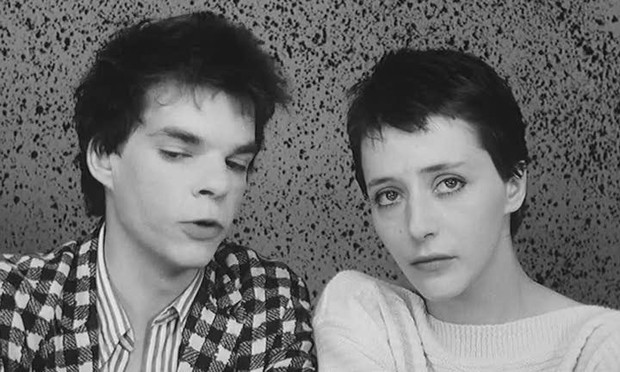
 French auteur Leos Carax learned a lot about making movies during his stint as a critic for Cahiers du cinéma, the magazine that came to represent the Nouvelle Vague movement of the 1950s. Born Alexandre Oscar Dupont in a Paris suburb in 1960, Carax released his first feature-length film in 1984, Boy Meets Girl, a black-and-white homage to the legacy of Jean-Luc Godard, François Truffaut, and Claude Chabrol as well as King Vidor, Buster Keaton, and Ingmar Bergman. Yet despite its obvious influences, Boy Meets Girl triumphs as a uniquely told tale of a strange young man named Alex (Carax’s onscreen alter ego, Denis Lavant) and his oddball adventures in search of love and truth. Dumped by Florence (Anna Baldaccini), he fakes his way into a party, where he finds Mireille (Mireille Perrier), a suicidal model who is intrigued by him. Carax, who would go on to make such well-received films as Mauvais Sang, Pola X, and Holy Motors, fills Boy Meets Girl with wonderful little touches, beautifully photographed in long takes by Jean-Yves Escoffier, from a repeating black-and-white clothing pattern and a battle with a pinball machine to a sudden burst of tap-dancing and a mysterious meeting along the Seine. Alex is a warped version of Jean-Pierre Léaud’s Antoine Doinel, but even though Alex as a lead character is no match for Truffaut’s seminal figure in the history of twentieth-century cinema, it’s still impossible to take your eyes off him as he continues to do and say a a whole lot of very weird and unpredictable things. Boy Meets Girl is screening on February 12 at Florence Gould Hall as part of the French Institute Alliance Française CinémaTuesdays series “When Boy Meets Girl: The Cinema of Leos Carax” and will be preceded by Merde, Carax’s contribution to the three-part omnibus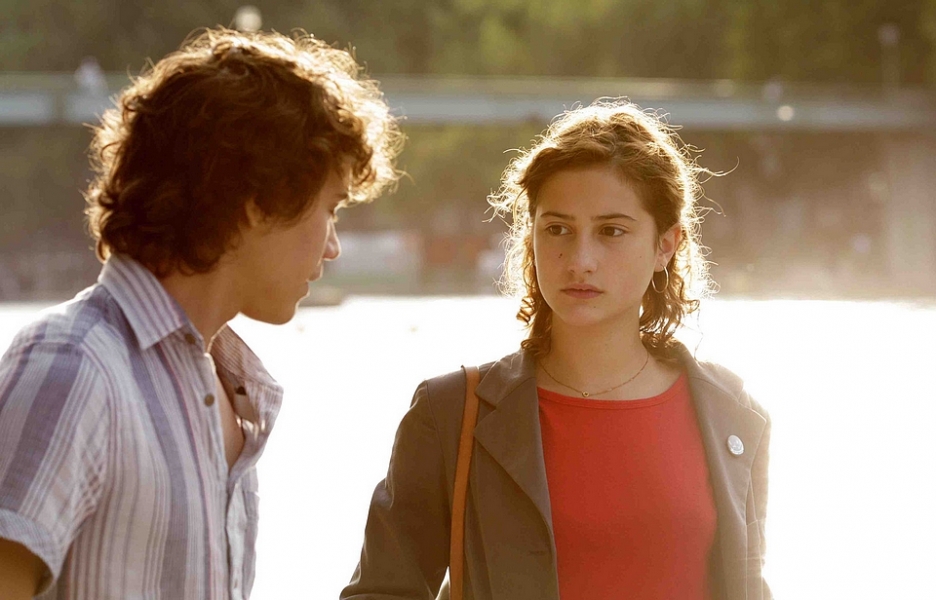
 French filmmaker Mia Hansen-Løve’s third film is an infuriating yet captivating tale that runs hot and cold. Goodbye First Love begins in Paris in 1999, as fifteen-year-old Camille (Lola Créton) frolics naked with Sullivan (Sebastian Urzendowsky), her slightly older boyfriend. While she professes her deep, undying lover for him, he refuses to declare his total dedication to her, instead preparing to leave her and France for a long sojourn through South America. When Camille goes home and starts sobbing, her mother (Valérie Bonneton), who is not a big fan of Sullivan’s, asks why. “I cry because I’m melancholic,” Camille answers, as only a fifteen-year-old character in a French film would. As the years pass, Camille grows into a fine young woman, studying architecture and dating a much older man (Magne-Håvard Brekke), but she can’t forget Sullivan, and when he eventually reenters her life, she has some hard choices to make. Créton (Bluebeard) evokes a young Isabelle Huppert as Camille, while Urzendowsky (The Way Back) is somewhat distant as the distant Sullivan. There is never any real passion between them; Hansen-Løve (All Is Forgiven,