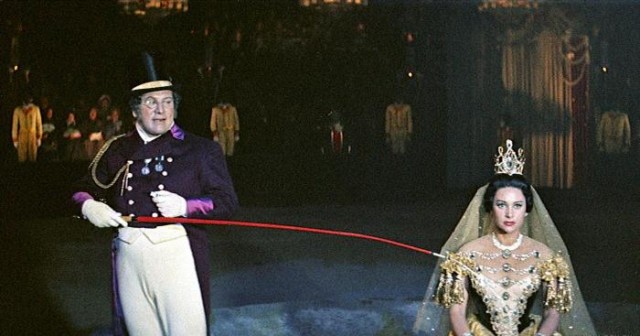
Ringmaster Peter Ustinov promises “Rumour! Scandal! Passion!” in presenting story of Lola Montès (Martine Carol)
CINÉSALON: LOLA MONTÈS (Max Ophüls, 1955)
French Institute Alliance Française, Florence Gould Hall
55 East 59th St. between Madison & Park Aves.
Tuesday, February 18, $13, 4:00 & 7:30
Series continues Tuesdays through March 18
212-355-6100
www.fiaf.org
 “And now, the moment you’ve all been waiting for!” announces the monocled, whip-snapping Mammoth Circus ringmaster (Peter Ustinov) as Max Ophüls’s 1955 CinemaScope masterpiece, Lola Montès, begins. “The most sensational act of the century!” he continues, the camera following him in a breathtaking tracking shot as he introduces “a creature a hundred times more wild than any beast in our menagerie! A monster of cruelty . . . with the eyes of an angel!” Then, with much fanfare, Lola Montès (Martine Carol) arrives like a queen — albeit a circus queen — as the ringmaster tells the audience that they (we) are about to witness “the whole truth of the extraordinary life of Lola Montès.” What follows is not necessarily the true tale of the famed courtesan and entertainer who gained more notoriety for her scandalous love affairs and hourglass body than for her abilities as an actress and dancer. Lola’s story is told in a series of flashbacks showing her with Franz Liszt (Will Quadflieg), Lt. Thomas James (Ivan Desny), conductor Claudio Pirotto (Claude Pinoteau), a young student (Oskar Werner), and, most critically, King Ludwig I of Bavaria (a dashing Anton Walbrook). The episodes reveal her to be both loved and reviled as she struggles to succeed in her career, which ends up taking second place to the men in her life. Ophüls barely shows the cigar-loving Lola performing, instead letting the camera slowly dance around her, often depicting her through window frames, screens, and curtains as if she is a caged animal, all leading to a dangerous grand finale.
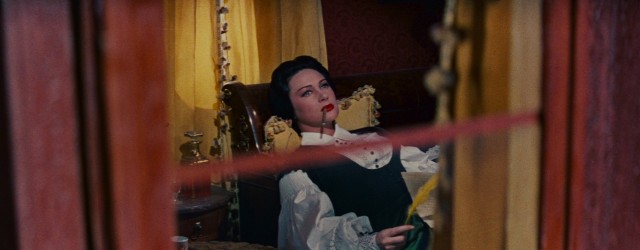
Lola (Martine Carol) dreams of a better life in Max Ophüls’s CinemaScope masterpiece
Lola Montès is filled with visual splendor; Jean d’Eaubonne and Willy Schatz’s sets are lush and elegant, and Georges Annenkov’s and Marcel Escoffier’s costumes are beautiful and appropriately extravagant, while cinematographer Christian Matras creates an emotionally powerful palette, bathing Ophüls’s first and only color film in bold reds and blues. (The director of such previous classics as La Ronde, Le Plaisir, and Letter from an Unknown Woman died in 1957 at the age of fifty-four while making Les Amants de Montparnasse.) It’s a dazzling cinematic achievement, one that was initially met with derision, then chopped up by the producers, but finally restored to its exquisite original version, a 35mm print of which will be screening February 18 at 4:00 & 7:30 as part of the FIAF CinéSalon series “Remastered & Restored: Treasures of French Cinema”; the later screening will be presented by painter Lola Montes Schnabel, and both shows will be followed by a wine reception. The three-month festival continues with such other recently restored French classics as Claude Chabrol’s The Color of Lies (costar Jacques Gamblin will no longer introduce the film), Claire Denis’s Chocolat (introduced by Mahen Bonetti), and Jean-Pierre Melville’s Two Men in Manhattan (introduced by Phillip Lopate).
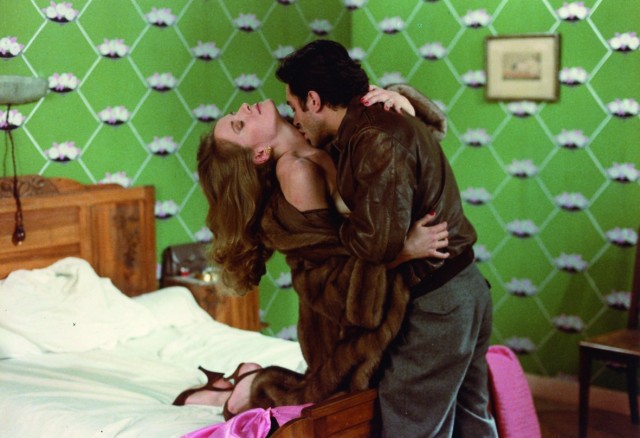
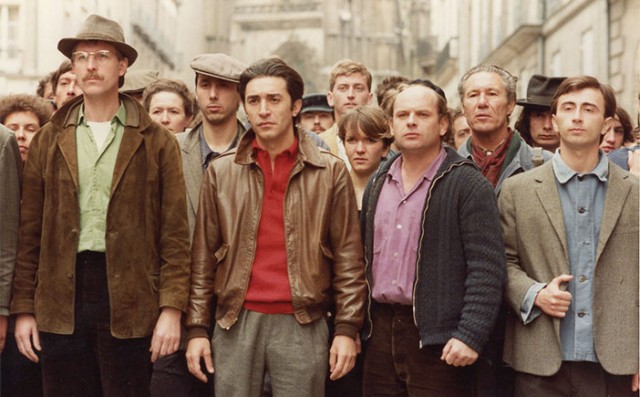
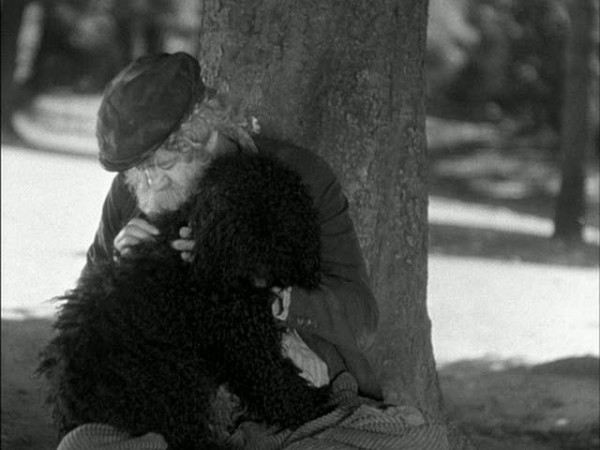
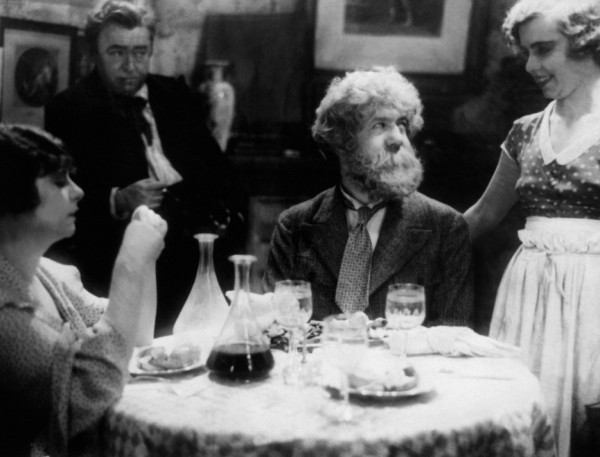
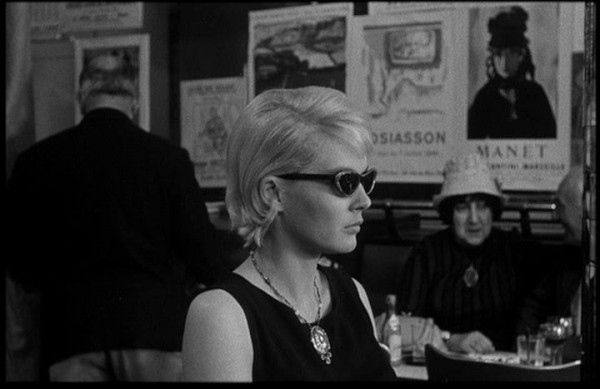
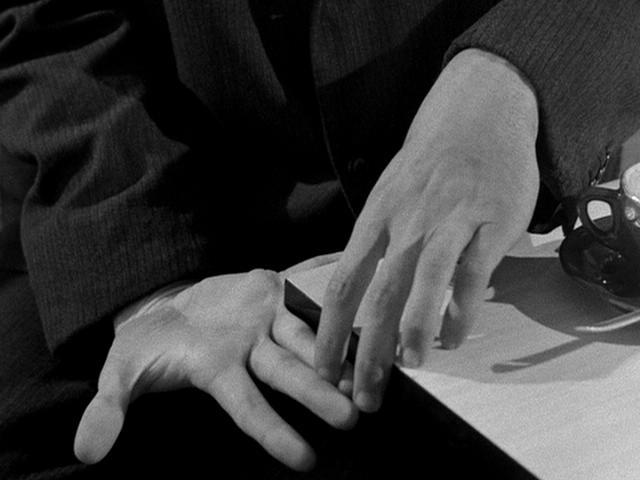
 After getting a biopsy taken and drawing the death card while consulting a fortune-teller, popular French singer Cléo (Corinne Marchand) begins looking back at her life — and wondering just what’s left of it — while awaiting the dreaded results. The blonde beauty talks with old friends, asks her piano player (Michel Legrand, who composed the score) to write her a song, and meets a dapper gentleman in the park, becoming both participant and viewer in her own existence. As Cléo makes her way around town, director (and former photographer) Agnès Varda (Le Bonheur, Vagabond) shows off early 1960s Paris, expertly winding her camera through the Rive Gauche. Just as Cléo seeks to find out what’s real (her actual name is Florence and that gorgeous hair is a wig), Varda shoots the film in a cinema verité style, almost as if it’s a documentary. She even sets the film in real time (adding chapter titles with a clock update), enhancing the audience’s connection with Cléo as she awaits her fate, but the movie runs only ninety minutes, adding mystery to what is to become of Cléo, as if she exists both on-screen and off, alongside the viewer. A central film in the French Nouvelle Vague and one of the first to be made by a woman, Cléo de 5 à 7 is an influential classic even as it has lost a step or two over the years. A new digital restoration of Cléo de 5 à 7 is screening January 28 at 4:00 & 7:30 as part of the FIAF CinéSalon series “Remastered & Restored: Treasures of French Cinema”; the later screening will be introduced by French author Catherine Cusset. The three-month festival continues with such other recently restored French classics as Jean Renoir’s Boudu Saved from Drowning (introduced by Henry Bean), Jacques Demy’s Une chambre en ville (introduced by Adam Gopnik), and Max Ophüls’s Lola Montès (introduced by Lola Montes Schnabel).