Yasuki Chiba’s Shitamachi is part of Film Forum series focusing on the popular downtown area of Tokyo
Film Forum
209 West Houston St.
Series runs October 18 – November 2
212-727-8110
filmforum.org
Tokyo’s downtown area known as Shitamachi, which means “low town,” has been a popular setting for movies since cinema began. Southeast of the Imperial Palace, it consists of small neighborhoods going back to the Edo period, filled with traditional Japanese culture particularly for the lower classes. You can explore its many facets in the Film Forum series “Shitamachi: Tales of Downtown Tokyo,” twenty-five films that take place in the geographical area seemingly invented for the movies. Running October 18 to November 7, the festival features a wide range of films, from Yasujirô Ozu’s Record of a Tenement Gentleman and Shôhei Imamura’s Eijanaika to Sadao Yamanaka’s Humanity and Paper Balloons and Nobuhiko Ôbayashi’s Reason, from Kenji Mizoguchi’s Street of Shame and Nami Iguchi’s The Cat Leaves Home to Takeshi Kitano’s Kikujiro and Ishirô Honda’s Godzilla. The series is copresented with the Japan Foundation and programmed by Aiko Masubuchi, who will introduce screenings of Tadashi Imai’s Still I Live On and Satsuo Yamamoto’s The Street without Sun, while Steve Sterner will play live piano accompaniment to Ozu’s Woman of Tokyo. Japanese master Akira Kurosawa was drawn to Shitamachi for several of his tales about class struggle, and Film Forum will be showing four of them, highlighted below.
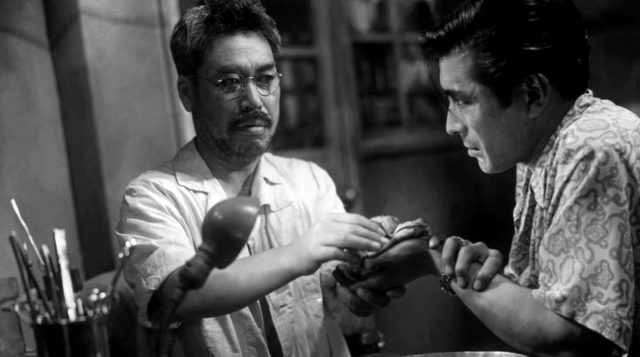
Takashi Shimura and Toshirô Mifune star in Akira Kurosawa noir Drunken Angel
DRUNKEN ANGEL (Akira Kurosawa, 1948)
Friday, October 18, 12:30, 4:50
Saturday, October 19, 5:10, 9:40
Wednesday, October 23, 4:20, 10:15
Friday, November 1, 9:30
filmforum.org
 The first film that Akira Kurosawa had total control over, Drunken Angel tells the story of a young Yakuza member, Matsunaga (Toshirô Mifune), who shows up late one night at the office of the neighborhood doctor, Sanada (Takashi Shimura), to have a bullet removed from his hand. Sanada, an expert on tuberculosis, immediately diagnoses Matsunaga with the disease, but the gangster is too proud to admit there is anything wrong with him. Sanada sees a lot of himself in the young man, remembering a time when his life was full of choices — he could have been a gangster or a successful big-city doctor. When Okada (Reisaburo Yamamoto) returns from prison, searching for Sanada’s nurse, Miyo (Chieko Nakakita), the film turns into a classic noir, with marvelous touches of German expressionism thrown in. The terrible incidental music lapses into melodramatic mush, preventing the film from reaching its full potential greatness, but that’s just a minor quibble.
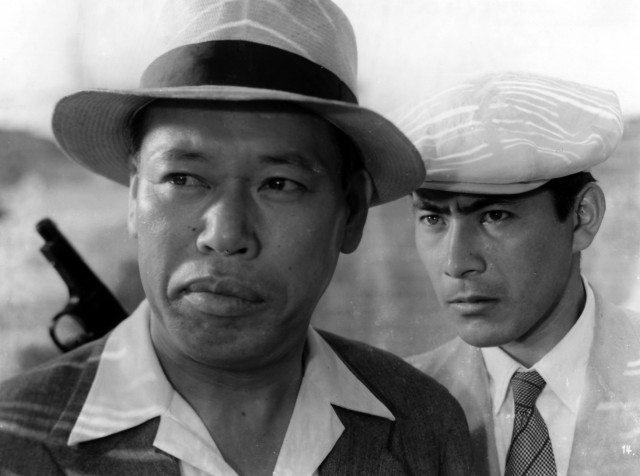
Takashi Shimura and Toshirō Mifune team up as detectives tracking a stolen gun in Akira Kurosawa’s Stray Dog
STRAY DOG (野良犬) (NORA INU) (Akira Kurosawa, 1949)
Friday, October 18, 2:30, 8:20
Saturday, October 19, 1:20, 7:10
Thursday, October 24, 12:30, 9:45
filmforum.org
Akira Kurosawa’s thrilling police procedural, Stray Dog, is one of the all-time-great film noirs. When newbie detective Murakami (Toshirō Mifune) gets his Colt lifted on a trolley, he fears he’ll be fired if he does not get it back. But as he searches for the weapon, he discovers that it is being used in a series of robberies and murders — for which he feels responsible. Teamed with seasoned veteran Sato (Takashi Shimura), Murakami risks his career — and his life — as he tries desperately to track down his gun before it is used again. Kurosawa makes audiences sweat, showing postwar Japan in the midst of a brutal heat wave, with Murakami, Sato, dancer Harumi Namiki (Keiko Awaji), and others constantly mopping their brows — the heat is so palpable, you can practically see it dripping off the screen. (You’ll find yourself feeling relieved when Sato hits a button on a desk fan, causing it to turn toward his face.) In his third of sixteen films made with Kurosawa, Mifune plays Murakami with a stalwart vulnerability, working beautifully with Shimura’s cool, calm cop who has seen it all and knows how to handle just about every situation. (Shimura was another Kurosawa favorite, appearing in twenty-one of his films.)
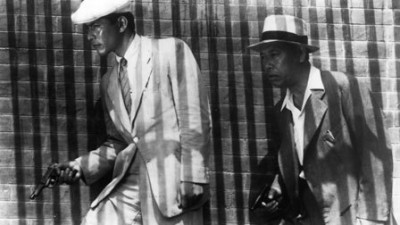
Rookie detective Murakami (Toshirō Mifune) often finds himself in the shadows in STRAY DOG
Mifune is often seen through horizontal or vertical gates, bars, curtains, shadows, window frames, and wire, as if he’s psychologically and physically caged in by his dilemma — and as time goes on, the similarities between him and the murderer grow until they’re almost one and the same person, dealing ever-so-slightly differently with the wake of the destruction wrought on Japan in WWII. Inspired by the novels of Georges Simenon and Jules Dassin’s The Naked City, Stray Dog is a dark, intense drama shot in creepy black and white by Asakazu Nakai and featuring a jazzy soundtrack by Fumio Hayasaka that unfortunately grows melodramatic in a few key moments — and oh, if only that final scene had been left on the cutting-room floor. It also includes an early look at Japanese professional baseball. Kurosawa would soon become the most famous Japanese auteur in the world, going on to make Rashomon, Ikiru, Seven Samurai, Throne of Blood, The Hidden Fortress, The Bad Sleep Well, The Lower Depths, and I Live in Fear in the next decade alone.
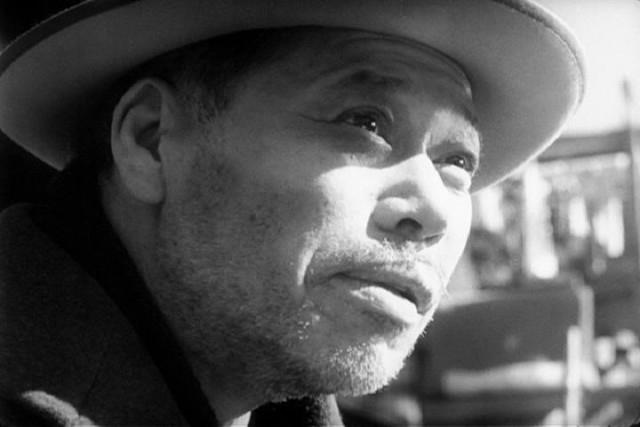
Takashi Shimura does a stellar job with a rare leading role in Akira Kurosawa’s captivating melodrama Ikiru
IKIRU (TO LIVE) (DOOMED) (Akira Kurosawa, 1952)
Sunday, October 20, 1:20
Thursday, October 24, 4:50
filmforum.org
 In Akira Kurosawa’s 1952 gem, Ikiru, winner of a special prize at the 1954 Berlin International Film Festival, the great Takashi Shimura is outstanding as simple-minded petty bureaucrat Kanji Watanabe, a paper-pushing section chief who has not taken a day off in thirty years. But when he suddenly finds out that he is dying of stomach cancer, he finally decides that there might be more to life than he thought after meeting up with an oddball novelist (Yunosuke Ito). While his son, Mitsuo (Nobuo Kaneko), and coworkers wonder just what is going on with him — he has chosen not to tell anyone about his illness — he begins cavorting with Kimura (Shinichi Himori), a young woman filled with a zest for life. Although the plot sounds somewhat predictable, Kurosawa’s intuitive direction, a smart script (cowritten with Hideo Oguni), and a marvelously slow-paced performance by Shimura (Stray Dog, Scandal, Seven Samurai) make this one of the director’s best melodramas.
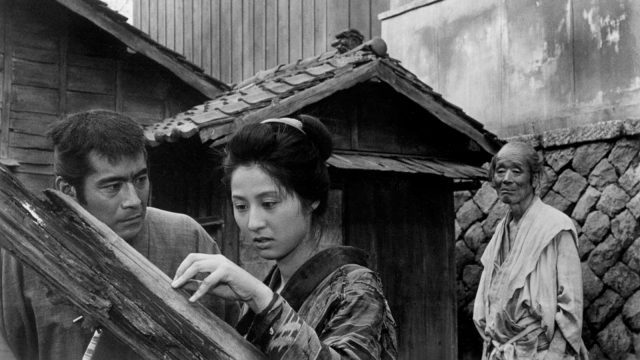
The Lower Depths is another masterful tour de force from Akira Kurosawa
THE LOWER DEPTHS (DONZOKO) (Akira Kurosawa, 1957)
Saturday, November 2, 12:50, 8:40
filmforum.org
 Loosely adapted from Maxim Gorky’s social realist play, The Lower Depths is a staggering achievement, yet another masterpiece from Japanese auteur Akira Kurosawa. Set in an immensely dark and dingy ramshackle skid-row tenement during the Edo period, the claustrophobic film examines the rich and the poor, gambling and prostitution, life and death, and everything in between through the eyes of impoverished characters who have nothing. The motley crew includes the suspicious landlord, Rokubei (Ganjiro Nakamura), and his much younger wife, Osugi (Isuzu Yamada); Osugi’s sister, Okayo (Kyôko Kagawa); the thief Sutekichi (Toshirō Mifune), who gets involved in a love triangle with a noir murder angle; and Kahei (Bokuzen Hidari), an elderly newcomer who might be more than just a grandfatherly observer. Despite the brutal conditions they live in, the inhabitants soldier on, some dreaming of their better past, others still hoping for a promising future. Kurosawa infuses the gripping film with a wry sense of humor, not allowing anyone to wallow away in self-pity. The play had previously been turned into a film in 1936 by Jean Renoir, starring Jean Gabin as the thief.

 In 1966, Brooklyn-born photographer Jay Maisel moved into the 1898 Germania Bank Building on the corner of Bowery and Spring, purchased with a now astonishing $25,000 down payment. Nearly fifty years later, in early 2015, after decades of taking pictures and collecting tens of thousands of random items, he was forced to sell the graffiti-laden, six-floor, 36,000-square-foot property because of rising maintenance costs; at fifty-five million dollars, it was the largest private real estate deal in New York history. One of his protégés, Stephen Wilkes — who back in the 1970s knocked on Maisel’s door and showed him his portfolio — documents Maisel’s months-long exit from the landmark building as he and a team of assistants sift through the maelstrom and Maisel regales him with stories from his career, which has included shooting for advertising agencies, Sports Illustrated, New York magazine, and jazz legends. “Objects are there for you only if you really see them. If you don’t, they don’t exist. And a lot of people don’t see things,” Maisel philosophizes. “Before you’re going to be able to see, you have to look. And before you can look, you have to want to look. And art is, to some effect, trying to make others see what you see.”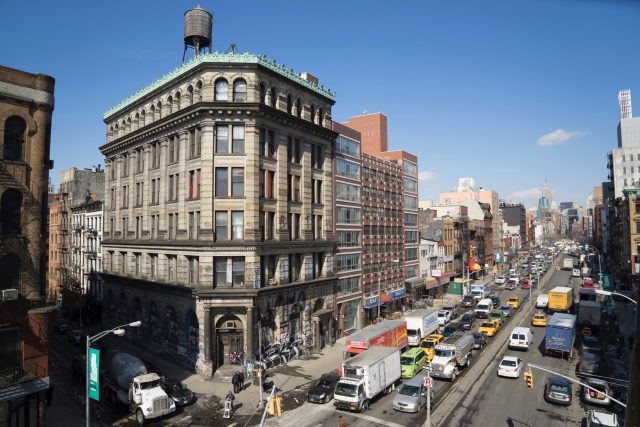
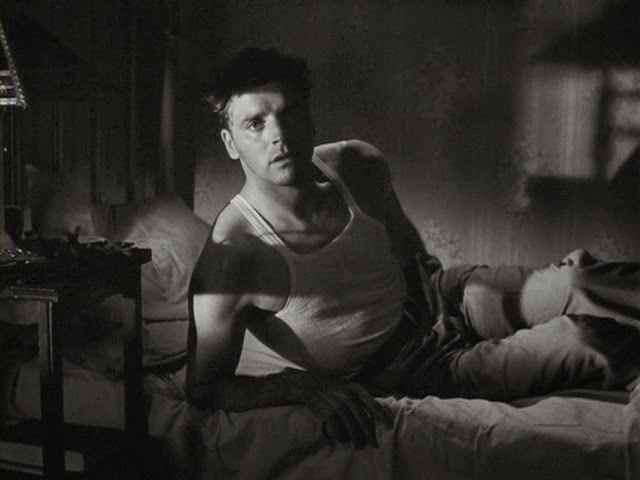
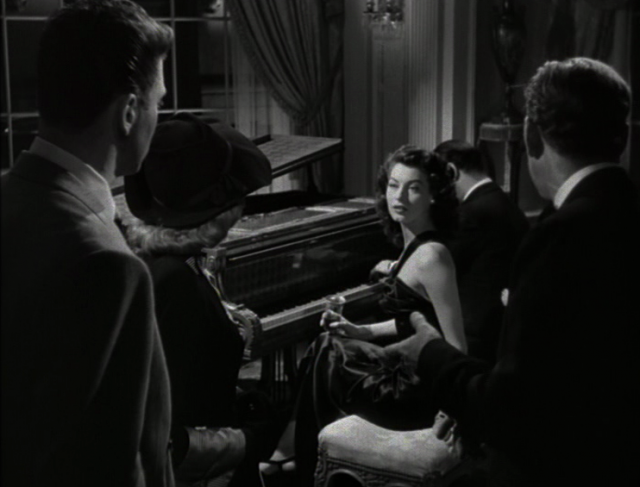
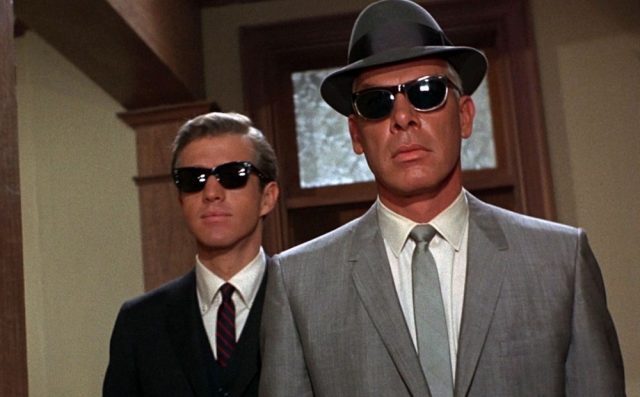
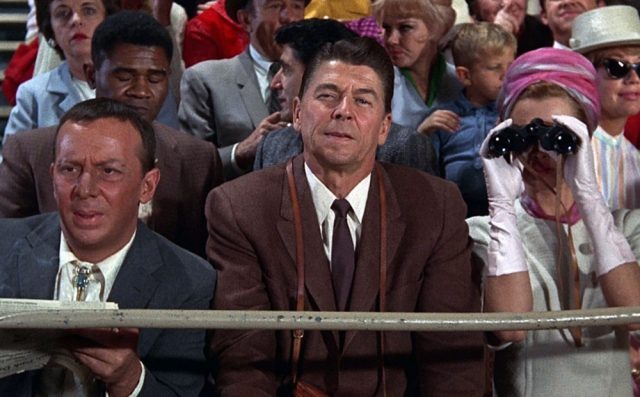
 In conjunction with the screening of the 1946 version of The Killers kicking off Film Forum’s four-week Burt Lancaster festival, the downtown institution is also presenting Don Siegel’s 1964 remake July 20-22. Siegel, who at one point was supposed to direct the 1946 original, sets this adaptation of Ernest Hemingway’s 1927 short story in a bright, candy-colored world that is a far cry from the intricate, shadowy darkness of Robert Siodmak’s earlier noir version; in fact, it’s so luminous that hitmen Charlie Strom (Lee Marvin) and Lee (Clu Gulager) are often wearing dark sunglasses (à la Jake and Ellwood Blues), and the film opens with them walking into a home for the blind, passing by two blind boys playing their own version of cops and robbers. The men are there to kill former race-car driver Johnny North (John Cassavetes), who is now a teacher. Despite being warned by an old man (longtime character actor Burt Mustin) that they are coming, Johnny waits for them, choosing not to run. His lack of a survival instinct confounds Charlie, who goes on a search to find out why Johnny didn’t fight for his life but instead essentially welcomed a brutal death.