Tag Archives: film forum

CAN YOU BRING IT: BILL T. JONES AND D-MAN IN THE WATERS

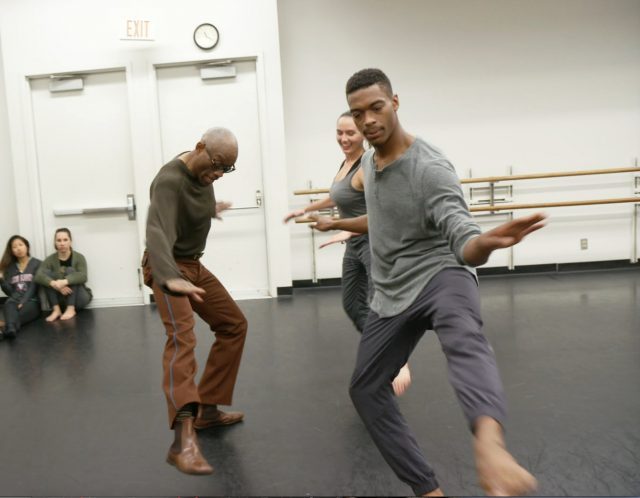
Documentary explores the creation and legacy of Bill T. Jones/Arnie Zane Company’s D-Man in the Waters (photo courtesy Rosalynde LeBlanc)

CAN YOU BRING IT: BILL T. JONES AND D-MAN IN THE WATERS (Rosalynde LeBlanc & Tom Hurwitz, 2020)
Film Forum
209 West Houston St.
Opens Friday, July 16
212-727-8110
www.d-mandocumentary.com
filmforum.org

In 1989, the Bill T. Jones/Arnie Zane Company presented the world premiere of D-Man in the Waters at the prestigious Joyce Theater in New York City, a physically demanding, emotional work born out of the AIDS crisis, dealing with tragedy and loss in the wake of the death of Zane, Jones’s personal and professional partner, at the age of thirty-nine in 1988. Directors Rosalynde LeBlanc and Tom Hurwitz take a deep dive into the history of the dance and its lasting impact more than thirty years later in the captivating documentary Can You Bring It: Bill T. Jones and D-Man in the Waters, opening July 16 at Film Forum.

“What is D-Man? Is it alive now? Is it a cautionary tale? Is it one of inspiration?” Jones tells fifteen Loyola Marymount dancers who are staging the piece under the direction of LeBlanc, a former company member who runs the Jones/Zane Educational Partnership at the school, where she is an associate professor in the Department of Dance. Jones continues, “Makes you want to get all your shit together, your community together, take responsibility, be beautiful, be fierce — is that what it is? I don’t know what it is. . . . What do they share that is so big, so tragic that you need a piece like this to move it and give it body?”

LeBlanc, who also produced the film, and two-time Emmy-winning cinematographer Hurwitz, the son of longtime Martha Graham dancer, choreographer, and teacher Jane Dudley, talk to most of the original cast of D-Man, many of whom have gone on to form their own companies: Arthur Avilés, Seán Curran, Lawrence Goldhuber, Gregg Hubbard, Heidi Latsky, Janet Lilly, and Betsy McCracken, who, along with Jones and his sister Johari Briggs, share intimate stories of working with Jones and Zane and the importance of the piece as the arts community was being ravaged by AIDS. Sometimes holding back tears, they speak lovingly of Zane and Demian Acquavella, nicknamed “D-Man,” who died at the age of thirty-two in 1990. “He was always a boy, but always a bit of a devilish boy, and the dancing was also that way,” Jones remembers.

Through new and old interviews, home video and archival photographs, and exciting footage from the dance’s original rehearsals and Joyce premiere, LeBlanc, Hurwitz, and editor Ann Collins choreograph a gracefully flowing, compelling narrative as the documentary participants discuss specific movements — Latsky’s attempts at a jump and Curran’s memories of a duet with Acquavella in which their foreheads have to keep touching are wonderful — and LeBlanc tries to reach inside the Loyola Marymount performers to motivate them. They might have the movement down, but D-Man requires more than that to be successful. “Do you dare to let the stakes really be high?” she asks as they search for contemporary issues that impact them similarly to how AIDS affected the creation of the work, which is set to Felix Mendelssohn’s 1825 Octet for Strings, which the German composer wrote at the age of sixteen. “There was some healing, cathartic ritual in the making and the doing of this dance that sustained us,” Curran says, a feeling LeBlanc wants to instill in the college students.

“This work is not about anybody’s epidemic,” Jones, a Kennedy Center Honoree, MacArthur Grant awardee, and Tony winner who is the artistic director of New York Live Arts, said in a statement about the film. “It is about the dark spirit of what is happening in the world and how you push back against it.” Can You Bring It: Bill T. Jones and D-Man in the Waters gets to the heart of that spirit by revealing the legacy, and the future, of a seminal dance piece that continues to find its place on an ever-evolving planet.

LeBlanc and Hurwitz will be at Film Forum to discuss the film at the 7:00 shows on July 16 and 17 and will participate in a live, virtual Q&A with Jones at 8:00 on July 21. Jones, whose riveting Afterwardsness at Park Avenue Armory in May explored the Covid-19 pandemic, isolation, and racial injustice, will return to the space this fall with Deep Blue Sea, a monumental work for more than one hundred community members and dancers that begins with a solo by Jones and incorporates texts by Martin Luther King Jr. and Herman Melville, with water again playing a critical role.
BILL TRAYLOR: CHASING GHOSTS

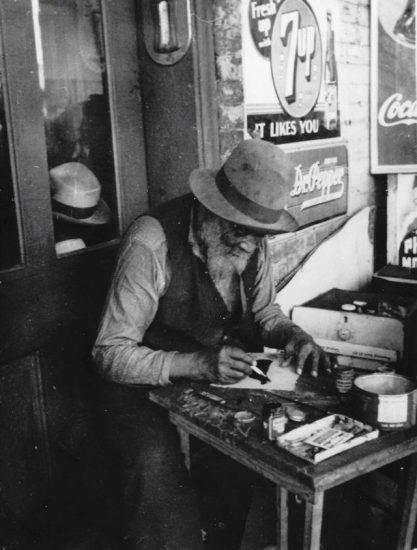
The life and art of Bill Traylor are the subject of illuminating documentary (photo courtesy Jean and George Lewis / Caroline Cargo Folk Art Collection)

BILL TRAYLOR: CHASING GHOSTS (Jeffrey Taylor, 2018)
Film Forum
209 West Houston St.
Opened April 16
filmforum.org
www.billtraylorchasingghosts.com

“I think Traylor is probably the greatest artist you’ve never heard of, but he’s getting heard of more and more,” art critic Roberta Smith says at the beginning of Jeffrey Taylor’s Bill Traylor: Chasing Ghosts, an insightful documentary that runs April 16–22 at Film Forum — both virtually and in person at the West Houston St. theater.

I well remember the first time I truly encountered the scope of Bill Traylor’s art, at a pair of 2013 exhibits at the American Folk Art Museum. I had seen his work before, but these two shows opened my eyes to his immense self-taught skill and his poignant and personal view of the world he had experienced, becoming, in his later years, a unique chronicler of the American South, from slavery and the Civil War through the Great Migration and the Great Depression to Jim Crow and WWII. He passed away in 1949 at the age of ninety-six, leaving behind some 1,500 drawings, all made between 1939 and 1942; it would still be decades until he would be duly recognized him as one of the most important artists of the twentieth century.

Director, producer, and editor Taylor and writer-producer Fred Barron tell Traylor’s uniquely American tale through archival photos, commentary from art connoisseurs and historians, members of Traylor’s family, and, most important, images of hundreds of his works. Born into slavery in Benton, Alabama, in 1853, Traylor was a slave on a cotton plantation, a field hand, a tenant farmer, a shoe repairman, and an ill homeless man while fathering nine children with multiple women before spending three years sitting behind a small refrigerated soda case on Monroe St. in Montgomery, Alabama, drawing both from memory and observation of the bustling Black community in front of him. Using anything he could find — torn paper, stained cardboard with logos on one side — Traylor would draw flat, silhouetted objects, primarily in black but with flourishes of blue, red, and occasional yellows, imbued with a musicality that breathes life into them while also exploring race and class; today, his art evokes elements of both Jacob Lawrence and Kara Walker. Taylor often juxtaposes Traylor’s drawings with photographs of places that might have served as inspiration, which offer further understanding of the art and the man.

“There are certain elements in the work — the use of animal spirits and plant spirits, and there’s hybrid people, there’s were-people — that all of these speak to someone operating intentionally with the desire to render the fantastic. So he’s giving us a whole enchanted, magical realm,” writer, musician, and producer Greg Tate says, adding, “The mystery prevails throughout.” Artist Radcliffe Bailey notes, “When I look at Traylor’s work, I see this freedom of expressing, or seeing what’s going on around him but also being very lyrical about it.” Among the others celebrating Traylor with a deep reverence are archivist Dr. Howard O. Robinson II, professor Richard Powell, and curator Leslie Umberger. Taylor includes readings by actors Russell G. Jones and Sharon Washington, songs by Willie King, Lead Belly, Buddy Guy, and Chick Webb, and tap dances by Jason Samuels Smith, along with the words of Zora Neale Hurston and Langston Hughes as well as the white painter and teacher Charles Shannon, who championed and represented Traylor.

The film’s latter section focuses on Traylor’s descendants, including his great-grandson Frank L. Harrison, who tears up when talking about his ancestor. Some knew of Traylor, and some didn’t, which is all part of his legacy. Umberger, who curated the major 2018-19 Smithsonian retrospective “Between Worlds: The Art of Bill Traylor,” sums it up when she states, “He put down this entire oral history in the language that was available to him, which was the language of pictures.” What pictures they are, and we now know more about where they came from, thanks to Chasing Ghosts.

WOJNAROWICZ: F**K YOU F*GGOT F**KER

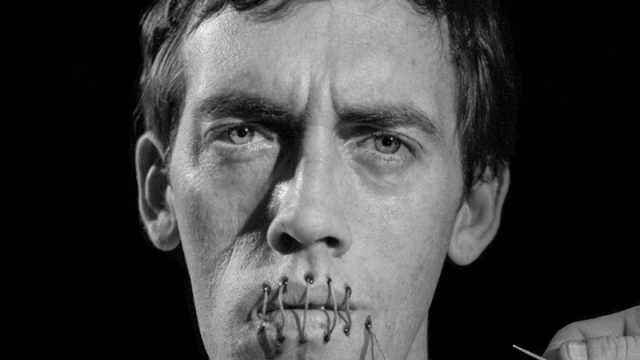
David Wojnarowicz tells his own story in Chris McKim documentary (Andreas Sterzing, David Wojnarowicz (Silence = Death), photograph, 1989 [courtesy of the artist, the estate of David Wojnarowicz, and P·P·O·W, New York])

WOJNAROWICZ: F**K YOU F*GGOT F**KER (Chris McKim, 2020)
Film Forum Virtual Cinema
Opens Friday, March 19; live Q&A on Tuesday, March 30, free with RSVP, 7:00
filmforum.org
kinomarquee.com

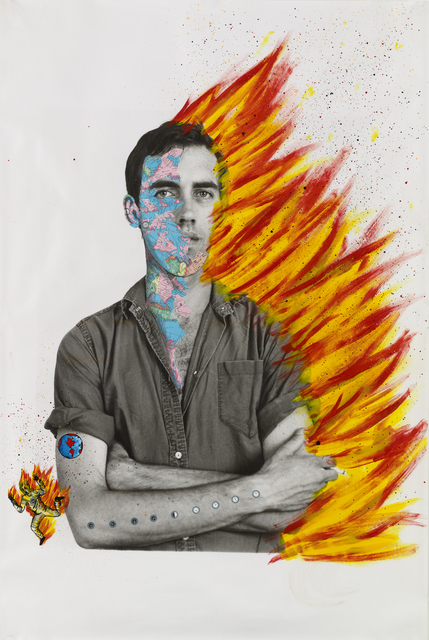
David Wojnarowicz packed a whole lot of living into his too-brief thirty-seven years, and the frenetic pace of his life and death is copiously captured in Chris McKim’s dynamic documentary, Wojnarowicz: F**k You F*ggot F**ker. Born in New Jersey in September 1954, Wojnarowicz — pronounced VOY-nah-ROH-vich — experienced a difficult childhood riddled with physical abuse from his father, became a teen street hustler in Times Square, and later dabbled in heroin. He gained fame as an avant-garde artist and anti-AIDS activist in the 1980s, when several of his pieces earned notoriety, condemned by right-wing politicians who wanted to censor the works and defund the National Endowment for the Arts, which had supported the shows of art they found objectionable or morally corrupt. (The controversy continued decades past his death, into December 2010, when the National Portrait Gallery edited his short film Fire in My Belly in a group show.)

McKim lets Wojnarowicz, who died of AIDS-related complications in July 1992, tell his own story, using the multimedia artist’s extensive archive of journals, cassette tapes, phone messages, photographs, and super 8 films; Wojnarowicz lived his life as if it was an ongoing radical performance installation itself, obsessively recording himself. “All the paintings are diaries that I always thought as proof of my own existence,” he says. “Whatever work I’ve done, it’s always been informed by what I experience as an American in this country, as a homosexual in this country, as a person who’s legislated into silence in this country.”

Editor Dave Stanke does a masterful job of putting it all together, primarily chronologically, seamlessly melding Wojnarowicz’s paintings, photographs, and videos into a compelling narrative that is as experimental, and successful, as the artist’s oeuvre, placing the audience firmly within its milieu. He intercuts news reports and other archival footage as Wojnarowicz’s life unfolds; among those whose voices we hear, either in new interviews or old recordings, are cultural critics Fran Lebowitz and Carlo McCormick, gallerist Gracie Mansion, curator Wendy Olsoff, his longtime partner Tom Rauffenbart, photographer and close friend/onetime lover Peter Hujar, artists Kiki Smith and Nan Goldin, artist and activist Sur Rodney Sur, Fire in the Belly author Cynthia Carr, Wojnarowicz’s siblings, and photographer and filmmaker Marion Scemama, who collaborated with Wojnarowicz on the haunting Untitled (Face in Dirt), pictures of the artist partially buried in the southwest desert. In addition, McKim includes such conservative mouthpieces as Donald Wildmon of the American Family Association and Senator Jesse Helms, who both sought to shut down Wojnarowicz and the NEA.

Influenced by such writers and artists as Jean Genet, William S. Burroughs, and Arthur Rimbaud, Wojnarowicz’s art is as bold and in your face as it can get, relentlessly depicting a hypocritical world inundated with lies, violence, and perpetual inequality. Among the works that are examined in the film are Untitled (Buffalo), Untitled (Peter Hujar), Gagging Cow at Pier, Arthur Rimbaud in New York (Times Square), Burning House, Untitled (One Day This Kid . . . , David Wojnarowicz (Silence = Death, New York), Untitled (Genet After Brassai), and his Fire, Water, Earth, and Air four elements series. McKim also focuses on Wojnarowicz’s incendiary East Village punk band, 3 Teens Kill 4, with snippets of such songs as “Hold Up,” “Hunger,” and “Stay & Fight.” Wojnarowicz spoke in a relatively calm, straightforward tone, especially when compared with the constant whirlwind surrounding him, but his work, from art to music, revealed the fiery emotions bubbling inside, a roiling mix of rage, rebellion, and resistance.

Self-Portrait of David Wojnarowicz, acrylic and collaged paper on gelatin silver print, 1983–84 (photo by Ron Amstutz/Whitney Museum of American Art)

McKim (RuPaul’s Drag Race, Out of Iraq) adds a curious, overly sentimental modern-day ending that might elicit a tear or two but is completely out of place; otherwise, Wojnarowicz: F**k You F*ggot F**ker, named after one of the artist’s works from 1984, is an intense journey into the mind of a deeply troubled soul who shared his endless dilemmas in very public ways that made so many people uneasy. “Last night I was standing around here, looking at my photographs. They’re my life, and I don’t owe it to anybody to distort that just for their comfort,” he says.

Wojnarowicz: F**k You F*ggot F**ker opens virtually at Film Forum through Kino Marquee on March 19 and includes a prerecorded Q&A with McKim, Mansion, McCormick, and producer Fenton Bailey, moderated by journalist Jerry Portwood. There will also be a live Q&A on March 30 at 7:00 with McKim and Stanke, moderated by artist and activist Leo Herrera, that is free and open to all.

STRAY

Keytin takes Elizabeth Lo on an amazing journey in Stray

STRAY (Elizabeth Lo, 2020)
Film Forum Virtual Cinema
Opens Friday, March 5
filmforum.org/film/stray
www.straymovie.com

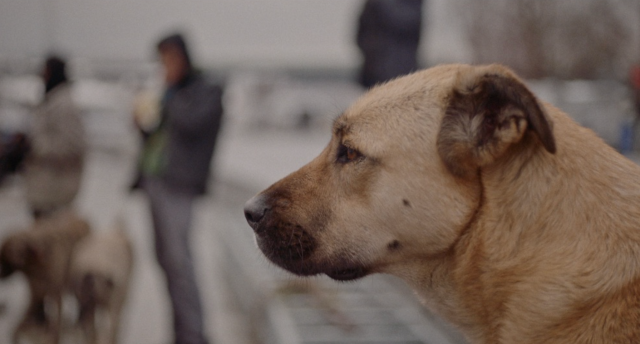
You can have Sounder, Old Yeller, and Lassie, cheer on Balto, Benji, and Beethoven. But the best movie dog ever is Keytin, the extraordinary golden mutt who is the star of Elizabeth Lo’s masterful feature-length debut, Stray. Lo follows the remarkable canine as she wanders through the streets of Istanbul and other parts of Turkey, living a dog’s life, in a place that until fairly recently would regularly round up strays and euthanize them mercilessly. Everywhere she goes, she meets up with people she knows and who love her, from a dock to a dangerous construction site; she also plays with such puppy pals as Nazar and Kartal. Keytin scavenges for food, cuddles up with homeless refugee children from Aleppo, relaxes amid traffic, and chases a cat, all with a look in her eyes that reveals great depth and understanding that humans can only dream of. The film was born out of loss; Lo notes in her director statement, “The impetus for Stray is personal. When my childhood dog died, I felt a quiet need to suppress my grief at his passing. I was shocked that something as personal as how my heart responds to the death of a loved one could be shaped by an external politics that defined him or ‘it’ as ‘valueless.’ As my grief evolved, I also saw how our moral conceptions of who or how much one matters can be in constant flux. This transformative moment is what propels Stray’s exploration into value, hierarchy, and sentience.”

The pandemic has only increased the meaning of pets in our lives, as if we needed more reasons to worship them. For many people, their dogs and cats have been their sole companions while sheltering in place, and it is devastating every time someone posts on social media that their dog or cat has passed — to say nothing of friends and relatives who have been stricken with the coronavirus and did not survive. Crouching down to get the dog’s perspective, Lo filmed the independent, purposeful Keytin for six months, with no choice but to let the confident canine guide the action as they encounter class, ethnic, and gender differences while making deep connections with everyone Keytin comes into contact with — a connection the audience will make as well, especially if they are watching the film at home, all alone. The soundtrack mixes a splendid score by Ali Helnwein with snippets of poignant conversation overheard on Keytin’s journeys, accompanied by occasional intertitles with wise, relevant quotes by Diogenes and Themistius, including “Human beings live artificially and hypocritically and would do well to study the dog.” As I said, Best. Movie. Dog. Ever. Stray begins streaming March 5 via Film Forum Virtual Cinema, complete with a conversation between Lo and filmmaker Rachel Grady and a Q&A with Lo and Joanne Yohannan from the North Shore Animal League, moderated by film critic Tomris Laffly.

TWO OF US (DEUX)

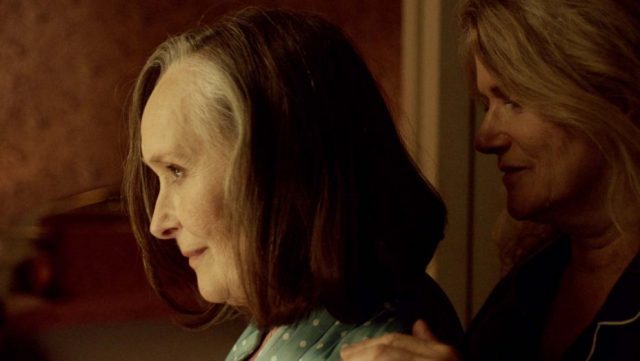
Martine Chevallier and Barbara Sukowa star as secret lovers in Filippo Meneghetti’s Two of Us

TWO OF US (DEUX) (Filippo Meneghetti, 2019)
Film Forum Virtual Cinema
Opens virtually Friday, February 5
www.twoofusfilm.com
filmforum.org

“You and I have memories / longer than the road that stretches out ahead,” the Beatles sing on the 1970 Let It Be song “Two of Us,” continuing, “Two of us wearing raincoats, standing solo / in the sun / You and me chasing paper, getting nowhere / on our way back home / We’re on our way home / We’re on our way home / We’re going home.” The concept of home is at the center of Filippo Meneghetti’s heartbreakingly beautiful Two of Us, France’s official submission for the Best International Feature Film Oscar. Two of Us begins in a park around Montpelier, where two little girls are playing hide-and-seek until one mysteriously disappears. It’s a park where Nina (Barbara Sukowa) and Madeline (Martine Chevallier), affectionately known as Mado, get to enjoy being together in a way they cannot in front of Madeline’s family — the two senior citizens, who live down the hall from each other on the top floor of an apartment building, have been lovers and traveling companions for decades, secrets they have kept from Madeline’s daughter, Anne (Léa Drucker), and son, Frédéric (Jérôme Varanfrain). Madeline promises to finally tell her children about their relationship and that she and Nina are planning to move to Rome, but tragedy strikes, forcing the two women apart, both physically and metaphorically like the girls in the park, but their deeply intense and honest connection isn’t about to relent under the circumstances, which include a villainous caregiver portrayed by Muriel Bénazéraf.

Reminiscent of Michael Haneke’s gorgeously told Amour, in which an elderly couple played by Jean-Louis Trintignant and Emmanuelle Riva deal with dementia, Two of Us, which does not involve Alzheimer’s, is a magnificent love story and a gripping psychological thriller. Sukowa (Berlin Alexanderplatz, Lola) gives a sexy, harrowing performance as Nina, a determined woman who refuses to give up despite mounting obstacles, while longtime Comédie-Française star Chevallier is a revelation as Madeline, her every movement exquisitely choreographed; Aurélien Marra’s camera seems to be magnetically drawn to her eyes as they search her changed world in silence.

In his debut feature film, the Italian-born, France-based Meneghetti has crafted a love story for the ages, written specifically for Sukowa and Chevallier by Meneghetti and Malysone Bovorasmy with Florence Vignon. Nina spends much of the first part of the film darting across the hall into Mado’s unlocked apartment, no one aware they are a lesbian couple; it is like the hallway is their own red carpet ushering them into their own private fantasy. At certain angles, it appears that they are younger versions of themselves, their passion for each other helping them stay youthful. But after the event, forces conspire to keep them apart, a separation that Nina fights against, resolved to make a home for the two of them. Two of Us is an unforgettable film about place, about belonging, about a love that knows no bounds. As the Beatles also sang on the Let It Be album, “The long and winding road / That leads to your door / Will never disappear / I’ve seen that road before / It always leads me here / Lead me to your door.”

The film opens virtually at Film Forum on February 5; each forty-eight-hour link comes with a conversation with Meneghetti and Sukowa, moderated by Julianne Moore. In conjunction with Two of Us, the French title of which is simply Deux, Film Forum is streaming three other Sukowa films, Rainer Werner Fassbinder’s Lola beginning February 12 and Margarethe Von Trotta’s Hannah Arendt February 19 and Rosa Luxemburg March 5.

PJ HARVEY: A DOG CALLED MONEY

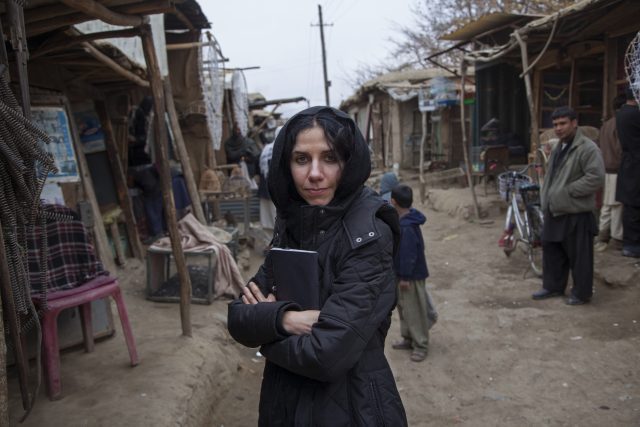
PJ Harvey traveled to Kosovo, Kabul, and Washington, DC, to inspire 2016 album The Hope Six Demolition Project

A DOG CALLED MONEY (Seamus Murphy, 2019)
Film Forum online
Opens virtually Wednesday, December 9, $12 for 48-hour rental
filmforum.org

Irish photojournalist Seamus Murphy lays bare English musician PJ Harvey’s creative process in the irresistible documentary A Dog Called Money. Polly Jean Harvey initially hired Murphy to take photos for her 2011 album, Let England Shake, after having seen Murphy’s 2008 exhibit and book, A Darkness Visible: Afghanistan. Murphy ended up making twelve short films with her, one for each song on the record, and in 2012 he asked Harvey if she wanted to accompany him on his trips to Kabul, Kosovo, and Washington, DC, where they would work separately, he on a book, she on a record. But the journeys led to a creative cornucopia that also resulted in their collaborating on the book The Hollow of the Hand, featuring his photographs and her poetry, as well as the 2016 album The Hope Six Demolition Project and the documentary, which opens virtually December 9 at Film Forum.

Murphy follows Harvey, dressed all in black, as she goes through old photos and other detritus in a looted, destroyed home, sits on the rocky shore of a lake writing in her journal (with voice-over narration of her thoughts), hangs out with Corny’s crew in Anacostia, wanders into a theater in ruins (“I’ve heard twenty years ago, you could pay to get into the cinema with bullets,” she says), has tea with a group of children, and visits with local musicians in Kabul’s “Tin Pan Alley.” Murphy cuts between these scenes and Harvey and her band recording new songs in a specially constructed studio in the basement of the historic arts center Somerset House in London. Harvey, who burst onto the alternative music scene in the 1990s with such seminal records as Dry, Rid of Me, and To Bring You My Love, turns the sessions into an art installation by allowing people to watch from behind a one-way mirror; they can see her, but she can’t see them. It’s a genuine treat to observe Harvey’s process as she works with such musicians as John Parish, Terry Edwards, Kenrick Rowe, Enrico Gabrielli, Mike Smith, Alessandro Stefana, James Johnston, Alaine Johannes, Adam “Cecil” Bartlett, Jean-Marc Butty, and Mick Harvey (no relation) on melody, vocalization, and instrumentation, the songs taking shape right before our eyes and ears.

Murphy draws direct parallels between what Harvey witnesses and the songs she is writing. She meets a woman walking with her hands behind her back, holding a chain with two keys, who says, “I would kill them with my own hands if I knew who was responsible”); in “Chain of Keys,” Harvey sings, “The woman’s old / The woman’s old and dressed in black / She keeps her hands / She keeps her hands behind her back / Imagine what / Imagine what her eyes have seen / We ask if she / We ask but she won’t let us in.” After playing with the Kabul musicians, she transforms their sounds into the powerful “Homo Sappy Blues.” She uses some of Corny’s crew’s exact words and actions in her lyrics for “A Dog Called Money.” She also captures the overall feeling of her experience in such tunes as “The Ministry of Defence” (“Those are the children’s cries from the dark / These are the words written under the arch / Scratched in the wall in biro pen / This is how the world will end”) and the stunning “I’ll Be Waiting” (“They swept across the land / They did not leave a thing / They did not leave a person / A stone or a tree / They did not leave anything / They did not leave anything / All that’s left is sand / All that’s left is sand”).

At first what seems like it could be cultural appropriation develops into something else, a genuine attempt to understand what is happening in these countries and around the world — as well as in America with the inclusion of DC — and sharing that through music. “Everyone driving in one direction / Everyone driving in every direction / Where to go? / Why? / What to say when I get there?” Harvey narrates near the start of the film, which opens with an extended close-up of a smiling boy with a dirty face, his nose pressed against the window of a car, the sound of traffic all around him. For ninety minutes, we are all that boy, and he is us. And we have a book, an album, and now a documentary to remember that.

76 DAYS

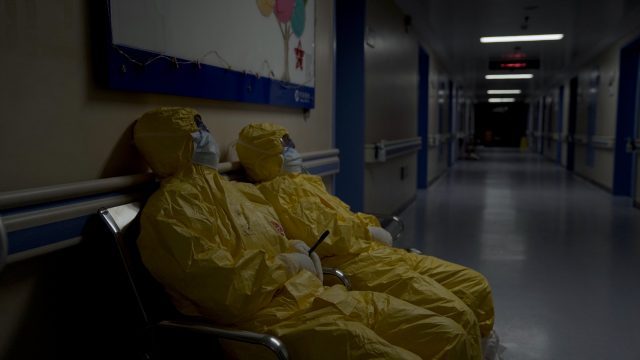
Two essential healthcare workers take a much-deserved brief break in a Wuhan hospital in 76 Days

76 DAYS (Hao Wu, Weixi Chen, and Anonymous, 2020)
Opens virtually at Film Forum at Home on Friday, December 4
Live Q&A Tuesday, December 8, 7:00
filmforumhome.org
www.76daysfilm.com

The prospect of sitting through a ninety-minute documentary about essential healthcare workers in four hospitals in Wuhan fighting in the early days of Covid-19, during the city’s seventy-six-day lockdown, might seem daunting. But what could have been a difficult, emotional, and political roller coaster about fear and anger, government lies and finger pointing turns out to be a deeply affecting film that celebrates our most basic hopes and humanity.

Chinese director Hao Wu was researching a film about pandemics when, in mid-February, he came upon footage being shot by a pair of reporters in Wuhan, Weixi Chen and a man who has decided to remain anonymous. They had been given full access to four hospitals, where they followed doctors, nurses, patients, and family members for several months. There are no talking heads, and no one speaks directly to the camera; instead, 76 Days offers a fly-on-the-wall perspective that manages to be as uplifting as it is frightening.

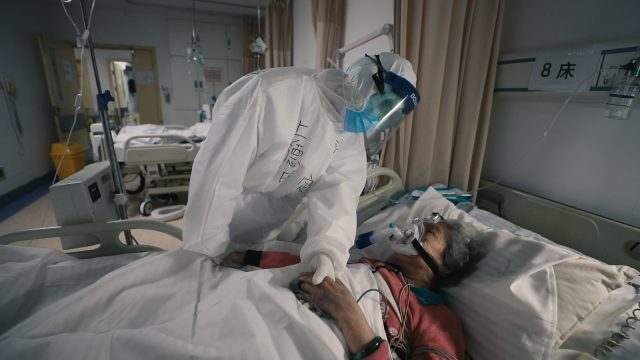
The film opens like a sci-fi thriller, as an unidentified group of people in head-to-toe protective gear that includes light-blue masks, long face shields, white Hazmat suits, and blue footies comforts a distraught colleague who is prevented from saying goodbye to her father, who has just died from the novel coronavirus. Near the end of the scene, one of her coworkers tries to calm her down, saying, “We don’t want to see you in distress or pain. What will we do if you fall sick? We all have to work in the afternoon.” Moments later, sick people are banging on a door of the hospital to be let in, like a crowd trying to escape a coming zombie apocalypse, while two workers decide who to admit first. Those exchanges set the stage for the rest of the film, in which doctors and nurses go about their business with a relatively relaxed demeanor, displaying endless empathy and compassion as they care for scared patients with uncertain futures.

Wu focuses on a few specific cases that serve to represent the crisis as a whole, following an elderly couple who both have the virus and are not permitted to see each other even though they are on the same floor, and a young couple who are forced to quarantine in their apartment after the woman gives birth to a baby girl, unable to see their newborn for two weeks. While the nurses fall in love with the infant, who must stay in an incubator and whom they name Little Penguin, the workers have their hands full with the old man, who constantly tries to leave the hospital and doesn’t seem capable of wearing his mask correctly, if at all.

Doctors and nurses in Wuhan care for Covid patients, displaying empathy and compassion during seventy-six-day lockdown

The genuine kindness and concern displayed by the hospital employees is, well, infectious. They are risking their lives at every moment; each encounter is fraught with the possibility that they could contract the virus even with all the PPE. It’s hard not to cringe when they feed the old man, wipe the face of the infant, or use a patient’s phone to call a relative with news, because the reality is that people die from this disease, and Wu is not afraid to show that. It’s a riveting film that immerses you in this global emergency that started right there, at that time; if this doesn’t make you wear a mask, wash your hands, observe social distance protocols, and avoid gathering with others indoors, I don’t know what will.

We also see the empty streets and highways of Wuhan, a city of eleven million people, deserted, with signs advising, “Staying home makes a happy family.” All the action is happening in the hospitals, where the doctors and nurses bond with themselves and the patients, decorate their white Hazmat suits with drawings and sayings (“Clay Pot Chicken: I miss you”), and caution everyone to “be extra vigilant.” As the crisis continues to surge around the world and here in America, where politics trumps safety, those are indeed words to live by. Winner of the Best Cinematography award at DOC NYC 2020 and nominated for a Best Documentary Gotham Award, 76 Days launches virtually at Film Forum on December 4; Wu will share more about the documentary and his process in a free, live Q&A on December 8 at 7:00.