Tag Archives: film forum

SONGS FOR ’DRELLA

SONGS FOR ’DRELLA (Ed Lachman, 1990)
Film Forum
209 West Houston St.
October 22-27
212-727-8110
filmforum.org

In December 1989, Velvet Underground cofounders John Cale and Lou Reed took the stage at BAM’s Howard Gilman Opera House and performed a song cycle in honor of Andy Warhol, who had played a pivotal role in the group’s success. The Pittsburgh-born Pop artist had died in February 1987 at the age of fifty-eight; although Cale and Reed had had a long falling-out, they reunited at Warhol’s funeral at the suggestion of artist Julian Schnabel. Commissioned by BAM and St. Ann’s, Songs for ’Drella — named after one of Warhol’s nicknames, a combination of Dracula and Cinderella — was released as a concert film and recorded for an album. The work is filled with factual details and anecdotes of Warhol’s life and career, from his relationship with his mother to his years at the Factory, from his 1967 shooting at the hands of Valerie Solanis to his dedication to his craft.

Directed, photographed, and produced by Ed Lachman, the two-time Oscar-nominated cinematographer of such films as Desperately Seeking Susan, Mississippi Masala, Far from Heaven, and Carol, the concert movie has just undergone a 4K restoration supervised by Lachman that premiered at the New York Film Festival a few weeks ago and is now running October 22-27 at Film Forum, with Lachman participating in Q&As following the 5:45 screenings on October 22, 23, and 24. (Producer Carolyn Hepburn will introduce the 5:45 show on October 27.) Songs for ’Drella is an intimate portrait not only of Warhol but of Cale and Reed, who sit across from each other onstage, Cale on the left, playing keyboards and violin, Reed on the right on guitars. There is no between-song patter or introductions; they just play the music as Robert Wierzel’s lighting shifts from black-and-white to splashes of blue and red. Photos of Warhol and some of his works (Electric Chair, Mona Lisa, Gun) are occasionally projected onto a screen on the back wall.

“When you’re growing up in a small town / Bad skin, bad eyes — gay and fatty / People look at you funny / When you’re in a small town / My father worked in construction / It’s not something for which I’m suited / Oh — what is something for which you are suited? / Getting out of here,” Reed sings on the opener, “Smalltown.” Cale and Reed share an infectious smile before “Style It Takes,” in which Cale sings, “I’ve got a Brillo box and I say it’s art / It’s the same one you can buy at any supermarket / ’Cause I’ve got the style it takes / And you’ve got the people it takes / This is a rock group called the Velvet Underground / I show movies of them / Do you like their sound / ’Cause they have a style that grates and I have art to make.”
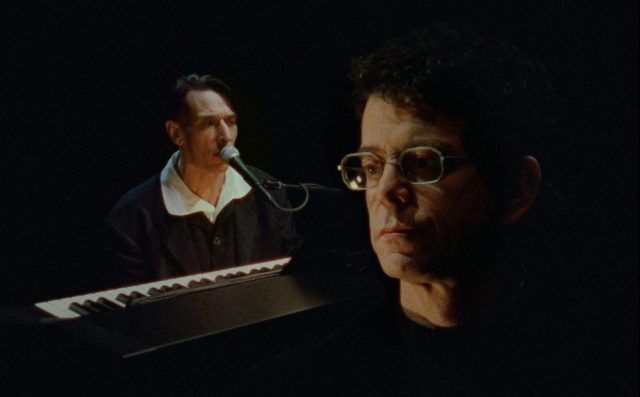
John Cale and Lou Reed reunited to honor Andy Warhol in Songs for ’Drella

Cale and Reed reflect more on their association with Warhol in “A Dream.” Cale sings as Warhol, “And seeing John made me think of the Velvets / And I had been thinking about them / when I was on St. Marks Place / going to that new gallery those sweet new kids have opened / But they thought I was old / And then I saw the old DOM / the old club where we did our first shows / It was so great / And I don’t understand about that Velvets first album / I mean, I did the cover / and I was the producer / and I always see it repackaged / and I’ve never gotten a penny from it / How could that be / I should call Henry / But it was good seeing John / I did a cover for him / but I did it in black and white and he changed it to color / It would have been worth more if he’d left it my way / But you can never tell anybody anything / I’ve learned that.”

The song later turns the focus on Reed, recalling, “And then I saw Lou / I’m so mad at him / Lou Reed got married and didn’t invite me / I mean, is it because he thought I’d bring too many people? / I don’t get it / He could have at least called / I mean, he’s doing so great / Why doesn’t he call me? / I saw him at the MTV show / and he was one row away and he didn’t even say hello / I don’t get it / You know I hate Lou / I really do / He won’t even hire us for his videos / And I was so proud of him.”

Reed does say hello — and goodbye — on the closer, “Hello It’s Me.” With Cale on violin, Reed stands up with his guitar and fondly sings, “Oh well, now, Andy — I guess we’ve got to go / I wish some way somehow you like this little show / I know it’s late in coming / But it’s the only way I know / Hello, it’s me / Goodnight, Andy / Goodbye, Andy.”

It’s a tender way to end a beautiful performance, but Lachman has added a special treat after the credits, with one final anecdote and the original trailer he made for Reed’s 1974 song cycle, Berlin. In addition, Songs for ’Drella is an excellent companion piece for the new Todd Haynes documentary, The Velvet Underground, which is also screening at Film Forum.
TODD HAYNES: THE VELVET UNDERGROUND

Todd Haynes tells the true story of the Velvet Underground in new documentary opening at Film Forum

THE VELVET UNDERGROUND (Todd Haynes, 2021)
Film Forum
209 West Houston St.
Opens Wednesday, October 13
212-727-8110
filmforum.org

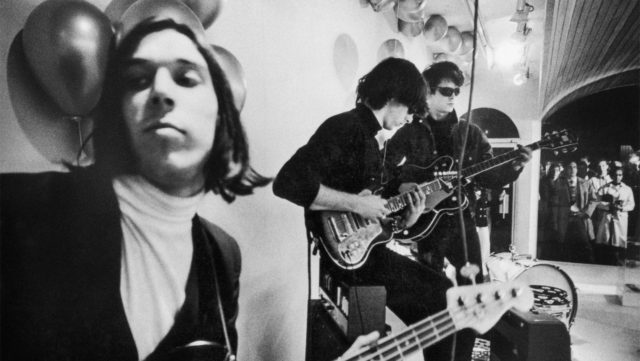
The Velvet Underground was more than just a music group; they electrified a generation, and continue to do so today, half a century later. Todd Haynes, whose 1998 Velvet Goldmine was set in the world of glam rock and whose 2007 I’m Not There explored the career of Bob Dylan through six characters and a nonlinear narrative, now turns his attention to the true story behind the Velvets. Haynes details the history of the band by delving into leaders John Cale and Lou Reed’s initial meeting, the formation of the Primitives with conceptual artists Tony Conrad and Walter DeMaria, and the transformation into the seminal VU lineup at the Factory under Pop icon Andy Warhol’s guidance: singer-songwriter-guitarist Reed, Welsh experimental composer and multi-instrumentalist Cale, guitarist Sterling Morrison, drummer Maureen Tucker, and German vocalist Nico. Much of Haynes’s documentary focuses on Warhol’s position in helping develop and promote the Velvets. “Andy was extraordinary, and I honestly don’t think these things could have occurred without Andy,” Reed, who died in 2013, says. “I don’t know if we would have gotten the contract if he hadn’t said he’d do the cover or if Nico wasn’t so beautiful.”

Haynes and editors Affonso Gonçalves and Adam Kurnitz pace the film like VU’s songs and overall career, as they cut between new and old interviews and dazzling archival photographs and video, frantic and chaotic at first, then slowing down as things change drastically for the band They employ split screens, usually two but up to twelve boxes at a time, to deluge the viewer with a barrage of sound and image. Among the talking heads in the film are composer and Dream Syndicate founder La Monte Young, actress and film critic Amy Taubin, actress and author Mary Woronov, Reed’s sister Merrill Reed-Weiner, early Reed bandmates and school friends Allan Hyman and Richard Mishkin, filmmaker and author John Waters, manager and publicist Danny Fields, composer and philosopher Henry Flynt, and avant-garde filmmaker and poet Jonas Mekas. “We are not part really of the subculture or counterculture. We are the culture!” Mekas, who passed away in 2019 at the age of ninety-six, declares.

Haynes also talks extensively with Cale and Tucker, who hold nothing back, in addition to Morrison’s widow, Martha Morrison; singer-songwriter Jackson Browne, who opened up for the Velvets back in their heyday; and big-time fan Jonathan Richman (of Modern Lovers fame). While everyone shares their thoughts about Warhol, the Factory, the Exploding Plastic Inevitable shows, and the eventual dissolution of the band, Haynes bombards us with clips from Warhol’s Sleep, Kiss, Empire, and Screen Tests (many opposite the people who appear in the film) as well as works by such artists as Maya Deren, Jack Smith, Kenneth Anger, Barbara Rubin, Tony Oursler, Stan Brakhage, and Mekas and paintings by Warhol, Jasper Johns, Robert Rauschenberg, and Mark Rothko. It’s a dizzying array that aligns with such VU classics as “I’ll Be Your Mirror,” “I’m Waiting for the Man,” “Heroin,” “White Light / White Heat,” “Sister Ray,” “Pale Blue Eyes,” and “Sweet Jane.”

Several speakers disparage the Flower Power era, Bill Graham, and Frank Zappa and the Mothers of Invention, with Tucker admitting, “This love-peace crap, we hated that. Get real.” They’re also honest about the group’s own success, or lack thereof. Tucker remembers at their first shows, “We used to joke around and say, ‘Well, how many people left?’ ‘About half.’ ‘Oh, we must have been good tonight.’” And there is no love lost for Reed, who was not the warmest and most considerate of colleagues.

The Velvets still maintain a remarkable influence on music and art today despite having recorded only two albums with Cale (The Velvet Underground and Nico and White Light / White Heat) and two with Doug Yule replacing Cale (The Velvet Underground and Loaded) in a span of only three years. (For example, the tribute album I’ll Be Your Mirror was released in September, featuring VU covers by Michael Stipe, Matt Berninger, Andrew Bird & Lucius, Kurt Vile, St. Vincent & Thomas Bartlett, Thurston Moore & Bobby Gillespie, Courtney Barnett, Iggy Pop & Matt Sweeney, and others.) Haynes (Far from Heaven, Safe) sucks us right into their extraordinary orbit and keeps us swirling in it for two glorious hours of music, gossip, art, celebrity, and backstabbing. The documentary, which premiered earlier this month at the New York Film Festival, opens at Film Forum on October 13 and begins streaming on Apple+ two days later. If you end up watching the film at home, turn it up loud. No, louder than that. Even louder. . . .

[Film Forum will be hosting Q&As with Gonçalves and Kurnitz on October 14 and 16 following the 7:50 shows, and Taubin will introduce the 7:50 screening on October 15. In addition, Haynes will join Gonçalves and Kurnitz at Film Forum for the 7:50 screening on November 12.]

IN BALANCHINE’S CLASSROOM

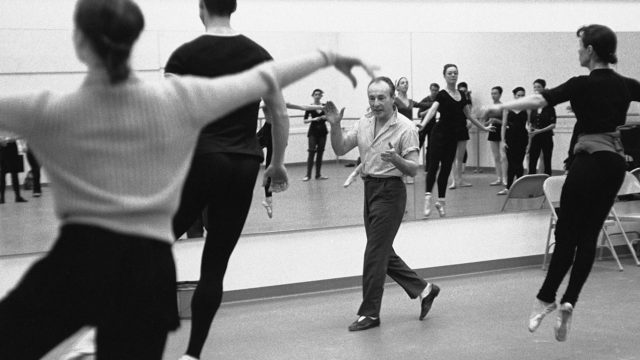
New documentary focuses on George Balanchine’s teaching methods (photo by Martha Swope)

IN BALANCHINE’S CLASSROOM (Connie Hochman, 2021)
Film Forum
209 West Houston St.
Opens Friday, September 17
212-727-8110
filmforum.org

This summer, dance fans have been treated to behind-the-scenes glimpses at the creative process of three legendary choreographers. First was Bill T. Jones in Rosalynde LeBlanc and Tom Hurwitz’s Can You Bring It: Bill T. Jones and D-Man in the Waters, followed by Alvin Ailey in Jamila Wignot’s Ailey. Now comes an exciting look at New York City Ballet cofounder George Balanchine in Connie Hochman’s In Balanchine’s Classroom, opening September 17 at Film Forum. Hochman, who trained at Balanchine’s School of American Ballet and danced with the Pennsylvania Ballet, has been working on the film since 2007, interviewing one hundred people who worked with Balanchine and gaining access to the archives of the George Balanchine Trust, incorporating rare, never-before-seen footage of Balanchine teaching his company in his unique style.

Several prominent former NYCB dancers share their experiences of the classes, in which Balanchine would focus on every minute aspect of movement, from the hands and the feet to the size of jumps. “He not only started a company; he changed the whole look of ballet,” says Gloria Govrin, artistic director of Eastern Connecticut Ballet. “It was more than just technique that he taught. It’s everything together that made the dancer,” Suki Schorer, senior faculty member of the School of American Ballet, explains. “The classroom was where he went to see how far he could make his dancers go,” Balanchine coach and stager Merrill Ashley notes. “He was our artistic father,” Edward Villella, founding artistic director of Miami City Ballet, says, pointing out how important it was for everyone to try to please him.

Hochman also speaks extensively with Balanchine-method coach and mentor Heather Watts and Jacques d’Amboise, the founder and president of National Dance Institute, who passed away in May at the age of eighty-six. (Sadly, twenty of Hochman’s subjects are no longer with us.) Photographs and film clips of all of the above show them dancing for the NYCB, interacting with Balanchine, and keeping his legacy alive by teaching such dancers as Tiler Peck, Stella Abrera, and Unity Phelan of NYCB, Calvin Royal III of ABT, and other professionals as well as young kids. “I think as teachers we have an obligation to share with the younger generation the way that he advocated, but it’s become the problem,” Ashley says. “We’re not Balanchine.”

There’s terrific, though grainy, black-and-white footage (and some later color) from such classic Balanchine ballets as Apollo, Prodigal Son, Serenade, Symphony in C, Orpheus, Agon, Jewels, and Stravinsky Violin Concerto while Hochman also explores Balanchine’s early years: He was born in St. Petersburg, Russia, in 1904, started dancing when he was nine, was hired as a choreographer by Serge Diaghilev for the Ballets Russes, was brought to American by Lincoln Kirstein, who cofounded the NYCB with Balanchine and helped fund the construction of the company’s home at the New York State Theater at Lincoln Center, and developed a fruitful working relationship with composer Igor Stravinsky. Balanchine is heard in numerous audio clips unearthed by Hochman. “I don’t accept the way it looks and it’s very difficult to discuss why,” he says. “I can’t say what inspires, if you use that high-class word, ‘inspiration.’ It’s your past, where you were born, what you’ve done in your life.”

All of the interview subjects agree that Balanchine could be extremely hard on his dancers, but he also gave them a freedom, appreciating them as individuals. They are also afraid of what might become of his ballets in the future, but Balanchine’s legacy seems safe in their capable hands. Film Forum will host three in-person Q&As opening weekend, with Hochman and Ashley on September 17 at 6:30 and September 19 at 5:20 and with Hochman and Villella on September 18 at 6:30. The 2021–22 NYCB season opens September 21 and will include Balanchine’s Serenade, Symphony in C, Western Symphony, Agon, La Valse, and The Nutcracker.

FIRE MUSIC: THE STORY OF FREE JAZZ

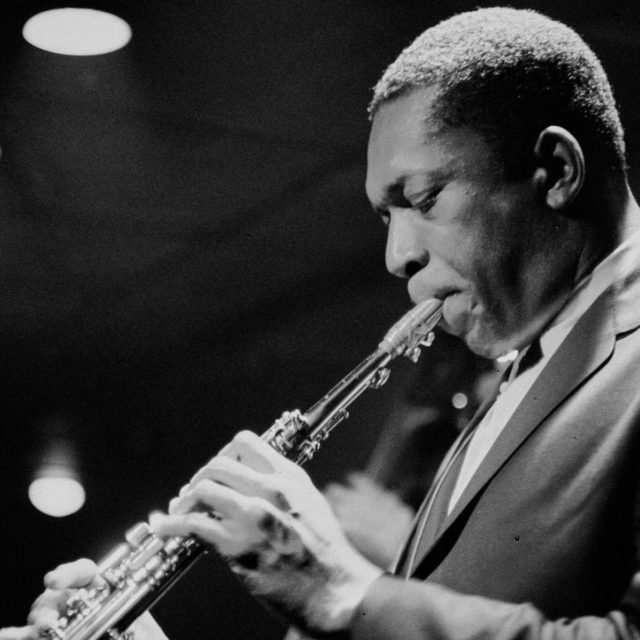
Sun Ra is one of the free jazz pioneers featured in Fire Music (photo by Baron Wolman / courtesy of Submarine Deluxe)

FIRE MUSIC: THE STORY OF FREE JAZZ (Tom Surgal, 2018)
Film Forum
209 West Houston St.
Opens Friday, September 10
212-727-8110
filmforum.org
www.firemusic.org

College is supposed to be a life-changing, career-defining experience. For me, there were two specific seminal moments, both of which took place in the classroom: discovering avant-garde film in a course taught by New York Film Festival cofounder Amos Vogel, author of Film as a Subversive Art, and being introduced to the free jazz movement, the radical response to bebop, in the History of American Music. Without those two flashpoints, it’s unlikely I would be writing a review of Tom Surgal’s Fire Music: The Story of Free Jazz all these years later.

Opening on September 10 at Film Forum, Fire Music takes a deep dive into free jazz, told with spectacular archival footage and old and new interviews with more than three dozen musicians who were part of the sonic upheaval, with famed jazz writer Gary Giddins adding further insight. Writer-director Surgal, who is also a drummer and percussionist, traces the development of free jazz chronologically, focusing on such groundbreaking figures as saxophonists Ornette Coleman, Eric Dolphy, John Coltrane, Albert Ayler, and Sam Rivers, pianist Cecil Taylor, and keyboardist and synth maestro Sun Ra. “It was terrifying for people,” Giddins says about the original reaction to free jazz, from audiences and musicians. “A lot of people were just, What the hell is this? This isn’t even music.”

There are snippets of live performances by Charlie Parker, Sun Ra Arkestra, Dolphy, Coltrane, Ayler, Max Roach, Don Cherry, Marion Brown, the Art Ensemble of Chicago, M’Boom, the Sam Rivers Trio, Globe Unity Orchestra, and others that set the right mood; this is not swing or bop but something wholly different — and dissonant — that requires an open mind and open ears, but it’s pure magic. “It was like a religion,” pianist Carla Bley remembers. Saxophonist John Tchicai explains, “Each individual could play in his own tempo or create melodies that were independent, in a way, from what the other players were playing. We had to break some boundary to be able to create something new.”

Surgal talks to the musicians about improvising without following standard chord progressions, the four-day October Revolution at the Cellar Café, trumpeter Bill Dixon starting the Jazz Composers’ Guild, pianist Muhal Richard Abrams cofounding the Association for the Advancement of Creative Musicians in Chicago, the formation of the Black Artists Group in St. Louis, the loft scene in New York City, the development of free jazz in New York, Los Angeles, the Midwest, and Europe, and the importance of the 1960 record Free Jazz by the Ornette Coleman Double Quartet, featuring Coleman, Cherry, Scott LaFaro, and Billy Higgins on the left channel and Dolphy, Freddie Hubbard, Charlie Haden, and Ed Blackwell on the right. Sadly, sixteen of the artists in the film have passed away since Surgal started the project; many others seen in clips died at an early age.

For these players, it was more than just fame and fortune; they were constantly called upon to defend free jazz itself. Taylor, who came out of the New England Conservatory, explains, “It seems to me what music is is everything that you do.” Pianist Misha Engelberg admits, “I am a complete fraud.” Meanwhile, Coleman trumpeter Bobby Bradford says of Ayler, “Here’s a saxophone player, man, that we all are thinking, we just broke the sound barrier — wow — and here’s a guy that’s gonna take us to another planet. Is that what we want to do?” As far as outer space is concerned, Sun Ra claims to be from Saturn.

John Coltrane is highlighted as the spiritual father of the free jazz movement (photo by Lee Tanner / courtesy of Submarine Deluxe)

Among the others who chime in are saxophonists Gato Barbieri, John Gilmore, Marshall Allen, Anthony Braxton, Oliver Lake, Noah Howard, Prince Lasha, and Archie Shepp, trombonists Roswell Rudd and George Lewis, trumpeter Wadada Leo Smith, pianists Burton Greene and Dave Burrell, drummers Rashied Ali, Barry Altschul, Thurman Barker, Warren Smith, Han Bennink, and Günter “Baby” Sommer, and vibesmen Karl Berger and Gunter Hampel, each musician unique and cooler than cool as great clips and stories move and groove to their own offbeat, subversive cacophony, brought together in a furious improvisation by editor and cowriter John Northrop, with original music by Lin Culbertson. Producers on the film include such contemporary musicians as Thurston Moore, Nels Cline, and Jeff Tweedy.

Surgal made Fire Music because he felt that the free jazz movement is largely forgotten today; his documentary goes a long way in showing how shortsighted that is. You don’t have to be in college to love this incredible music, and the film itself, which is a crash course in an unforgettable sound like no other.

(Film Forum will host an in-person Q&A with Surgal, Moore, and Smith at the 7:00 show on September 10 and with Surgal, Barker, and jazz writer Clifford Allen at the 7:00 screening on September 11.)

MOGUL MOWGLI

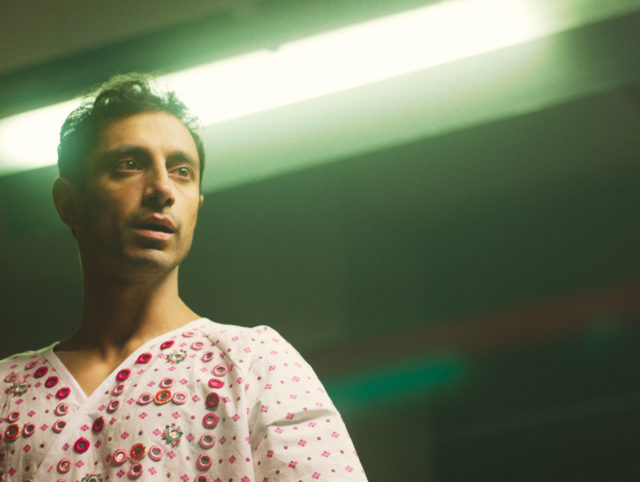
Riz Ahmed plays a rapper searching for his identity in Mogul Mowgli

MOGUL MOWGLI (Bassam Tariq, 2020)
Film Forum
209 West Houston St.
Opens Friday, September 3
212-727-8110
filmforum.org

There may be no more riveting, multidimensional actor, rapper, and activist working today than Oscar nominee and Emmy winner Riz Ahmed. Born and raised in London in a British Pakistani family, Ahmed rose to prominence as a suspected murderer in the HBO series The Night Of and made a major breakthrough playing a drummer who suddenly loses his hearing in the Academy Award–nominated Sound of Metal. For more than fifteen years, Ahmed has been releasing music, with his band, Swet Shop Boys (as Riz MC, with Heems), and as a solo act. It all comes together in his latest film, Mogul Mowgli, which opens September 3 at Film Forum.

Ahmed stars in and cowrote the tense drama with Karachi-born American director Bassam Tariq. Ahmed plays Zaheer, a rapper who goes by the name Zed and has just scored a huge gig opening for a popular rapper. But shortly before the tour kicks off, he gets hit with a baffling debilitating illness. With his career in jeopardy, he battles his hardworking religious father, Bashir (Alyy Khan); receives unconditional tenderness from his caring mother, Nasra (Sudha Bhuchar); is criticized by his brother, Bilal (musician, poet, and activist Hussain Manawer); reaches out to an ex-girlfriend, Bina (Aiysha Hart); argues with his friend and manager, Vaseem (Anjana Vasan); and is stupefied by the rising success of fellow rapper RPG (Nabhaan Rizwan), whose silly video “Pussy Fried Chicken” has gone viral.

All the while, Zed is haunted by memories from his childhood and hallucinations of a mysterious figure known as Toba Tek Singh (Jeff Mirza), whose face is covered by a ritual crown of rows of colorful fabric flowers. “People pay attention,” Toba Tek Singh tells him. “They drew a line in the sand. India and Pakistan. East and West. Us and them. I was born from this rupture. And I am the sickness from this separation. I am Toba Tek Singh!” The name refers to a city in Punjab and the title of a short story by Saadat Hasan Manto, about the troubles between India and Pakistan and a “Sikh lunatic” with a “frightening appearance” who “was a harmless fellow.” Ahmed also has a song called “Toba Tek Singh” on his March 2020 album, The Long Goodbye, in which he declares, “She wanna kick me out / but I’m still locked in / What’s my fucking name? / Toba Tek Singh.”

Riz Ahmed is a force to be reckoned with in Bassam Tariq’s debut narrative feature

Named after the Swet Shop Boys’ 2016 song “Half Moghul Half Mowgli,” Mogul Mowgli is a gripping film that deals with various dichotomies as laid out by Toba Tek Singh as Zed tries to find his place in a world that keeps letting him down. “The song’s about being torn between different sides of your identity, being descended from moguls and rich heritage, but living as Mowgli, lost in the urban jungle far away from the village that was once home,” Ahmed says in the film’s production notes. “That’s our experience in diaspora.”

In a concert scene, Zed raps, “Legacies outlive love,” which is at the center of his search for personal meaning, a concept he also explored in his arresting one-man show The Long Goodbye: Online Edition, livestreamed by BAM and the Manchester International Festival last December. (“I don’t belong here,” he says in the piece.) In addition, Ahmed gave a 2017 speech to the House of Commons on the importance of diversity and representation and has written about being typecast as a terrorist and profiled at airports.

Ahmed (Nightcrawler, ) and Tariq (These Birds Walk, Ghosts of Sugar Land), in his debut narrative feature, don’t make room for a lot of laughs in Mogul Mowgli, which passes the five-part Riz Test evaluating Muslim stereotypes in film and on television. It’s a powerful, personal work, made all the more poignant by Ahmed’s semiautobiographical elements and Tariq’s background as a documentary filmmaker. Ahmed is a force to be reckoned with; Anika Summerson’s camera can’t get enough of him, from his dark, penetrating eyes to his shuffling bare feet. Ahmed delivers a monumental performance that avoids clichés as it blazes across the screen. The 6:45 show at Film Forum on September 3 will be followed by a Q&A with Tariq in person and Ahmed on Zoom, moderated by filmmaker, critic, and curator Farihah Zaman; Tariq will also be at the 6:45 show on September 4 (moderated by Oscar nominee Shaka King) and the 4:40 screening on September 5.

THE MACALUSO SISTERS

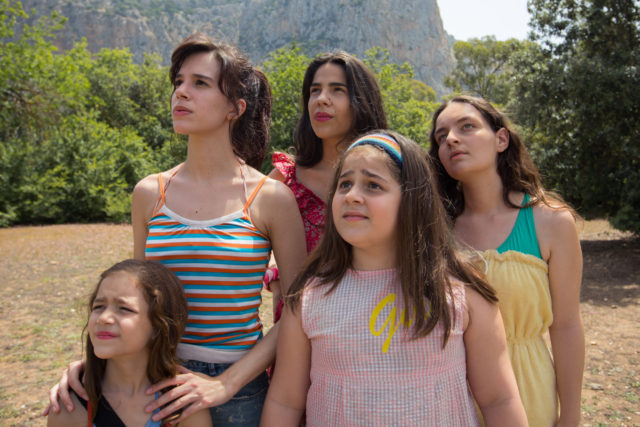
Five siblings face a tragedy they cannot recover from in The Macaluso Sisters

THE MACALUSO SISTERS (Emma Dante, 2020)
Film Forum
209 West Houston St.
Opens Friday, August 6
212-727-8110
filmforum.org

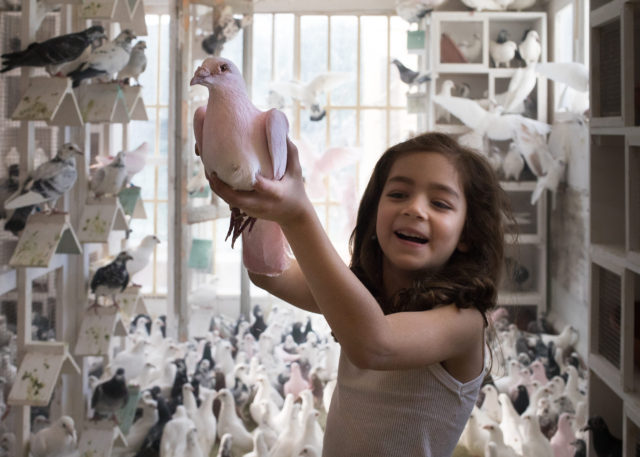
Emma Dante’s The Macaluso Sisters is a heart-wrenching tale that follows seventy years in the lives of five sisters in Palermo, Sicily, after they endure a horrific tragedy. The film begins in 1985, as the orphaned siblings prepare for a day at the beach, which they have to sneak onto because they can’t afford the admission fee. It is a chance for them to enjoy themselves and be free of their problems for an afternoon, much like the pastel-painted pigeons they raise and rent out for special occasions, from weddings to funerals. The oldest, eighteen-year-old Maria (played first by Eleonora De Luca, then Simona Malato), uses the escape to secretly share kisses with a young woman she is in love with as they set up an outdoor screening of Back to the Future.

Pinuccia (Anita Pomario, Donatella Finocchiaro, Ileana Rigano) spends much of her time in front of mirrors, putting on makeup and getting ready to attract men. Lia (Susanna Piraino, Serena Barone, Maria Rosaria Alati) is the most passionate and impulsive member of the family. Katia (Alissa Maria Orlando, Laura Giordani, Rosalba Bologna) is the chubby, imaginative one who embraces fantasy. And Antonella (Viola Pusateri) is the beloved baby of the close-knit group, cute and adorable, whom the rest dote over. Following a terrible accident, the four remaining sisters try to go on with their lives, but they are haunted by loss, literally and figuratively, some damaged beyond repair as the decades pass.

Written by Dante, Elena Stancanelli, and Giorgio Vasta based on Dante’s play Le sorelle Macaluso, the award-winning film is centered around the sisters’ home, which grows more ramshackle over time, representing their deteriorating psychological state. Dante (Via Castellana Bandiera, mPalermu) often trains the camera on the building’s yellowing facade, four floors with many windows, tiny terraces, and a rooftop extension where the pigeons live. Just like the birds always return, so do the surviving sisters, the sadness enveloping them, pain evident in their vacant eyes and aging bodies.

Dante has described the five siblings as parts of the same being, with Maria the brain, Pinuccia the skin, Lia the heart, Katia the stomach, and Antonella the lungs, each one necessary to maintain the whole; take away any single aspect and the body is in danger of failing. It is no coincidence that the middle-aged Maria works in a veterinary lab where she has to cut open animals and dispose of their internal organs, saving the heart in a plastic bag. Meanwhile, whenever the older Katia, the only one who develops some sort of life of her own and is in favor of selling the place, tries to go inside, her key won’t open the door, as if she is no longer welcome, the house aware of her intentions.

Antonella (Viola Pusateri) is the beloved youngest of the Macaluso sisters in elegiac film

The elegiac film is gorgeously photographed by Gherardo Gossi, capturing the beauty of the bright outdoors, filled with life and excitement, offset against the darkness of the family home, shadows everywhere. Occasionally one of the sisters looks through a hole in the wall they made as children, allowing them to see a sunny world that has eluded them. Throughout the film, Dante focuses on water, from the ocean to the bathtub where the young Antonella likes to play and the older Maria seeks respite.

Dante lingers on Maria more than the others; as a teenager, she dreams of becoming a dancer, her lithe, naked body alive with promise. But decades later, her once-wide eyes are tired, deep, dark circles dominating her face; as she soaks in a tub, we again see her naked body, but it lacks the vitality she previously reveled in, doomed to a different fate, not simply because of age but because she, like her sisters, have never been able to get over their loss. It’s like the fancy plate Antonella uses to feed the pigeons; when it breaks years later, Maria tries to glue it back together, but she cannot fill in all the cracks.

SABAYA

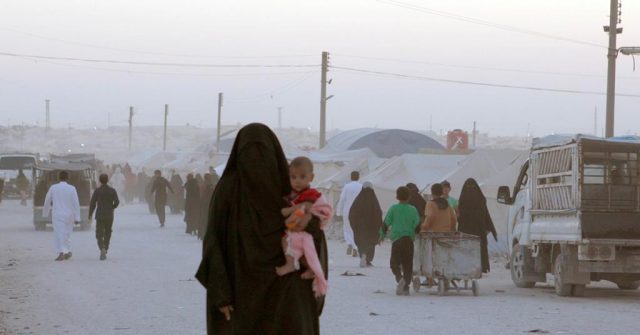
Sabaya tells the story of brutalized Yazidi women at the hands of Daesh in a Syrian camp

SABAYA (Hogir Hirori, 2021)
Film Forum
209 West Houston St.
Opens Friday, July 30
212-727-8110
filmforum.org
www.sabayathefilm.com

“What must be done so a woman will not be a victim of war?” twenty-one-year-old human rights activist Nadia Murad, a member of the Yazidi religious minority, asks in Alexandria Bombach’s award-winning 2018 documentary, On Her Shoulders. Murad’s question is not rhetorical; she was brutalized as a sex slave herself when Daesh (ISIS) attacked the Yazidi, followers of a small, ancient monotheistic religion. Swedish-Kurdish filmmaker Hogir Hirori explores the horrors further in the real-life thriller Sabaya, which opens July 30 at Film Forum.

On August 3, 2014, Daesh stormed Yazidi villages in Sinjar province in northern Iraq, murdering men, women, and children while also kidnapping thousands of girls and young women, who were beaten, raped, and forced to convert to Islam. The abused women are known as sabaya, or sex slaves, who serve multiple terrorist husbands and have their babies. Over eighteen months, Hirori made six visits to Syria, embedding himself with a handful of volunteers from the Yazidi Home Center as they attempt to rescue sabaya, one at a time.

Armed with a cellphone and a gun, Mahmud, Ziyad, and a few others make dangerous sojourns at night into the Al-Hol camp in Syria, where more than seventy-three thousand Daesh live, guarded by Kurdish troops. Mahmud and Ziyad track down specific girls and young women using information from their family and female infiltrators who have been placed on the inside, risking their own lives to save these sabaya. At one point, Mahmud goes into Hassake Prison, where fifteen thousand Daesh captives are piled into rooms, as he searches out someone who will talk.

When Mahmud and Ziyad succeed, they drive the women back to the center, a ramshackle structure in a deserted area where Mahmud’s wife, Siham, and mother, Zahra, try to help the traumatized women adjust and eventually reunite them with their loved ones who, if they’re still alive, are ready to welcome them back with open arms, a refreshing difference from other religions in which they are more likely to be murdered in an honor killing or shunned from society. These sabaya are often engulfed in shame and sometimes suicidal, preferring death to a life haunted by the memories of their experiences.

“You are safe now. No one is going to hurt you,” Zahra tells a newly freed Leila, who shares her story, tears in her eyes. “We were happy in our previous lives,” Leila says. “Even though we were poor, we were happy. Then they came and killed all the men. They took us women to the city of Mosul. I can’t . . . take any more.” Meanwhile, Mahmud and Siham’s young son, Suleyman, plays, smiles, and laughs, unwittingly bringing hope and joy to the women.

Winner of the Directing Award for World Cinema Documentary at Sundance, Hirori (The Deminer) directed, edited, and photographed the film, mostly working alone or with one assistant, venturing into harm’s way as Mahmud and Ziyad head into the darkness and are shot at and threatened, undeterred from their mission to bring back as many of the missing sabaya, numbering more than two thousand, some as young as seven, as they can. Sabaya is a powerful, gripping reminder of what is happening to women and religious minorities around the world every day, and that there are quiet, unrecognized heroes like Mahmud toiling away in the shadows as well as public advocates like Murad, risking their own safety to do something about it. It’s also a harrowing chronicle of the innate cruelty of too much of humanity.