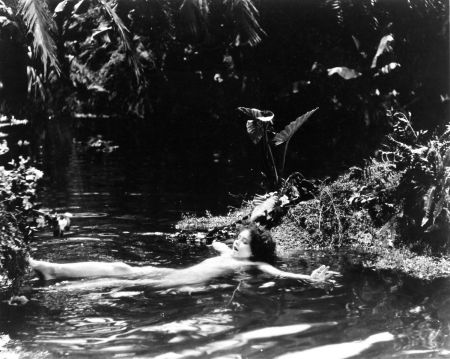
Clara Bow reveals all in Victor Fleming’s HULA (courtesy Photofest)
Film Forum
209 West Houston St.
March 5-18
212-727-8110
www.filmforum.org
For years, one of our favorite trivia questions has involved naming the director of GONE WITH THE WIND and THE WIZARD OF OZ. Not only do most people not know who made those classic films, but when we tell them that they were both credited to the same man, Victor Fleming, the answer usually is accompanied by a shrug. (Interestingly, he was called in to take over both of those epics following situations with other directors.) Fleming is among the least well known and studied filmmakers despite a resume that also includes CAPTAINS COURAGEOUS, A GUY NAMED JOE, THE VIRGINIAN, TREASURE ISLAND, JOAN OF ARC, and DR. JEKYLL AND MR. HYDE. Film Forum will be screening twenty-three of his films through March 18, from 1919’s WHEN THE CLOUDS ROLL BY to 1948’s JOAN OF ARC, with enticing double features of RED DUST (1932) and BOMBSHELL (1933), THE WIZARD OF OZ (1939) and CAPTAINS COURAGEOUS (1937), A GUY NAMED JOE (1943) and TEST PILOT (1938), and others. Fleming worked with the best in the business; among the stars in this series are Douglas Fairbanks, Myrna Loy, Clark Gable, Hedy Lamarr, Gary Cooper, Carole Lombard, Henry Fonda, Clara Bow, John Garfield, Janet Gaynor, and Spencer Tracy.

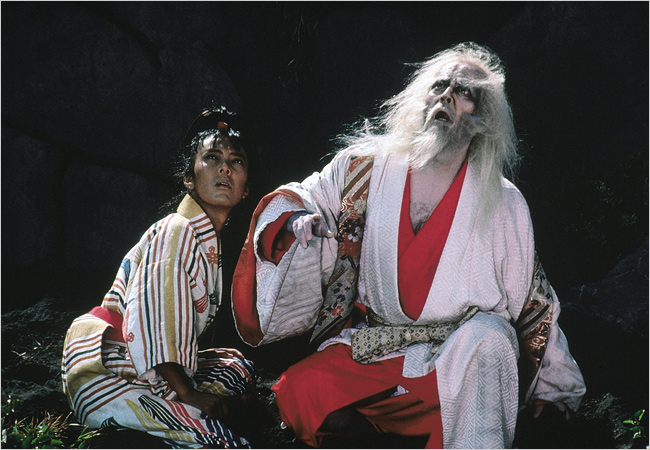
 Inspired by the story of feudal lord Mori Motonari and Shakespeare’s KING LEAR, Akira Kurosawa’s RAN is an epic masterpiece about the decline and fall of the Ichimonji clan. Aging Lord Hidetora (Tatsuya Nakadai) is ready to hand over his land and leadership to his three sons, Taro (Akira Terao), Jiro (Jinpachi Nezu), and Saburo (Daisuke Ryû). But jealousy, misunderstandings, and outright deceit and treachery result in Saburo’s banishment and a violent power struggle between the weak eldest, Taro, and the warrior Jiro. Hidetaro soon finds himself rejected by his children and wandering the vast, empty landscape with his wise, sarcastic fool, Kyoami (Peter), as the once-proud king descends into madness. Dressed in white robes and with wild white hair, Nakadai (THE HUMAN CONDITION), in his early fifties at the time, portrays Hidetaro, one of the great characters of cinema history, with an unforgettable, Noh-like precision. Kurosawa, cinematographers Asakazu Nakai, Takao Saitô, and Masaharu Ueda, and Oscar-winning costume designer Emi Wada bathe the film in lush greens, brash blues, and bold reds and yellows that marvelously offset the white Hidetaro. Kurosawa shoots the first dazzling battle scene in an elongated period of near silence, with only Tôru Takemitsu’s classically based score playing on the soundtrack, turning the film into a thrilling, blood-drenched opera. RAN is a spectacular achievement, the last great major work by one of the twentieth century’s most important and influential filmmakers. Film Forum is screening RAN in a brand-new twenty-fifth-anniversary 35mm print, concluding its terrific six-week-long Kurosawa festival celebrating the auteur’s centennial.
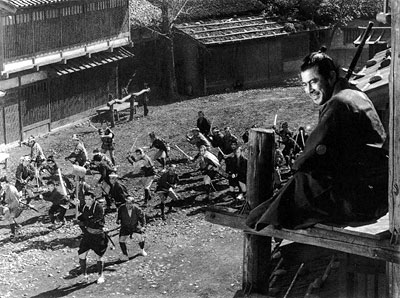
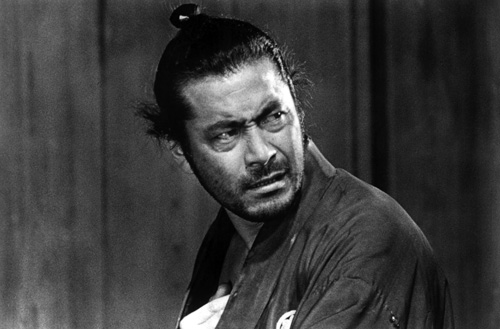
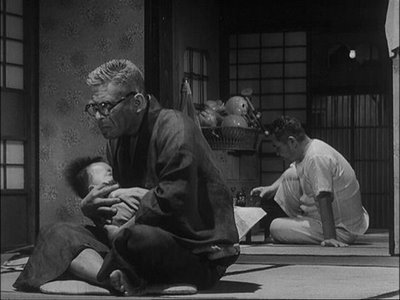
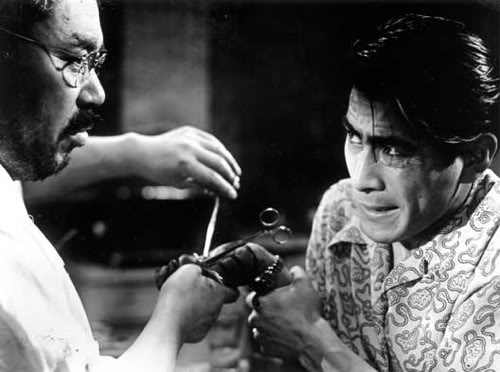
 Akira Kurosawa’s powerful psychological drama begins with a jazzy score over shots of a bustling Japanese city, people anxiously hurrying through as a Theremin joins the fray. But this is no Hollywood film noir or low-budget frightfest; Kurosawa’s daring film is about the end of old Japanese society as the threat of nuclear destruction hovers over everyone. A completely unrecognizable Toshiro Mifune stars as Nakajima, an iron foundry owner who wants to move his large family — including his two mistresses — to Brazil, which he believes to be the only safe place on the planet where he can survive the H bomb. His immediate family, concerned more about the old man’s money than anything else, takes him to court to have him declared incompetent; there he meets a dentist (the always excellent Takashi Shimura) who also mediates such problems — and fears that Nakajima might be the sanest one of all.