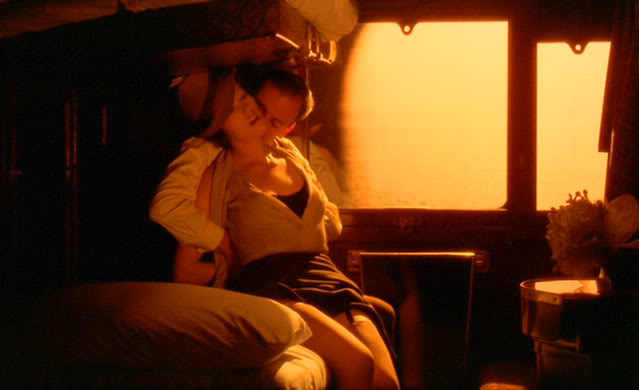
Jean-Paul Trintignant tries to find his place in the world in Bernardo Bertolucci’s lush masterpiece, THE CONFORMIST
THE CONFORMIST (Bernardo Bertolucci, 1970)
Film Forum
209 West Houston St.
December 17-23, 1:00, 3:15, 5:30, 7:45, 10:00
212-727-8110
www.filmforum.org
 Based on the novel by Alberto Moravia, Bernardo Bertolucci’s gorgeous masterpiece, THE CONFORMIST, is a political thriller about paranoia, pedophilia, and trying to find one’s place in a changing world. Jean-Louis Trintignant (AND GOD CREATED WOMAN, Z, MY NIGHT AT MAUD’S) stars as Marcello Clerici, a troubled man who suffered childhood traumas and is now attempting to join the fascist secret police. To prove his dedication to the movement, he is ordered to assassinate one of his former professors, the radical Luca Quadri (Enzo Tarascio), who is living in France. He falls for Quadri’s much younger wife, Anna (Dominique Sanda), who takes an intriguing liking to Clerici’s wife, Giulia (Stefania Sandrelli), while Manganiello (Gastone Moschin) keeps a close watch on him, making sure he will carry out his assignment. THE CONFORMIST, made just after THE SPIDER’S STRATAGEM and followed by LAST TANGO IN PARIS, captures one man’s desperate need to belong, to become a part of Mussolini’s fascist society and feel normal at the expense of his real inner feelings and beliefs. An atheist, he goes to church to confess because Giulia demands it. A bureaucrat, he is not a cold-blooded killer, but he will murder a part of his past in order to be accepted by the fascists (as well as Bertolucci’s own past, as he makes a sly reference to his former mentor, Jean-Luc Godard, by using the French auteur’s phone number and address for Quadri’s). Production designer Ferdinando Scarfiotti and cinematographer Vittorio Storaro bathe the film in lush Art Deco colors as Bertolucci moves the story, told in flashbacks, through a series of set pieces that include an erotic dance by Anna and Giulia, a Kafkaesque visit to a government ministry, and a stunning use of black and white and light and shadow as Marcello and Giulia discuss their impending marriage. THE CONFORMIST is a multilayered psychological examination of a complex figure living in complex times, as much about the 1930s as the 1970s, as the youth of the Western world sought personal, political, and sexual freedom. In addition to this one-week presentation of a new 35mm print of THE CONFORMIST at Film Forum, MoMA has just begun a complete retrospective of Bertolucci’s career that runs through January 12, with such upcoming screenings as BEFORE THE REVOLUTION (December 17 and January 10), THE SPIDER’S STRATAGEM (December 17, introduced by Bertolucci, and January 2), 1900 (December 18 and January 8), TRAGEDY OF A RIDICULOUS MAN (December 18 and January 10), and THE LAST EMPEROR (December 19 and January 5).
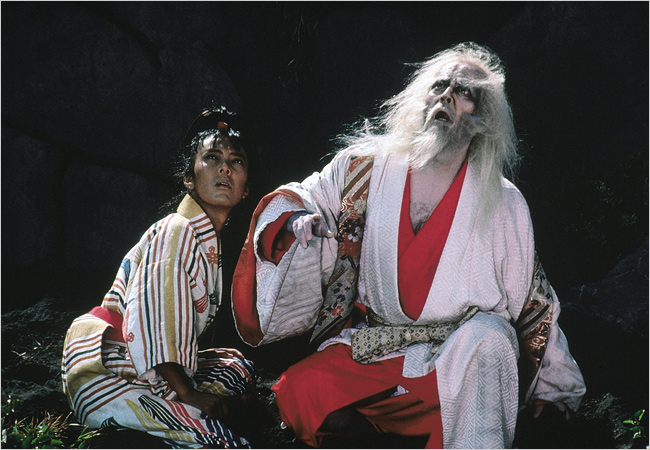
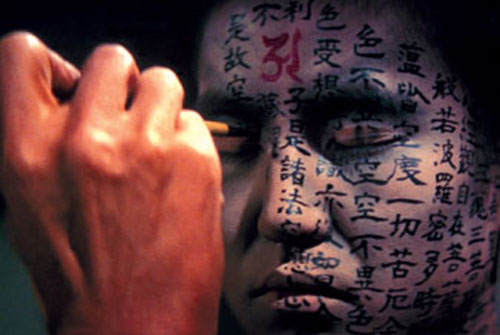
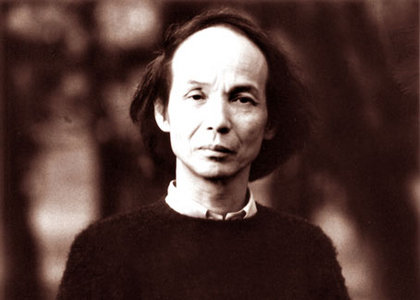
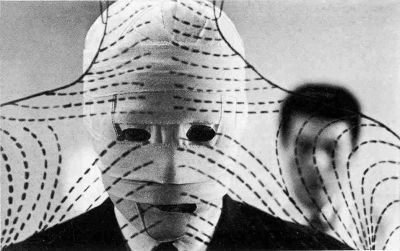
 Japanese novelist Kôbô Abe and director Hiroshi Teshigahara collaborated on five films together, including the marvelously existential WOMAN OF THE DUNES in 1964 and THE FACE OF ANOTHER two years later. In THE FACE OF ANOTHER, Tatsuya Nakadai (THE HUMAN CONDITION, KILL!) stars as Okuyama, a man whose face has virtually disintegrated in a laboratory accident. He spends the first part of the film with his head wrapped in bandages, a la the Invisible Man, as he talks about identity, self-worth, and monsters with his wife (Machiko Kyo), who seems to be growing more and more disinterested in him. Then Okuyama visits a psychiatrist (Mikijirô Hira) who is able to create a new face for him, one that would allow him to go out in public and just become part of the madding crowd again. But his doctor begins to wonder, as does Okuyama, whether the mask has actually taken control of his life, making him as helpless as he was before. Abe’s remarkable novel is one long letter from Okuyama to his wife, filled with utterly brilliant, spectacularly detailed examinations of what defines a person and his or her value in society. Abe wrote the film’s screenplay, which tinkers with the time line and creates more situations in which Okuyama interacts with people; although that makes sense cinematically, much of Okuyama’s interior narrative, the building turmoil inside him, gets lost. Teshigahara once again uses black and white, incorporating odd cuts, zooms, and freeze frames, amid some truly groovy sets, particularly the doctor’s trippy office, and Tōru Takemitsu’s score is ominously groovy as well. As a counterpart to Okuyama, the film also follows a young woman (Miki Irie) with one side of her face severely scarred; she covers it with her hair and is not afraid to be seen in public, while Okuyama must hide behind a mask. But as Abe points out in both the book and the film, everyone hides behind a mask of one kind or another.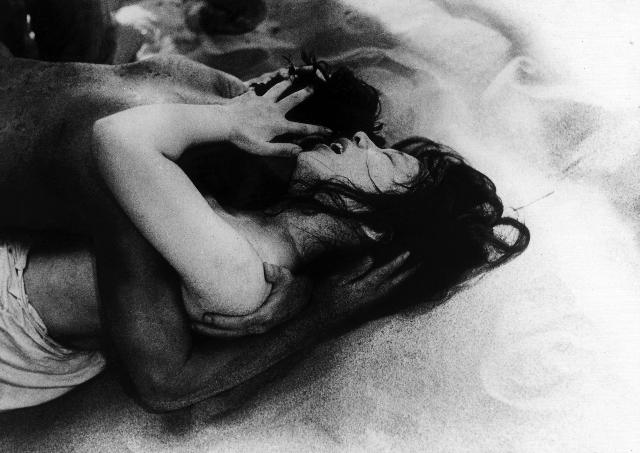
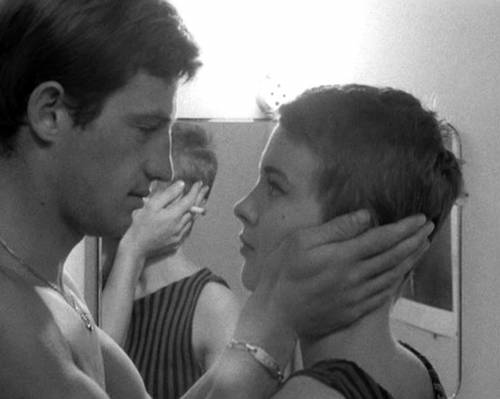
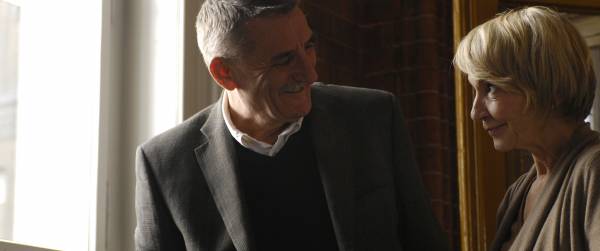
 Inspired by the success of THE LIVES OF OTHERS, Florian Henckel von Donnersmarck’s Oscar-winning 2006 drama about the German secret police, the Czech team of writer Petr Jarchovsky and director Jan Hrebejk (DIVIDED WE FALL, BEAUTY IN TROUBLE) tackle a similar subject from a different point of view in the powerful KAWASAKI’S ROSE. After discovering that her mystery illness is not terminal cancer, Lucie (Lenka Vlasáková) returns home to her husband, Ludek (Milan Mikulcik), and daughter, Bara (Anna Simonová), only to find out that Ludek is once again seeing his former lover, Radka (Petra Hrebícková). Ludek and Radka are working on a documentary about Lucie’s father, Pavel (Martin Huba), who is about to receive the coveted Czech memory prize in honor of his work with disabled children since the Velvet Revolution. But when Lucie understandably refuses to accept Radka’s gesture of friendship, Ludek decides to get even after being given Pavel’s complete dossier, which reveals that the beloved doctor and his wife, Jana (Daniela Kolárová), have been keeping some very damaging secrets that could tear apart their family. Like THE LIVES OF OTHERS, KAWASAKI’S ROSE is a nearly flawless film, with well-drawn characters, a compelling, emotional story, and a gripping narrative structure, always offering something unexpected. The performances are uniformly excellent, the script subtle and intelligent. Curiously, the only misstep, and thankfully it’s just a minor tangent, involves the title figure, Mr. Kawasaki (Isao Onoda), a painter who was taken in by Jana’s onetime lover, anarchist sculptor Borek (Antonin Kratochvil). Kawasaki seems completely unnecessary, existing merely as a metaphor both within the film and outside it, referring to master mathematician and paper folder Toshikazu Kawasaki and his famed origami rose that flows out from the center. Hrebejk will be at Film Forum for the 7:50 show on November 27.