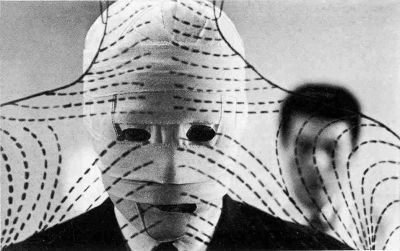
Tatsuya Nakadai searches for identity in THE FACE OF ANOTHER
THE FACE OF ANOTHER (Hiroshi Teshigahara, 1966)
Film Forum
209 West Houston St.
Thursday, April 7, 1:00, 3:20, 8:10
Series continues through April 21
212-727-8110
www.filmforum.org
 Kôbô Abe and director Hiroshi Teshigahara collaborated on five films together, including the marvelously existential Woman of the Dunes in 1964 and The Face of Another two years later. In The Face of Another, Tatsuya Nakadai (The Human Condition, Kill!) stars as Okuyama, a man whose face has virtually disintegrated in a laboratory accident. He spends the first part of the film with his head wrapped in bandages, a la the Invisible Man, as he talks about identity, self-worth, and monsters with his wife (Machiko Kyo), who seems to be growing more and more disinterested in him. Then Okuyama visits a psychiatrist (Mikijirô Hira) who is able to create a new face for him, one that would allow him to go out in public and just become part of the madding crowd again. But his doctor begins to wonder, as does Okuyama, whether the mask has actually taken control of his life, making him as helpless as he was before. Abe’s remarkable novel is one long letter from Okuyama to his wife, filled with utterly brilliant, spectacularly detailed examinations of what defines a person and his or her value in society. Abe wrote the film’s screenplay, which tinkers with the time line and creates more situations in which Okuyama interacts with people; although that makes sense cinematically, much of Okuyama’s interior narrative, the building turmoil inside him, gets lost. Teshigahara once again uses black and white, incorporating odd cuts, zooms, and freeze frames, amid some truly groovy sets, particularly the doctor’s trippy office, and Tōru Takemitsu’s score is ominously groovy as well. As a counterpart to Okuyama, the film also follows a young woman (Miki Irie) with one side of her face severely scarred; she covers it with her hair and is not afraid to be seen in public, while Okuyama must hide behind a mask. But as Abe points out in both the book and the film, everyone hides behind a mask of one kind or another. The Face of Another is screening April 7 as part of Film Forum’s “5 Japanese Divas” series, featuring four weeks of films starring Kyo, Isuzu Yamada, Kimuyo Tanaka, Setsuko Hara, and Hideko Takamine, who play strong, determined women in such classic works as Yasujiro Ozu’s Early Summer (1951) and Tokyo Story (1953), Hiroshi Teshigahara’s The Face of Another (1966), Mikio Naruse’s Okaasan (1952) and Flowing (1956), Akira Kurosawa’s The Idiot (1951) and Throne of Blood (1957), Keisuke Kinoshita’s Carmen Comes Home (1951) and Twenty-Four Eyes (1954), and Kenji Mizoguchi’s Ugetsu (1953), Sansho the Bailiff (1954), and Street of Shame (1956), among others.
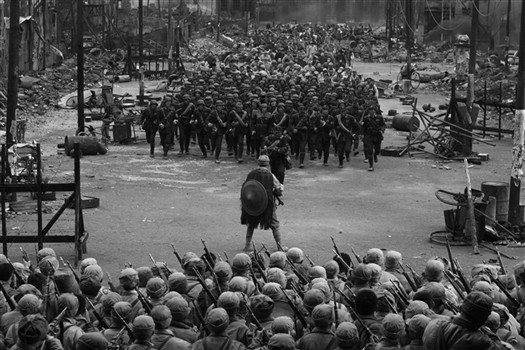
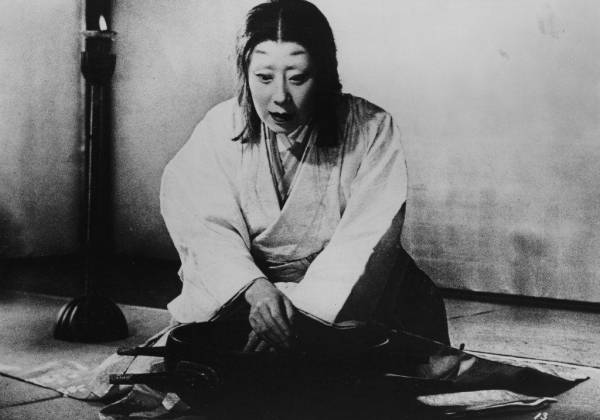
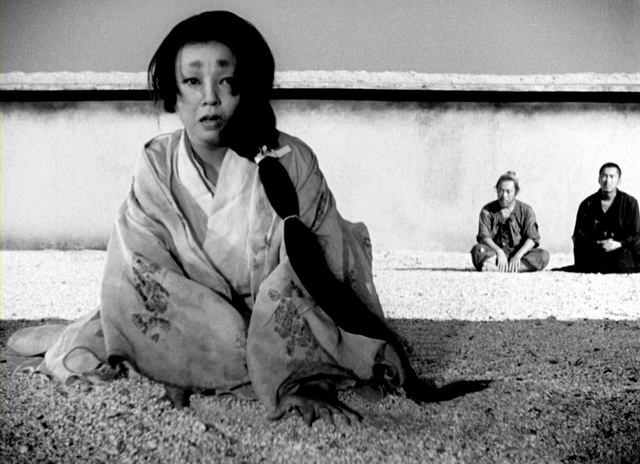
 Akira Kurosawa’s marvelous reimagining of Macbeth is an intense psychological thriller that follows one man’s descent into madness. Following a stunning military victory led by Washizu (Toshirô Mifune) and Miki (Minoru Chiaki), the two men are rewarded with lofty new positions. As Washizu’s wife, Asaji (Isuzu Yamada, with spectacular eyebrows), fills her husband’s head with crazy paranoia, Washizu is haunted by predictions made by a ghostly evil spirit in the Cobweb Forest, leading to one of the all-time classic finales. Featuring exterior scenes bathed in mysterious fog, interior long shots of Washizu and Asaji in a large, sparse room carefully considering their next bold move, and composer Masaru Sato’s shrieking Japanese flutes, Throne of Blood is a chilling drama of corruptive power and blind ambition, one of the greatest adaptations of Shakespeare ever put on film. Throne of Blood is screening April 17-18 as part of Film Forum’s “5 Japanese Divas” series, featuring four weeks of films starring Yamada, Machiko Kyo, Kimuyo Tanaka, Setsuko Hara, and Hideko Takamine, who play strong, determined women in such classic works as Yasujiro Ozu’s Early Summer (1951) and Tokyo Story (1953), Hiroshi Teshigahara’s The Face of Another (1966), Mikio Naruse’s Okaasan (1952) and Flowing (1956), Kurosawa’s The Idiot (1951) and Throne of Blood (1957), Keisuke Kinoshita’s Carmen Comes Home (1951) and Twenty-Four Eyes (1954), and Kenji Mizoguchi’s Ugetsu (1953), Sansho the Bailiff (1954), and Street of Shame (1956), among others.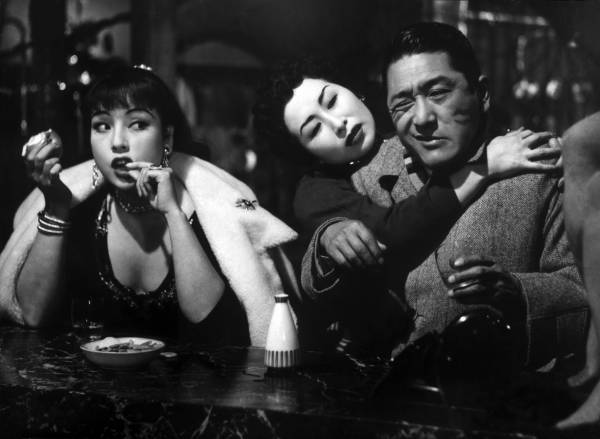

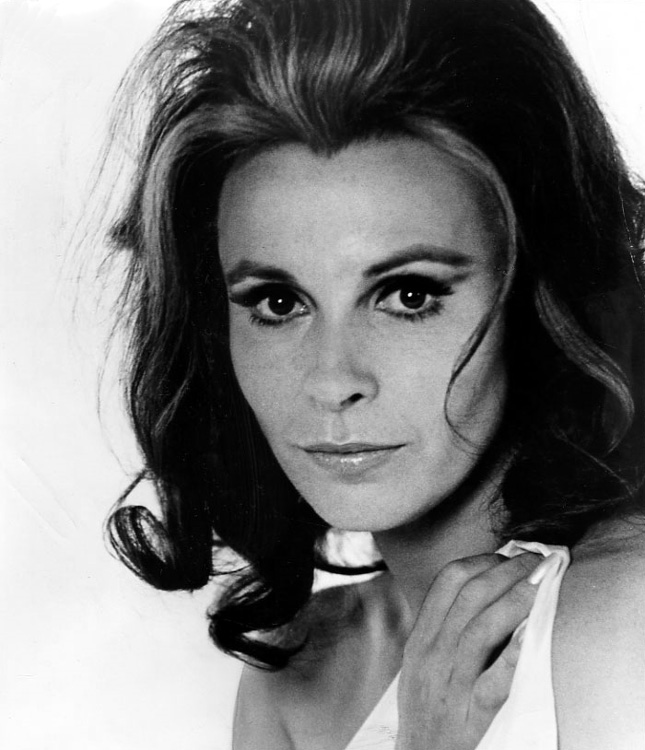
 Based on the Russian novel Yama (The Pit) by Aleksandr Kuprin, protofeminist director Kenji Mizoguchi’s Sisters of the Gion offers a poignant look at the changing desires of women in twentieth-century Japan. In the Gion District, geisha have become one-man prostitutes, taking up with one wealthy patron at a time. When Furusawa (Benkei Shiganoya) loses his business, the bankrupt man turns away from his wife and instead goes to Umekichi (Yōko Umemura), who takes him in, believing that it is her responsibility. Her younger sister, Omocha (Isuzu Yamada), is furious, arguing that geisha, and women in general, should be more than just the playthings of men. She wants her sister instead to find a rich patron who can take care of her in style. Omocha is a manipulative woman, willing to lie to get what she thinks she and Umekichi deserve, but she is not doing it for evil reasons as much as she wants to change the plight of the geisha and give more power to women. But Umekichi cannot break free of the old-fashioned ways as Omocha plays games with successful businessman Jurakudo (Fumio Okura) and his assistant, Kimura (Taizō Fukami), devising a plot that threatens to tear everything apart. Mizoguchi fills Sisters of the Gion with long shots of narrow passageways as characters try to escape from their situations but are unable to. Made in 1936, just before a war that would change Japan’s views on houses of ill repute, the film is virtually timeless for most of its too-brief sixty-nine minutes, until one man decides to take actions into his own hands and suddenly cars and the nearby city shift the overall perspective. In the end, it’s about more than just money, although it’s definitely about that, but it’s also about respect, about common decency, and about humanity, as seen from all sides. Sisters of the Gion is screening April 4 with Yasujiro Ozu’s 1933 silent crime drama, Dragnet Girl, starring Kinuyo Tanaka, as part of Film Forum’s “5 Japanese Divas” series, featuring four weeks of films starring Yamada, Tanaka, Machiko Kyo, Setsuko Hara, and Hideko Takamine, who play strong, determined women in such classic works as Ozu’s Early Summer (1951) and Tokyo Story (1953), Hiroshi Teshigahara’s The Face of Another (1966), Mikio Naruse’s Okaasan (1952) and Flowing (1956), Akira Kurosawa’s The Idiot (1951) and Throne of Blood (1957), Keisuke Kinoshita’s Carmen Comes Home (1951) and Twenty-Four Eyes (1954), and Mizoguchi’s Ugetsu (1953), Sansho the Bailiff (1954), and Street of Shame (1956), among others.