Grant Gee follows in the footsteps of W. G. Sebald in PATIENCE
PATIENCE (AFTER SEBALD) (Grant Gee, 2011)
Film Forum
209 West Houston St.
May 9-15
212-727-8110
www.filmforum.org
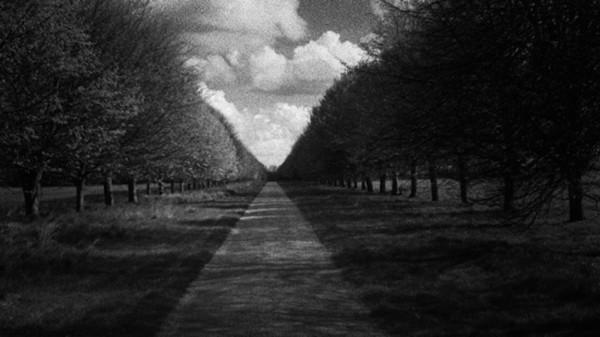
 British director Grant Gee, who has previously made such music documentaries as Meeting People Is Easy (about Radiohead), Demon Days: Live at the Manchester Opera House (with Gorillaz), and Joy Division, takes off on a more literary journey with Patience (After Sebald). Commissioned to examine a written work of fiction or nonfiction, Gee chose to delve into W. G. Maximilian Sebald’s highly influential 1995 book, The Rings of Saturn, about a character named W. G. Sebald who goes on a walk through Suffolk in East Anglia, veering off in his mind in all directions, waxing poetic on history, geography, life, death, literature, and other subjects. “In August 1992,” Sebald begins in the existential travelogue, “when the dog days were drawing to an end, I set off to walk the county of Suffolk, in the hope of dispelling the emptiness that takes hold of me whenever I have completed a long stint of work.” In the film, Gee includes shots of his own feet as he follows Sebald’s path, along with archival footage that relates to the book itself as such writers, artists, and cultural critics as Rick Moody, Tacita Dean, Ian Sinclair, Marina Warner, Adam Phillips, Andrew Motion, and Robert McFarlane talk about Sebald, who died in 2001 at the age of fifty-seven, and the importance of the hard-to-define Rings. To match the older footage, Gee shot much of the new material in a hazy, grainy black and white, with the talking heads occasionally appearing on camera almost in the background. The film includes fascinating snippets of a rare radio interview with Sebald in addition to a narrator reading sections from the book, both of which end up being far more interesting than what many of the other contributors have to say. Reminiscent of Patrick Keiller’s Robinson in Ruins, Robinson in Space, and London, Gee’s Patience fetishizes its subject but lacks the visual and aural poetry of those works, with the walk becoming somewhat tiresome until its offbeat surprise ending. As on most trips, there are beautiful moments, engaging digressions, and gorgeous landscapes to linger over, but they grow fewer and farther between as the story unfolds. Although it’s not necessary to have read the book in order to follow Gee’s wanderings, it would probably help. Patience (After Sebald) opens May 9 at Film Forum, with the 8:20 show on opening night introduced by Sebald friend Moody, and the 8:20 show on May 11 will be introduced by Lynne Sharon Schwartz, editor of The Emergence of Memory: Conversations with W.G. Sebald.
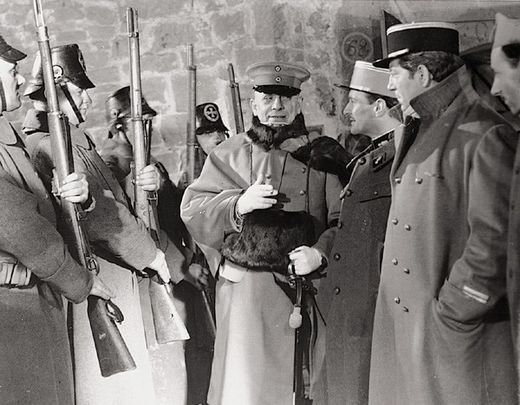
 If you’ve never seen this remarkable cinematic achievement, prepare to be overwhelmed by Jean Renoir’s antiwar masterpiece, screening through May 24 at Film Forum in an all-new 35mm restored print in honor of the film’s seventy-fifth anniversary. The first foreign film to be nominated for a Best Picture Oscar, Grand Illusion is set in a POW camp during WWI, where everyman pilot Lieutenant Maréchal (Jean Gabin), by-the-book Captain de Boieldieu (Pierre Fresnay), lovable Rosenthal (Marcel Dalio), and others are being held by the aristocratic Captain von Rauffenstein (an unforgettable Erich von Stroheim). Proclaimed “cinematic public enemy no. 1” by Joseph Goebbels, Grand Illusion takes on anti-Semitism, class structure, and religion in addition to war, a humanist film that is as relevant as ever seventy-five years after its initial release. Illustrator Paul Davis will be at Film Forum on May 15 following the 7:45 show to sign copies of his specially created poster celebrating the anniversary.
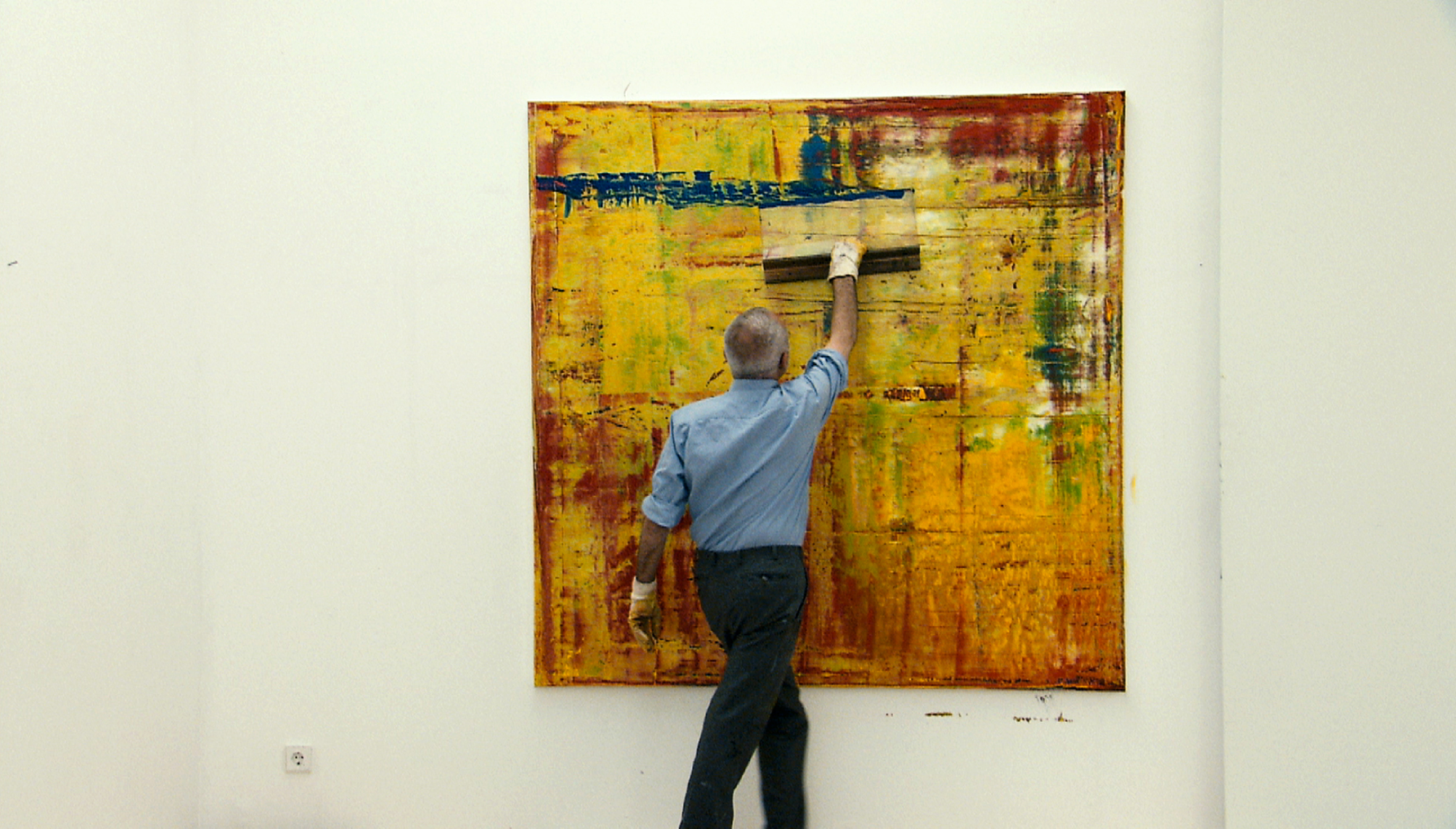
 There’s nothing abstract about the title of Corinna Belz’s documentary on German artist Gerhard Richter, no missing words or punctuation marks. Gerhard Richter Painting is primarily just that: Ninety-seven minutes of Gerhard Richter painting as he prepares for several exhibitions, including a 2009 show at the Marian Goodman Gallery in New York City. In 2007, Belz got a rare chance to capture Richter on camera, making a short film focusing on the stained-glass window he designed for the Cologne Cathedral. Two years later, the shy, reserved German artist, who prefers to have his art speak for itself, invited Belz into his studio, giving her remarkable access inside his creative process, which revealingly relies so much on chance and accident. Belz films Richter as he works on two large-scale canvases on which he first slathers yellow paint, adds other colors, then takes a large squeegee and drags it across the surface, changing everything. It’s fascinating to watch Richter study the pieces, never quite knowing when they are done, unsure of whether they are any good. It’s also painful to see him take what looks like an extraordinary painting and then run the squeegee over it yet again, destroying what he had in order to see if he can make it still better. “They do what they want,” he says of the paintings. “I planned something totally different.” About halfway through the film, a deeply concerned Richter starts regretting his decision to allow the camera into his studio. “It won’t work,” he says. “At the moment it seems hopeless. I don’t think I can do this, painting under observation. That’s the worst thing there is.” But continue he does, for Belz’s and our benefit. Belz (Life After Microsoft) even gets Richter to talk a little about his family while looking at some old photos, offering intriguing tidbits about his early life and his escape to Düsseldorf just before the Berlin Wall went up. Belz also includes clips from 1966 and 1976 interviews with Richter, and she attends a meeting he has with Goodman about his upcoming show, lending yet more insight into the rather eclectic artist. “To talk about painting is not only difficult but perhaps pointless, too,” Richter, who turned eighty last month, says in the 1966 clip. However, watching Gerhard Richter Painting is far from pointless; Belz has made a compelling documentary about one of the great, most elusive artists of our time. “Man, this is fun,” Richter says at one point, and indeed it is; watching the masterful artist at work is, well, a whole lot more fun than watching paint dry. Gerhard Richter Painting opens on March 14 at Film Forum, with Yale School of Art dean Robert Storr introducing the 8:00 screening.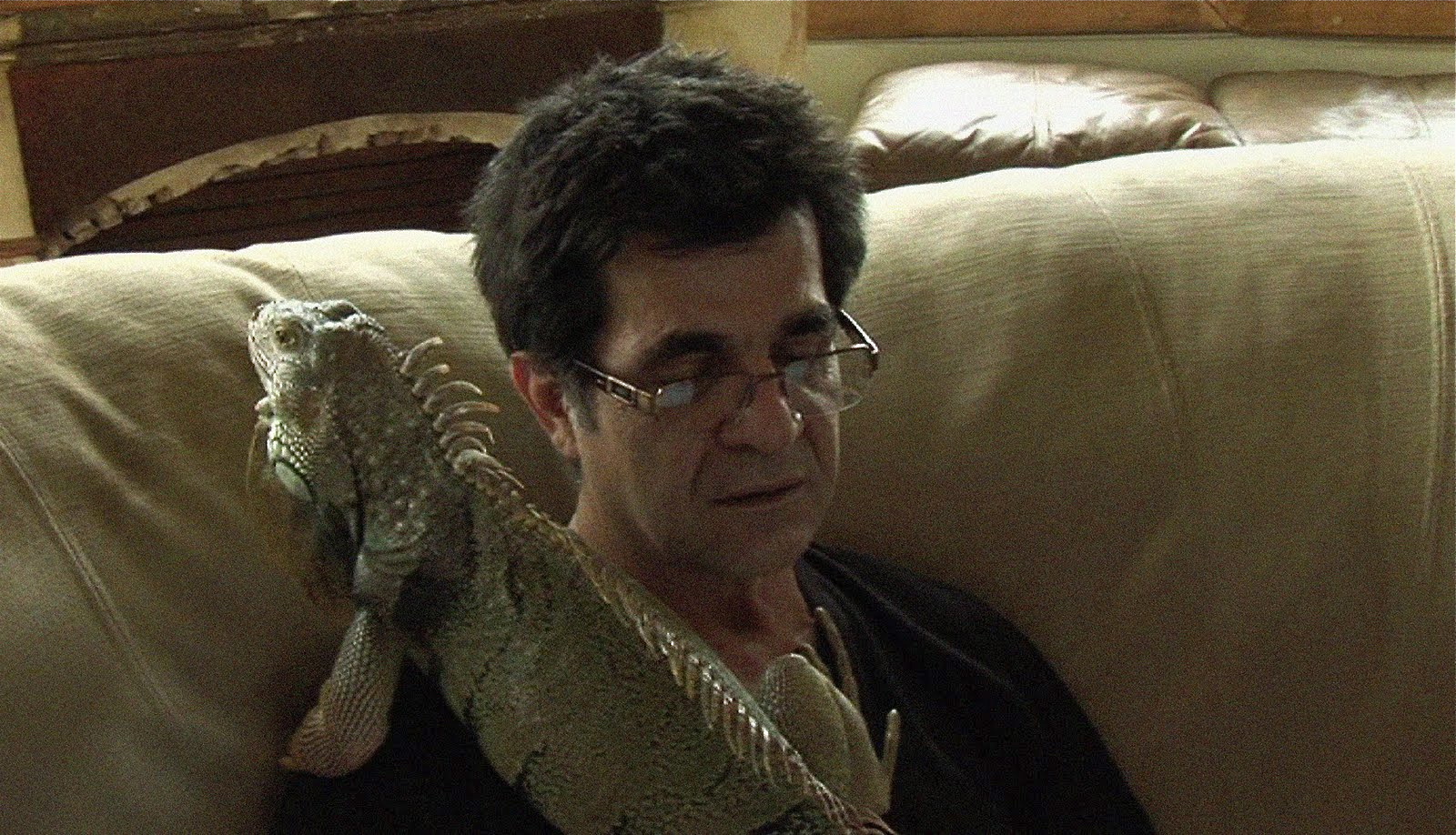
 “You call this a film?” Jafar Panahi asks rhetorically about halfway through the revealing documentary This Is Not a Film. After several arrests beginning in July 2009 for supporting the opposition party, the highly influential and respected Iranian filmmaker (Crimson Gold, Offside) was convicted in December 2010 for “assembly and colluding with the intention to commit crimes against the country’s national security and propaganda against the Islamic Republic.” Although facing a six-year prison sentence and twenty-year ban on making or writing any kind of movie, Panahi is a born storyteller, so he can’t stop himself, no matter the risks. Under house arrest, Panahi has his friend, fellow director Mojtaba Mirtahmasb (Lady of the Roses), film him with a handheld DV camera over ten days as Panahi plans out his next movie, speaks with his lawyer, lets his pet iguana climb over him, and is asked to watch a neighbor’s dog, taking viewers “behind the scenes of Iranian filmmakers not making films.” Panahi even pulls out his iPhone to take additional video, photographing New Year’s fireworks that sound suspiciously like a military attack. Panahi is calm throughout, never panicking (although he clearly does not want to take care of the barking dog) and not complaining about his situation, which becomes especially poignant as he watches news reports on the earthquake and tsunami disaster in Japan. “But you can’t make a film now anyhow, can you?” Mirtahmasb — who will later be arrested and imprisoned as well — asks at one point. “So what I can’t make a film?” Panahi responds. “That means I ask you to take a film of me? Do you think it will turn into some major work of art?” This Is Not a Film, which was smuggled out of Iran in a USB drive hidden in a birthday cake so it could be shown at Cannes, is indeed a major work of art, an important document of government repression of free speech as well as a fascinating examination of one man’s intense dedication to his art and the creative process.