Tag Archives: film forum

L’AVVENTURA

Michelangelo Antonioni’s L’AVVENTURA is a thing of existential beauty

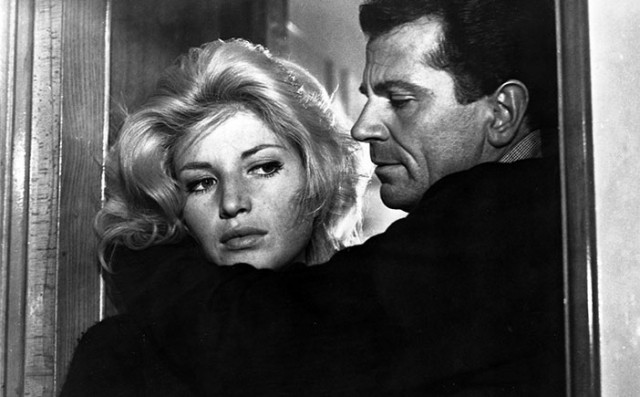
Michelangelo Antonioni’s L’AVVENTURA, starring Monica Vitti and Gabriele Ferzetti, is a thing of existential beauty

L’AVVENTURA (Michelangelo Antonioni, 1960)
Film Forum
209 West Houston St.
July 12-25
212-727-8110
www.filmforum.org

Michelangelo Antonioni shows that being rich and fancy-free on the Italian Riviera ain’t all it’s cracked up to be in this fascinating study of a group of friends out on a yachting adventure. When Anna (Lea Massari) disappears, Claudia (Monica Vitti), Giulia (Dominique Blanchar), and Sandro (Gabriele Ferzetti) search for her but can’t find her. Slowly life goes on, with Sandro and Claudia falling for each other as the mystery of Anna fades away. Aldo Scavarda’s gorgeous cinematography adds beauty to this captivating, unusually told story of ultimately empty souls. Winner of a Special Jury Prize at Cannes, where it was also booed, the existential L’Avventura, the first of a trilogy by Antonioni that also includes La Notte (1961) and L’Eclisse (1962), is screening July 12-25 at Film Forum in a new 35mm restoration that should take the stunning black-and-white visuals to a whole new level.

12 ANGRY MEN

12 ANGRY MEN

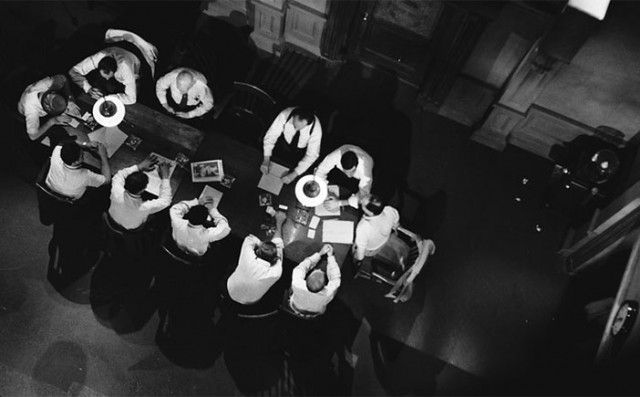
Sidney Lumet’s 12 ANGRY MEN explores the consciences and more of a dozen jurors deciding a murder case

12 ANGRY MEN (Sidney Lumet, 1957)
Film Forum
209 West Houston St.
July 5-11
212-727-8110
www.filmforum.org

The fate of an eighteen-year-old boy charged with the murder of his father is at stake in Sidney Lumet’s first film, the gripping, genre-defining 12 Angry Men. After a series of establishing shots, a judge sends a dozen New Yorkers into the jurors room, where they need to come to a unanimous verdict that could lead to the execution of the teen. Over the course of about ninety minutes, an all-star cast examines and reexamines the case — and their own personal biases — as the heat increases, both literally and figuratively. At first, the nameless dozen men make small talk, trying to be friendly, but it’s not long before some of them are at others’ throats, primarily the gruff Lee J. Cobb, who has it in for the calm and thoughtful Henry Fonda, who is ready to stand alone if necessary for what he believes in. The other uniformly excellent actors playing a very specific cross-section of white, male America are John Fiedler, Martin Balsam, Robert Webber, E. G. Marshall, Jack Klugman, Edward Binns, Jack Warden, Ed Begley, Joseph Sweeney, and George Voskovec. “I tell you, we were lucky to get a murder case,” Webber tells Fonda, but he won’t feel the same as the tension reaches near-violent proportions. 12 Angry Men is a searing examination of the criminal justice system as well as basic human instincts, behavior, and common decency. The Philadelphia-born Lumet, whose parents were both in the Yiddish theater, is able to tell the story in cinematic ways despite its taking place mostly in one small, sweaty room, letting the intense acting drive the narrative; the director, who was nominated for an Oscar for the film, would go on to make such other classic New York City dramas as The Pawnbroker, The Anderson Tapes, Serpico, Dog Day Afternoon, and Prince of the City. Nominated for a Best Picture Oscar and winner of the Golden Bear at Berlin, 12 Angry Men, based on an original teleplay by Reginald Rose, will be presented in a DCP restoration at Film Forum July 5-11.

RESCHEDULED — CONEY ISLAND FLICKS ON THE BEACH: LITTLE FUGITIVE

LITTLE FUGITIVE

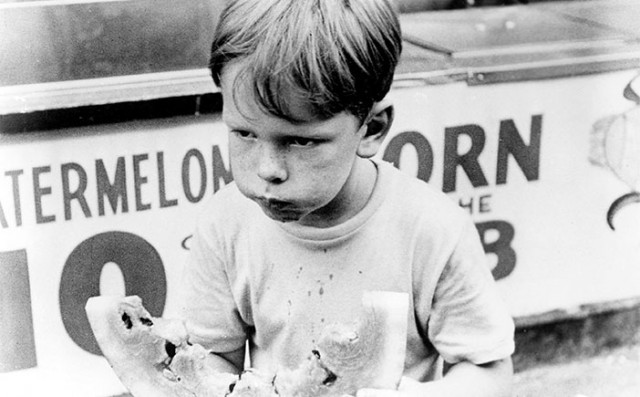
Joey Norton goes on the adventure of a lifetime in Coney Island in underground indie classic LITTLE FUGITIVE

LITTLE FUGITIVE (Morris Engel, Ray Ashley, and Ruth Orkin, 1953)
Coney Island
1001 Boardwalk West
Rained out: Monday, July 1, free, dusk
Rescheduled: Tuesday, August 27, free, dusk
www.coneyislandfunguide.com

A summer night in Coney Island is the perfect time and place to see one of the most influential and important — and vastly entertaining — works to ever come out of the city, Morris Engel’s charming Little Fugitive. In celebration of the film’s sixtieth anniversary, the free summer series “Flicks on the Beach” is screening the newly restored 35mm print of the underground classic, which won the Silver Lion at the Venice Film Festival in 1953, was nominated for a Best Screenplay Oscar, and was entered into the National Film Registry in 1997. Written and directed with Ray Ashley and Ruth Orkin, Engel’s future wife, Little Fugitive follows the gritty, adorable exploits of seven-year-old wannabe cowboy Joey Norton (Richie Andrusco, in his only film role), who runs away to Coney Island after his older brother, Lennie (Richard Brewster), and his brother’s friends, Harry (Charlie Moss) and Charley (Tommy DeCanio), play a trick on the young boy, using ketchup to convince Joey that he accidentally killed Lennie. With their single mother (Winifred Cushing) off visiting their ailing mother, Joey heads out on his own, determined to escape the cops who are surely after him. But once he gets to Coney Island, he decides to take advantage of all the crazy things to be found on the beach, along the boardwalk, and in the surrounding area, including, if he can get the money, riding a real pony.

A no-budget black-and-white neo-Realist masterpiece shot by Engel with a specially designed lightweight camera that was often hidden so people didn’t know they were being filmed, Little Fugitive explores the many pleasures and pains of childhood and the innate value of home and family. As Joey wanders around Coney Island, he meets all levels of humanity, preparing him for the world that awaits as he grows older. Meanwhile, Engel gets into the nooks and crannies of the popular beach area, from gorgeous sunrises to beguiling shadows under the boardwalk. In creating their beautifully told tale, Engel, Ashley, and Orkin use both trained and nonprofessional actors, including Jay Williams as Jay, the sensitive pony ride man, and Will Lee, who went on to play Mr. Hooper on Sesame Street, as an understanding photographer, while Eddie Manson’s score continually references “Home on the Range.” Rough around the edges in all the right ways, Little Fugitive became a major influence on the French New Wave, with Truffaut himself singing its well-deserved praises. There’s really nothing quite like it, before or since.

OZU: LATE AUTUMN

A trio of yentas in LATE AUTUMN

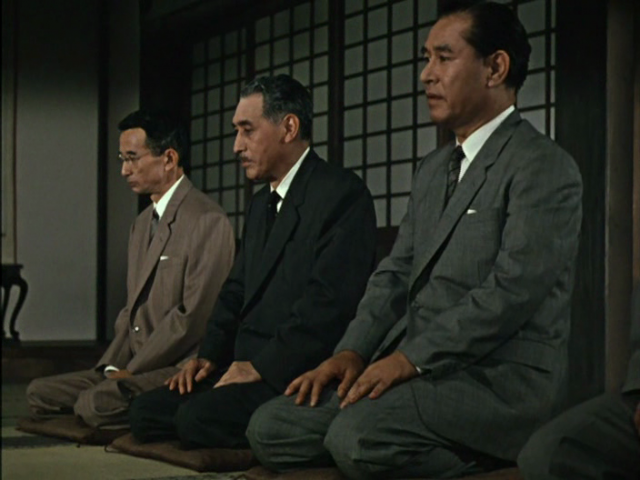
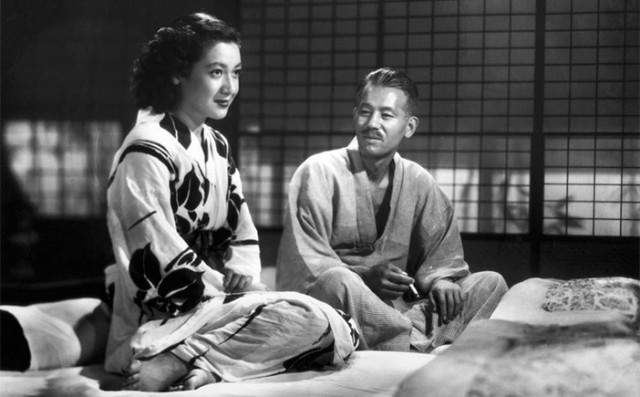
Nobuo Nakamura, Ryuji Kita, and Shin Saburi play a trio of matchmaking yentas in Ozu’s LATE AUTUMN

LATE AUTUMN (AKIBIYORI) (Yasujirō Ozu, 1960)
Film Forum
209 West Houston St.
Tuesday, June 25, 1:00, 3:20, 8:00
Series runs through June 27
212-727-8110
www.filmforum.org

Yasujirō Ozu revisits one of his greatest triumphs, 1949’s Late Spring, in the 1960 drama Late Autumn, the Japanese auteur’s fourth color film and his third-to-last work. Whereas the black-and-white Late Spring is about a widowed father (Chishu Ryu) and his unmarried adult daughter (Setsuko Hara) contemplating their futures, Late Autumn deals with young widow Akiko Miwa (Hara again) and her daughter, Ayako (Yoku Tsukasa). At a ceremony honoring the seventh anniversary of Mr. Miwa’s death, several of his old friends gather together and are soon plotting to marry off both the younger Akiko, whom they all had crushes on, and twenty-four-year-old Ayako. The three businessmen — Soichi Mamiya (Shin Saburi), Shuzo Taguchi (Nobuo Nakamura), and Seiichiro Hirayama (Ryuji Kita) — serve as a kind of comedic Greek chorus, matchmaking and arguing like a trio of yentas, while Akiko and Ayako maintain creepy smiles as the men lay out their misguided, unwelcome plans. Mamiya makes numerous attempts to fix Ayako up with one of his employees, Shotaru Goto (Keiji Sada), but Ayako wants none of it, preferring the freedom and independence displayed by her best friend, Yoko (Yuriko Tashiro), who represents the new generation in Japan. At the same time, their matchmaking for Akiko borders on the slapstick. Based on a story by Ton Satomi, Late Autumn, written by Ozu with longtime collaborator Kôgo Noda, is a relatively lighthearted film from the master, with sly jokes and playful references while examining a Japan that is in the midst of significant societal change in the postwar era. Kojun Saitô’s Hollywood-esque score is often bombastically melodramatic, but Yuuharu Atsuta’s cinematography keeps things well grounded with Ozu’s trademark low-angle, unmoving shots amid carefully designed interior sets. Late Autumn is downright fun to watch, and you can see it on June 25 at Film Forum as part of its three-week Ozu series, which continues through June 27 with screenings of such other works as An Autumn Afternoon, That Night’s Wife, the double feature A Hen in the Wind and Ohayo, and Where Now Are the Dreams of Youth? In addition, on June 26 at 11:00 am, Film Forum will host a free memorial tribute to Japanese cinema expert, critic, director, and curator Donald Richie, who died in Tokyo in February at the age of eighty-eight; speakers include Ian Buruma, Daryl Chin, Emilie de Brigard, Lucille Carra, Bruce Goldstein, Peter Grilli, Laurence Kardish, Stephen Prince, Mary Richie, and Paul Schrader. (Late Autumn will be having encore screenings July 24-25 as part of Film Forum’s “Reprise Presentation” of eight of the films through July 25.)

OZU: LATE SPRING

LATE SPRING

Father (Chishu Ryu) and daughter (Setsuko Hara) contemplate their future in Yasujirō Ozu masterpiece

LATE SPRING (BANSHUN) (Yasujirō Ozu, 1949)
Film Forum
209 West Houston St.
Friday, June 7, 1:00, 3:10, 5:20, 9:30, Saturday, June 8, 1:00, 3:10, 5:20, 7:30, 9:40, Tuesday, June 11, 1:30
Series runs June 7-27
212-727-8110
www.filmforum.org

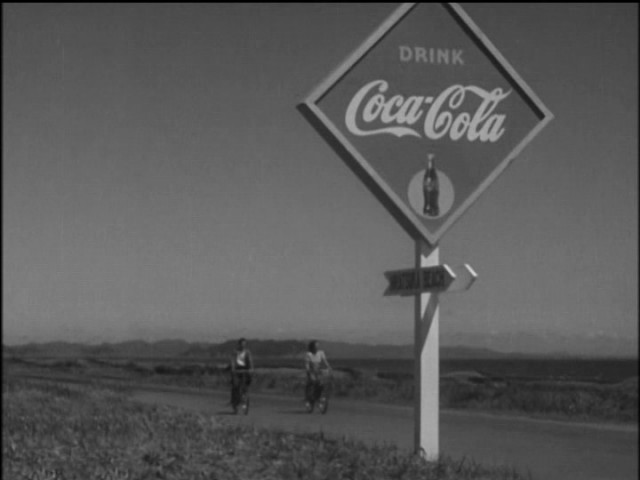
It is rather appropriate that Film Forum’s three-week, thirty-plus-film “Ozu” series, held in honor of the fiftieth anniversary of director Yasujirō Ozu’s death, kicks off with Late Spring. Not only is it late spring right now in New York, but the work marked a late spring of sorts in the Japanese auteur’s career as he moved into a new, post-WWII phase of his long exploration of Japanese family life and the middle class. Based on Kazuo Hirotsu’s novel Father and Daughter, the black-and-white film, written by Ozu with longtime collaborator Kogo Noda, tells the story of twenty-seven-year-old Noriko (Setsuko Hara), who lives at home with her widower father, Shukichi Somiya (Chishu Ryu), a university professor who has carved out a very simple existence for himself. Her aunt, Masa (Haruko Sugimura), thinks Noriko should get married, but she prefers caring for her father, who she believes would be lost without her. But when Somiya starts dropping hints that he might remarry, like his friend and colleague Jo Onodera (Masao Mishima) did — a deed that Noriko finds unbecoming and “filthy” — Noriko has to take another look at her future. Late Spring is a masterpiece of simplicity and economy while also being a complex, multilayered tale whose every moment offers unlimited rewards. From the placement and minimal movement of the camera to the design of the set to the carefully choreographed acting, Ozu infuses the work with meaning, examining not only the on-screen relationship between father and daughter but the intimate relationship between the film and the viewer. Ozu, who never married, has a firm grasp on the state of the Japanese family as some of the characters try to hold on to old-fashioned culture and tradition while recovering from the war’s devastation and facing the modernism that is taking over.
LATE SPRING

LATE SPRING kicks off three-week festival at Film Forum in honor of the fiftieth anniversary of director Yasujirō Ozu’s death

Hara, who also starred as a character named Noriko in Ozu’s Early Summer and Tokyo Story, is magnificent as a young woman averse to change, forced to reconsider her happy existence. And Ryu, who appeared in more than fifty Ozu films, is once again a model of restraint as the father, who only wants what is best for his daughter. Working within the censorship code of the Allied occupation and playing with narrative cinematic conventions of time and space, Ozu, who died on his birthday in 1963 at the age of sixty, examines such dichotomies as marriage and divorce, the town and the city, parents and children, the changing roles of men and women in Japanese society, and the old and the young as postwar capitalism enters the picture, themes that are evident through much of his oeuvre. In his 1977 book Ozu: His Life and Films, historian, director, and writer Donald Richie wrote, “For him the givens of his pictures were indeed so everyday that, once decided upon, he neither considered nor questioned their effect. This was shown by his surprise that anyone would want to ask questions about his material and his methods, and by his indifference, even obliviousness, to the many similarities among his pictures. Not in the slightest doctrinaire, he early found a way to show what he wanted and saw no reason to change.” A masterpiece from start to finish, Late Spring is screening in a 35mm print on June 7, 8, and 11 at Film Forum; the series, which is dedicated to Richie, who died earlier this year at the age of eighty-eight, continues through June 27 with such other Ozu works as A Story of Floating Weeds, Equinox Flower, Record of a Tenement Gentleman, Tokyo Chorus, Dragnet Girl, A Hen in the Wind, The Munekata Sisters, and Tokyo Twilight. (Late Spring will be having encore screenings July 14-15 as part of Film Forum’s “Reprise Presentation” of eight of the films through July 25.)

FILM FORUM JR.: THE KID

THE KID

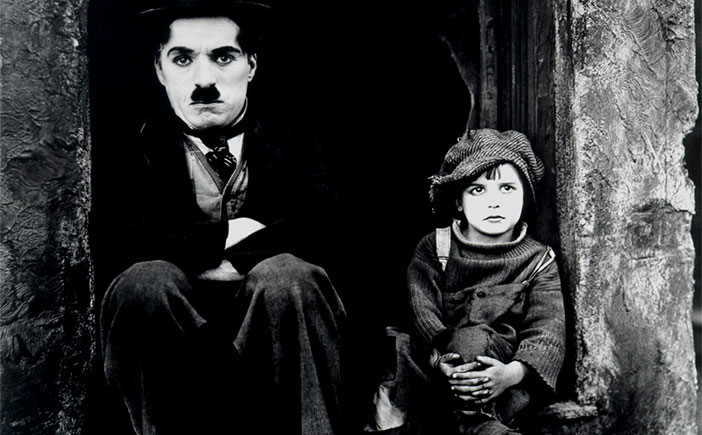
A Tramp (Charlie Chaplin) and an abandoned child (Jackie Coogan) form a family in THE KID

THE KID (Charlie Chaplin, 1921)
Film Forum
209 West Houston St.
Sunday, May 5, $7, 11:00 am
Series continues through August 11
212-727-8110
www.filmforum.org

Charlie Chaplin’s first feature, The Kid, was a breakthrough for the British-born silent-film star, a touching and tender sixty-eight-minute triumph about a poor soul getting a second chance at life. When a baby arrives at his doorstep, a Tramp (Chaplin) first tries to ditch the boy, but he ends up taking him to his ramshackle apartment and raising him as if he were his own flesh and blood. Although he has so little, the Tramp makes sure the child, eventually played by Jackie Coogan, has food to eat, clothes to wear, and books to read. Meanwhile, the mother (Edna Purviance, Chaplin’s former lover), who has become a big star, regrets her earlier decision and wonders where her son is, setting up a heartbreaking finale. In addition to playing the starring role, Chaplin wrote, produced, directed, and edited the film and composed the score for his company, First National, wonderfully blending slapstick comedy, including a hysterical street fight with an angry neighbor, with touching melodrama as he examines poverty in post-WWI America, especially as seen through the eyes of the orphan boy, played beautifully by Coogan, who went on to marry Betty Grable, among others, and star as Uncle Fester in The Addams Family. Chaplin’s innate ability to tell a moving story primarily through images reveals his understanding of cinema’s possibilities, and The Kid holds up as one of his best, alongside such other silent classics as 1925’s The Gold Rush and 1931’s City Lights. The Kid is screening on May 5 at 11:00 am as part of the Film Forum Jr. series for kids and families and will be preceded by a Little Rascals short and a Chaplin Dress-Alike Contest; the series continues May 12 with Alfred Hitchcock’s 1956 version of The Man Who Knew Too Much and May 19 with François Truffaut’s Small Change.

FILM FORUM JR.: THE ADVENTURES OF ROBIN HOOD

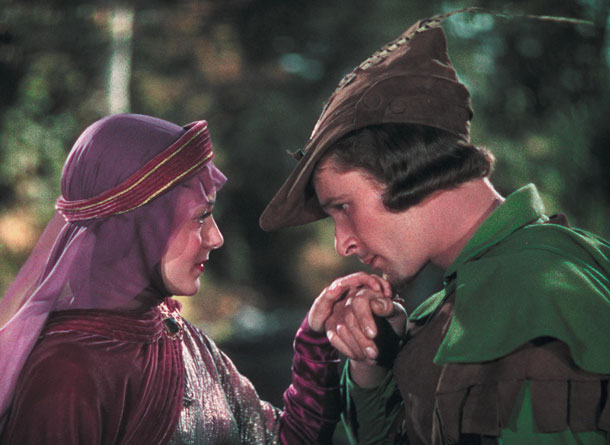
Olivia de Havilland and Errol Flynn capture each other’s fancy in one of the grandest adventure movies ever made

THE ADVENTURES OF ROBIN HOOD (Michael Curtiz, 1938)
Film Forum
209 West Houston St.
Sunday, April 14, $7, 11:00 am
Series continues through August 11
212-727-8110
www.filmforum.org

With King Richard the Lionheart (Ian Hunter) off fighting the Crusades, his scheming brother, Prince John (Claude Rains), has taken over England, planning to become king with the help of the conniving Sir Guy of Gisbourne (Basil Rathbone) and the cowardly Sheriff of Nottingham (Melville Cooper). But one brave man stands in his way, “an impudent, reckless rogue who goes around the shire stirring up the Saxons against authority,” according to the Bishop of the Black Canons (Montagu Love). “And he has the insolence to set himself up as a protector of the people.” Sir Robin of Locksley (Errol Flynn), better known as Robin Hood, is fiercely loyal to King Richard and will do anything to preserve the sanctity of the throne and fight for the rights of the common people as he occupies Sherwood Forest with his band of merry men in tights, including Will Scarlet (Patric Knowles), Little John (Alan Hale Sr.), Friar Tuck (Eugene Pallette), and Much (Herbert Mundin). He also falls for the lovely Maid Marian (Olivia de Havilland), King Richard’s ward whom John promises to Gisbourne. Directed with appropriate flair and fanfare by Michael Curtiz (Casablanca, Mildred Pierce) and William Keighley (Each Dawn I Die, The Man Who Came to Dinner) The Adventures of Robin Hood is a rollicking romp through the famous legend, complete with exciting fight scenes, lots of male camaraderie, and just the right touch of romance. Flynn and de Havilland, who ended up making eight films together, are magnetic as Robin Hood and Maid Marian, a classic love story mired in life-threatening danger. There have been numerous versions of Robin Hood, starring such actors as Douglas Fairbanks, Russell Crowe, Kevin Costner, Patrick Bergin, Cary Elwes, and the voice of Brian Bedford, but there’s no Sir Robin quite like Flynn, who flits about with an endless supply of charm, humor, grace, and bravery. By the way, Marian’s horse, then known as Golden Cloud, was sold after the movie to Roy Rogers and was renamed Trigger, going on to have quite a career himself. Winner of Three Oscars (for art direction, editing, and original score — it lost Best Picture to Frank Capra’s You Can’t Take It with You) — The Adventures of Robin Hood is screening in a new Technicolor restoration on April 14 at 11:00 am as part of the Film Forum Jr. series for kids and families, which continues April 28 with the Marx Brothers’ A Night at the Opera and May 5 with Charlie Chaplin’s The Kid.