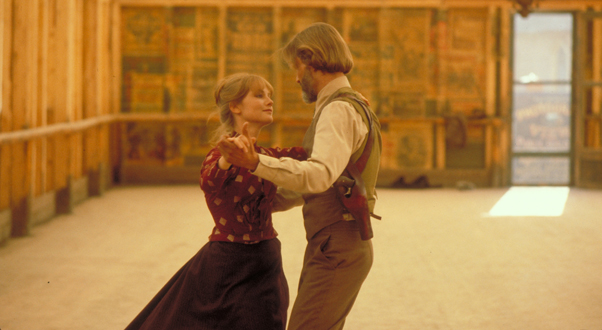
Isabelle Huppert and Kris Kristofferson waltz their way through HEAVEN’S GATE
HEAVEN’S GATE (Michael Cimino, 1980)
Film Forum
209 West Houston St.
March 22-28
212-727-8110
www.filmforum.org
 When I was a kid in school, one of the first movies I ever reviewed was Heaven’s Gate, Michael Cimino’s brazenly overbudget famous Hollywood disaster. Incensed that professional film critics were obsessed with the meta surrounding the making of the epic Western instead of simply taking it for what it was, I was determined to treat it like any other movie, forgetting about all the behind-the-scenes gossip and tales of financial gluttony. And what I found back then was that it was a noble failure, a bold exercise in genre that had its share of strong moments but ultimately fell apart, leaving me dissatisfied and disappointed but glad I had seen it; I did not want my three-plus hours back. In fact, I probably would have checked out the rumored five-hour version if it had been shown, hoping it would fill in the many gaps that plagued the official theatrical release. More than thirty years later, Cimino’s follow-up to his Oscar-winning sophomore effort, The Deer Hunter, has returned in a 216-minute digital restoration supervised by Cimino, playing March 22-28 at Film Forum, and it does indeed shed new light on the unfairly ridiculed work, which is still, after all this time, a noble failure. Inspired by the 1882 Johnson County War in Wyoming, the film stars Kris Kristofferson as Jim Averill, a Harvard-educated lawman hired by a group of immigrants, called “citizens,” whose livelihood — and lives — are being threatened by a wealthy cattlemen’s association run by the elitist Frank Canton (Sam Waterston). The association has come up with a kill list of 125 citizens, offering fifty dollars for each murder, a plan that has been authorized all the way up to the president of the United States. Leading the way for the cattlemen is hired killer Nate Champion (Christopher Walken), who has a particularly fierce aversion to the foreign-speaking immigrants. With a major battle on the horizon, Averill and Champion also fight for the love of the same woman, the luminous Ella Watson (Isabelle Huppert), a successful madam who soon finds herself in the middle of the controversy.
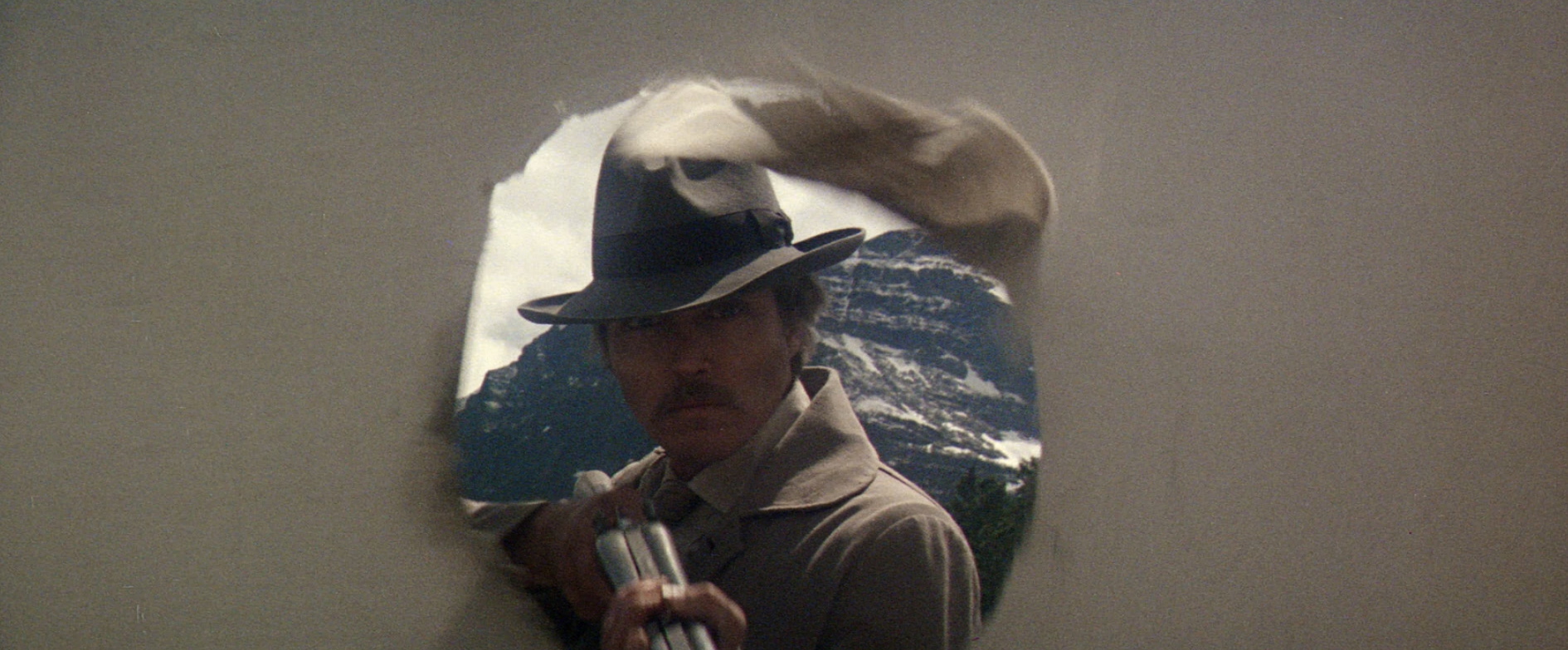
Christopher Walken sets his sights on immigrants in epic Western
Heaven’s Gate is beautifully photographed by Vilmos Zsigmond, the first half bathed in sepia tones, with many shots evoking Impressionist painting. The narrative, which begins in Harvard in 1870 before jumping to 1890 Wyoming, moves far too slowly, with underdeveloped relationships and characters that don’t pay off in the long run, especially John Hurt as Billy Irvine, who wanders around lost throughout the film. Using a gentle rendition of Strauss’s “The Blue Danube” as a musical motif, Cimino creates repetitive scenes that start too early and go on too long, choosing style over substance, resulting in too much atmosphere and not enough motivation. The all-star cast also includes Joseph Cotten, Jeff Bridges, Brad Dourif, Richard Masur, Eastwood regular Geoffrey Lewis, Terry O’Quinn, Tom Noonan, and Mickey Rourke, but most of them are wasted in minor roles that are never fully developed. Whereas the film began by calling to mind such works as Akira Kurosawa’s Yojimbo, John Ford’s My Darling Clementine, and Robert Altman’s McCabe & Mrs. Miller, it devolves into Sam Peckinpah-lite as rape and violence take center stage, along with silly plot twists and clichéd dialogue, much of which is hard to make out. However, all of that does not add up to one of the worst movies ever made, despite its inclusion on many such lists. It even feels oddly relevant today, as America continues to debate immigration laws. But in the end it’s just a film that tried too hard, focusing on the wrong things. Back in 1980, I wanted to see the supposed five-hour version; now I think I’d prefer to see a two-hour Heaven’s Gate that would just get to the point.
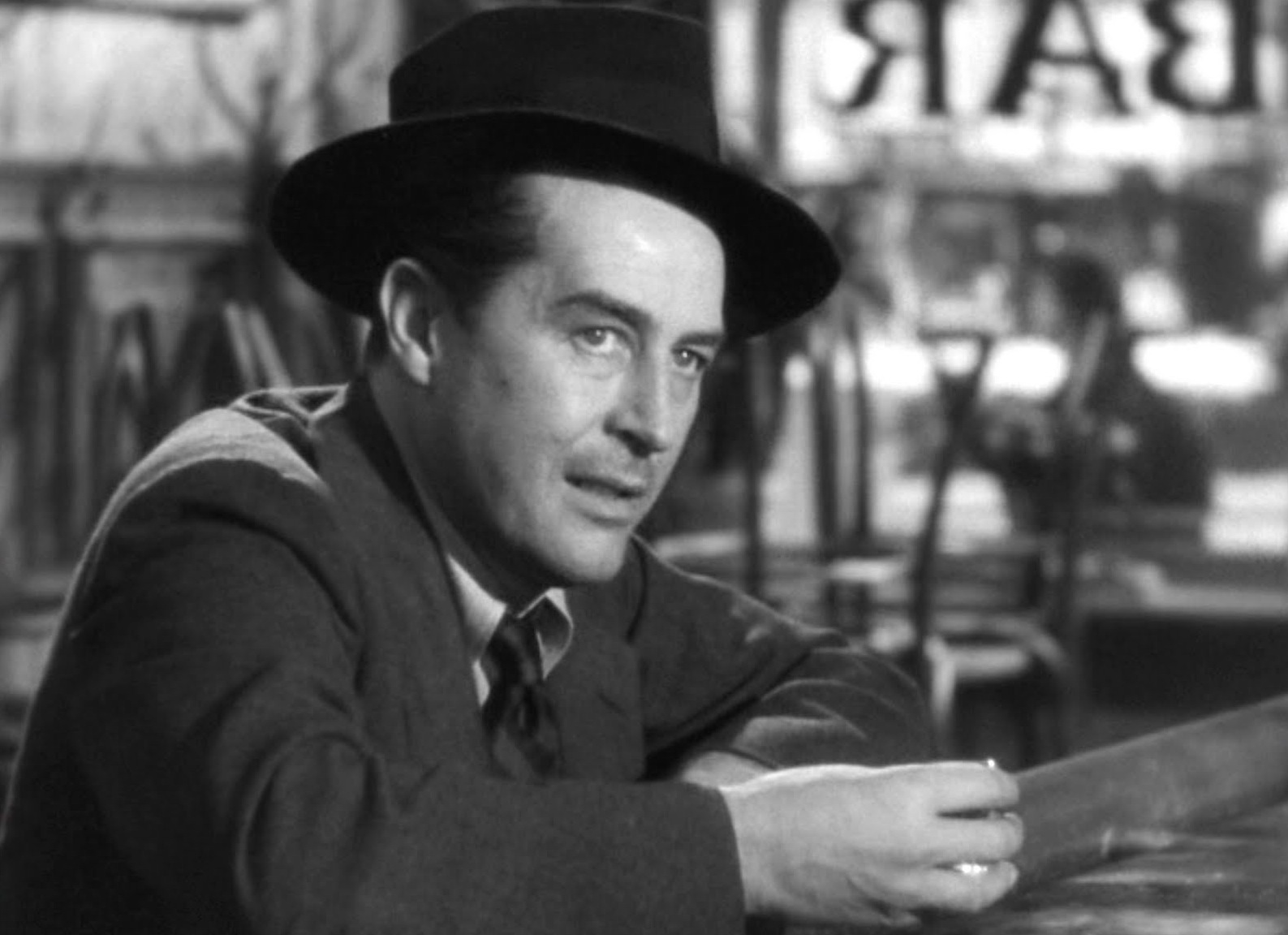
 Ray Milland won an Oscar as Best Actor for his unforgettable portrayal of Don Birnam in Billy Wilder’s The Lost Weekend, starring as a would-be writer who can see life only through the bottom of a bottle. Having just gotten sober, he is off to spend the weekend with his brother (Phillip Terry), but Don is able to slip away from his girlfriend, Helen (Jane Wyman), and his sibling and hang out mostly with Nat the bartender (Howard Da Silva) and plenty of inner demons. One of the misunderstood claims to fame of Wilder’s classic drama is that it was shot in P. J. Clarke’s on Third Ave.; although the bar in the film was based on Clarke’s, the set was re-created in Hollywood, which doesn’t take anything away from this heartbreaking tale that will not have you running to the nearest watering hole after you see it. The Lost Weekend, which won three other Academy Awards — Best Screenplay (Wilder and Charles Brackett), Best Director (Wilder), and Best Picture — is screening March 18 at 7:25 at Film Forum and will be introduced by Blake Bailey, author of the new biography Farther & Wilder: The Lost Weekends and Literary Dreams of Charles Jackson (Knopf, March 13, 2013, $30), about the author of such books as The Lost Weekend and The Fall of Valor, and will be followed by a book signing. Bailey, who has also written biographies of John Cheever and Richard Yates, is currently working on a major bio of Philip Roth; the new documentary
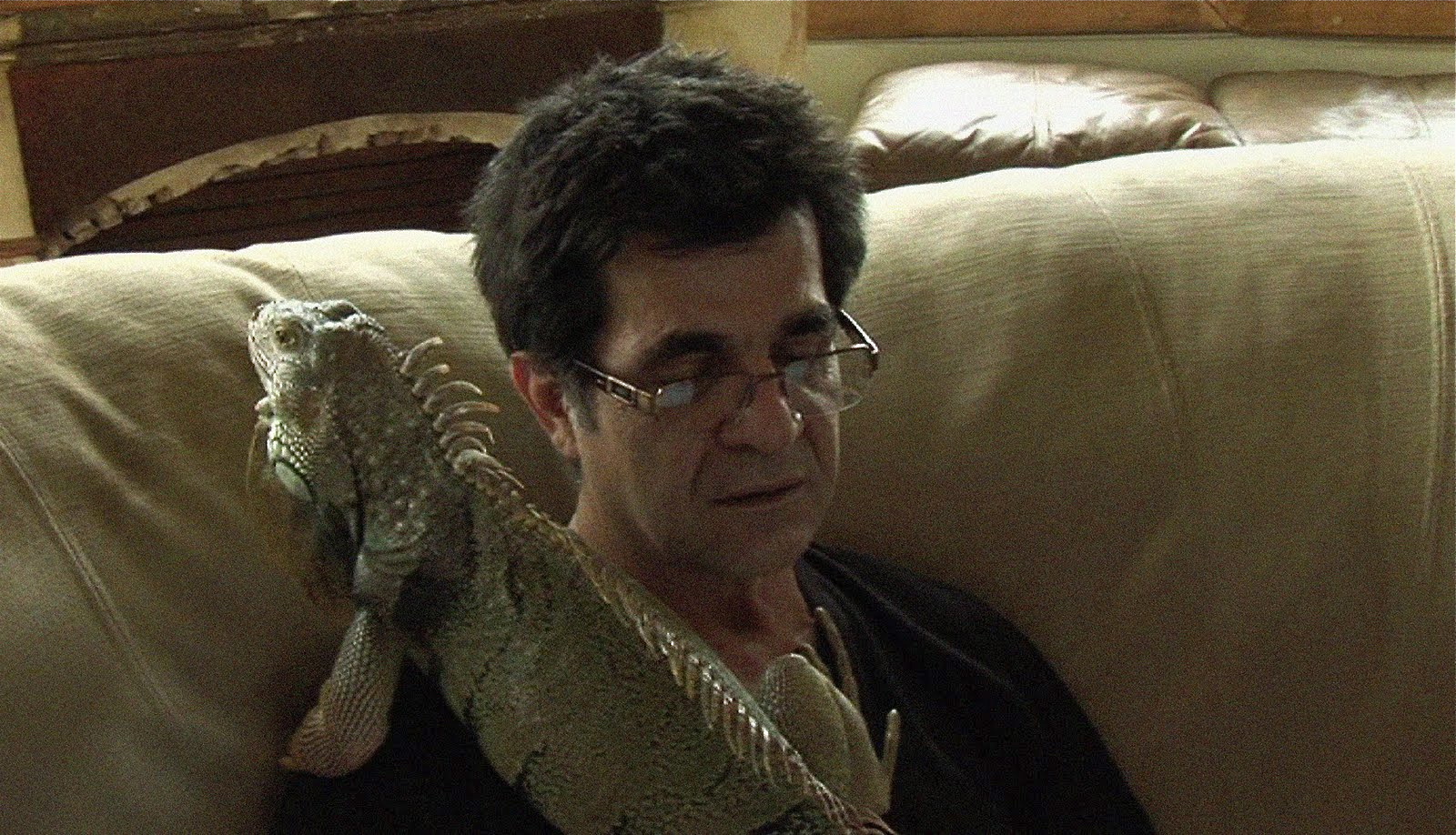
 “You call this a film?” Jafar Panahi asks rhetorically about halfway through the revealing documentary This Is Not a Film. After several arrests beginning in July 2009 for supporting the opposition party, the highly influential and respected Iranian filmmaker (Crimson Gold, Offside) was convicted in December 2010 for “assembly and colluding with the intention to commit crimes against the country’s national security and propaganda against the Islamic Republic.” Although facing a six-year prison sentence and twenty-year ban on making or writing any kind of movie, Panahi is a born storyteller, so he can’t stop himself, no matter the risks. Under house arrest, Panahi has his friend, fellow director Mojtaba Mirtahmasb (Lady of the Roses), film him with a handheld DV camera over ten days as Panahi plans out his next movie, speaks with his lawyer, lets his pet iguana climb over him, and is asked to watch a neighbor’s dog, taking viewers “behind the scenes of Iranian filmmakers not making films.” Panahi even pulls out his iPhone to take additional video, photographing New Year’s fireworks that sound suspiciously like a military attack. Panahi is calm throughout, never panicking (although he clearly does not want to take care of the barking dog) and not complaining about his situation, which becomes especially poignant as he watches news reports on the earthquake and tsunami disaster in Japan. “But you can’t make a film now anyhow, can you?” Mirtahmasb — who will later be arrested and imprisoned as well — asks at one point. “So what I can’t make a film?” Panahi responds. “That means I ask you to take a film of me? Do you think it will turn into some major work of art?” This Is Not a Film, which was smuggled out of Iran in a USB drive hidden in a birthday cake so it could be shown at Cannes, is indeed a major work of art, an important document of government repression of free speech as well as a fascinating examination of one man’s intense dedication to his art and the creative process. This Is Not a Film is screening January 20 at the Museum of the Moving Image as part of the “Curators’ Choice: The Best of 2012” series, consisting of works selected by chief curator David Schwartz and assistant film curator Rachael Rakes; upcoming screenings include Wes Anderson’s Moonrise Kingdom, David Cronenberg’s Cosmopolis, and Hong Sang-soo’s In Another Country.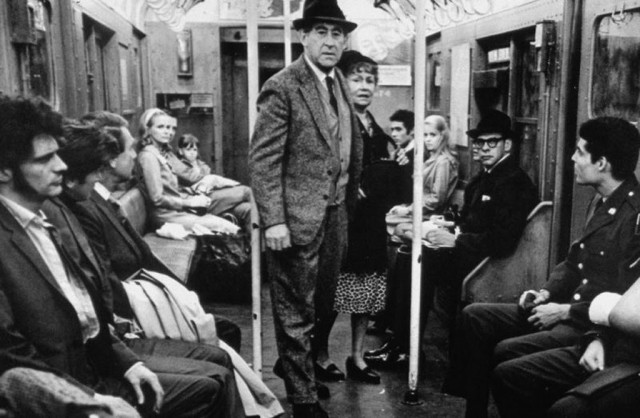
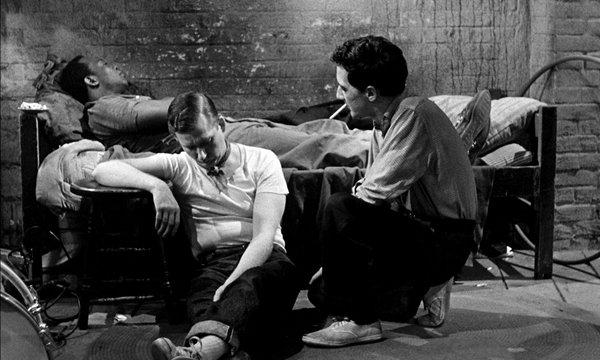
 One of the ultimate nightmare scenarios of 1960s New York City, Larry Peerce’s gritty black-and-white The Incident takes viewers deep down into the subway as two thugs terrorize a group of helpless passengers. Joe Ferrante (Tony Musante) and Artie Connors (Martin Sheen, in his first movie role) are out for kicks, so after getting some out on the streets, they head underground, where they find a wide-ranging collection of twentieth-century Americans to torture, including Arnold and Joan Robinson (Brock Peters and Ruby Dee), Bill and Helen Wilks (Ed McMahon and Diana Van der Vlis), Sam and Bertha Beckerman (Jack Gilford and Thelma Ritter, in her last role), Douglas McCann (Gary Merrill), Muriel and Harry Purvis (Jan Sterling and Mike Kellin), Alice Keenan (Donna Mills), soldiers Felix Teflinger and Phillip Carmatti (Beau Bridges and Robert Bannard), and others, each representing various aspects of contemporary culture and society, all with their own personal problems that come to the surface as the harrowing ride continues. It’s a brutal, claustrophobic, highly theatrical film that captures the fear that haunted the city in the 1960s and well into the ’70s, with an all-star cast tackling such subjects as racism, teen sex, alcoholism, homosexuality, war, and the state of the American family. The rarely shown drama, some of which was filmed in the actual subway system against the MTA’s warnings, is screening at Film Forum January 16-17 in a double feature with Anthony Harvey’s Dutchman as part of the three-week festival “New Yawk New Wave,” comprising seminal independent films made in and about New York City; among the other double features in the series are Jim McBride’s David Holzman’s Diary and Milton Moses Ginsberg’s Coming Apart, Kenneth Anger’s Scorpio Rising and Andy Warhol’s My Hustler, Martin Scorsese’s Mean Streets and Who’s That Knocking at My Door, and Brian De Palma’s Greetings and Hi, Mom!