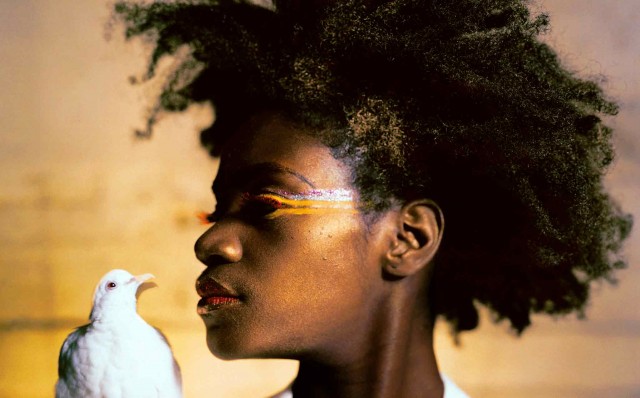
Brothers Lyle Ashton Harris and Thomas Allen Harris collaborate on a photo of their cousin Peggy in THROUGH A LENS DARKLY
THROUGH A LENS DARKLY: BLACK PHOTOGRAPHERS AND THE EMERGENCE OF A PEOPLE (Thomas Allen Harris, 2014)
Film Forum
209 West Houston St.
August 27 – September 9
212-727-8110
www.filmforum.org
www.throughalensdarkly.wordpress.com
 Thomas Allen Harris exposes the conflicting relationship between the public and private visual depiction of African Americans in the powerful, if overly idealistic and methodical, Through a Lens Darkly: Black Photographers and the Emergence of a People. Inspired by Deborah Willis’s 2000 book, Reflections in Black: A History of Black Photographers 1840 to the Present, the documentary examines how black men, women, and children have been portrayed in advertising and the media and on postcards since the development of the camera and daguerreotypes, depicting them in negative, stereotyped ways as animals, criminals, and, most horrifically, victims of lynchings. Over the course of seven years, the Bronx-born Harris interviewed such photographers and scholars as Carrie Mae Weems, Glenn Ligon, Lorna Simpson, Dawoud Bey, Coco Fusco, Chuck Stewart, and Lyle Ashton Harris (Harris’s brother), as well as Willis (one of the film’s producers) and her son, artist Hank Willis Thomas, exploring how blacks countered these distortions through family photos, where they not only controlled the image but the gaze itself. “How was, is, the photograph used in the battle between two legacies, self-affirmation and negation?” Harris (Twelve Disciples of Nelson Mandela, É Minha Cara/That’s My Face), the founder and president of Chimpanzee Productions, asks early in the film. “Our salvation as a people, as a culture, depends on salving the wounds of this war, a war of images within the American family album.” Harris and his many talking heads look at the importance of such black photographers as J. P. Ball, James Van Der Zee, Roy DeCarava, Vera Jackson, and Gordon Parks as well as such trailblazers as Sojourner Truth, Frederick Douglass, Booker T. Washington, and W. E. B. Du Bois, who used the camera to their advantage when presenting themselves and their views to the public.
The documentary does get repetitive, and Harris’s personal story occasionally stops the compelling general narrative as he attempts to relate his family history to the bigger picture. But the film is worth seeing just for the amazing archival footage, a marvelous collection of black-and-white and color photographs that show how a people can reclaim their image and validate their culture in the face of extreme prejudice. Winner of the Social Justice Award at the Santa Barbara International Film Festival and Best Diaspora Documentary at the tenth Africa Movie Academy Awards, Through a Lens Darkly is playing August 27 to September 9 at Film Forum, with special events scheduled to follow one screening per day for the first eleven days, including a Q&A with Thomas Allen Harris and producers Deborah Willis, Don Perry, and Ann Bennett on August 27 (7:20), a Salute to Harlem Photographers with Renee Cox, C. Danny Dawson, and John Pinderhughes, moderated by Moikgantsi Kgama, on August 29 (7:20), a Salute to Women Photographers with Willis and Coreen Simpson, moderated by Michaela Angela Davis, on August 30 (2:50), a Q&A with composer Vernon Reid on September 1 (2:50), and a Salute to Brooklyn Photographers with Delphine Fawundu-Buford, Russell Frederick, and Radcliffe Roye, moderated by Dawson, on September 6.
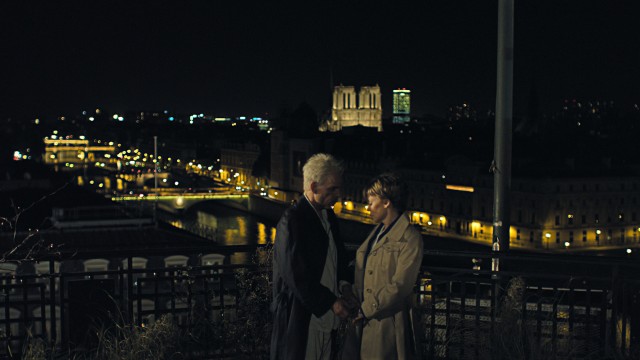
 French writer-director Léos Carax (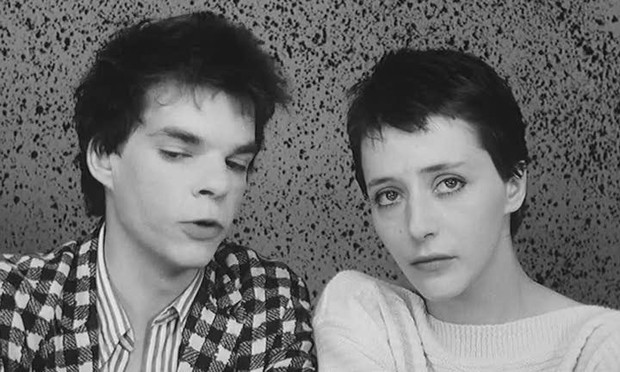
 French auteur Leos Carax learned a lot about making movies during his stint as a critic for Cahiers du cinéma, the magazine that came to represent the Nouvelle Vague movement of the 1950s. Born Alexandre Oscar Dupont in a Paris suburb in 1960, Carax released his first feature-length film in 1984, Boy Meets Girl, a black-and-white homage to the legacy of Jean-Luc Godard, François Truffaut, and Claude Chabrol as well as King Vidor, Buster Keaton, and Ingmar Bergman. Yet despite its obvious influences, Boy Meets Girl triumphs as a uniquely told tale of a strange young man named Alex (Carax’s onscreen alter ego, Denis Lavant) and his oddball adventures in search of love and truth. Dumped by Florence (Anna Baldaccini), he fakes his way into a party, where he finds Mireille (Mireille Perrier), a suicidal model who is intrigued by him. Carax, who would go on to make such well-received films as Mauvais Sang, Pola X, and Holy Motors, fills Boy Meets Girl with wonderful little touches, beautifully photographed in long takes by Jean-Yves Escoffier, from a repeating black-and-white clothing pattern and a battle with a pinball machine to a sudden burst of tap-dancing and a mysterious meeting along the Seine. Alex is a warped version of Jean-Pierre Léaud’s Antoine Doinel, but even though Alex as a lead character is no match for Truffaut’s seminal figure in the history of twentieth-century cinema, it’s still impossible to take your eyes off him as he continues to do and say a a whole lot of very weird and unpredictable things. Boy Meets Girl is screening in a new restoration August 8-14 at Film Forum and will be followed August 15-21 by Tessa Louise-Salomé’s 2014 documentary, Mr. X: A Vision of Leos Carax, along with Carax’s other feature films, Pola X, Les Amants du Pont Neuf, Mauvais Sang, and Holy Motors.