Tag Archives: film forum

VERTIGO

VERTIGO

James Stewart and Kim Novak get caught up in a murder mystery in VERTIGO

VERTIGO (Alfred Hitchcock, 1958)
Film Forum
209 West Houston St.
October 24-30; back by popular demand through November 18
212-727-8110
www.filmforum.org

Alfred Hitchcock was perhaps never so fetishistic as in his 1958 psychological thriller, Vertigo. Based on Boileau-Narcejac’s 1954 novel, D’entre les morts, the film delves deep into the nature of fear and obsession. Jimmy Stewart stars as John “Scottie” Ferguson, a police detective who retires after his acrophobia leads to the death of a fellow cop. An old college classmate, wealthy businessman Gavin Elster (Tom Holmore), asks Scottie to look into his wife’s odd behavior; Elster believes that Madeleine (Kim Novak) is being inhabited by the spirit of Carlotta Valdes, her great-grandmother, a woman who committed suicide in her mid-twenties, the same age that Madeleine is now. Scottie follows Madeleine as she goes to Carlotta’s grave, visits a portrait of her in a local museum, and jumps into San Francisco Bay. Scottie rescues her, brings her to his house, and starts falling in love with her. But on a visit to Mission San Juan Bautista, tragedy strikes when Scottie can’t get to the top of the tower because of his vertigo. After a stint in a sanatorium, he wanders the streets of San Francisco where he and Madeleine had fallen in love, as if hoping to see a ghost — and when he indeed finds a woman who reminds him of Madeleine, a young woman named Judy Barton (Novak), he can’t help but try to turn her into his lost love, with tragedy waiting in the wings once again.
VERTIGO

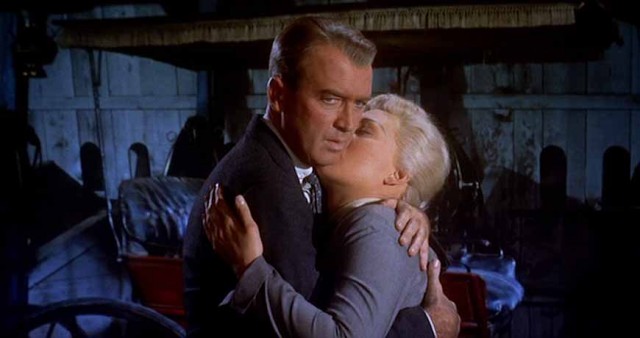
Scottie experiences quite a nightmare in Alfred Hitchcock classic

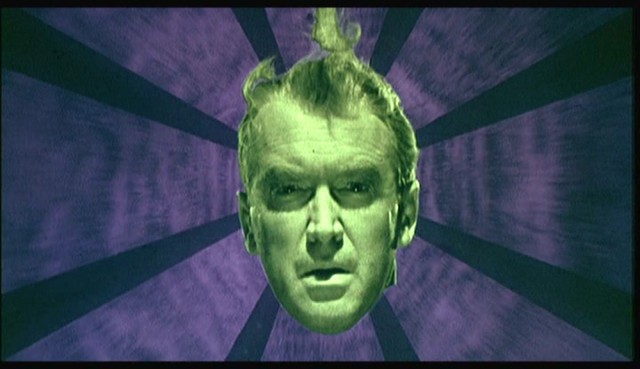
Vertigo is a twisted tale of sexual obsession, much of it filmed in San Francisco, making the City by the Bay a character all its own as Scottie travels down Lombard St., takes Madeleine to Muir Woods, stops by Ernie’s, and saves Madeleine under the Golden Gate Bridge. The color scheme is almost shocking, with bright, bold blues, reds, and especially greens dominating scenes. Hitchcock, of course, famously had a thing for blondes, so it’s hard not to think of Stewart as his surrogate when Scottie insists that Judy dye her hair blonde. Color is also central to Scottie’s psychedelic nightmare (designed by artist John Ferren), a Spirographic journey through his mind and down into a grave. Cinematographer Robert Burks’s use of the dolly zoom, in which the camera moves on a dolly in the opposite direction of the zoom, keeps viewers sitting on the edge of their seats, adding to the fierce tension, along with Bernard Herrmann’s frightening score. Despite their age difference, there is pure magic between Stewart, forty-nine, and Novak, who was twenty-four. (Stewart and Novak next made Bell, Book, and Candle as part of the deal to let Novak work for Paramount while under contract to Columbia.) The production was fraught with problems: The screenplay went through Maxwell Anderson, Alec Coppel, and finally Samuel A. Taylor; shooting was delayed by Hitchcock’s health and vacations taken by Stewart and Novak; a pregnant Vera Miles was replaced by Novak; Muir Matheson conducted the score in Europe, instead of Herrmann in Hollywood, because of a musicians’ strike; associate producer Herbert Coleman reshot one scene using the wrong lens; Hitchcock had to have a bell tower built atop Mission San Juan Bautista after a fire destroyed its steeple; and the studio fought for a lame alternate ending (which was filmed). Perhaps all those difficulties, in the end, helped make Vertigo the classic it is today, gaining in stature over the decades, from mixed reviews when it opened to a controversial restoration in 1996 to being named the best film of all time in Sight & Sound’s 2012 poll to the latest digital restoration that is playing at Film Forum October 24-30, a great way to get ready for Halloween. (And don’t be late, as even the opening credit sequence is beautifully creepy.)
HIROSHIMA MON AMOUR

HIROSHIMA MON AMOUR

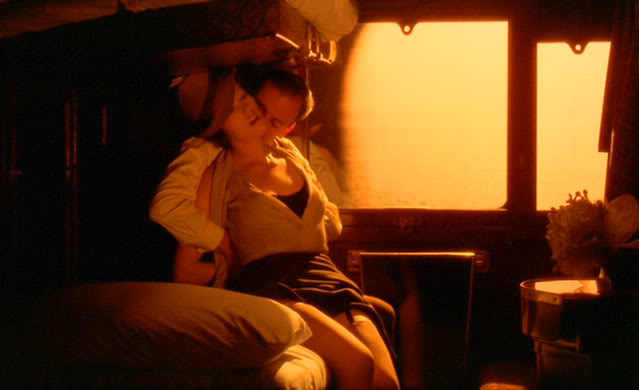
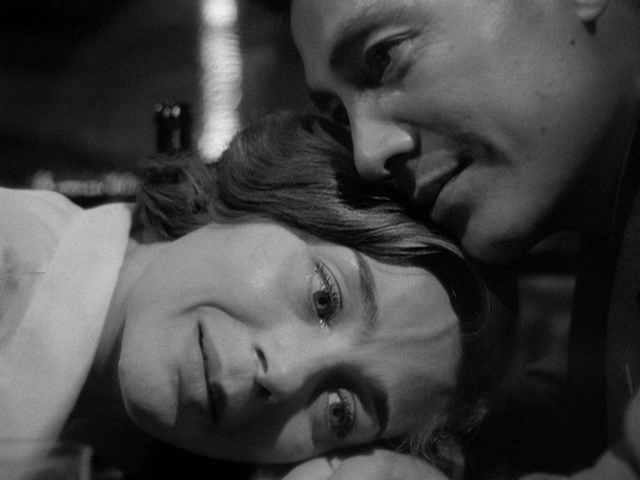
A French actress (Emmanuelle Riva) and a Japanese architect (Eiji Okada) examine their Hiroshima affair in Alain Resnais classic

HIROSHIMA MON AMOUR (Alain Resnais, 1959)
Film Society of Lincoln Center, Elinor Bunin Munroe Film Center, 144 West 65th St., October 17-30, 212-875-5050
Film Forum, 209 West Houston St., October 17-28, 212-727-8110
www.filmforum.org
www.filmlinc.com

In July 1959, Cahiers du cinéma published a roundtable discussion with Eric Rohmer, Jean-Luc Godard, Jacques Rivette, and others about Alain Resnais’s Hiroshima Mon Amour, in which Rohmer said, “Hiroshima is a film about which you can say everything. . . . Perhaps Hiroshima really is a totally new film. . . . I think that, in a few years, in ten, twenty, or thirty years, we shall know whether Hiroshima was the most important film since the war, the first modern film of sound cinema. . . . In any case it is an extremely important film, but it could be that it will even gain stature with years.” Some four and a half decades later, Rohmer’s prediction has come true, as a stunning new 4K digital restoration reveals Hiroshima Mon Amour to indeed be one of the most important films in the history of cinema, redefining just what the medium is capable of, as fresh and innovative today as it was to Rohmer, Godard, Rivette, et al. upon its initial release. As the black-and-white film opens, two naked, twisted bodies merge together in bed, first covered in glittering ashes, then a kind of acid rain. The woman (Emmanuelle Riva) is a French actress who is in Hiroshima to make a movie about peace. He (Eiji Okada) is a Japanese architect, a builder working in a city that has been laid to waste. Both married with children, they engage in a brief but torrid affair; as her film prepares to wrap, she gets ready to leave, but he begs her to stay. Theirs is a romance that could happen only in Hiroshima.

Director Alain Resnais (Last Year at Marienbad, Same Old Song) was meticulous with every detail of the film, from the casting to Marguerite Duras’s stirringly poetic, Oscar-nominated script and dialogue, from Georges Delerue’s and Giovanni Fusco’s powerful, wide-ranging score to crafting each shot as a work of art in itself, using two cinematographers, Michio Takahashi in Japan and Sacha Vierny in France, to emphasize a critical visual difference between the contemporary scenes in Hiroshima and the woman’s past with a German soldier (Bernard Fresson) in Nevers. Hiroshima Mon Amour is a haunting experience, examining love and loss among the ruins of war as two people, at least temporarily, try to create something new. Riva (Three Colors: Blue, Thomas the Impostor) is mesmerizing as the confused, unpredictable woman, her eyes so often turned away from the man, unwilling to face the future, while Okada (Woman in the Dunes, The Yakuza) can’t keep his eyes off her, desperate for their romance to continue. Riva bookended her long career by starring in two of the most unusual yet beautiful love stories ever made, as more than fifty years after Hiroshima she would be nominated for an Oscar for her hypnotizing performance as an elderly woman debilitated by a stroke in Michael Haneke’s Amour. The glorious restoration of Hiroshima Mon Amour,, supervised by Renato Berta, who was Resnais’s chief cameraman on four projects, makes it, to use the words of Eric Rohmer, feel like a totally new film, like we’re experiencing it for the very first time all over again. Following its sold-out screening at the New York Film Festival, Hiroshima Mon Amour opens October 17 at Film Forum and the Elinor Bunin Munroe Film Center. Resnais, who passed away on March 1 at the age of ninety-one, was also represented at the festival with his final work, Life of Riley. In conjunction with the theatrical release of the restoration, the Film Society of Lincoln Center will also host the series “By Marguerite Duras” October 15-22.

20,000 DAYS ON EARTH

Nick Cave takes a look back at his life and career as only Nick Cave can in imaginative, deeply introspective documentary

Nick Cave takes a look back at his life and career as only Nick Cave can in imaginative, deeply introspective documentary

20,000 DAYS ON EARTH (Iain Forsyth & Jane Pollard, 2014)
Film Forum
209 West Houston St.
September 17 – October 16
212-727-8110
www.filmforum.org
www.20000daysonearth.com

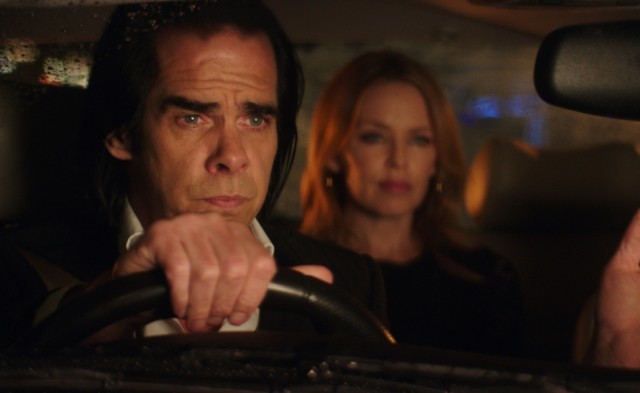
The film 20,000 Days on Earth might sound like a 1950s low-budget sci-fi cult classic you’ve never seen, but actually it’s an unusual and vastly inventive document of the life and times of Australian rocker, poet, novelist, film composer, screenwriter, and all-around bon vivant Nick Cave. In their debut feature, installation artists and curators Iain Forsyth and Jane Pollard collaborated closely with Cave on the film, mixing reality and fantasy as they follow Cave during a rather busy day. “Who knows their own story? Certainly it makes no sense when we are living in the midst of it,” Cave, who just turned fifty-seven, says in the deeply poetic voiceover narration he wrote specifically for the film. “It’s all just clamor and confusion. It only becomes a story when we tell it, and retell it, our small, precious recollections that we speak again and again to ourselves or to others, first creating the narrative of our lives, and then keeping the story from dissolving into darkness.” Forsyth and Pollard journey with Cave as he delves into religion and his relationship with his father with psychoanalyst Darian Leader, visits with longtime collaborator Warren Ellis (who shares an amazing story about Nina Simone and a piece of gum), drives around as people from his past suddenly appear in his car (friend Ray Winstone, duet partner Kylie Minogue, former bandmate Blixa Bargeld), lays down tracks in the studio (“Give Us a Kiss,” “Higgs Boson Blues,” “Push the Sky Away” with a children’s orchestra), watches television with his twin sons, and goes through his archives of photographs and other ephemera from childhood to the present day.
The film reveals Cave, the leader of cutting-edge groups the Birthday Party, Grinderman, and the Bad Seeds and author of the novels And the Ass Saw the Angel and The Death of Bunny Munro, to be an intelligent, introspective, engaging fellow with a wry, often self-deprecating sense of humor and a hunger to create. “Mostly I write. Tapping and scratching away day and night sometimes,” he says while typing away with two fingers on an old typewriter in his home office. “But if I ever stopped for long enough to question what I’m actually doing? The why of it? Well, I couldn’t really tell you. I don’t know.” The film begins with a barrage of images of Cave and his influences throughout the years, whipping by machine-gun style on multiple monitors, and ends with Cave onstage with the Bad Seeds, becoming the fearless musician that has defined his career. In between, he’s a contemplative husband, father, son, and friend, an artist with a rather unique view of the world and his place in it. At a special event at Town Hall on September 20, Cave participated in a postscreening Q&A with Forsyth and Pollard, performed solo songs at the piano (playing what one fan described as a “dream setlist”), and spoke often about “transformation.” In its own way, 20,000 Days on Earth, which has been held over at Film Forum, is a transformative documentary, a groundbreaking, unconventional, and thoroughly imaginative portrait of a groundbreaking, unconventional, and thoroughly imaginative artist. (For more on Cave’s history, be sure to check out the online Museum of Important Shit, which highlights additional strange paraphernalia from Cave’s life and career.) Following its month-long run at Film Forum, 20,000 Days on Earth makes its way to Williamsburg, where it is scheduled to play at Nitehawk Cinema through October 25.

THE DECENT ONE

THE DECENT ONE

THE DECENT ONE sheds new light on the architect of the Final Solution

THE DECENT ONE (DER ANSTÄNDIGE) (Vanessa Lapa, 2014)
Film Forum
209 West Houston St.
October 1-14, 12:30, 2:40, 4:50, 7:00, and 9:15
212-727-8110
www.filmforum.org

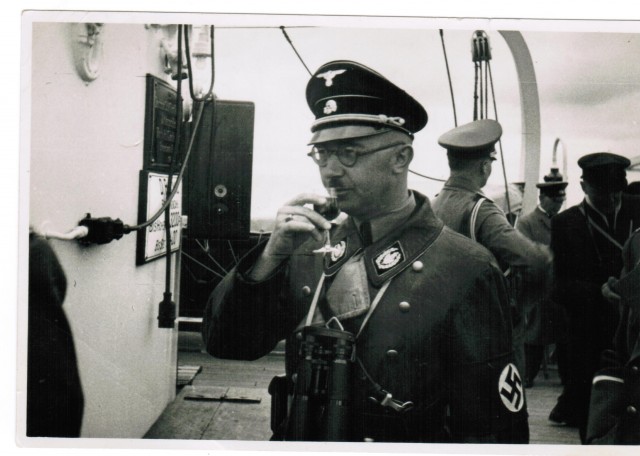
Vanessa Lapa’s chilling feature documentary debut, The Decent One, reveals that there wasn’t a whole lot that was decent about Heinrich Himmler, the SS chief who was the architect of the Final Solution. In 2006, Lapa’s father purchased a collection of Himmler’s diaries, letters, documents, and photographs that had initially been discovered in his home by U.S. soldiers in May 1945. The treasure trove forms the narration for Lapa’s film, as actors read from many of the items in chronological order while home movies, still images, and rare archival footage of Himmler and the rise of the SS are shown onscreen. The film includes letters, postcards, and diaries from Himmler; his parents; his wife, Marga; his mistress, Hedwig Potthast; his beloved daughter, “Püppi”; his foster son, Gerhard von Ahé; and others, in which the Gestapo head discusses love and romance, racial purity, motherhood, duty and honor, order and obedience, the Jewish question, homosexuality, and subhumans, troubling views he developed from a young age. “People don’t like me,” he writes after not being accepted into a fraternal group at college. Looking for purpose in his life, he explains, “You start to think, if only there was a war again. If only I could put my life on the line. Fight! It would be a pleasure.” He was also fully aware of the brutality of the Nazi regime. “I can predict the horrors of the future,” he notes in 1927.

Even his love letters evoke the terror he brought to the world. “What a naughty man you have, with such an evil, naughty movement,” he writes to his wife. Lapa and editors Sharon Brook and Noam Amit move smoothly between pictures of Himmler with his wife and children and shots of him in uniform, inspecting the troops and meeting with Adolf Hitler. It all makes for an uncomfortable intimacy, especially when the actual letters fill the screen; seeing his handwriting while listening to his words is extremely disturbing, but it’s not done in an effort to humanize him, as there is not much humanity to be found in the mass murderer responsible for so many atrocities. The Decent One is disquieting and unnerving, but it is also essential viewing. Named Best Documentary at the Jerusalem Film Festival, The Decent One begins a two-week run at Film Forum on October 1 (perhaps not coincidentally during the Days of Awe, the ten days of contemplation and repentance between Rosh Hashanah and Yom Kippur); Lapa will participate in Q&As following the 7:00 screenings October 1, 2, and 4.

ROME OPEN CITY

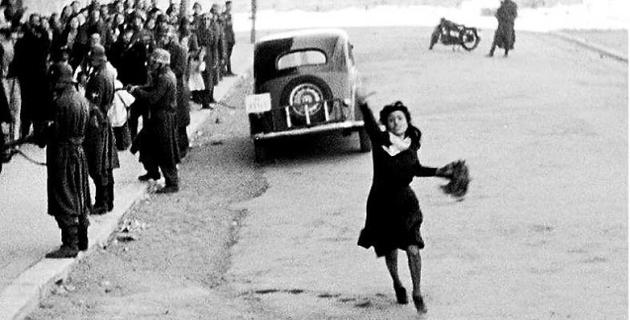
Pregnant widow Pina (Anna Magnani) runs through the streets of German-occupied Rome in Rossellini antiwar masterpiece

ROME OPEN CITY (ROMA, CITTÀ APERTA) (Roberto Rossellini, 1945)
Film Forum
209 West Houston St.
September 12-25
212-727-8110
www.filmforum.org

One of six films to be awarded the Grand Prix at the inaugural Cannes Film Festival in 1946, Roberto Rossellini’s Rome Open City is an antiwar masterpiece, the first of three works that together form his War Trilogy, along with Paisan and Germany Year Zero. Begun in January 1945 with Italy still under German occupation, Rome Open City melds neorealism with melodrama in telling the story of a small, tight-knit community secretly battling the Nazis. The leader of the local Italian resistance is Giorgio Manfredi (Marcello Pagliero), an engineer sending messages and money through courier Don Pietro (Aldo Fabrizi), a priest who is generally left alone by the Nazis and the Italian police. Giorgio hides away in his friend Francesco’s (Francesco Grandjacquet) apartment as Francesco prepares to marry Pina (Anna Magnani), a pregnant widow raising a son, Marcello (Vito Annicchiarico), who is part of a gang of young kids also fighting in the resistance and causing a surprising amount of trouble. Meanwhile, Giorgio’s former flame, cabaret performer Marina Mari (Maria Michi), is cozying up to Ingrid (Giovanna Galletti), a suspicious woman with ties to the Nazis, who are led by the relentless Major Bergmann (Harry Feist). With events coming to a head, faith is questioned, and betrayals set in motion violence, torture, and killings that brutally characterize the many horrors of war. Written by Sergio Amidei and Federico Fellini, Rome Open City is a remarkable example of guerrilla filmmaking, with Rossellini and cinematographer Ubaldo Arata shooting on the streets of Rome using whatever dupe negatives they could get their hands on. The mix of professional and nonprofessional actors lends a stark reality to the proceedings. “Above all, the concept was to give an honest account, to show things as they were,” Rossellini explained in a 1963 intro to the film, a staggering achievement that seems to only get better with age. Rome Open City is screening September 12-25 in a new 35mm restoration at Film Forum.

NICK CAVE AT TOWN HALL: 20,000 DAYS ON EARTH

20,000 DAYS ON EARTH (Iain Forsyth & Jane Pollard, 2013)
The Town Hall
123 West 43rd St. between Sixth & Seventh Aves.
Presale September 5 at 12 noon, tickets on sale to general public September 6, 12 noon
Event takes place Saturday, September 20
www.thetownhall.org
www.nickcave.com

For more than forty years, Australian singer, songwriter, novelist, film composer, screenwriter, musician, lecturer, honorary doctor of laws, actor, and father Nick Cave has been a beguiling and intriguing figure in the entertainment world, leading such bands as the Birthday Party, the Bad Seeds, and Grinderman while imparting his outrageous views of contemporary society. “I am Nick Cave and there is no going back to what I was,” the tall, lanky Cave said at the BIGSOUND 2013 conference in Brisbane last year. “And on some level, I see that as being successful in my job and on the other hand sometimes it’s fucking exhausting.” Cave looks back at his life and career (he turns fiftyin the new film 20,000 Days on Earth, a mix of fiction and nonfiction, fantasy and reality from first-time directors Iain Forsyth and Jane Pollard, who specialize in cultural reenactments. Winner of the World Cinema Documentary editing and directing awards at Sundance, 20,000 Days on Earth opens at Film Forum on September 17, but there will be a very special screening at Town Hall on September 20, with Cave, who will turn fifty-seven two days later, participating in a Q&A with Forsyth and Pollard in which fans can send in questions in advance via Twitter (@drafthousefilms, #20000Days); the directors will also be making appearances at Film Forum opening weekend. In addition, Cave will be giving a very rare solo performance at the event. Tickets go on sale to Cave’s mailing list and website on September 5 at noon and to the general public September 6 at noon. It should be an amazing night with one of the world’s greatest, and strangest, entertainers.

THE CONFORMIST

Jean-Paul Trintignant tries to find his place in the world in Bernardo Bertolucci’s lush masterpiece, THE CONFORMIST

THE CONFORMIST (Bernardo Bertolucci, 1970)
Film Forum
209 West Houston St.
August 29 – September 4
212-727-8110
www.filmforum.org

Based on the novel by Alberto Moravia, Bernardo Bertolucci’s gorgeous masterpiece, The Conformist, is a political thriller about paranoia, pedophilia, and trying to find one’s place in a changing world, and you can now experience it in all its glory in a new digital restoration at Film Forum. Jean-Louis Trintignant (And God Created Woman, Z, My Night at Maud’s) stars as Marcello Clerici, a troubled man who suffered childhood traumas and is now attempting to join the fascist secret police. To prove his dedication to the movement, he is ordered to assassinate one of his former professors, the radical Luca Quadri (Enzo Tarascio), who is living in France. He falls for Quadri’s much younger wife, Anna (Dominique Sanda), who takes an intriguing liking to Clerici’s wife, Giulia (Stefania Sandrelli), while Manganiello (Gastone Moschin) keeps a close watch on him, making sure he will carry out his assignment. The Conformist, made just after The Spider’s Stragagem and followed by Last Tango in Paris, captures one man’s desperate need to belong, to become a part of Mussolini’s fascist society and feel normal at the expense of his real inner feelings and beliefs. An atheist, he goes to church to confess because Giulia demands it. A bureaucrat, he is not a cold-blooded killer, but he will murder a part of his past in order to be accepted by the fascists (as well as Bertolucci’s own past, as he makes a sly reference to his former mentor, Jean-Luc Godard, by using the French auteur’s phone number and address for Quadri’s). Production designer Ferdinando Scarfiotti and cinematographer Vittorio Storaro bathe the film in lush Art Deco colors as Bertolucci moves the story, told in flashbacks, through a series of set pieces that include an erotic dance by Anna and Giulia, a Kafkaesque visit to a government ministry, and a stunning use of black and white and light and shadow as Marcello and Giulia discuss their impending marriage. The Conformist is a multilayered psychological examination of a complex figure living in complex times, as much about the 1930s as the 1970s, as the youth of the Western world sought personal, political, and sexual freedom.