Tag Archives: film forum

TRUE CRIME: M

Peter Lorre

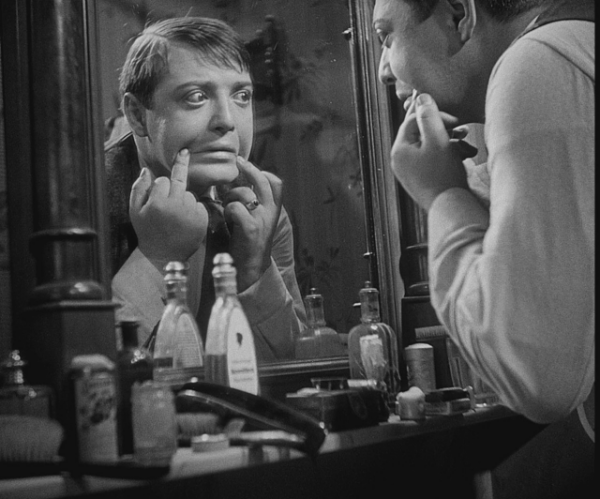
Hans Beckert (Peter Lorre) takes a good look at himself in Fritz Lang classic

M (Fritz Lang, 1931)
Film Forum
209 West Houston St.
Wednesday, July 22, 10:00
Series continues through August 5
212-727-8110
filmforum.org

Fritz Lang’s first sound film, following such classic silent works as Metropolis and Die Nibelungen, is a masterpiece of precision, a crime thriller nonpareil in its examination of a serial killer, mob justice, and the psychological nature of good and evil. In M — Eine Stadt sucht einen Mörder, Peter Lorre stars as Hans Beckert, a creepy young man who befriends children before abducting and murdering them. Even with a reward out for his capture, he can’t stop himself from taking yet more little girls, in broad daylight, and writing letters to the police and a local newspaper, practically daring them to catch him. As his spree continues, the local community grows more and more frightened and suspicious, and men and women start looking suspiciously at anyone who even so much as nods to a child on the streets, mass hysteria beckoning. As the police try to figure out a plan of action, the criminals band together and hire beggars to try to track down Beckert, since the larger police presence is negatively impacting their business. Eventually, Beckert, who has a fondness for whistling Edvard Grieg’s “In the Hall of the Mountain King,” is spotted with a child, leading to a series of scenes that are simply spectacular in the flow of their movement as the riveting denouement approaches.

In making M, Lang was inspired by real events involving multiple serial killers. Although the film in no way preaches, Lang, who cowrote the script with his then-wife, Thea von Harbou, considered M very much a message picture. On May 20, 1931, he wrote in the German newspaper Die Filmwoche, “If this film based on factual reports helps to point an admonishing and warning finger at the unknown, lurking threat, the chronic danger emanating from the constant presence among us of compulsively and criminally inclined individuals, forming, so to speak, a latent potential that may devour our lives in flames—and especially the lives of the most helpless among us—and if the film also helps, perhaps, even to avert this danger, then it will have served its highest purpose and drawn the logical conclusion from the quintessential facts assembled in it.” M feels eerily prescient and especially relevant today, when parents’ fear for the safety of their children has perhaps never been greater. Seeing adults waiting outside schools, praying for their kids to be out of harm’s way, is something that can now be witnessed across America day after day.
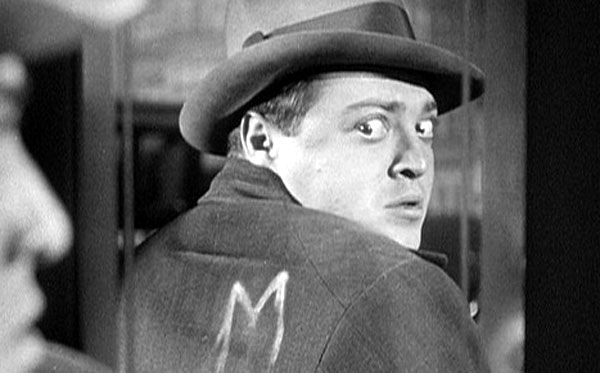
Peter Lorre

Hans Beckert (Peter Lorre) doesn’t like what he sees in M

Lorre (The Man Who Knew Too Much, The Maltese Falcon) is exceptional as Beckert, a baby-faced man who might not be quite as evil as everyone imagines. Lang and cinematographer Fritz Arno Wagner (Nosferatu, Diary of a Lost Girl) regularly show Beckert in shadow and in mirrors, as if there are two sides to this child killer. Lang uses no musical score, instead allowing natural sound, and very often pure silence, as Lang (Fury, Ministry of Fear) recognizes that he doesn’t need to overplay his hand. As depicted in the film, if there’s one thing that everyone can agree on, from cops and criminals to blind balloon sellers and mothers and fathers, it’s that there is nothing worse than a man who murders children. Yet Lang ultimately is able to extract some sympathy for Beckert, who makes a powerful plea near the end of the film. Watching M is a gripping, unforgettable experience, despite its terrifying subject matter.

M is screening July 22 at 10:00 as part of Film Forum’s “True Crime” series, which continues through August 5 with such other ripped-from-the-headlines favorites as Sidney Lumet’s Serpico and Dog Day Afternoon, Tadashi Imai’s Darkness at Noon, John McNaughton’s Henry: Portrait of a Serial Killer, and double features of Richard Fleischer’s The Girl in the Red Velvet Swing and Compulsion and William Friedkin’s The French Connection and The Brink’s Job.
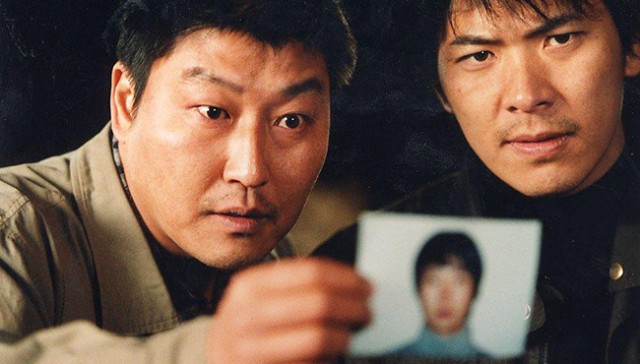

TRUE CRIME: MEMORIES OF MURDER

Detectives Park (Song Kang-ho) and Cho (Kim Roe-ha) are on the case in MEMORIES OF MURDER

Detectives Park (Song Kang-ho) and Cho (Kim Roe-ha) are on the case in MEMORIES OF MURDER

MEMORIES OF MURDER (SALINUI CHUEOK) (Bong Joon-ho, 2003)
Film Forum
209 West Houston St.
Saturday, July 18, 4:30, and Saturday, July 25, 4:40
Series continues through August 5
212-727-8110
filmforum.org

Inspired by actual events, Bong Joon-ho’s Memories of Murder is a psychological thriller set in a rural South Korean town. With a serial killer on the loose, Seoul sends experienced inspector Suh (Kim Sang-kyung) to help with the case, which is being bungled by local detectives Park (Song Kang-ho) and Cho (Kim Roe-ha), who consistently tamper with evidence, bring in the wrong suspects, and torture them in both brutal and ridiculously funny ways. But as the frustration level builds and more victims are found, even Suh starts considering throwing away the book and doing whatever is necessary to catch the killer. Bong’s first major success, earning multiple awards at film festivals around the world, Memories of Murder is a well-paced police procedural that contains just enough surprises to overcome a few too many genre clichés. The film is beautifully shot by Kim Hyung-gu, from wide-open landscapes to a busy, crowded factory. But the film is dominated by Song’s (The Host, Snowpiercer) big, round face, a physical and emotional wonder whether he’s goofing around with a prisoner or dead-set on catching a criminal. Winner of numerous international film festival awards, Memories of Murder is screening July 18 & 25 as part of Film Forum’s “True Crime” series, which continues through August 5 with such other ripped-from-the-headlines favorites as Sidney Lumet’s Serpico and Dog Day Afternoon, Franceso Rosi’s The Mattei Affair, Fritz Lang’s M, and double features of Alfred Hitchcock’s Rope and Tom Kalin’s Swoon and Robert Wise’s The Body Snatcher and I Want to Live!
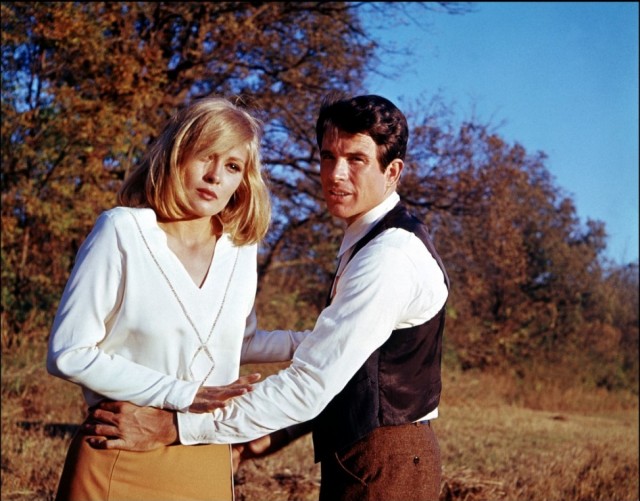
TRUE CRIME: BONNIE AND CLYDE

Faye Dunaway and Clyde Barrow glamorize bank robbery in Arthur Penn classic

Faye Dunaway and Clyde Barrow glamorize bank robbery in Arthur Penn classic

BONNIE AND CLYDE (Arthur Penn, 1967)
Film Forum
209 West Houston St.
Friday, July 17, and Saturday, July 18
Series continues through August 5
212-727-8110
filmforum.org

Arthur Penn changed the course of Hollywood — and world cinema — in 1967 with Bonnie and Clyde, a film previously offered to such Nouvelle Vague luminaries as François Truffaut and Jean-Luc Godard. Cowritten by David Newman (Superman I-III) and Robert Benton (Kramer vs. Kramer), the film mythologizes the true story of depression-era bank robbers Clyde Barrow and Bonnie Parker, played magnificently by Warren Beatty and Faye Dunaway. At its heart, Bonnie and Clyde is a passionate yet unusual love story, filled with close-ups of the gorgeous Dunaway, who is first seen naked, running to her bedroom window confident and carefree, more a modern 1960s woman than a poor 1930s small-town waitress. Meanwhile, Barrow might know how to shoot a gun, but he’s a dud in bed; “I ain’t much of a lover boy,” he tells Bonnie early on, so their passion plays out in fast-moving car chases and shootouts rather than under the covers (while also playing off of Beatty’s already well-deserved reputation as a ladies’ man). They pick up an accomplice in gas-station attendant C. W. Moss (Michael J. Pollard) and are soon joined by Clyde’s brother, Buck (Gene Hackman), and his wife, Blanche (Oscar winner Estelle Parsons), and continue their rampage as heroic, happy-go-lucky hold-up artists, leading up to one of the most influential and controversial endings ever put on celluloid, an unforgettable finale of violent and poetic beauty. Penn (Little Big Man, Target), editor Dede Allen (The Hustler, Serpico), and Oscar-winning cinematographer Burnett Guffey (All the King’s Men, Birdman of Alcatraz) redefined the gangster picture with their creative use of slow motion, long takes, and crowded shots, defying Hollywood conventions in favor of unique and innovative storytelling devices, allowing the film to work on multiple levels. Nominated for ten Academy Awards, Bonnie and Clyde is screening July 17 & 18 as part of Film Forum’s “True Crime” series, which continues through August 5 with such other ripped-from-the-headlines favorites as Peter Jackson’s Heavenly Creatures, Terrence Malick’s Badlands, Leonard Kastle’s The Honeymoon Killers, and double features of John Milius’s Dillinger and Don Siegel’s Escape from Alcatraz and Richard Fleischer’s 10 Rillington Place and The Boston Strangler.

YASUJIRO OZU: LATE SPRING

LATE SPRING

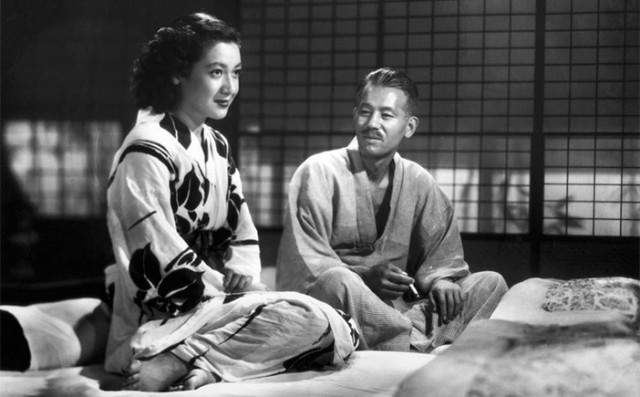
Father (Chishu Ryu) and daughter (Setsuko Hara) contemplate their future in Yasujirō Ozu masterpiece

LATE SPRING (BANSHUN) (Yasujirō Ozu, 1949)
IFC Center
323 Sixth Ave. at West Third St.
July 3-5, 11:00 am
Series runs weekends through September 27
212-924-7771
www.ifccenter.com

Yasujirō Ozu’s Late Spring marked a late spring of sorts in the Japanese auteur’s career as he moved into a new, post-WWII phase of his long exploration of Japanese family life and the middle class. Based on Kazuo Hirotsu’s novel Father and Daughter, the black-and-white film, written by Ozu with longtime collaborator Kogo Noda, tells the story of twenty-seven-year-old Noriko (Setsuko Hara), who lives at home with her widower father, Shukichi Somiya (Chishu Ryu), a university professor who has carved out a very simple existence for himself. Her aunt, Masa (Haruko Sugimura), thinks Noriko should get married, but she prefers caring for her father, who she believes would be lost without her. But when Somiya starts dropping hints that he might remarry, like his friend and colleague Jo Onodera (Masao Mishima) did — a deed that Noriko finds unbecoming and “filthy” — Noriko has to take another look at her future. Late Spring is a masterpiece of simplicity and economy while also being a complex, multilayered tale whose every moment offers unlimited rewards. From the placement and minimal movement of the camera to the design of the set to the carefully choreographed acting, Ozu infuses the work with meaning, examining not only the on-screen relationship between father and daughter but the intimate relationship between the film and the viewer. Ozu, who never married, has a firm grasp on the state of the Japanese family as some of the characters try to hold on to old-fashioned culture and tradition while recovering from the war’s devastation and facing the modernism that is taking over.

LATE SPRING

LATE SPRING is part of summer-long festival at the IFC Center celebrating the work of director Yasujirō Ozu

Hara, who also starred as a character named Noriko in Ozu’s Early Summer and Tokyo Story, is magnificent as a young woman averse to change, forced to reconsider her supposed happy existence. And Ryu, who appeared in more than fifty Ozu films, is once again a model of restraint as the father, who only wants what is best for his daughter. Working within the censorship code of the Allied occupation and playing with narrative cinematic conventions of time and space, Ozu, who died on his birthday in 1963 at the age of sixty, examines such dichotomies as marriage and divorce, the town and the city, parents and children, the changing roles of men and women in Japanese society, and the old and the young as postwar capitalism enters the picture, themes that are evident through much of his oeuvre. In his 1977 book Ozu: His Life and Films, historian, director, and writer Donald Richie wrote, “For him the givens of his pictures were indeed so everyday that, once decided upon, he neither considered nor questioned their effect. This was shown by his surprise that anyone would want to ask questions about his material and his methods, and by his indifference, even obliviousness, to the many similarities among his pictures. Not in the slightest doctrinaire, he early found a way to show what he wanted and saw no reason to change.” A masterpiece from start to finish, Late Spring is screening in a 35mm print at the IFC Center July 3-5; the series continues through September 27 with such other Ozu works as What Did the Lady Forget?, Brothers and Sisters of the Toda Family, Record of a Tenement Gentleman, and Tokyo Twilight.

GLORIOUS TECHNICOLOR — FROM GEORGE EASTMAN HOUSE AND BEYOND: THE ADVENTURES OF ROBIN HOOD

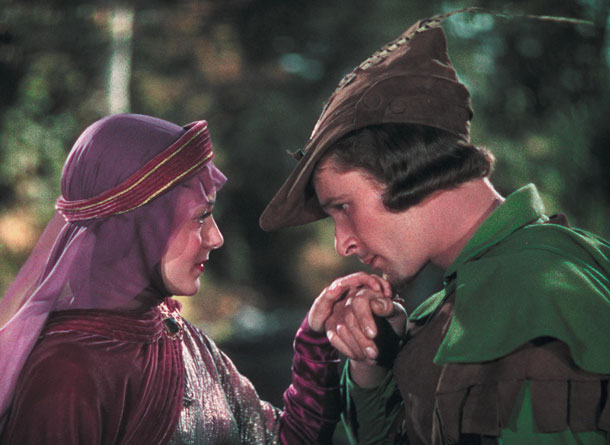
Olivia de Havilland and Errol Flynn capture each other’s fancy in one of the grandest adventure movies ever made

THE ADVENTURES OF ROBIN HOOD (Michael Curtiz, 1938)
MoMA Film, Museum of Modern Art
11 West 53rd St. between Fifth & Sixth Aves.
Monday, June 22, 4:30
Series runs through August 5
Tickets: $12, in person only, may be applied to museum admission within thirty days, same-day screenings free with museum admission, available at Film and Media Desk beginning at 9:30 am
212-708-9400
www.moma.org

With King Richard the Lionheart (Ian Hunter) off fighting the Crusades, his scheming brother, Prince John (Claude Rains), has taken over England, planning to become king with the help of the conniving Sir Guy of Gisbourne (Basil Rathbone) and the cowardly Sheriff of Nottingham (Melville Cooper). But one brave man stands in his way, “an impudent, reckless rogue who goes around the shire stirring up the Saxons against authority,” according to the Bishop of the Black Canons (Montagu Love). “And he has the insolence to set himself up as a protector of the people.” Sir Robin of Locksley (Errol Flynn), better known as Robin Hood, is fiercely loyal to King Richard and will do anything to preserve the sanctity of the throne and fight for the rights of the common people as he occupies Sherwood Forest with his band of merry men in tights, including Will Scarlet (Patric Knowles), Little John (Alan Hale Sr.), Friar Tuck (Eugene Pallette), and Much (Herbert Mundin). He also falls for the lovely Maid Marian (Olivia de Havilland), King Richard’s ward whom John promises to Gisbourne. Directed with appropriate flair and fanfare by Michael Curtiz (Casablanca, Mildred Pierce) and William Keighley (Each Dawn I Die, The Man Who Came to Dinner), The Adventures of Robin Hood is a rollicking romp through the famous legend, complete with exciting fight scenes, lots of male camaraderie, and just the right touch of romance. Flynn and de Havilland, who ended up making eight films together, are magnetic as Robin Hood and Maid Marian, a classic love story mired in life-threatening danger. There have been numerous versions of Robin Hood, starring such actors as Douglas Fairbanks, Russell Crowe, Kevin Costner, Patrick Bergin, Cary Elwes, and the voice of Brian Bedford, but there’s no Sir Robin quite like Flynn, who flits about with an endless supply of charm, humor, grace, and bravery. By the way, Marian’s horse, then known as Golden Cloud, was sold after the movie to Roy Rogers and was renamed Trigger, going on to have quite a career himself. Winner of Three Oscars (for art direction, editing, and original score — it lost Best Picture to Frank Capra’s You Can’t Take It with You) — The Adventures of Robin Hood is screening on June 22 at 4:30 as part of MoMA’s “Glorious Technicolor: From George Eastman House and Beyond” series, a celebration of the one hundredth anniversary of Technicolor, which continues through August 5 with such other delights as Vincente Minnelli’s Yolanda and the Thief, Roy Rowland’s The 5,000 Fingers of Dr. T. with George Pal’s And to Think That I Saw It on Mulberry Street, and Curtiz’s Sons of Liberty short with The Private Lives of Elizabeth and Essex.

PICKUP ON SOUTH STREET

Richard Widmark

Richard Widmark and Thelma Ritter talk over old times in Samuel Fuller Cold War noir

PICKUP ON SOUTH STREET (Samuel Fuller, 1953)
Film Forum
209 West Houston St.
May 29 – June 4
212-727-8110
filmforum.org

Three-time loser Skip McCoy (Richard Widmark) gets more than he bargained for when he lifts femme fatale Candy’s (Jean Peters) wallet on the subway, landing him in trouble with mysterious Joey (Richard Kiley) and the Feds in Samuel Fuller’s fab Cold War noir set in New York City. “If you refuse to cooperate, you’ll be as guilty as the traitors that gave Stalin the A bomb,” the cops tell him, to which Skip classically replies, “Are you waving the flag at me?” Widmark is almost too good as Skip, a suave pickpocket who lives under the Brooklyn Bridge in an old bait and tackle shack. Sure, it gets a little melodramatic at the end, which comes too soon (the film is only eighty minutes long), but it’s worth every minute nonetheless. And yes, that is Brooklyn’s own Thelma Ritter as the curious little lady who sells ties for information, earning her fourth consecutive Oscar nomination for Best Supporting Actress. One of Fuller’s best, Pickup on South Street is screening at Film Forum in a new 4K restoration May 29 to June 4.
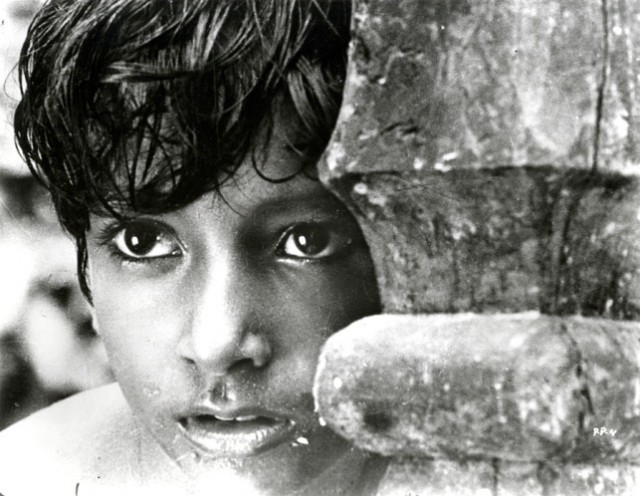
THE APU TRILOGY: PATHER PANCHALI

PATHER PANCHALI

Apu (Subir Banerjee) watches life unfold in his small Indian village in Satyajit Ray’s PATHER PANCHALI

PATHER PANCHALI (SONG OF THE LITTLE ROAD) (Satyajit Ray, 1955)
Film Forum
209 West Houston St.
May 8-28
212-727-8110
filmforum.org

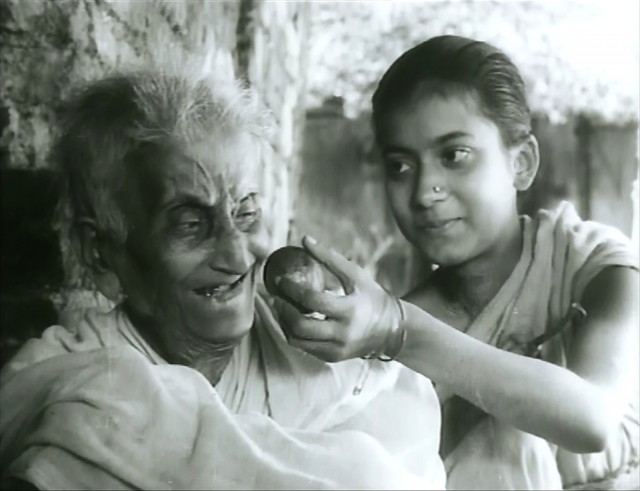
A groundbreaking work in the history of world cinema, Satyajit Ray’s Pather Panchali and its two sequels, Aparajito and Apur Sansar, have been meticulously restored by the Criterion Collection and the Academy Film Archive following a nitrate fire in 1993 — the year after Ray was awarded an honorary Oscar on his deathbed — and now are being shown together as “The Apu Trilogy,” running May 8-28 at Film Forum. Inspired by a meeting with Jean Renoir in Kolkata, where Renoir was shooting The River, and watching ninety-nine films in six months while working as a graphic designer for an advertising agency in London, Ray decided to make his first film, adapting Bibhutibhushan Banerjee’s 1929 novel, which he knew well; Ray had contributed illustrations to a later edition of the book. The film took nearly five years to make as Ray faced repeated financing problems, such delays as cattle eating flowers that were needed for an important scene, and a cast and crew primarily of nonprofessionals. Despite all those issues, Pather Panchali is a stunning masterpiece, a bittersweet and captivating tale of a rural family mired in poverty, struggling to survive in extremely hard times. In a small village, Sarbajaya (Karuna Banerjee) is raising her daughter, Durga (Runki Banerjee), a rambunctious teen, and son, Apu (Subir Banerjee), while her husband, dreamer Harihar (Kanu Banerjee), a wannabe playwright and poet, goes off for months at a time, trying to find work in the city. (The actors shared a common surname but were not related in real life.) Sarbajaya is also caring for their elderly cousin, “Auntie” Indir (retired theater actress Chunibala Devi), who walks very slowly, hunched over and with impossibly leathery skin. The family goes about its business from day to day, as the kids play with friends, figure out how they can get something from the sweets man, and hang out with Auntie, who offers a fresh perspective on life. Sarbajaya is embarrassed that she cannot pay back several rupees she owes her relatively wealthy neighbor, who owns an orchard from which Durga steals fruit. It’s a meager existence, but it avoids being completely dark and bleak because of Auntie’s sense of humor and Apu’s wide-eyed innocence. The film is told from his point of view — in fact, the first time we see him, he is lying down, covered, and one of his eyes pops open, dominating the screen. It’s a difficult, challenging life, but there’s always hope.

PATHER PANCHALI

Durga (Runki Banerjee) offers Auntie (Chunibala Devi) a stolen treat in PATHER PANCHALI

The episodic Pather Panchali was heavily influenced by Italian Neorealism while also evoking works by Ozu, Kurosawa, and Renoir, providing an alternative to the flashier, popular Bollywood style. First-time writer-director Ray and first-time cinematographer Subrata Mitra maintain a lyrical, poetic pace, accompanied by a traditional score by sitar legend Ravi Shankar. The film succeeds both as a cultural testament, lending insight into the poor of India, as well as a fully realized cinematic story; it won the country’s National Film Award for Best Feature Film while also earning Best Human Document honors at Cannes. Sarbajaya, Durga, Apu, and Auntie are almost always barefoot, wearing the same clothes, scraping the bottom of the pan with their fingers for that last grain of rice, but there’s an elegance and grace, an intoxicating honesty, to their simple, laborious daily lives. Ray would go on to make such other films as Teen Kanya, Jalsaghar, Ashani Sanket, Devi, and Agantuk, but he is most remembered for “The Apu Trilogy,” which looks absolutely gorgeous in these new 4K restorations, reaffirming its lofty place in the coming-of-age pantheon alongside François Truffaut’s Antoine Doinel series. Ray’s son, director and cinematographer Sandip Ray, who collaborated with his father on several projects, will introduce the 8:00 screening of Pather Panchali on May 8.