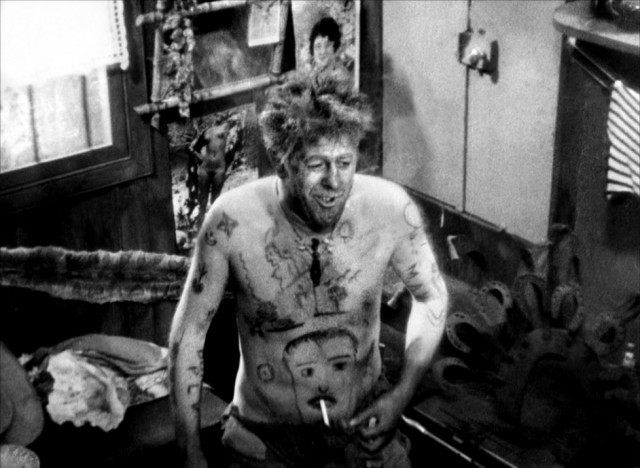
Michel Simon has loads of fun as a somewhat decrepit first mate in Jean Vigo’s classic L’ATALANTE
L’ATALANTE (Jean Vigo, 1934)
Socrates Sculpture Park
32-01 Vernon Blvd.
Wednesday, July 13, free, live music at 7:00, screening at sunset
718-956-1819
www.socratessculpturepark.org
 Swiss actor Michel Simon is spectacularly hilarious as an aging, somewhat decrepit first mate with a peculiar lust for life and cats in French auteur Jean Vigo’s fourth and final film, L’Atalante. After barge captain Jean (Jean Dasté) and Juliette (Dita Parlo) get married in her small, tight-knit country town, they head for the big city of Paris on the long boat, L’Atalante, that he captains as his job. First mate Père Jules (Simon) and his young cabin boy (Louis Lefebvre) come along for the would-be honeymoon, attempting to make sure it’s a smooth ride, which of course it’s not. Juliette wants to enjoy the Parisian nightlife, Jean is a jealous, overprotective stick-in-the-mud, and Père Jules — well, Père Jules is downright unpredictable, pretty much all id, living life footloose and fancy free even if he doesn’t have much money or many true friends. When a love-struck bicycle-riding peddler (Gilles Margaritis) tries to woo Juliette, Jean grows angry, and an emotional and psychological battle ensues. But through it all, Père Jules just keeps on keepin’ on, never getting too concerned, confident that everything will work out in the end, because that’s what happens in life.
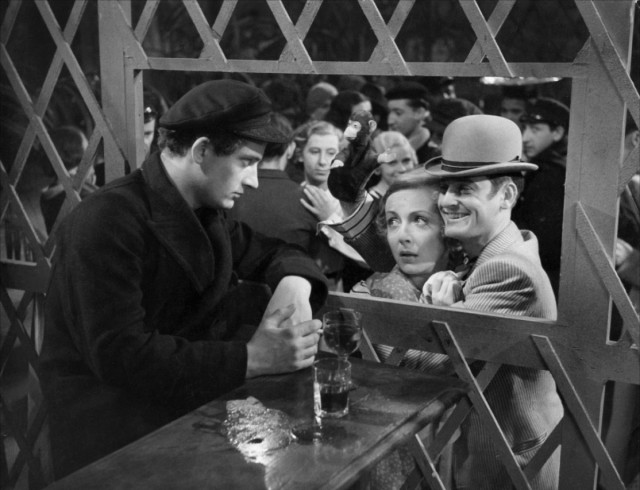
Jean (Jean Dasté) is jealous of a hotshot peddler (Gilles Margaritis) trying to steal his wife (Dita Parlo) in L’ATALANTE
The son of anarchist Miguel Almereyda, who chose his last name because it is an anagram of the French phrase for “there is shit,” Vigo had been labeled a subversive for his first film, À propos de Nice, and his third film, Zéro de conduite, had been banned. So he went a little more conventional, at least for him, with L’Atalante, rewriting with Albert Riéra an original script by Jean Guinée. The film is an insightful tale of love and romance, of wealth and poverty, of hard social conditions, focusing on a wacky man who has experienced a lot in his life, even though he looks like a bum, reminiscent of Simon’s brilliant portrayal of Priape in Jean Renoir’s Boudu Saved from Drowning. Whether putting on a puppet show, displaying his tattoos, getting his fortune read, or walking around with cats on his shoulders, Père Jules is one of the most endearing and memorable characters in the history of cinema, a unique figure who surprises over and over again, and Simon’s portrayal is just amazing; it’s hard to believe that he was only thirty-nine when he made the picture. The highly poetic film, featuring a lovely score by Maurice Jaubert, also echoes F. W. Murnau’s Sunrise: A Song of Two Humans, only from a comic, often slapstick angle. After shooting was completed, Vigo’s already failing health took a turn for the worse, and a battle ensued over final cut involving the producers and editor Louis Chavance and cinematographer Boris Kaufman (Dziga Vertov’s brother, who went on to shoot such American classics as On the Waterfront and 12 Angry Men). Vigo died in October 1934 at the age of twenty-nine, only a few weeks after L’Atalante was released. L’Atalante is screening July 13 in Long Island City as part of Socrates Sculpture Park’s free summer Outdoor Cinema series, programmed by Film Forum, and will be preceded by a live performance by Le Petit Pepinot, with French food available for purchase from Le Fond and La Maison du Soufflé. The seventeenth annual series continues through August 24 with such other international films as Rokhsareh Ghaem Maghami’s Sonita, Lou Ye’s Suzhou River, and Werner Herzog’s Aguirre, the Wrath of God.
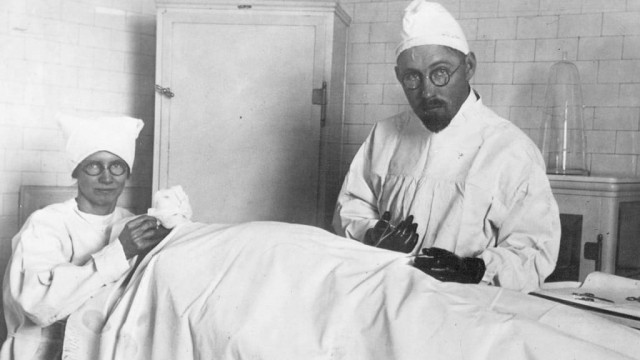
 Penny Lane’s wonderfully titled, inventively told “Nuts!” tells the wacky true tale of Dr. John R. Brinkley, a pivotal twentieth-century figure who was part P. T. Barnum, part Donald Trump, a controversial doctor or a quack, a radio pioneer or a snake-oil charlatan, depending on one’s opinion. He became rich and famous by surgically implanting goat glands into men’s testicles, claiming it increased virility, but his story is about much more than that. “This is a film about John Romulus Brinkley, a doctor, amongst other things, a man who succeeded against terrible odds and powerful opposition, a man who changed the world,” narrator Gene Tognacci explains early on. Lane, who previously profiled another intriguing individual in her debut feature-length documentary, 2013’s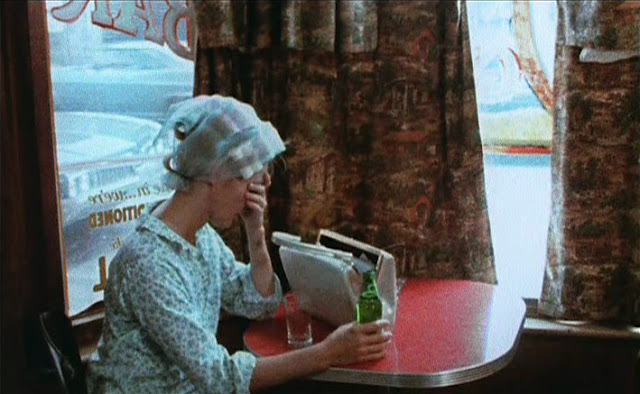
 “If you don’t want anything, you won’t have anything, and if you don’t have anything, then you’re as good as dead,” Mr. Dennis (Michael Higgins) tells Wanda Goronski (Barbara Loden) in Wanda, which appropriately kicks off Film Forum’s two-week “Genre Is a Woman” festival on June 3. The first theatrical feature written, directed, produced by, and starring an American woman, Wanda is a raw, naturalistic road-trip movie about an emotionally vacant woman who walks through life in a kind of stupor, wandering into situations to avoid being alone yet still trapped in an unrelenting alienation. Loden, who won a 1964 Tony for her portrayal of Maggie in Arthur Miller’s After the Fall — the play was directed on Broadway by Elia Kazan, whom she would marry four years later and remain with through her tragic death in 1980 — doesn’t try to turn Wanda into a feminist antihero, but she does take all the power away from her, making her completely dependent on other people, primarily men, an excellent counterpoint to Loden herself, who has all the power. Staying on her sister’s (Dorothy Shupenes) couch in the middle of Pennsylvania coal country, Wanda is almost zombielike as she slowly heads to court in curlers and a housecoat and lets the judge award custody of her two children to her soon-to-be-ex-husband (Jerome Thier). “I’m just no good,” she mumbles. Broke and apparently with no faith or hope in her future, she proceeds to get involved with some sketchy losers, including Mr. Dennis, who takes her on a minor crime spree that is a far cry from Bonnie and Clyde. All along the way, she rarely has anything of any interest to say to anyone; the only time she speaks clearly and definitively is when she explains that she likes onions on her hamburgers.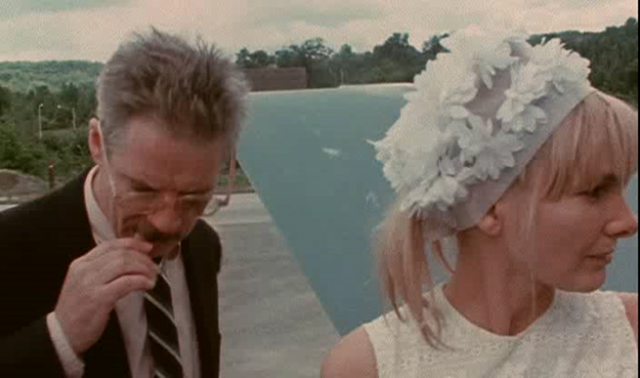
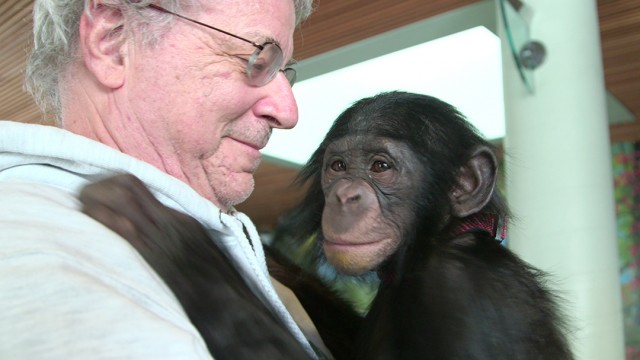
 Award-winning husband-and-wife documentarians D. A. Pennebaker and Chris Hegedus have been collaborating for forty-five years, working on films about such subjects as Bill Clinton’s presidential campaign (The War Room), Carol Burnett (Moon over Broadway), soul music (Only the Strong Survive), pastry chefs (Kings of Pastry), and Elaine Stritch (Elaine Stritch at Liberty). For their latest film, Unlocking the Cage, they spent three years following animal rights lawyer Steven M. Wise, the president and founder of the Nonhuman Rights Project, as he sought to establish “personhood” for several chimpanzees in order to free them from their caged existence and move them to more acceptable animal sanctuaries. Wise and his team, Natalie Prosin and attorneys Elizabeth “Liddy” Stein and Monica Miller, scour the internet searching for chimpanzees to represent as well as sanctuaries where the animals can be released. (The Nonhuman Rights Project focuses on great apes, elephants, and such cetaceans as dolphins and whales because of their autonomy, intelligence, and emotional capacity.) The concept is fascinating, and the film hits its high points when Pennebaker and Hegedus show some of the chimpanzees interacting with humans in compelling ways, watching television or figuring something out on a computer. Unfortunately, far too much of Unlocking the Cage deals with often murky legal discussions and courtroom arguments that drag on and on.