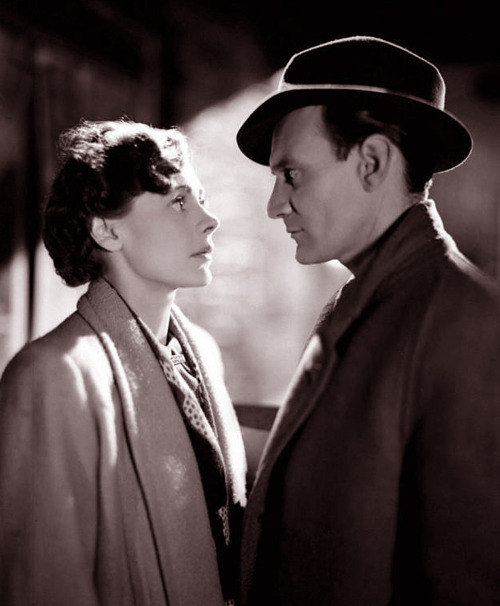
Laura Jesson (Celia Johnson) and Alec Harvey (Trevor Howard) explore an extramarital affair in BRIEF ENCOUNTER
BRIEF ENCOUNTER (David Lean, 1945)
Film Forum
209 West Houston St.
Sunday, May 15, 3:30, and Monday, May 16, 12:30
Series runs May 13-19
212-727-8110
filmforum.org
 “Don’t hurry. I’m perfectly happy,” Laura Jesson (Celia Johnson) tells her rather boring husband, Fred (Cyril Raymond), as he returns to his crossword puzzle one night. “How can I possibly say that?” she then thinks to herself. “‘Don’t hurry. I’m perfectly happy.’ If only it were true. Not, I suppose, that anybody’s ever perfectly happy, really. But just to be ordinarily contented, to be at peace. It’s such a little while ago really but it seems an eternity since that train went out of the station, taking him away into the darkness. I was happy then.” In David Lean’s Brief Encounter, one of the greatest romantic films ever made, Laura, a housewife and mother, can’t stop herself from falling for dapper doctor Alec Harvey (Trevor Howard), who is also married. As they explore a potential physical relationship, Laura is wracked with guilt, especially as she keeps bumping into nosy gossip Myrtle Bagot (Joyce Carey). But the two potential lovers are so drawn to each other, filling the holes in each other’s lives, that they consider risking all they have for just one more moment together. Winner of the 1946 Palme d’Or at Cannes, Brief Encounter is told in flashback in Laura’s voice as she goes over every wonderful and terrifying detail in her mind while contemplating whether to spill the beans to the generally oblivious Fred. Written by Noël Coward based on his 1936 one-act play, Still Life, the film features terrifically subtle performances by Johnson and Howard as the daring couple; you can’t help but root for them, despite the possible consequences. Lean, who earned the first of his seven Best Director Oscar nominations for the heartbreaking film, keeps things relatively, well, lean, getting right to the point in less than ninety minutes; he would go on to helm such sprawling epics as The Bridge on the River Kwai, Lawrence of Arabia, Doctor Zhivago, and A Passage to India before his death in 1991 at the age of eighty-three. Brief Encounter is screening May 15 and 16 in Film Forum’s one-week, thirteen-film tribute to the one and only Coward, consisting of movies he wrote, appeared in, or were based on his writing, from such beloved classics as Blithe Spirit, Private Lives, and Cavalcade to such lesser-known fare as The Astonished Heart, Tonight Is Ours, and Boom!
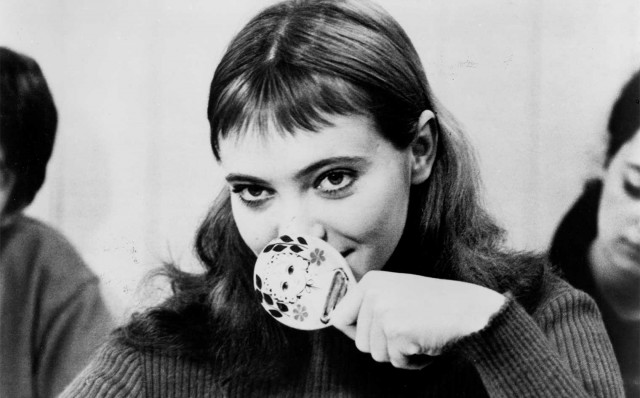
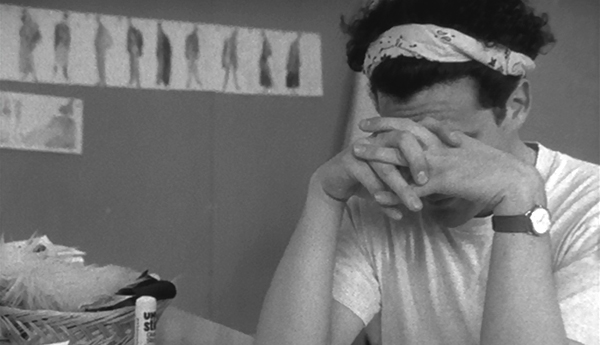
 About halfway through Unzipped, Douglas Keeve’s thrilling 1995 documentary, which follows fashion designer extraordinaire Isaac Mizrahi as he puts together his fall 1994 collection following a critical disaster, Mizrahi says, “Everything’s frustrating; every single thing is frustrating. Except designing clothes. That’s not frustrating. That’s really liberating and beautiful. I don’t know, being overweight and not being able to lose weight, you know, that’s a problem. Anything you’re really working hard at and that’s not working, that’s a problem. But frankly, designing clothes is never a problem.” Of course, the statement doesn’t exactly ring true as Mizrahi, usually with his trademark bandanna wound around his wild, curly hair, encounters his fair share of difficulties as he meets with Candy Pratts and André Leon Talley from Vogue and Polly Mellen from Allure, expresses his hopes and fears with Mark Morris, Sandra Bernhard, Eartha Kitt, and his mother, and works with such supermodels as Kate Moss, Naomi Campbell, Cindy Crawford, Shalom Harlow, Linda Evangelista, Carla Bruni, Christy Turlington, and Amber Valletta. Along the way he makes endless pop-culture references, singing the theme song from The Mary Tyler Moore Show, citing scenes from The Red Shoes, Marnie, Valley of the Dolls, and Whatever Happened to Baby Jane? and using Nanook of the North and The Call of the Wild as creative inspiration.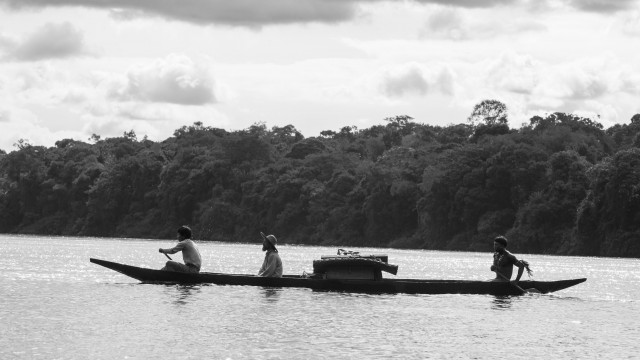
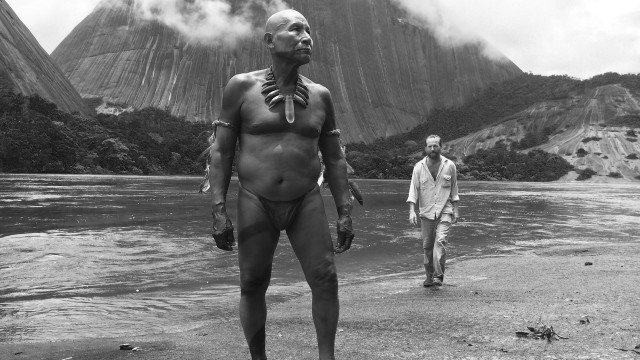
 Colombian writer-director Ciro Guerra takes viewers on a spectacular journey through time and space and deep into the heart of darkness in the extraordinary Embrace of the Serpent. Guerra’s Oscar-nominated film, the first to be shot in the Colombian Amazon in thirty years, opens with a 1909 quote from explorer Theodor Koch-Grünberg: “It is not possible for me to know if the infinite jungle has started on me the process that has taken many others to complete and irremediable insanity.” Inspired by the real-life journals of Koch-Grünberg and botanist and explorer Richard Evans Schultes, Guerra poetically shifts back and forth between two similar trips down the Vaupés River, both led by the same Amazonian shaman, each time guiding a white scientist on a perilous expedition in a long, narrow canoe. Shortly after the turn of the twentieth century, ailing white ethnologist Theo (Jan Bijvoet) and his native aid, Manduca (Yauenkü Migue), seek the help of Karamakate (Nilbio Torres), a shaman wholly suspicious of whites and who believes he is the last of his tribe. However, Theo claims he knows where remnants of Karamakate’s people live and will show him in return for helping him find the magical and mysterious hallucinogenic Yakruna plant that Theo thinks can cure his illness. Forty years later, white botanist Evan (Brionne Davis) enlists Karamakate (Antonio Bolívar Salvador) to locate what is thought to be the last surviving Yakruna plant, which he hopes will finally allow him to dream in order to heal his soul. Evoking such films as Werner Herzog’s Fitzcarraldo and Aguirre, the Wrath of God and Francis Ford Coppola’s Apocalypse Now, Embrace of the Serpent makes the rainforest itself a character, shot in glorious black-and-white by David Gallego (Cecilia, Violencia) in a sparkling palette reminiscent of the work of Brazilian photographer