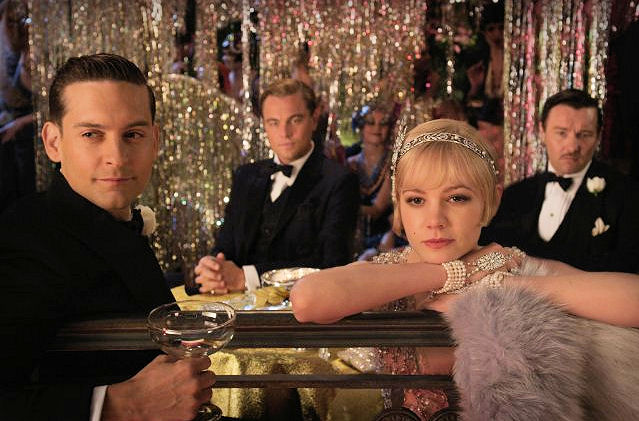
Nick (Tobey Maguire), Jay (Leonardo DiCaprio), Daisy (Carey Mulligan), and Tom (Joel Edgerton) are caught up in matters of the heart in THE GREAT GATSBY
THE GREAT GATSBY (Baz Luhrmann, 2013)
Film Forum
209 West Houston St.
Wednesday, November 16, 4:10; Saturday, November 19, 5:10; Monday, November 21, 12:30
Series runs November 11-29
212-727-8110
filmforum.org
www.thegreatgatsby.warnerbros.com
 Baz Luhrmann’s sumptuous version of The Great Gatsby is a dazzling reimagining of F. Scott Fitzgerald’s 1925 novel of old and new money and the American dream. The Australian director and his wife, costume and production designer extraordinaire Catherine Martin, have turned the classic tale into a lush spectacle without losing focus on the main story of life and love during the Roaring Twenties. Leonardo DiCaprio, who played the male lead in Lurhmann’s contemporary take on Romeo + Juliet, is superb as Jay Gatsby, the mystery man previously portrayed by Warner Baxter in 1926, Alan Ladd in 1949, Robert Redford in 1974, and Toby Stephens in 2000, adding a compelling level of vulnerability to the character. Gatsby has built a magnificent palace for himself on Long Island, hosting wild parties that he doesn’t care about; all he truly wants is Daisy (Carey Mulligan), a former love who has married successful businessman Tom Buchanan (Joel Edgerton) and lives in a mansion right across the bay. The villainous Tom is having an affair with the lower-class Myrtle Wilson (Isla Fisher), whose unaware husband, George (Jason Clarke), runs a gas station and garage in the Valley of Ashes. Although a loner, Gatsby befriends his neighbor, Nick Carraway (Tobey Maguire), a young, innocent bond trader who rents a modest home at the base of Gatsby’s enormous estate and whose cousin just happens to be Daisy. As Carraway is sucked into this glamorous, debauched society, which also includes wild and elegant golf champion Jordan Baker (Elizabeth Debicki), he is forced to reexamine his own hopes and dreams as he tries to find his place in the world.
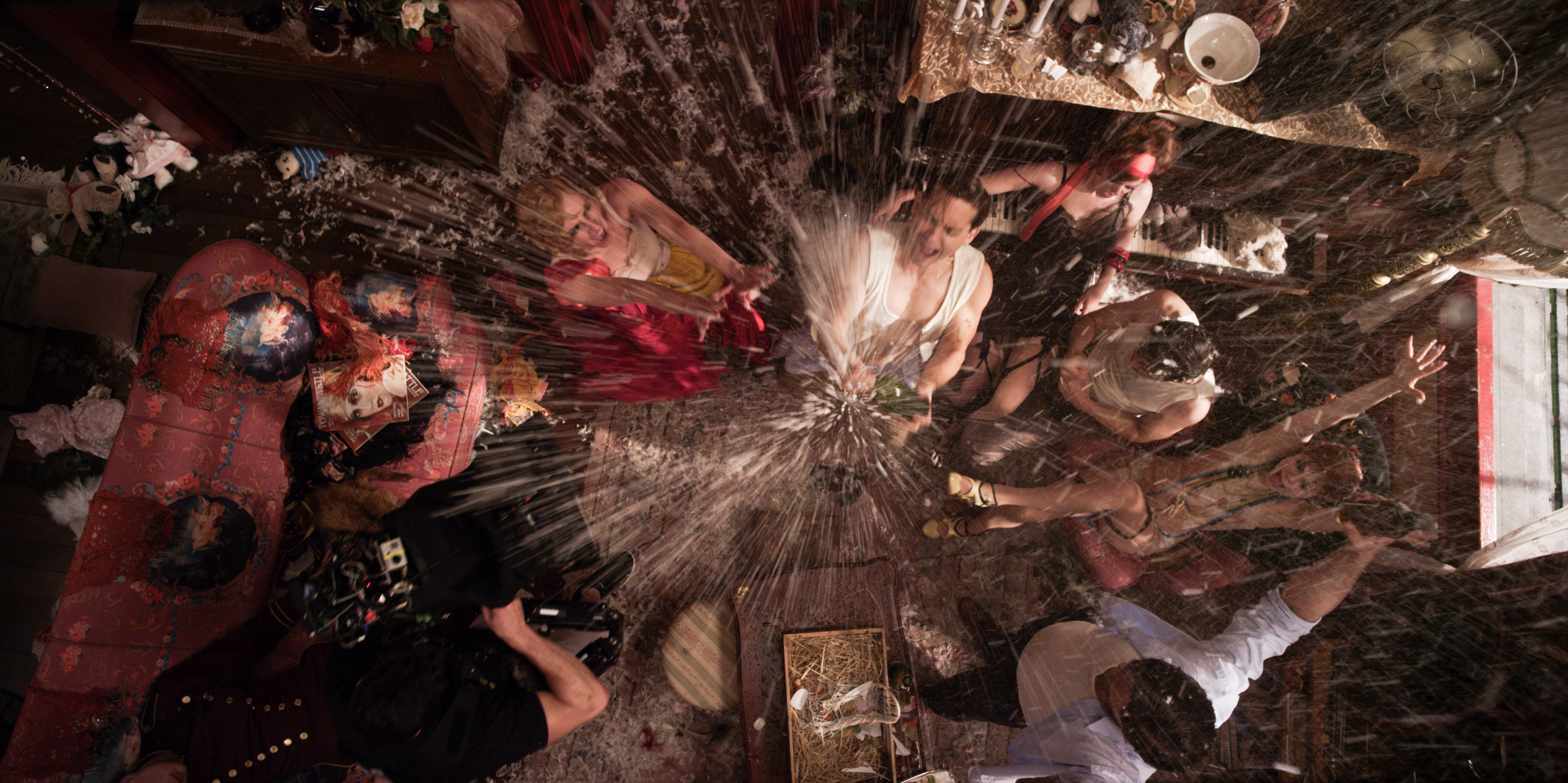
Baz Luhrmann throws one helluva party in his reimagining of THE GREAT GATSBY
Luhrmann and cowriter Craig Pearce have framed the tale by putting Carraway, the narrator of the book and film, in a sanitarium, where a doctor (Jack Thompson) convinces him that writing down what happened with Gatsby will help him overcome his alcoholism and depression; the device, which is not part of the novel, is based on Fitzgerald’s own time spent in a sanitarium. Luhrmann and Pearce, who did extensive research for the project, also include elements from Fitzgerald’s Trimalchio, the first draft of The Great Gatsby, which will certainly anger purists. Purists are also likely to be furious at the soundtrack, which features songs by Jay Z (one of the film’s producers), his wife, Beyoncé, André 3000, will.i.am, Lana Del Rey, Gotye, and the xx alongside Jazz Age re-creations by the Bryan Ferry Orchestra of Beyoncé’s “Crazy in Love” and Roxy Music’s “Love Is the Drug.” But this is not your high school English teacher’s Gatsby; instead, it’s F. Scott Fitzgerald for the twenty-first century, not meant to be seen through the billboard spectacles of oculist Dr. T. J. Eckleburg but through 3-D glasses that invite viewers into the oh-so-fashionable goings-on in eye-popping ways. “Is all this made entirely from your own imagination?” Daisy asks Gatsby at one point. In this case, it’s made from the minds of two wildly inventive men, Luhrmann and Fitzgerald, who together throw one helluva party. Winner of two Academy Awards, for Best Costume Design (Catherine Martin) and Best Production Design (Martin and Beverley Dunn), The Great Gatsby is screening November 16, 19, and 21 in “3-D Auteurs,” which runs November 11-29 at Film Forum and consists of approximately three dozen 3-D feature films and shorts, including Jean-Luc Godard’s Goodbye to Language, Werner Herzog’s Cave of Forgotten Dreams, Takashi Miike’s Hara Kiri: Death of a Samurai, Alfred Hitchcock’s Dial M for Murder, Jack Arnold’s Creature from the Black Lagoon, Three Stooges and Méliès shorts, and the wacky double feature of Johnnie To’s Office and George Sidney’s Kiss Me Kate.
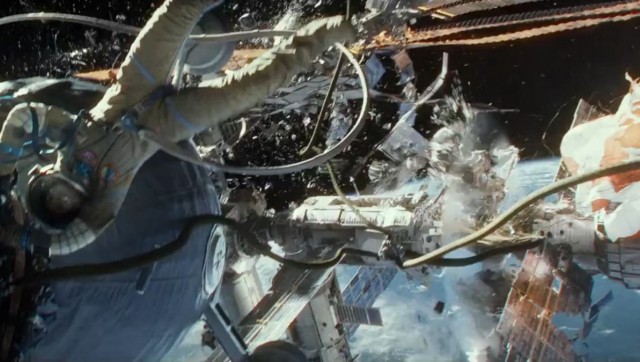
 Alfonso Cuarón’s Gravity is a breathtaking thriller that instantly enters the pantheon of such classic space fare as 2001: A Space Odyssey, Alien, and The Right Stuff. And if you haven’t seen it in 3-D, how it’s being shown in the Film Forum series “3-D Auteurs” this month, well, you haven’t really seen it. While medical engineer Dr. Ryan Stone (Sandra Bullock) is fixing a computer glitch outside the shuttle Explorer, veteran astronaut and wisecracker Matt Kowalski (George Clooney), on his final mission before retirement, is playing around with a new jetpack and Shariff (voiced by Paul Sharma) is having fun going on a brief spacewalk. But disaster strikes when debris from a destroyed Russian satellite suddenly comes their way, killing Shariff and the rest of the crew and crippling the shuttle, leaving Stone and Kowalski on their own in deep space, their communication with Mission Control in Houston (voiced by Ed Harris, in a nod to his participation in Apollo 13 and The Right Stuff) gone as well. Kowalski is cool and calm, listening to country music as he tries to come up with a plan that will get them to the International Space Station, but the inexperienced Stone is running out of oxygen fast as she tumbles through the emptiness, Earth in the background, so close yet so far. Written by Cuarón (Y Tu Mamá También, Children of Men) with his son Jonás, Gravity is spectacularly photographed by Emmanuel Lubezki, the master behind numerous works by Cuarón and Terrence Malick (The New World, The Tree of Life), among others. Lubezki and his team even created a new LED light box to increase the film’s realism, which is nothing less than awe-inspiring and mind-bending as it takes place in real time. Despite the vastness of space, Gravity often feels claustrophobic, particularly as Stone struggles to get a breath or attempts to operate a foreign module.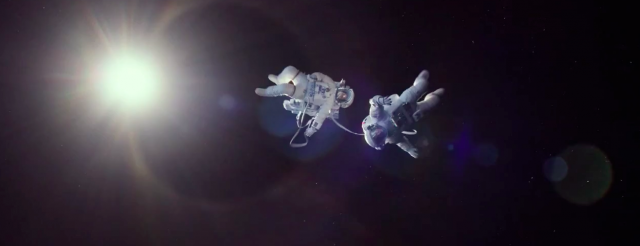
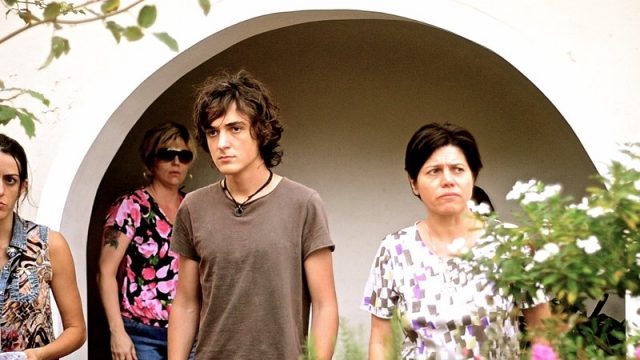
 Brazilian writer-director Anna Muylaert once again intricately explores the nature of class, identity, and family in her fifth feature film, the powerful and poignant Don’t Call Me Son. In last year’s award-winning The Second Mother, Muylaert told the story of a live-in housekeeper who was like a surrogate mother to the family she works for, but things change when her estranged teenage daughter comes to stay with her. In Don’t Call Me Son, a family is torn apart when it is discovered that the mother, Arcay (Dani Nefusi), actually stole her children, son Pierre (Naomi Nero) and daughter Jaqueline (Lais Dias), when they were babies, and the kids’ biological parents have been searching desperately for them ever since and have now found them. Pierre is a seventeen-year-old gender-bending bisexual musician who seems relatively comfortable in his own skin, at least for a seventeen-year-old gender-bending bisexual musician, until Arcay is arrested and imprisoned for kidnapping. She might not have been a model mother, but she was his mother, and he is devastated when he is suddenly forced to move in with his biological parents, Glória (also played by Nefusi) and Matheus (Matheus Nachtergaele), who are overjoyed to have him back but were expecting someone a little bit more traditional; however, Pierre’s new younger brother, Joca (Daniel Botelho), appears to be happy he now has such a cool, if tortured, sibling. Meanwhile, Jaqueline is taken away to live with her real parents. As Glória and Matheus persist in calling Pierre by the name they gave him at birth, Felipe, the teen acts out as he tries to figure out who he is and redefine his place in a world that has been turned upside down and inside out.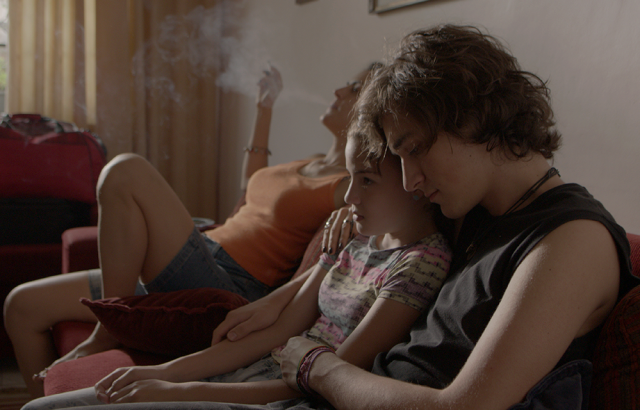

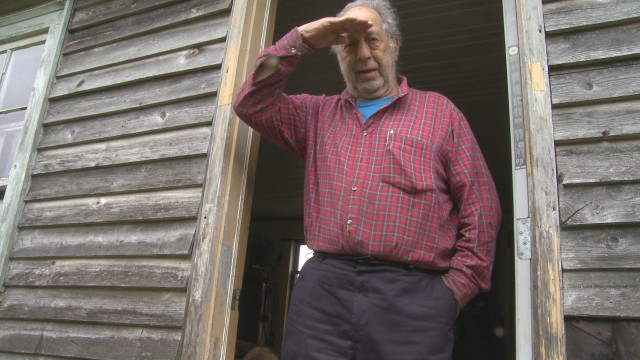
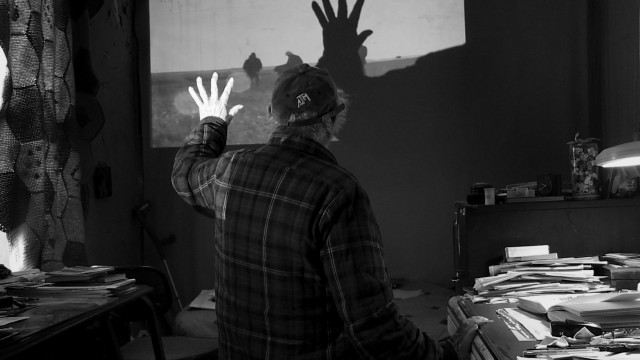
 I remember the first time I saw the BBC series Ways of Seeing, thoroughly entranced by the host, a curly-haired British art critic with the cutest little lisp of his “R”s who promised that, while looking at European painting in a whole new way, “we shall discover something about ourselves and the situation in which we are living.” Years later, I was distraught when I couldn’t find my paperback copy of the companion book; my wife quickly ordered it and it was soon in my hands, where I devoured every word and image again and again. So I was terrifically excited when I heard about the new documentary The Seasons in Quincy: Four Portraits of John Berger, which opens August 31 at Film Forum. Perhaps my expectations were too high, but I came away from the four-part film feeling disappointed and let down; I selfishly wanted only Berger (pronounced with a soft “g”) but instead got too much of his friends and colleagues. And to make matters worse, the directors are too often what Berger tried so hard to avoid being throughout his long, influential career: pretentious. The film begins in winter with “Ways of Listening,” in which director Colin MacCabe focuses on Berger and his longtime friend, Oscar-nominated actress Tilda Swinton, as they talk at Berger’s farm in the small French town of Quincy, where he moved in the 1970s after becoming fed up with England. Filmed in 2010, the segment works best when Berger tells personal stories about his father and war; Swinton listens while peeling apples, the camera on her as much as on him. It occasionally feels as if she can’t decide whether to share Berger or keep him to herself; they already have a special connection, sharing the same birthday, albeit thirty-four years apart. But I wanted to make my own connection with Berger, a down-to-earth intellectual with a lust for life and a wide-ranging legacy, an artist, critic, “radical humanist,” social commentator, political activist, husband, father, farmer, and self-described “revolutionary writer” who prefers to simply be known as a storyteller.

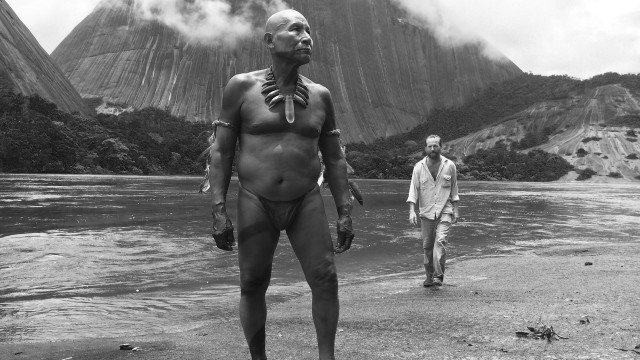
 Colombian writer-director Ciro Guerra takes viewers on a spectacular journey through time and space and deep into the heart of darkness in the extraordinary Embrace of the Serpent. Guerra’s Oscar-nominated film, the first to be shot in the Colombian Amazon in thirty years, opens with a 1909 quote from explorer Theodor Koch-Grünberg: “It is not possible for me to know if the infinite jungle has started on me the process that has taken many others to complete and irremediable insanity.” Inspired by the real-life journals of Koch-Grünberg and botanist and explorer Richard Evans Schultes, Guerra poetically shifts back and forth between two similar trips down the Vaupés River, both led by the same Amazonian shaman, each time guiding a white scientist on a perilous expedition in a long, narrow canoe. Shortly after the turn of the twentieth century, ailing white ethnologist Theo (Jan Bijvoet) and his native aid, Manduca (Yauenkü Migue), seek the help of Karamakate (Nilbio Torres), a shaman wholly suspicious of whites and who believes he is the last of his tribe. However, Theo claims he knows where remnants of Karamakate’s people live and will show him in return for helping him find the magical and mysterious hallucinogenic Yakruna plant that Theo thinks can cure his illness. Forty years later, white botanist Evan (Brionne Davis) enlists Karamakate (Antonio Bolívar Salvador) to locate what is thought to be the last surviving Yakruna plant, which he hopes will finally allow him to dream in order to heal his soul. Evoking such films as Werner Herzog’s Fitzcarraldo and Aguirre, the Wrath of God and Francis Ford Coppola’s Apocalypse Now, Embrace of the Serpent makes the rainforest itself a character, shot in glorious black-and-white by David Gallego (Cecilia, Violencia) in a sparkling palette reminiscent of the work of Brazilian photographer