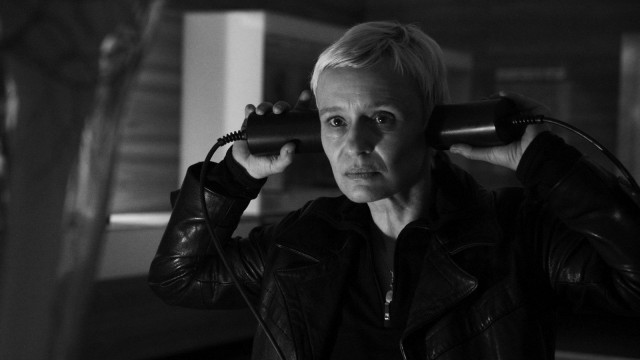
Documentarian Petra Epperlein investigates her father’s mysterious suicide in KARL MARX CITY
KARL MARX CITY (Petra Epperlein & Michael Tucker, 2016)
Film Forum
209 West Houston St.
March 29 – April 11
212-727-8110
filmforum.org
karlmarxcity.com
 In 1999, filmmaker Petra Epperlein’s fifty-seven-year-old father, Wolfgang, thoroughly washed his company car, burned all of his personal papers and photographs, and then hanged himself from a tree in the family garden in their home in Chemnitz, which was known as Karl Marx City in what was formerly communist East Germany from shortly after the end of WWII to the fall of the Berlin Wall. “Much like Karl Marx City, her father set out to erase himself,” narrator Matilda Tucker, Epperlein’s daughter, says near the beginning of the intricately plotted and gripping documentary Karl Marx City. “All that he left behind were questions.” Fifteen years later, Epperlein, who has made such sociopolitical films with her husband, Michael Tucker, as Gunner Palace, The Prisoner Or: How I Planned to Kill Tony Blair, and Bulletproof Salesman — the duo call themselves Pepper & Bones — returned to Chemnitz to try to answer some of those questions and find out whether her father had killed himself because, as was rumored, he had collaborated with the Stasi, the much-feared East German secret police. Between 1950 and 1990, the German Democratic Republic employed 92,000 officers and 200,000 informants to spy on their own friends, neighbors, and family, using audio and video to track their every move in order to identify supposed enemies of the state. Written, directed, edited, and produced by Epperlein and Tucker — Petra also did the audio recording and Michael served as cinematographer and sound designer — Karl Marx City features declassified surveillance tapes, broadcast intercepts, and propaganda films from the Ministry for State Security (the Stasi, or Staatssicherheit) along with striking new black-and-white footage of Epperlein’s quest as she poignantly retraces her father’s steps. She meets with such current and former employees of the Stasi Archive as Lothar Raschker, Dr. Juliane Schütterle, and Dagmar Hovestadt, Cold War and GDR expert Dr. Douglas Selvage, and Berlin-Hohenschönhausen Memorial director Dr. Hubertus Knabe to examine the history of the Stasi and detail the effects it had on the psyche of the German people.
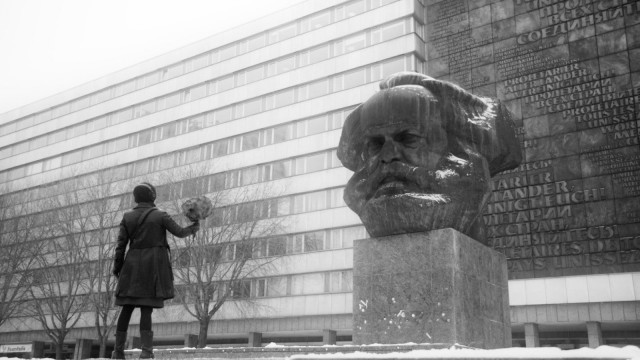
Poignant documentary looks into Stasi control of Karl Marx City during the Cold War era
Epperlein also speaks with former classmate Jana X and her parents, Stasi collaborators R. and S., and historian and suicide-letter expert Dr. Udo Grashoff, who examines a note and postcard that Wolfgang sent Petra just before he killed himself. “The main question of the Stasi was, Who is the enemy, and how can we prove that he is an enemy or she is an enemy?” Dr. Grashoff points out. “But you and I, we have different questions. And we find in the files empirical material that allows us to answer our different questions, and this is the value of the Stasi files for me. I’m not interested in the questions of the Stasi. You can find your own truth.” Petra’s twin brothers, Uwe and Volker, and their mother, Christa, also talk about their father, with Christa sometimes hesitant and emotional. Visiting sites from her family’s past, Epperlein travels everywhere wearing headphones and carrying a large fur-covered microphone, emphasizing how her, and our, world is still under constant surveillance. “No aspect of society escaped their gaze,” Tucker narrates early on, referring to the Stasi. “Everyone a suspect. The enemy is everyone.” Epperlein occasionally addresses the camera directly, creating boundary-shattering moments between filmmaker and audience while evoking the ability of the camera and microphone to make us all subjects, particularly in this surveillance-heavy age. In addition, Karl Marx City offers a vocabulary lesson, defining such words as Die Wende (“the change”), Ostalgie (“the feeling for home”), Erinnerungskutlur (“the culture of remembrance”), and Vergangenheitsbewältigung (“the process of coming to terms with the past”), the letters shown onscreen in torn red-and-white strips as if ripped from tabloid headlines or ransom notes. Karl Marx City is an eye-opening look at a frightening past as well as a potent reminder of what can always happen again — if it isn’t already. The film opens March 29 at Film Forum and will be preceded by Alexander Lahl and Volker Schlecht’s seven-minute animated short, Broken — The Women’s Prison at Hoheneck; Epperlein and Tucker will participate in Q&As following the 7:00 shows on March 29 and 31 and the 4:40 show on April 1.
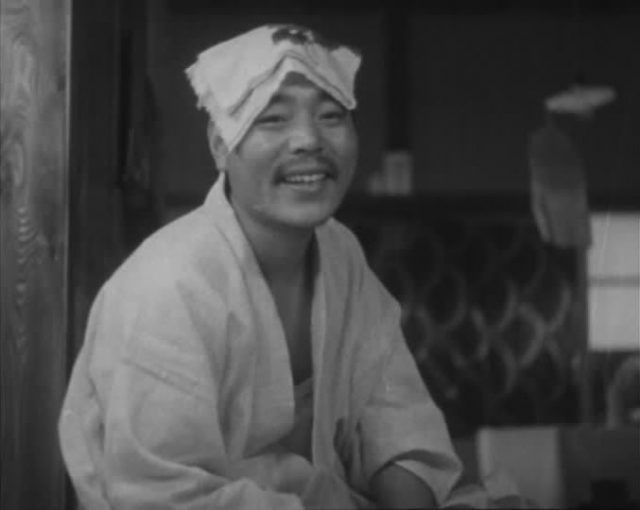
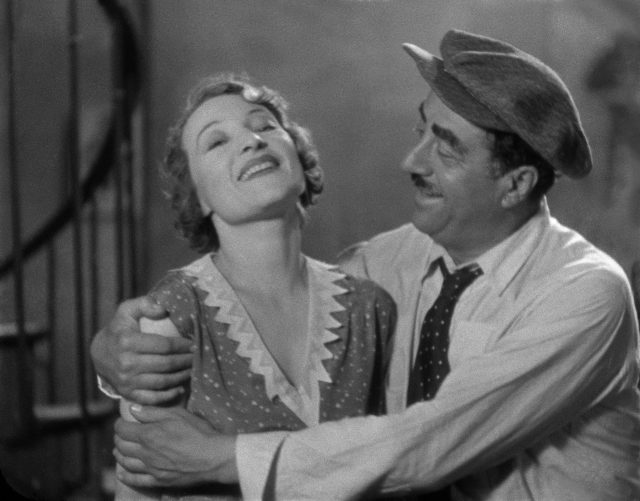
 Yasujirō Ozu might not have been keen on the latest technology — he made silent films until 1936, and his first color film was in 1958, near the end of his career — but there’s nothing old-fashioned about his mastery of camera and storytelling, as evidenced by one of his lesser-known comedy-dramas, Passing Fancy. On March 19 at 4:30, Film Forum is screening a 35mm print of the 1933 masterpiece, accompanied by a live benshi performance by Ichiro Kataoka and composer and pianist Makia Matsumura. Takeshi Sakamato stars as Kihachi, a character that would go on to appear in such other Ozu works as A Story of Floating Weeds, An Inn in Tokyo, and Record of a Tenement Gentleman. The film opens at a rōkyoku performance, where the audience is sitting on the floor on a hot day, mopping their brows and fanning themselves; Kihachi has an ever-present cloth on his head, looking clownish, a small boy with an injured eye who turns out to be his son, Tomio (Tokkankozo), sleeping by him. Foreshadowing Bresson-ian precision, Ozu and cinematographers Hideo Shigehara and Shojiro Sugimoto follow a small, lost change purse as several men inspect it, hoping to find money in it, then toss it away when it comes up empty. The scene establishes the pace and tone of the film, identifies Kihachi as the protagonist, and shows that there will be limited translated text and dialogue; in fact, Ozu never reveals what happened to Tomio’s eye. After the performance, Kihachi and his friend and coworker at the local brewery, Jiro (Den Obinata), meet a destitute young woman named Harue (Nobuko Fushimi). An intertitle explains, “Everyone years for love. Love sets our thoughts in flight.” Kihachi, a poor, single father, helps Harue get a place to stay and a job with restaurant owner Otome (Chouko Iida), hoping that Harue will become interested in him, but she instead takes a liking to the younger Jiro, who wants nothing to do with the whole situation, believing that Harue is using them.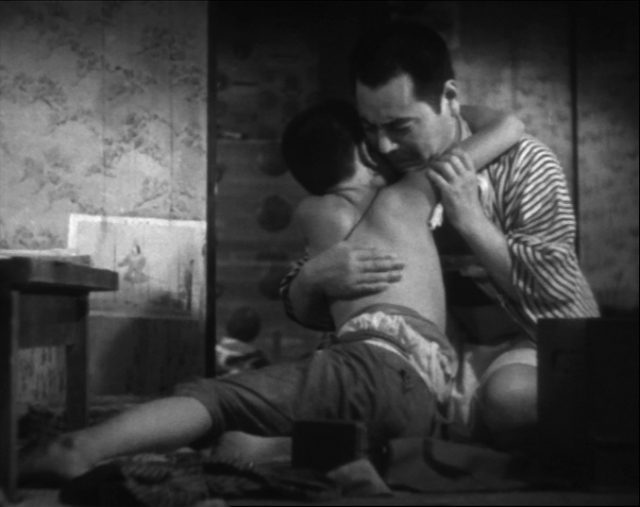

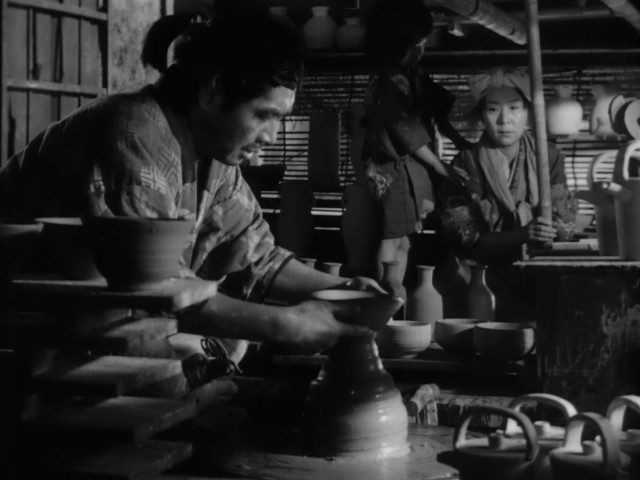
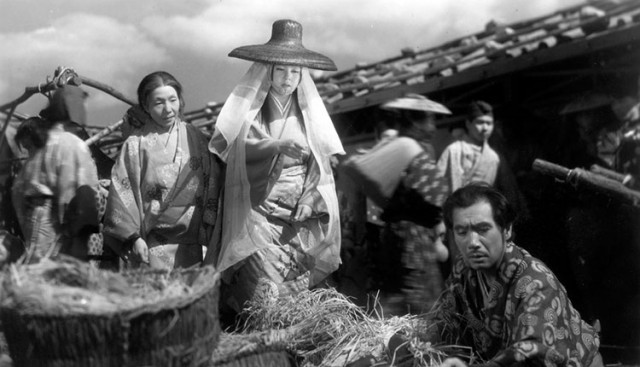
 Film Forum is presenting a new 4K restoration of one of the most important and influential — and greatest — works to ever come from Japan. Winner of the Silver Lion for Best Director at the 1953 Venice Film Festival, Kenji Mizoguchi’s seventy-eighth film, Ugetsu, is a dazzling masterpiece steeped in Japanese storytelling tradition, especially ghost lore. Based on two tales by Ueda Akinari and Guy de Maupassant’s “How He Got the Legion of Honor,” Ugetsu unfolds like a scroll painting beginning with the credits, which run over artworks of nature scenes while Fumio Hayasaka’s urgent score starts setting the mood, and continues into the first three shots, pans of the vast countryside leading to Genjurō (Masayuki Mori) loading his cart to sell his pottery in nearby Nagahama, helped by his wife, Miyagi (Kinuyo Tanaka), clutching their small child, Genichi (Ikio Sawamura). Miyagi’s assistant, Tōbei (Sakae Ozawa), insists on coming along, despite the protestations of his nagging wife, Ohama (Mitsuko Mito), as he is determined to become a samurai even though he is more of a hapless fool. “I need to sell all this before the fighting starts,” Genjurō tells Miyagi, referring to a civil war that is making its way through the land. Tōbei adds, “I swear by the god of war: I’m tired of being poor.” After unexpected success with his wares, Genjurō furiously makes more pottery to sell at another market even as the soldiers are approaching and the rest of the villagers run for their lives. At the second market, an elegant woman, Lady Wakasa (Machiko Kyō), and her nurse, Ukon (Kikue Mōri), ask him to bring a large amount of his merchandise to their mansion. Once he gets there, Lady Wakasa seduces him, and soon Genjurō, Miyagi, Genichi, Tōbei, and Ohama are facing very different fates.