Tag Archives: film forum

I AM CUBA

I Am Cuba

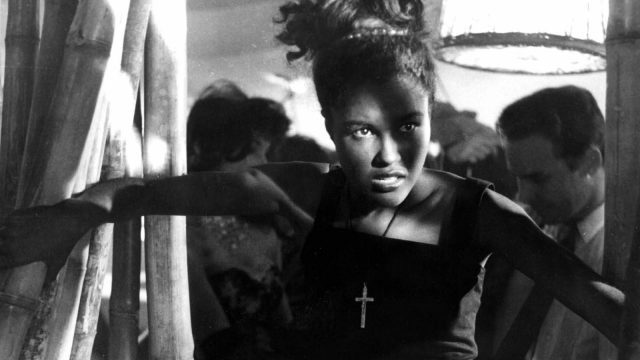
A reluctant prostitute named Maria is unhappy to have to deal with American gamblers in Mikhail Kalatozov’s I Am Cuba

I AM CUBA (SOY CUBA) (Mikhail Kalatozov, 1964)
Film Forum
209 West Houston St.
February 15-21
212-727-8110
filmforum.org

The Revivals section of last year’s New York Film Festival included a rare screening of Mikhail Kalatozov’s 1964 political epic, I Am Cuba, in a 4K restoration from Milestone. It’s now back for a one-week run beginning at Film Forum on February 15. In the early 1960s, the Soviet Union wanted to cement its hold on Cuba and celebrate its new Communist regime by making a propaganda film celebrating the Cuban Revolution and the end of Fulgencio Batista’s dictatorial reign. The Soviets actually disowned the result, considering it too arty and inaccessible for their needs. But it’s quite a film, a lavishly photographed black-and-white gem that was championed by Martin Scorsese and Francis Ford Coppola when it was resurrected at the Telluride Film Festival in 1992.
I Am Cuba

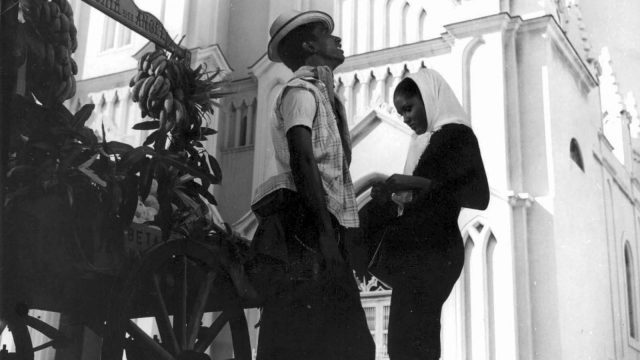
The 4K restoration of I Am Cuba comes to Film Forum February 15-21

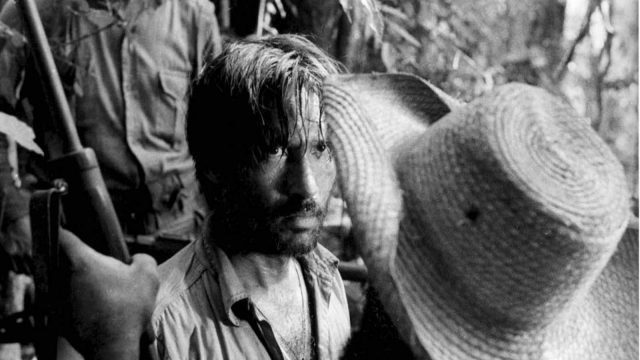
I Am Cuba is divided into four sections that tell the story of the nation from different points of view. The film opens in a casino where American men degrade Cuban prostitutes; one of the men demands to see the home of one of the women, Maria, so he trudges with her through a poverty-stricken region and meets an unexpected man. Next, Pedro, a tenant farmer, is told that the land he has been working for decades has been sold to the American company United Fruit, so he takes dire action while protecting his family. (“I used to think the most terrifying thing in life is death,” he says. “Now I know the most terrifying thing in life is life.”) In the third story, a university student named Enrique is overeager to get involved in a campus rebellion, especially after saving a young woman from drunk American soldiers and witnessing a cold-blooded shooting by the police. The final part deals with a pacifist villager named Mariano who is being goaded by a soldier to join the military fight for freedom.
I Am Cuba

A pacifist would rather stay home than fight in I Am Cuba

I Am Cuba is one of the most visually stunning films ever made. Kalatozov and cinematographer Sergei Urusevsky, who had previously collaborated on the extraordinary Palme d’Or winner The Cranes Are Flying, create breathtaking tracking shots from virtually impossible angles, high in the air and underwater, assisted by camera operator Alexander Calzatti, who was practically a stuntman to achieve whatever was necessary. A joint production of the Soviet company Mosfilm and the new Cuban Institute of Cinematographic Art and Industry, the film was written by Soviet poet and novelist Yevgeny Yevtushenko and Cuban director and writer Enrique Pineda Barnet and features interstitial narration by Havana-born actress Raquel Revuelta as the voice of the nation. “Is this a happy picture?” she asks. “Don’t avert your eyes. Look! I am Cuba. For you, I am the casino, the bar, the hotels. But the hands of these children and old people are also me.” Later she encourages her citizenry to take up arms, softly stating, “I am Cuba. Your hands have gotten used to farming tools. But now a rifle is in your hands. You are not shooting to kill. You are firing at the past. You are firing to protect your future.” The film, of course, takes on added relevance today given the US government’s relationship with Cuba and the death of Fidel Castro in November 2016; there are also scenes that seem to prefigure the coming civil rights and peace movements in the US that occurred after the film was made. [Note: The 6:40 screening on February 15 will be introduced by Amy Heller and Dennis Doros of Milestone Films.]

FAR-OUT IN THE 70s — A NEW WAVE OF COMEDY, 1969–1979: LITTLE MURDERS

LITTLE MURDERS

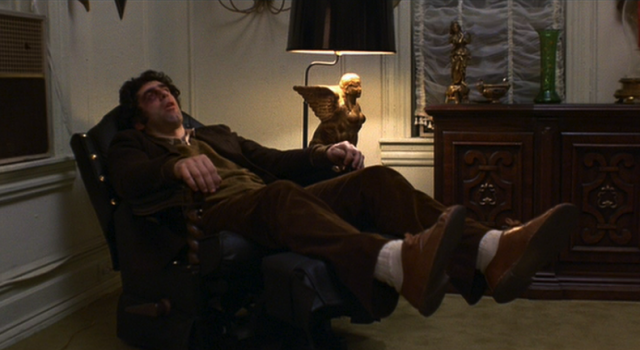
Alfred Chamberlain (Elliott Gould) takes a break in Alan Arkin’s Little Murders

LITTLE MURDERS (Alan Arkin, 1971)
Film Forum
209 West Houston St.
Thursday, January 31, 4:20
Friday, February 1 2:40, 7:00
Series runs through February 14
212-727-8110
filmforum.org

Alan Arkin’s directorial debut is a hysterically absurdist foray into the urban paranoia that haunted a lawless New York City in the late 1960s and 1970s. Based on Jules Feiffer’s first play, which was a Broadway flop in 1969 but became a hit in London and off Broadway, Little Murders centers on the offbeat relationship between the determined and domineering Patsy Newquist (Marcia Rodd) and the calm, easygoing Alfred Chamberlain (Elliott Gould). They first meet when Patsy tries to save him from getting beaten up yet again by a group of thugs, but he doesn’t want any help; he never fights back, instead letting them tire themselves out. A former successful commercial photographer, Alfred now spends his time taking artistic pictures of feces he finds on the filthy streets. He and Patsy sort of start dating, but Alfred, who regularly says, “I don’t know what love is,” is too passive for Patsy, who makes it her project to mold him into a stronger man, as if he were one of her interior design projects. The black comedy reaches new heights when Alfred meets Patsy’s rather eccentric family, played by the three actors who originated the roles on the stage. Vincent Gardenia is her high-strung father who laments what has become of the city, Elizabeth Wilson is her prim and proper mother who only sees what she wants to see, and Jon Korkes is deliciously funny as her crazy brother, who finds humor in just about everything. Meanwhile, wherever Patsy goes, a heavy-breathing phone caller follows.
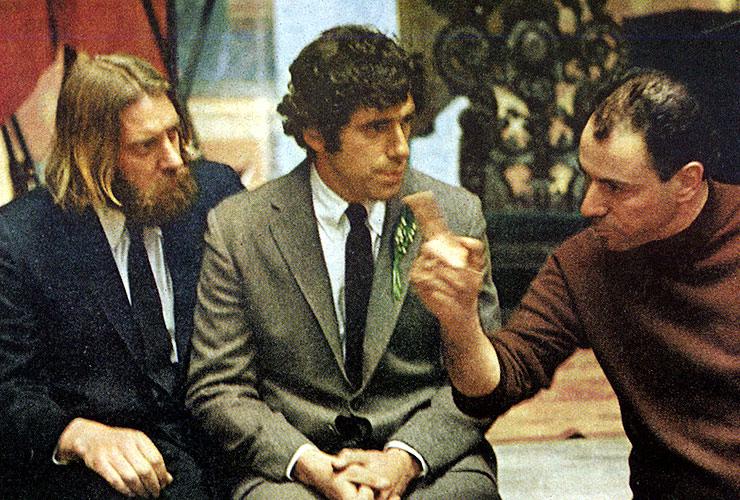
Donald Sutherland, Elliott Gould, and Alan Arkin discuss the wacky wedding scene in LITTLE MURDERS

Donald Sutherland, Elliott Gould, and Alan Arkin discuss the wacky wedding scene in Little Murders

Little Murders is one of the great unsung films of the 1970s, a wickedly funny, at times manic examination of love, fear, family, faith, and violence. The story is highlighted by several riotous monologues about the state of the world, including an epic rant delivered by Lou Jacobi as an angry judge and an oddball hippie speech by Donald Sutherland (Gould’s M*A*S*H costar) as an alternative minister. Arkin also appears as Lt. Practice, a cop stuttering about how many unsolved murders there have been in the past six months. The film is shot in a beautifully subdued, lurid palette by Gordon Willis, who photographed such other seminal New York–set ’70s pics as The Landlord, Klute, The Godfather I and II, Annie Hall, and Manhattan. A genuine underground cult classic, Little Murders is screening January 31 and February 1 in the Film Forum series “Far-Out in the 70s: A New Wave of Comedy, 1969–1979,” which continues through February 14 with such other period comedies as Hal Ashby’s Being There, Milos Forman’s Taking Off, a double feature of Art Carney in The Late Show and Harry and Tonto, and Brian De Palma’s Hi, Mom! in addition to The Landlord and a double feature of Annie Hall and Manhattan.

THE CONTENDERS 2018: MONROVIA, INDIANA

Monrovia, Indiana

Frederick Wiseman heads to the Midwest for latest documentary, Monrovia, Indiana

MONROVIA, INDIANA (Frederick Wiseman, 2018)
MoMA Film, Museum of Modern Art
11 West 53rd St. between Fifth & Sixth Aves.
Wednesday, November 21, 7:00
Series runs through January 8
212-708-9400
www.moma.org
www.zipporah.com

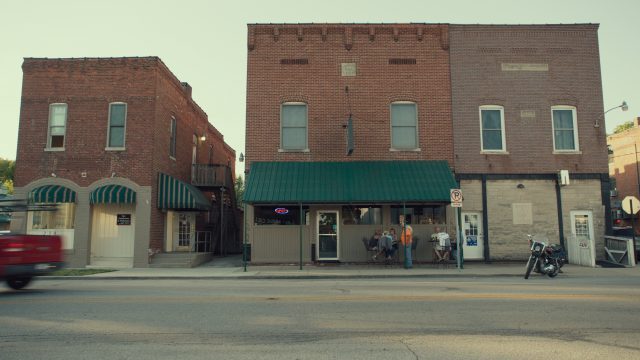
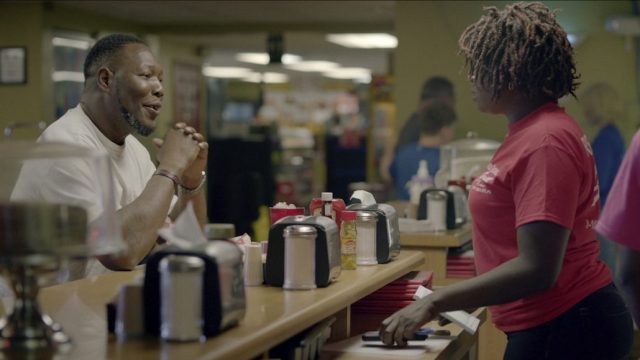
Master documentarian Frederick Wiseman shows a compelling slice of Middle American life in his forty-third film, Monrovia, Indiana, screening November 21 at 7:00 in MoMA’s annual series “The Contenders,” consisting of works the museum believes will last the test of time. Wiseman, who will turn eighty-nine on New Year’s Day, directed, edited, produced, and did the sound for the 143-minute documentary, gorgeously photographed by John Davey. The camera makes its way around the small town, showing zoning discussions at a town council meeting, an award given out by the Freemasons to one of its members, a trio of old men in a café comparing maladies, a high school teacher talking about the importance of sports, people getting their hair cut, women in an exercise class, employees at a pizza place making a special item, and pigs being rounded up into a truck. Wiseman goes to the local market, a farm equipment auction, the church, a fair, a veterinary office, the high school gym, and a gun shop, all shot with natural sound and light. In between are beautiful, short scenes of streets, farms, and buildings, with no voice-over narration or informational text. However, even in this age of Trump, with an ever-growing disparity between the two coasts and the rust and Bible belts, politics never enters the film, which instead focuses on genuine humanity and day-to-day existence.

“I thought a film about a small farming community in the Midwest would be a good addition to the series I have been doing on contemporary American life,” the Boston-born Wiseman, whose previous films include Titicut Follies, High School, Central Park, Ex Libris — The New York Public Library, and Boxing Gym, explains in his director’s statement. “Monrovia, Indiana, appealed to me because of its size (1,063 residents), location (I have never shot a film in the rural Midwest), and the shared cultural and religious interests within the community. During the nine weeks of filming, the residents of Monrovia were helpful, friendly, and welcoming and gave me access to all aspects of daily life. Life in big American cities on the East and West Coasts is regularly reported on and I was interested in learning more about life in small-town America and sharing my view.” And that’s exactly what the film, which is also showing at Film Forum through November 22, is, a helpful, friendly, and welcoming document of small-town America in the twenty-first century. “The Contenders” continues through January 8 with such other 2018 films as Spike Lee’s BlacKKKLansman (followed by a discussion with Lee), Paul Dano’s Wildlife (followed by a discussion with Dano, cowriter Zoe Kazan, and actors Carey Mulligan and Jake Gyllenhaal), Paul Schrader’s First Reformed (followed by a discussion with Shrader and Ethan Hawke), and John Krasinski’s A Quiet Place (followed by a discussion with Krasinski).

LIFE AND NOTHING MORE

Life and Nothing More

Robert (Robert Williams) attempts to charm Regina (Regina Williams) in Life and Nothing More

LIFE AND NOTHING MORE (Antonio Méndez Esparza, 2017)
Film Forum
209 West Houston St.
Through Tuesday, November 6
212-727-8110
filmforum.org
www.cafilm.org/lanm

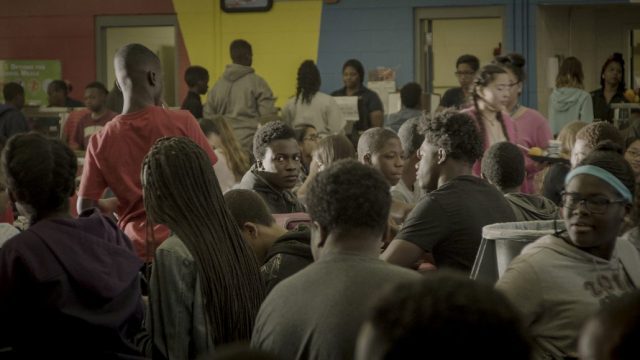
Antonio Méndez Esparza’s follow-up to his debut, Aquí y Allá, is a sensitive, beautifully paced film that lives up to its title: Life and Nothing More. Inspired by Italian neorealism, Esparza employs a cinema vérité style to tell the story of Regina (Regina Williams), an African American single mother struggling to get by in Florida. Regina has a delightful three-year-old daughter (Ry’Nesia Chambers) and a quiet, distant fourteen-year-old son, Andrew (Andrew Bleechington), who is starting to get in trouble with the law, hanging around with bad kids and carrying around a knife. Regina works menial minimum-wage jobs to try to keep the family afloat while the father of her children is in prison. Robert (Robert Williams), a newcomer to the town, starts trying to charm her, wanting to take her out, but Regina is suspicious of his intentions, as is Andrew. But when Robert shows the least bit of threatening anger as he and Andrew clash, Regina has some difficult decisions to make, which grow more complicated when other facts come to light.

Life and Nothing More

Fourteen-year-old Andrew (Andrew Bleechington) has trouble connecting in Antonio Méndez Esparza’s Life and Nothing More

Cinematographer Barbu Balasoiu keeps his camera slow and steady as it lingers on scenes with very little or no dialogue, maintaining a tense mood that hovers over the film. As with Aquí y Allá, which was shot in Mexico, most of the actors are nonprofessionals in their first film, which heightens the reality. Regina Williams gives a strong, tenderhearted performance as the mother, a woman dedicated to making a better life for her children but continually runs into roadblocks beyond her control. Writer-director Esparza often focuses on her eyes as she watches events unfold, saying nothing but wanting to fight back more and more without risking the safety of her family. The film also smartly explores the incarceration gap between blacks and white without getting overtly political. Robert Williams (no relation) is engaging, with just the right hint of mystery and possible danger, while Bleechington reveals much with very few words, a boy who just can’t seem to say or do the right thing (when he speaks at all). Winner of awards at film festival around the world in addition to the Independent Spirit John Cassavetes Award, Life and Nothing More is an honest, nuanced look at race and class in twenty-first-century America, an intelligent and heartbreaking depiction of what life is like for so many people today.

THE COMPLETE JEAN VIGO: L’ATALANTE

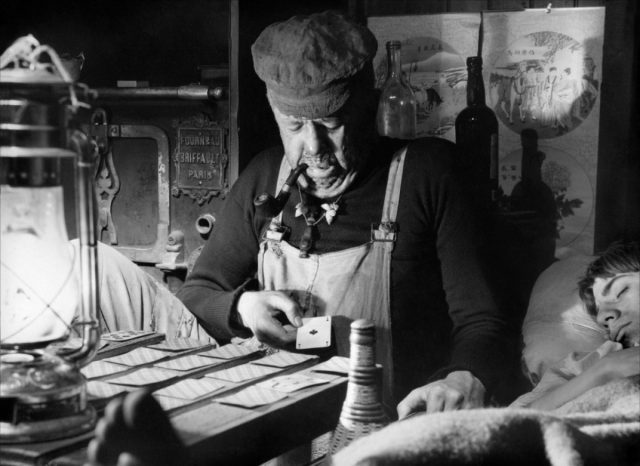
Michel Simon has loads of fun as a somewhat decrepit first mate in Jean Vigo’s classic L’Atalante

Michel Simon has loads of fun as a somewhat decrepit first mate in Jean Vigo’s classic L’Atalante

L’ATALANTE (Jean Vigo, 1934)
Film Forum
209 West Houston St.
September 21 – October 2
212-727-8110
filmforum.org

French auteur Jean Vigo made only three shorts and one feature before his death from tuberculosis and leukemia in 1934 at the age of twenty-nine, but his wide-ranging legacy continues. Film Forum pays tribute to his lasting influence on cinema with “The Complete Jean Vigo,” new 4K restorations of all of his works in addition to a new bonus. In Vigo’s fourth and final film, L’Atalante, his only feature, Swiss actor Michel Simon is spectacularly hilarious as an aging, somewhat decrepit first mate with a peculiar lust for life and cats. After barge captain Jean (Jean Dasté) and Juliette (Dita Parlo) get married in her small, tight-knit country town, they head for the big city of Paris on the long boat, L’Atalante, that he captains as his job. First mate Père Jules (Simon) and his young cabin boy (Louis Lefebvre) come along for the would-be honeymoon, attempting to make sure it’s a smooth ride, which of course it’s not. Juliette wants to enjoy the Parisian nightlife, Jean is a jealous, overprotective stick-in-the-mud, and Père Jules — well, Père Jules is downright unpredictable, pretty much all id, living life footloose and fancy free even if he doesn’t have much money or many true friends. When a love-struck bicycle-riding peddler (Gilles Margaritis) tries to woo Juliette, Jean grows angry, and an emotional and psychological battle ensues. But through it all, Père Jules just keeps on keepin’ on, never getting too concerned, confident that everything will work out in the end, because that’s what happens in life.

Film Forum honors Jean Vigo with 4K restorations of all four of his works, along with a bonus

Film Forum honors Jean Vigo with 4K restorations of all four of his works, along with a bonus

The son of anarchist Miguel Almereyda, who chose his last name because it is an anagram of the French phrase for “there is shit,” Vigo had been labeled a subversive for his first film, the twenty-five-minute À propos de Nice, and his third, the forty-one-minute Zéro de conduite (Zero for Conduct), had been banned. So he went a little more conventional, at least for him, with L’Atalante, rewriting with Albert Riéra an original script by Jean Guinée. The film is an insightful tale of love and romance, of wealth and poverty, of hard social conditions, focusing on a wacky man who has experienced a lot in his life, even though he looks like a bum, reminiscent of Simon’s brilliant portrayal of Priape in Jean Renoir’s Boudu Saved from Drowning. Whether putting on a puppet show, displaying his tattoos, getting his fortune read, or walking around with cats on his shoulders, Père Jules is one of the most endearing and memorable characters in the history of cinema, a unique figure who surprises over and over again, and Simon’s portrayal is just amazing; it’s hard to believe that he was only thirty-nine when he made the picture.

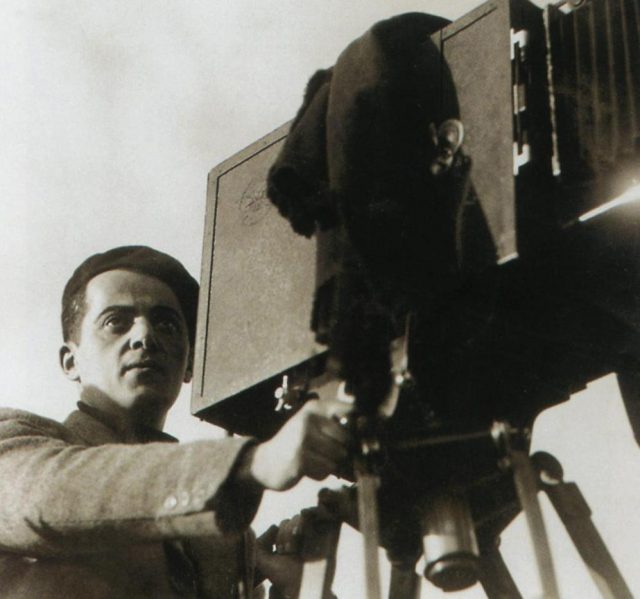
The highly poetic film, featuring a lovely score by Maurice Jaubert, also echoes F. W. Murnau’s Sunrise: A Song of Two Humans, only from a comic, often slapstick angle. After shooting was completed, Vigo’s already failing health took a turn for the worse, and a battle ensued over final cut involving the producers and editor Louis Chavance and cinematographer Boris Kaufman (Dziga Vertov’s brother, who went on to shoot such American classics as On the Waterfront and 12 Angry Men). Vigo died only a few weeks after L’Atalante was released. Film Forum is showing the restored director’s cut of L’Atalante from September 21 to October 2, along with “Vigo x 3,” consisting of À propos de Nice, the short documentary Jean Taris, and the restored director’s cut of Zéro de conduite. In addition, on September 30, Film Forum is screening Tournage d’hiver (Winter Shooting), a 2017 compilation of rushes and outtakes from L’Atalante and Zéro de conduite, narrated by film critic and historian Bernard Eisenschitz, who oversaw the restoration of L’Atalante.

GARRY WINOGRAND: ALL THINGS ARE PHOTOGRAPHABLE

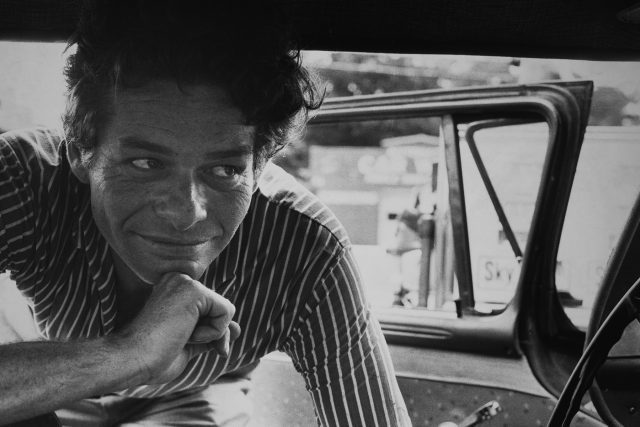
Portrait of Garry Winogrand. Credit: Judy Teller

New documentary paints a fascinating portrait of street photographer Garry Winogrand (photo by Judy Teller)

GARRY WINOGRAND: ALL THINGS ARE PHOTOGRAPHABLE (Sasha Waters Freyer, 2018)
Film Forum
209 West Houston St.
Opens Wednesday, September 19
212-727-8110
www.winograndmovie.com
filmforum.org

There’s an intrinsic challenge about making a documentary about a photographer: How to portray the artist’s work, silent, still pictures of a moment in time, in a medium based on sound and movement. In Garry Winogrand: All Things Are Photographable, producer, director, and editor Sasha Waters Freyer attacks that issue by delving deep into many of Winogrand’s photographs, lingering on them as friends, relatives, and colleagues rave about his glorious images. “Well, what is a photograph? I’ll tell you what a photograph is. It’s the illusion of a literal description of how a camera saw a piece of time in space,” Winogrand said in a 1975 lecture at the University of Texas Austin, later adding, “All it is is light on surface.” Of course, in Winogrand’s case, it is much more than that; the black-and-white pictures he took with his trusted Leica M4 inhale and exhale at the exciting pace of real life. “It’s this observation of human behavior, of human activity, human gesture, the relationships between people, whether they know each other or not, how we behave in the world,” curator Susan Kismaric says. Writer Geoff Dyer calls Winogrand’s work a “psychogestural ballet,” while photographer Matt Stuart looks at photo after photo, pointing out “the dance” in each one. “When things move, I get interested. I know that much,” Winogrand, who passed away in 1984 at the age of fifty-six, says in his gruff voice. “He had no ambition for fame or celebrity. He was totally obsessed and possessed by photography,” his good friend, photographer Tod Papageorge, says. “It was work work work work work.”

New York, 1968 [laughing woman with ice cream] Photographs by Garry Winogrand, Collection Center for Creative Photography, The University of Arizona. © The Estate of Garry Winogrand, courtesy of Fraenkel Gallery, San Francisco.

“New York, 1968” [laughing woman with ice cream] (photographs by Garry Winogrand, Collection Center for Creative Photography, the University of Arizona. © The Estate of Garry Winogrand, courtesy of Fraenkel Gallery, San Francisco)

Freyer traces the life of “a city hick from the Bronx,” from his boyhood, when he had polio, through three marriages and three children, from his fear of nuclear war to his love of the female form, from the streets of New York City to California and Texas. She weaves in audio and video from lectures and interviews, filmed and taped conversations with photographer Jay Maisel, and photos and home movies of Winogrand and his family. Freyer speaks with photographers Thomas Roma, Jeffrey Henson Scales, Leo Rubinfien, Laurie Simmons, and Michael Ernest Sweet, curator Erin O’Toole, gallery owner Jeffrey Fraenkel (who compares Winogrand to Norman Mailer), Mad Men creator Matthew Weiner, historian and critic Shelley Rice, and two of Winogrand’s ex-wives, Adrienne Lubeau and Judy Teller. There are also extensive quotes from legendary MoMA photography curator John Szarkowski. The film explores several turning points in his career, both good and bad, including the “New Documents” show with Lee Friedlander and Diane Arbus; his seminal work in 1964; “The Animals,” a series shot at the Central Park Zoo, where he would go with his kids; his color work; Public Relations, in which he examined the role and effect of the mass media; and his controversial Women Are Beautiful book, which was labeled as sexist and misogynistic.

Influenced by such photographers as Robert Frank, Walker Evans, and Dan Weiner, Winogrand could not stop taking pictures. He took so many — the thought of his working in the digital age is both thrilling and frightening — that he didn’t even develop thousands of rolls, leaving behind a treasure trove of material that Roma explains was misinterpreted by critics. “I would like not to exist,” Winogrand said. It’s a good thing for the rest of us that he did, sharing his unique view of the world, incorporating the chaos of his personal life into his remarkable pictures. Garry Winogrand: All Things Are Photographable, which features original music by Winogrand’s son, Ethan, and animation by Kelly Gallagher, opens September 19 at Film Forum, with Freyer participating in Q&As following the 7:00 shows on September 19 and 21. In her director’s statement, the Brooklyn-born Freyer writes, “In looking at Winogrand in all his multidimensional human complexity, I take aim at the ‘bad dad’ and ‘bad husband’ tropes in artist biography, seeking to undermine these as sources of triumph or artistic necessity. Winogrand was an artist whose rise and fall — from the 1950s to the mid-1980s — in acclaim mirrors not only that of American power and credibility in the second half of the twentieth century but also a vision of American masculinity whose limitations, toxicity, and inheritance we still struggle, culturally, to comprehend. The film ultimately invites a deeper consideration of Winogrand not only as a ‘man of his time,’ in the words of MoMA photography curator Susan Kismaric, but also as a man struggling to define himself simultaneously as an artist and a parent (as so many of us do).”

HIP HOP ON FILM 1979-1986: STATIONS OF THE ELEVATED

STATIONS OF THE ELEVATED

Cult subway graffiti film Stations of the Elevated is part of hip-hop series at Film Forum

STATIONS OF THE ELEVATED (Manfred Kirchheimer, 1981)
Film Forum
209 West Houston St.
Thursday, September 20, 8:50
Series runs through October 20
212-727-8110
filmforum.org

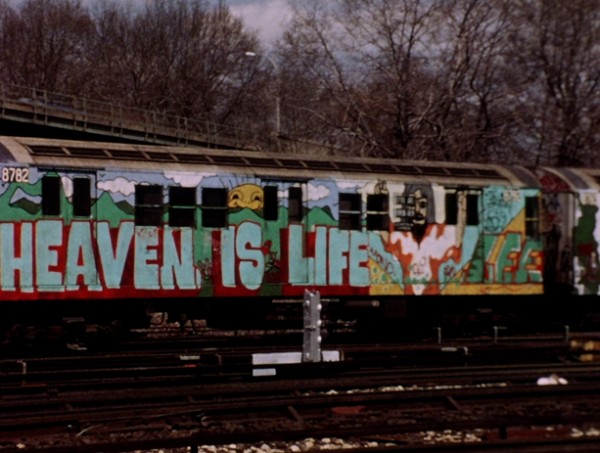
In October 2014, thirty-three years after screening at the New York Film Festival, Manfred Kirchheimer’s Stations of the Elevated finally got its official U.S. theatrical release, in a gorgeous restoration that was shown at BAMcinématek and will be presented this week at Film Forum. In 1977, Manfred Kirchheimer, whose family escaped Nazi Germany in 1936, went to the Bronx and filmed graffiti-covered subway cars at the train depot and rushing across the elevated tracks, kids playing in a burned-out housing project, and giant billboards advertising hamburgers, cigarettes, alcohol, and suntan lotion. Shot on 16mm reversal stock, Stations of the Elevated is more than just a captivating document of a bygone era; it is a deeply poetic socioeconomic journey into class, race, art, and freedom of expression, told without a single word of narration or onscreen text. Instead, producer, director, editor, and photographer Kirchheimer (Colossus on the River, Bridge High with Walter Hess) shifts from the natural sound of the environment to a superb jazz score by Charles Mingus while cutting between shots of trains covered in tags and illustrations (and such phrases as “Heaven Is Life,” “Invasion of the Earth,” “Never Die,” and “Earth Is Hell”) by such seminal figures as Blade, Daze, Lee, Pusher, Shadow, and Slave and views of colorful billboards filmed peeking through the geometric architecture of the elevated railways and set against bright blue skies. Most often, the camera focuses on the painted eyes in the ads, looking right back at the viewer as they dominate the scene, evoking the optician’s ad in that famous novel of American class, The Great Gatsby. (The concentration on the eyes also predicts how Madison Ave. was watching the graffiti movement, eventually coopting the imagery into mainstream advertising.) Through this dichotomy of meaning and execution, Kirchheimer reveals similarities in artistic styles and how the elements influenced each other; a particularly telling moment occurs when a man is shown hand painting a billboard who could have just as well been spray painting a subway car.

Kirchheimer remains outside during the course of the forty-five-minute documentary, never venturing into the tunnels, capturing the elevated train lines as if they’re just another part of New York City architecture, which of course they are. And it’s especially powerful because it was made at a time when the city was in the midst of a severe economic crisis and rampant crime epidemic, as Mayor Koch sought to eliminate the scourge of graffiti, while Kirchheimer celebrates its beauty (and New York-ness) in this glorious little film. Stations of the Elevated, which elevates the station of subway graffiti artistry with an entrancing calmness, is screening September 20 at 8:50 in the Film Forum series “Hip Hop on Film 1979-1986” and will be followed by a Q&A with Kirchheimer and a live graffiti presentation by David “CHINO” Villorente. The series continues through October 20 with such other hip hop gems as Beat Street, featuring DJ Jazzy Jay, Kool Herc, Grandmaster Melle Mel, and Rae Dawn Chong, and the genre classic Wild Style, with director Charlie Ahearn participating in a Q&A after the 8:15 show on September 27.