Tag Archives: brooklyn academy of music

KRAPP’S LAST TAPE

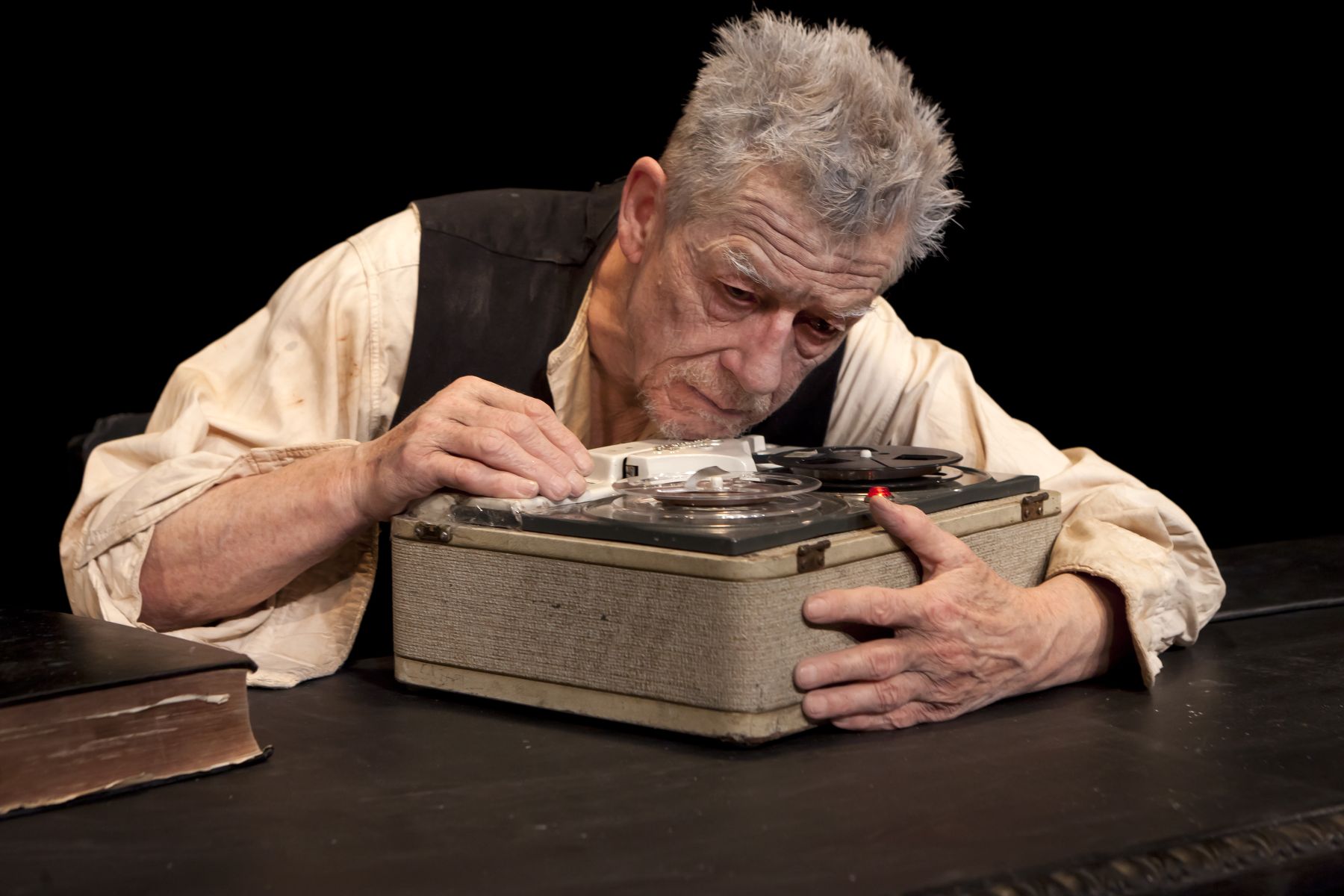
John Hurt listens to his past in KRAPP’S LAST TAPE, running at BAM through December 18 (photo by Richard Termine)

NEXT WAVE FESTIVAL
Brooklyn Academy of Music
BAM Harvey Theater
651 Fulton St. between Ashland & Rockwell Pl.
Through December 18, $25-$90
718-636-4100
www.bam.org

Originally written in 1958 for British actor Patrick Magee, Samuel Beckett’s autobiographical Krapp’s Last Tape is a haunting examination of time, memory, and the futility of language. Performed over the years by the likes of Magee, Harold Pinter, Brian Dennehy, and Michael Gambon, the fifty-five-minute one-act is perhaps most closely identified today with John Hurt, who first appeared in the play at Dublin’s Gate Theatre in 1999, starred in Atom Egoyan’s 2001 film version, and is now giving a bravura command performance at BAM through December 18. Making his New York stage debut, Hurt (Midnight Express, 10 Rillington Place) plays a failed writer named Krapp who, when first seen, is sitting at a table in silence, an old lamp dangling overhead. He says nothing for several minutes and then eventually gets up, walks around in squeaky white shoes, consumes two bananas, slips on a peel he dropped on the floor, and carefully approaches the darkness on either side of him, deciding not to venture out of the lighted area, as if something unknown and dangerous awaits outside his very private, solitary comfort zone. It is a critical moment in the play, establishing the precipice of life and death that Krapp is balancing on while also reminding the audience that this is a staged production. As he does every year on his birthday, Krapp listens to reel-to-reel recordings of messages he left on previous birthdays and makes a new one; in this case, the sixty-nine-year-old shabbily dressed man is looking for the tape he made on his thirty-ninth, which, according to his dusty old ledger, can be found in “box five, spool three.” Krapp takes delight in drawing out the word spool like he is a child. As he listens to his old self discuss the past, present, and future as he saw it thirty years before, he starts and stops the tape, remembering some moments that elicit strong emotions while clearly having no memory of others, the fractured narrative tantalizing and teasing the audience. “Thirty-nine today,” the recorded Krapp says. “Sound as a bell.” But alas, the sixty-nine-year-old Krapp is not sound as a bell, with little but death to look forward to.

Director Michael Colgan and lighting designer James McConnell have placed Krapp in a masterfully minimalist black-and-white world, surrounded by darkness, the only colors the yellow of the bananas and the green in Krapp’s description of a former love’s coat. Hurt, now seventy-one, is a less angry, more fragile and perhaps desperate Krapp than he portrayed in previous versions, cupping his ear tighter as he leans his head to hear the tape, shuffling to the back — through a minefield of his past, the boxes of tapes strewn across the floor — to steal a drink, staring straight ahead, wondering what happened to the ambitious youth he once was. (He even resembles Beckett himself this time around.) Krapp’s Last Tape is an extraordinarily complex work that delves deep into the human psyche, a challenge for both the actor and the audience, a play that will stay with you for a long time, eliciting thoughts of where you’ve been, who you are, and what awaits you in the future. Hurt will participate in a post-show artist talk on December 15; in addition, BAMcinématek will be highlighting four of the British actor’s best films in “John Hurt Quartet,” including The Elephant Man (David Lynch, 1980) on December 12, Scandal (Michael Caton-Jones, 1989) on December 13 (followed by a Q&A with Hurt), Love and Death on Long Island (Richard Kwietniowski, 1997) on December 14, and Nineteen Eighty-Four (Michael Radford, 1984) on December 15.

JOHN JASPERSE: CANYON

John Jasperse’s CANYON should delight audiences at BAM this week

NEXT WAVE FESTIVAL
Brooklyn Academy of Music
BAM Harvey Theater
651 Fulton St. between Ashland & Rockwell Pl.
November 16-19, $16-$45, 7:30
718-636-4100
www.bam.org

In works such as Becky, Jodi and John at Dance Theater Workshop, Truth, Revised Histories, Wishful Thinking, and Flat Out Lies at the Joyce, and Misuse Liable to Prosecution at BAM’s 2007 Next Wave Festival, New York City–based choreographer John Jasperse has shared intimate moments with the audience in creating unusual and often challenging evenings of dance theater. This week Jasperse and his Thin Man Dance company return to BAM to present the New York premiere of Canyon, which deals with “the transformative power of losing oneself in visceral experience.” Running November 16-19, the seventy-minute piece features dancers Lindsay Clark, Erin Cornell, Kennis Hawkins, Burr Johnson, and James McGinn, a live score by Hahn Rowe, visual design by Tony Orrico, and lighting by James Clotfelter. There will be an artist talk with Jasperse and his collaborators following Thursday night’s performance, moderated by Mary-Jane Rubenstein, whose book Strange Wonder: The Closure of Metaphysics and the Opening of Awe influenced the making of Canyon.

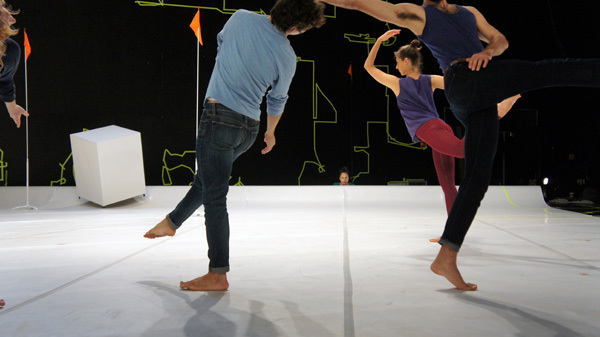
John Jasperse’s CANYON celebrates the thrill of the dance (photo by Tony Orrico)

Updated: Dance does not always have to be about something. In such previous works as Becky, Jodi and John, Truth, Revised Histories, Wishful Thinking, and Flat Out Lies, and Misuse Liable to Prosecution, John Jasperse dealt with a number of themes, from personal relationships and environmentalism to the fine line between fantasy and reality. In his latest evening-length piece, Jasperse eschews high concept in favor of, quite simply, the thrill of the dance. The seventy-minute Canyon puts Jasperse’s breathtaking choreography front and center, a celebration of the joy of movement, with Jasperse, Lindsay Clark, Erin Cornell, Kennis Hawkins, Burr Johnson, and James McGinn running, jumping, twisting, and rolling to an exciting score composed by Hahn Rowe and performed live by Olivia De Prato on violin, Ha-Yang Kim on cello, Doug Wieselman on bass clarinet, and Rowe on violin, guitar, and electronics. Because this is Jasperse, there are odd elements as well, courtesy of visual designer Tony Orrico, that include yellow tape that begins outside on the street and wends its way through the BAM Harvey lobby and bathrooms and into the theater, down the steps, across the stage, and onto the back wall, where they resemble an abstract map. Meanwhile, a large white box continually roams the space, adding to the fun. And what fun it is.

TONEELGROEP AMSTERDAM: CRIES AND WHISPERS

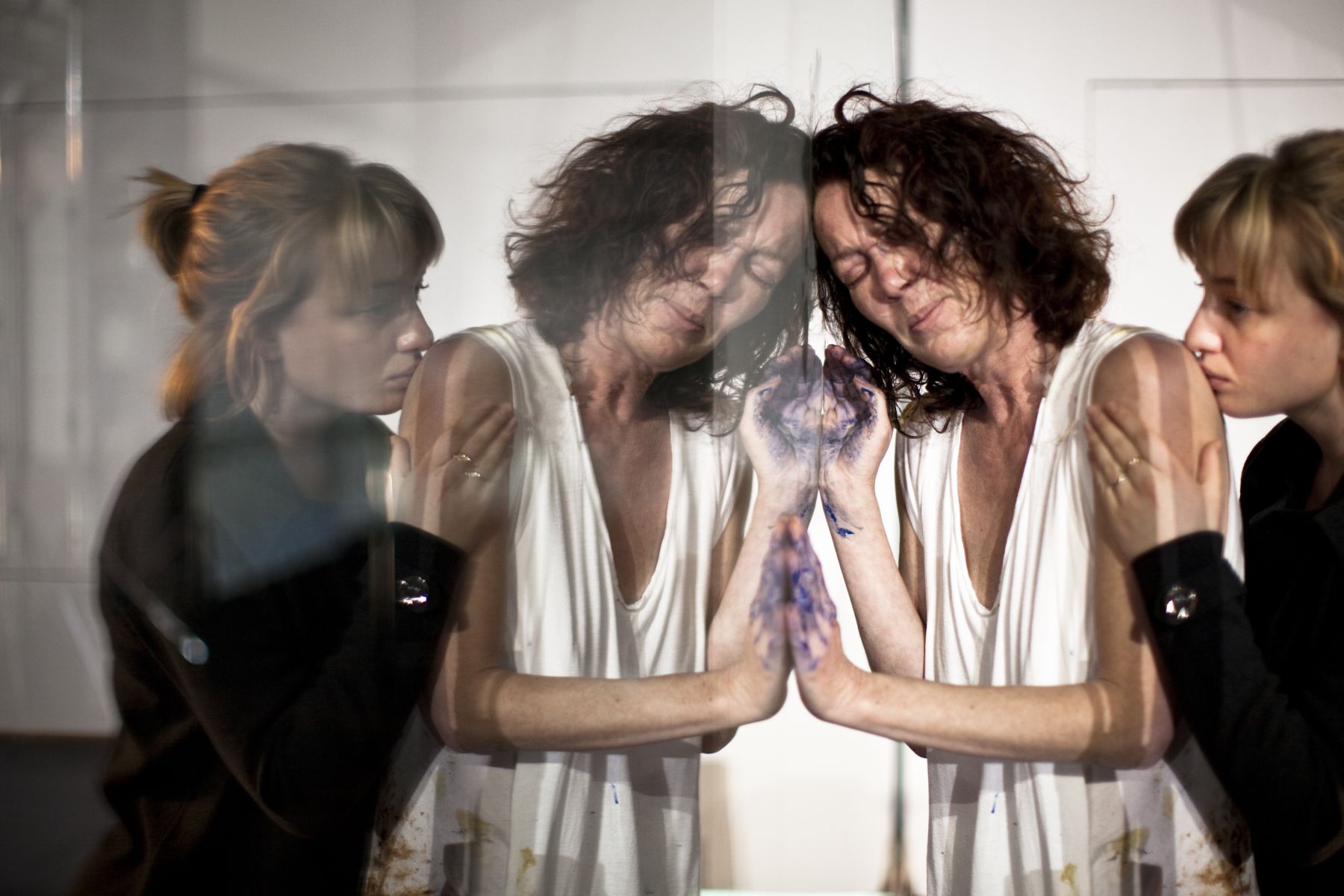
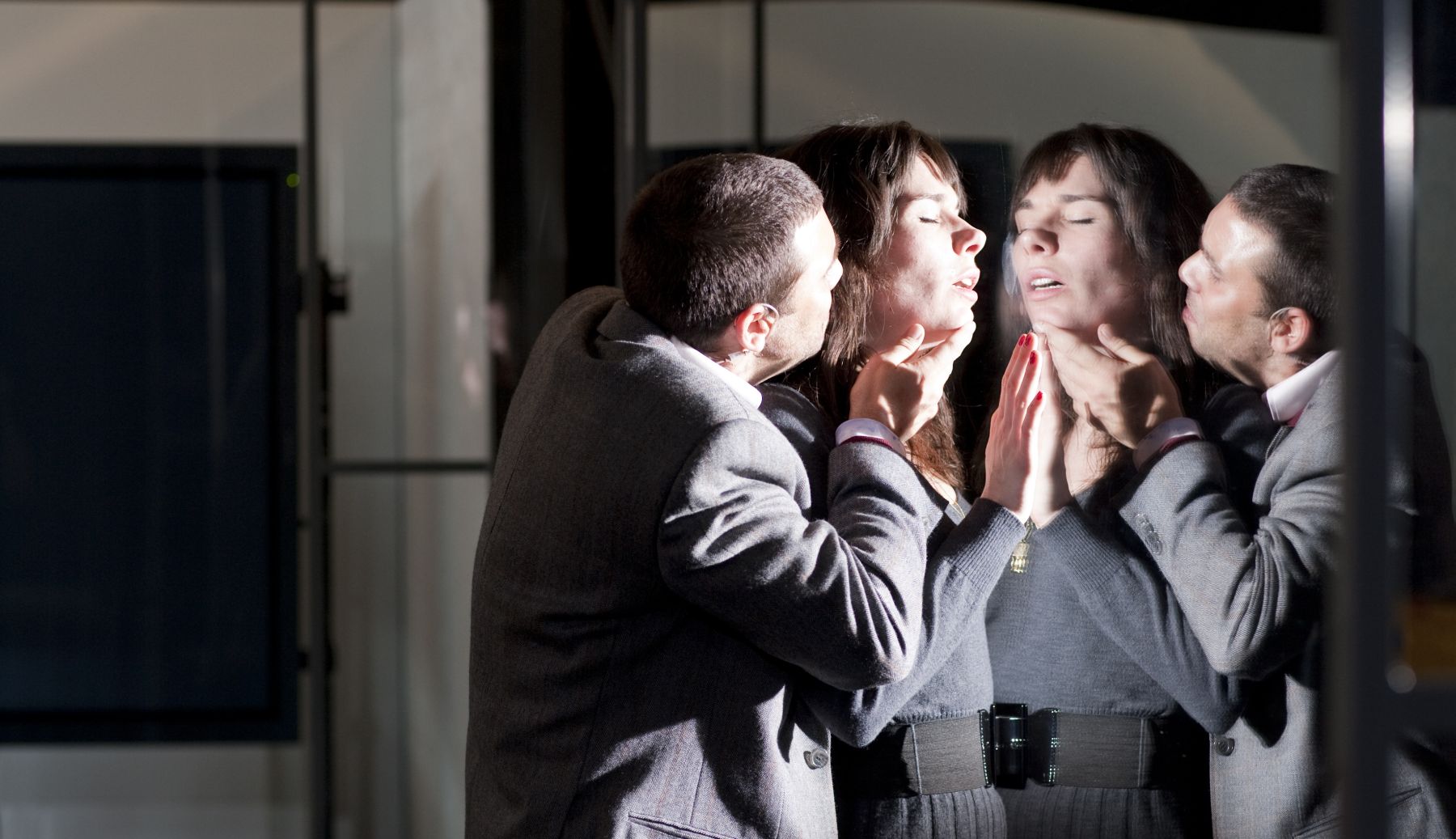
A brave artist’s impending death is the focus of multimedia stage adaptation of Ingmar Bergman’s CRIES AND WHISPERS at BAM (photo by Jan Versweyveld)

Brooklyn Academy of Music
BAM Harvey Theater
651 Fulton St. between Ashland & Rockwell Pl.
October 25-29, $25-$80, 7:30
718-636-4100
www.bam.org
www.tga.nl

The Brooklyn Academy of Music has had a long and fruitful relationship with Swedish director Ingmar Bergman, presenting his films as well as stage productions over the decades. Among the plays Bergman directed at BAM were A Doll’s House, Long Day’s Journey into Night, Miss Julie, The Ghost Sonata, Maria Stuart, and Ghosts, and shortly after his death BAM put together a stellar lineup of actors to read from his diary, including Bibi Andersson, Pernilla August, Lena Olin, and Peter Stormare. BAM and the late auteur continue their collaboration this week with the U.S. premiere of Toneelgroep Amsterdam multimedia adaptation of Bergman’s 1972 intense family drama Cries and Whispers, which starred Harriet Andersson, Kari Sylwan, Ingrid Thulin, and Liv Ullmann. The Dutch company, led by director Ivo van Hove, has previously adapted such cinematic gems as John Cassavetes’s Faces, Husbands, and Opening Night and Luchino Visconti’s Rocco and His Brothers and Ludwig in addition to classic works by Shakespeare, Molière, Williams, Hellman, O’Neill, Ibsen, Chekhov, Pinter, and others. Cries and Whispers features scenography by Jan Versweyveld, dramaturgy by Peter van Kraaij, video design by Tal Yarden, costumes by Wojciech Dziedzic, and sound design by Roeland Fernhout, all coming together for what looks to be an appropriately complex and moving experience.
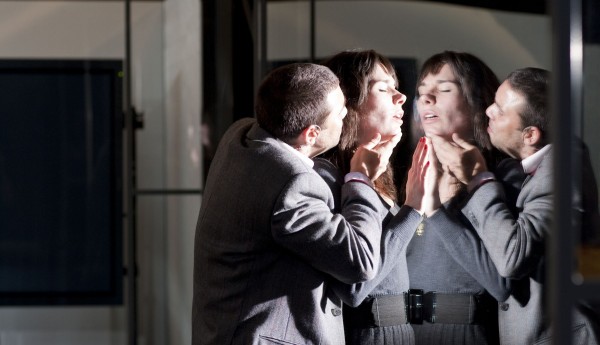
A family faces some harsh truths in CRIES AND WHISPERS (photo by Jan Versweyveld)

Update: Ivo van Hove paints a harrowing, brutal, yet ultimately strangely comforting portrayal of death in Toneelgroep Amsterdam’s intense and, at times, inexplicable Cries and Whispers, running at BAM’s Harvey Theater through October 29. Liberally adapted from Ingmar Bergman’s 1972 film — the company previously staged Bergman’s epic, documentary-like Scenes from a Marriage — this multimedia version turns the protagonist, Agnes (an immensely brave Chris Nietvelt), into a visual artist who is recording her final days, evoking Hannah Wilke’s “Intra-Venus” project. Jan Versweyveld’s stunning set contains mirrors, video screens, television monitors, a drop-down white surrounding wall, reflective glass, and multiple rooms in a mansion where Agnes is being cared for by her sisters, Karin (Janni Goslinga) and Maria (Helina Reijn), and her attending nurse, Anna (Karina Smulders). The pain Agnes feels is physically and emotionally palpable, echoing throughout the theater, especially when she releases an ear-piercing, shattering death howl as an overhead camera swings like a pendulum counting down her last breaths. The twelve silent minutes that follow are mesmerizing — and the show is still barely half over at that point. Although van Hove offers snippets of the other characters’ lives, not enough is learned about them, and there is a heavy dose of nudity, both male and female, that seems titillating but not always necessary. And some viewers might need a stronger stomach when Agnes takes care of some unpleasant bodily functions in plain view. Van Hove has added personal touches to the story, influenced by the death of his own father, who died in 2007, the same year as Bergman. The white color scheme is offset by Agnes’s blue paint and videos, providing a stark contrast that pays homage to Sven Nykvist, who won the Oscar for Best Cinematography for his camerawork on the film version. Van Hove recently told Gothamist that he’ll be back at BAM with an even bigger production for the 2012 Next Wave Festival; we can’t wait to see what he has up his sleeves for that.
JOHN GABRIEL BORKMAN

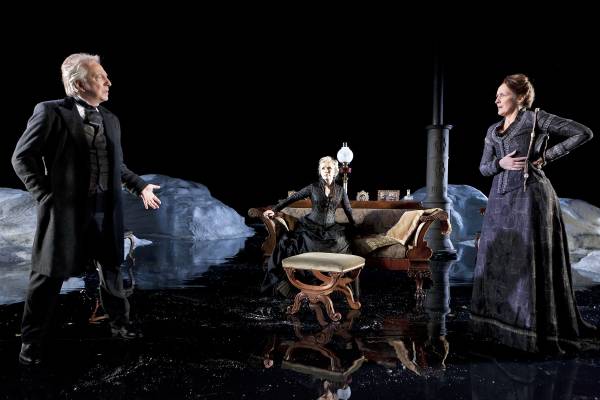
Alan Rickman, Lindsay Duncan, and Fiona Shaw head a stellar production of Ibsen’s JOHN GABRIEL BORKMAN at BAM (photo by Richard Termine)

Brooklyn Academy of Music
BAM Harvey Theater
651 Fulton St.
Through February 6, $25-$80
718-636-4100
www.bam.org

Written in 1896, Henrik Ibsen’s penultimate play, JOHN GABRIEL BORKMAN, feels as fresh and alive as if it were written yesterday. Frank McGuinness’s new English-language version, directed by James Macdonald and first presented at Dublin’s Abbey Theatre this past fall, is currently having its U.S. premiere at BAM’s Harvey Theater, in a splendid production running through February 6. Ibsen’s dark tale of greed, power, and cold, soulless hearts centers on a once-prominent family torn apart by scandal. John Gabriel Borkman (Alan Rickman) was a successful bank manager who ultimately got caught embezzling funds, serving five years in prison before returning home, where he has been pacing in his upstairs cave for eight more years, never seeing his destroyed wife, Gunhild (Fioan Shaw), or his now-grown son, Erhart (Marty Rea). While Borkman is determined to regain his position, refusing to admit his guilt, Gunhild is battling her twin sister, Ella Rentheim (Lindsay Duncan), over Erhart’s love; after Borkman’s arrest, Ella took in Erhart for six years as Gunhild tried to deal with the shame and suddenly having no money. Neither woman is happy that Erhart, in the meantime, has been spending more and more time with the older Fanny Wilton (Cathy Belton), a free-spirited woman whose husband recently left her. Over the course of one very long night, secrets are revealed in a series of dazzling scenes filled with fast-paced dialogue beautifully delivered by the outstanding cast. Set designer Tom Pye has surrounded the stage with large piles of snow, emphasizing the coldness that has taken over the main characters’ hearts. As Ella and Gunhild, both wearing long, mournful black dresses, give one another icy stares, they drag bits of snow into the middle of the sparse room, where chairs are set up by themselves, continuing the physical and psychological isolation, which is furthered by Borkman’s often vacant eyes. As Borkman speaks with his one friend, Vilhelm (John Kavanagh), and teaches piano to Vilhelm’s daughter, Frida (Amy Molloy), upstairs, the grandfather clock in the back can be heard ticking away, counting the seconds till Borkman’s ultimate destiny. Rickman, Duncan, and Shaw so embody their characters that on January 15, when a disturbance was going on in the right front corner of the audience, Rickman calmly announced, still in Borkman’s voice, that the play should be stopped because someone appeared to be ill. After several moments, the sick man was helped out of the theater, and Rickman and Duncan returned to the scene, picking up right where they left off, as if nothing had happened, their fiery passion as palpable as ever. Although McGuinness’s version was written in response to the economic crisis in Ireland, it is impossible not to think of such figures as Bernie Madoff as the Borkmans fight over their despised name, yet JOHN GABRIEL BORKMAN still winds up a timeless, masterful piece of theater. (An Artist Talk with Duncan, Rickman, and Shaw, moderated by Paul Holdengräber, will follow the January 16 performance [$15, 6:45.])

SASHA WALTZ & GUESTS: GEZEITEN

Sasha Waltz returns to BAM with U.S. premiere of GEZEITEN (photo by Gert Weigelt)

Next Wave Festival
BAM Howard Gilman Opera House
30 Lafayette Ave. between Ashland Pl. & St. Felix St.
November 3, 5, 6, $20-$55, 7:30
718-636-4100
www.bam.org
www.sashawaltz.de

Berlin-based choreographer Sasha Waltz returns to BAM’s Next Wave Festival with the U.S. premiere of GEZEITEN (TIDES), following 2002’s KÖRPER, which we called “playful and powerful, enlightening and frightening,” and 2005’s IMPROMPTUS, which we described as “a beautifully expressive piece.” Set in a postapocalyptic world, GEZEITEN incorporates physical objects and smoke and fire as the dancers deal with disaster. The nearly two-hour piece features music by Jonathan Bepler and Johann Sebastian Bach, costumes by Beate Borrmann, lighting by Martin Hauk, and stage design by Waltz and Thomas Schenk. As shown by her previous appearances at BAM, Waltz is a creative choreographer who is not afraid to push the envelope, keeping audiences rapt, never knowing quite what is going to happen next. There are only three performances of GEZEITEN, so don’t miss out on this rare opportunity to see this daring company in Brooklyn.

VOLLMOND (FULL MOON)

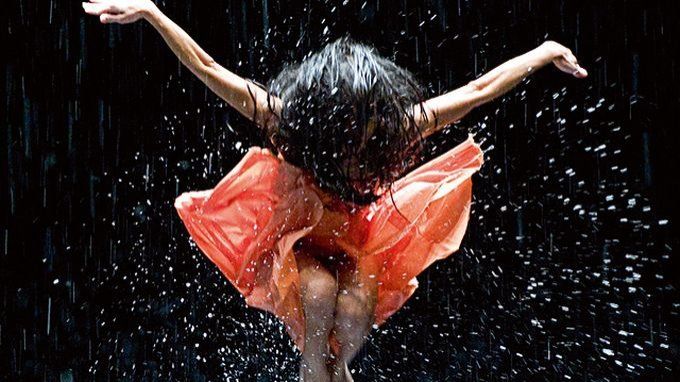
Pina Bausch’s VOLLMOND is a wet and wild experience (photo by Laurent Philippe)

Tanztheater Wuppertal Pina Bausch
BAM Howard Gilman Opera House
30 Lafayette Ave. between Ashland Pl. & St. Felix St.
Through October 9, $25 – $85 (October 1 performance reviewed)
718-636-4100
www.bam.org
www.pina-bausch.de

Returning to BAM for the first time since the sudden death of their founder and artistic director, Pina Bausch, in June 2009, Tanztheater Wuppertal is dazzling audiences in Brooklyn with the U.S. premiere of the 2006 evening-length piece VOLLMOND (FULL MOON). A large rock sits alone on a sparse black stage above a shallow, barely visible river of water. The first half of the 150-minute show is an utter delight as the twelve-member company enacts vignettes of love, romance, and the playful battle between the sexes, the men dressed in dark pants and button-down shirts, the women in elegant evening gowns and high heels. They flirt, kiss, and tell jokes, occasionally giving way to sparkling solos by the diminutive Rainer Behr and Ditta Miranda Jasjfi and others. Water, the elixir of life, is at the center of it all, whether the men are pouring drinks for the women or they all go for a swim in the river, rain crashing down in a breathtaking display.

Women dominate the battle of the sexes in VOLLMOND (photo by Jan Szito)

But the second half takes a darker turn, as costumes dim and tend toward black, the kissing and jokes replaced by violence and pain, the high tides of the full moon now pulling more turbulent currents to the surface. The first three solos are performed by the troupe’s older members, new co-artistic director Dominique Mercy (who has been with the company since Bausch took it over in 1973), longtime comic relief Nazareth Panadero, and the lithe, rail-thin Julie Anne Stanzak, their movements sharper and less fluid than those of the younger dancers. Where wooden sticks were earlier used to create a cool thwooshing sound, now they are weapons. Instead of filling a wineglass with a drink, a man now shoots a plastic cup off a woman’s head using a water pistol. The music also borders on the morose, including Cat Power’s eerie “Werewolf.” But soon the sexes are back in each other’s arms for a wet and wild finale. Bausch’s unique melding of dance, theater, comedy, and music is in abundant evidence throughout VOLLMOND, another terrific crowd pleaser from one of the world’s most gifted talents. Athough no one takes the customary choreographer’s bow after the show, Bausch’s presence is felt all night long. At one point, Panadero brings out a chair and warns a man away from it, stating that even ghosts need to sit down; everyone in the theater instantly understands whom she is talking about. Discussion and speculation over the future of Tanztheater Wuppertal swirl around whether it can go on without Bausch; VOLLMOND is a must-see on its own merits, but even more so considering the possibility that it could be the company’s last stand in New York.

DELUSION

Laurie Anderson is back at BAM with another multimedia examination of the personal and the political (photo by Leland Brewster)

Brooklyn Academy of Music
BAM Harvey Theater
651 Fulton St.
Through October 3, $20-$60
718-636-4100
www.bam.org

Examining the twenty years of her life she has spent sleeping, Laurie Anderson’s new show, DELUSION, running at BAM’s Harvey Theater through October 3, consists of approximately twenty short mystery plays that move smoothly between the personal and the poltical, an intimate multimedia work about dreams and the state of the nation. Commissioned for the 2010 Vancouver Cultural Olympiad, DELUSION features some of Anderson’s sharpest writing in years, performed in her unique talk-singing style either as herself or as deep-voiced alter ego Fenway Bergamot. Anderson glides between several microphones on a stage that includes video projections on a loveseat, shredded paper, a small scrim, and a large screen in back, depicting leaves flying in the wind, smoke drifting endlessly, a chalkboard filled with hard-to-decipher words and images, moonscapes, a child witnessing her mother’s death, and giant live shots of Anderson herself, playing her specially made violin. Joined by Colin Stetson on bass saxophone and Eyvind King on a more traditional violin, both men primarily seen in silhouette, Anderson, dressed in her trademark white shirt and thin black tie, tells jokes and stories about age, memory, Iceland, nineteenth-century Russian space theorist Konstantin Tsiolkovsky, punctuation, and her own heritage. The centerpiece of the show is “Another Day in America,” from Anderson’s latest album, the just-released HOMELAND; “And so finally here we are, at the beginning of a whole new era, the start of a brand new world,” she sings as Bergamot. “And now what? How do we start? How do we begin again? . . . And so which way do we go?” Throughout the ninety-minute performance, Anderson, who has previously staged such pieces as THE END OF THE MOON, SONGS AND STORIES FROM MOBY DICK, EMPTY PLACES, and the seminal UNITED STATES: PARTS I-IV at BAM, is warmer and friendlier than ever, filled with charm and good humor, making strong eye contact with the audience as she delves into fascinating topics with a wink and a knowing smile.