Tag Archives: brooklyn academy of music

DANCEAFRICA 2013

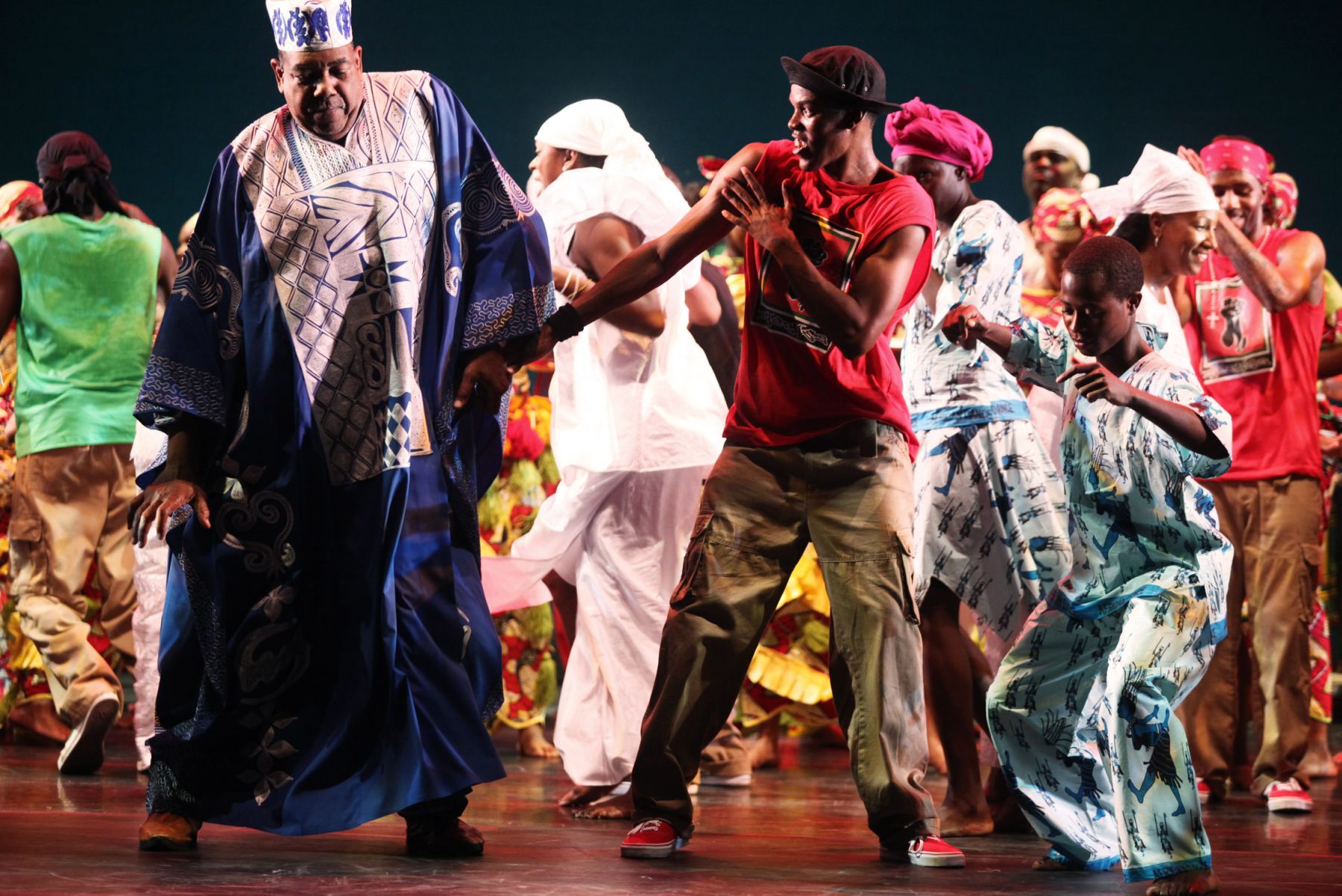
The Bronx-based Harambee Dance Company is part of 2013 DanceAfrica festival at BAM (photo by Derrek Garret)

The Bronx-based Harambee Dance Company is part of 2013 DanceAfrica festival at BAM (photo by Derrek Garret)

Brooklyn Academy of Music
30 Lafayette Ave. between Ashland Pl. & St. Felix St.
May 24-27, free – $50
718-636-4100
www.bam.org

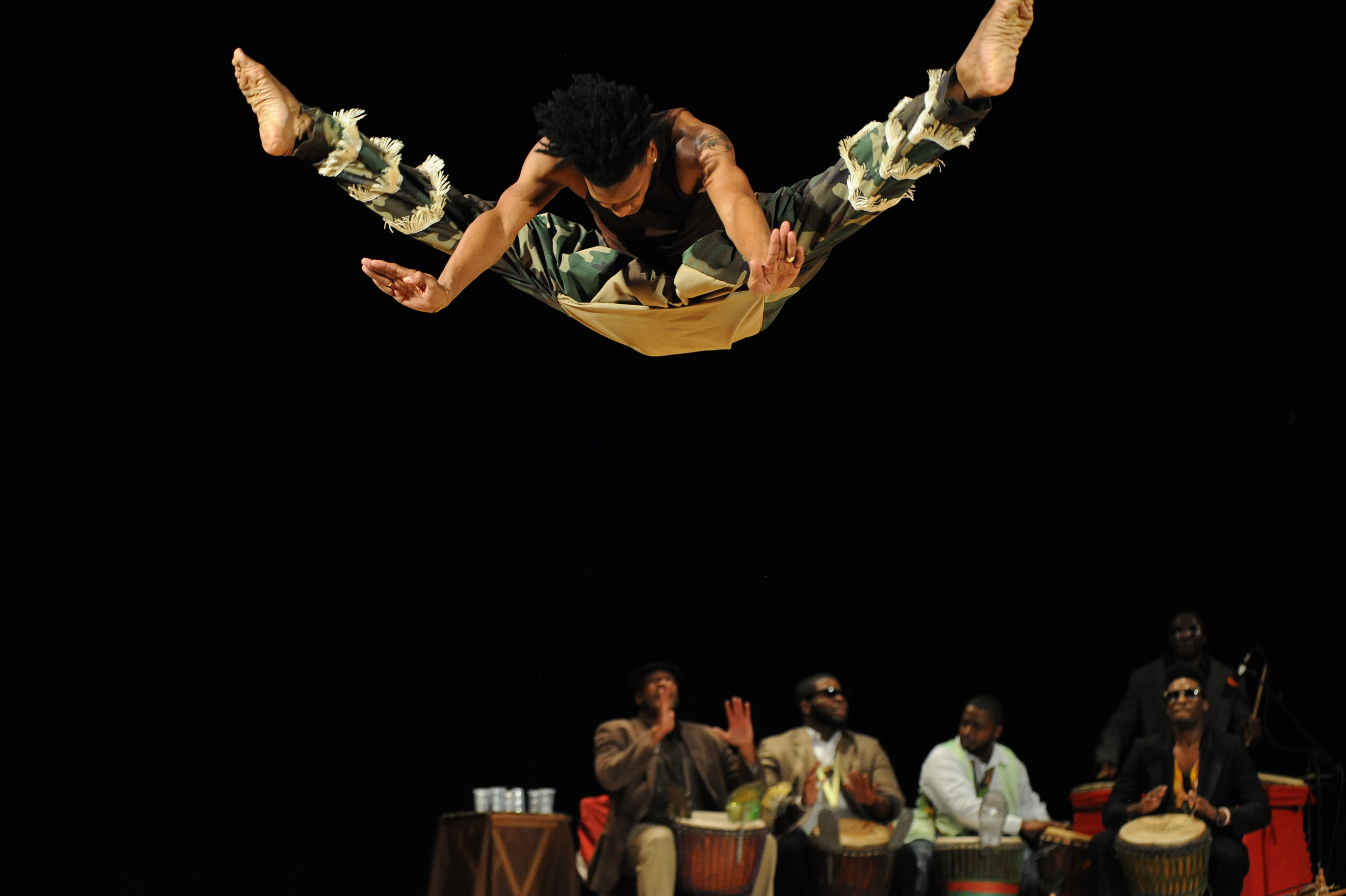
Last week, the incomparable Baba Chuck Davis, the founder and artistic director of BAM’s annual DanceAfrica festival, was one of the grand marshals of the seventh New York Dance Parade, the theme of which was “Unity Through Dance.” That same theme can apply to Davis and DanceAfrica, which this year brings three international companies to the Howard Gilman Opera House stage. Zimbabwe’s Umkhathi Theatre Works will perform the tribal dance Isitshikitsha, the hunting-and-gathering dance Chinyambera, the Shangani tribal dance Muchongoyo, and the social gathering Setapa, joined by the BAM/Restoration DanceAfrica Ensemble. Atlanta’s Giwayen Mata’s program will include Perseverance: In My House, set to DJ Fresca’s “Amaphoyisa,” and the Lamban Dansa. Harambee Dance Company, which hails from the Bronx, will present the historical and spiritual journey Reflections, the partying Midnight in the City, and the musical piece “You Goin’ Get This Work.” As a special treat, Washington, DC’s Sweet Honey in the Rock will sing “Sabumoya,” “I Remember I Believe,” “Wholly Wholly,” and “Let There Be Peace.” As always, Davis will provide his welcoming address (“Ago!” “Amée!!”), introduce the Council of Elders, and honor those who are no longer with us. Meanwhile, BAMcinématek’s FilmAfrica will screen such movies as Taghreed Elsanhouri’s Our Beloved Sudan, Clemente Bococchi’s Black Africa White Marble, Charlie Vundla’s How to Steal 2 Million, and Rémi Bezançon and Jean-Christophe Lie’s animated Zarafa. BAMcafé Live continues the African celebration with a pair of free concerts: Abdou Mboup and Waakaw on May 24 and a Late Night Dance Party with Ralph McDaniels and Video Music Box on May 25. And the always fun DanceAfrica Bazaar will set up shop along Lafayette Ave. and Ashland Pl. Saturday through Monday, a global marketplace with great food, clothing, fashion, arts & crafts, and much more.

THE SUIT

Matilda (Nonhlanhla Kheswa) clutches the object of her affection, and ultimate downfall, while Philomen (William Nadylam) sneaks up on her in THE SUIT (photo by Richard Termine)

Matilda (Nonhlanhla Kheswa) clutches the object of her affection, and ultimate downfall, while Philomen (William Nadylam) sneaks up on her in THE SUIT (photo by Richard Termine)

Brooklyn Academy of Music
BAM Harvey Theater
651 Fulton St. between Ashland & Rockwell Pl.
Through February 2, $25-$90
718-636-4100
www.bam.org

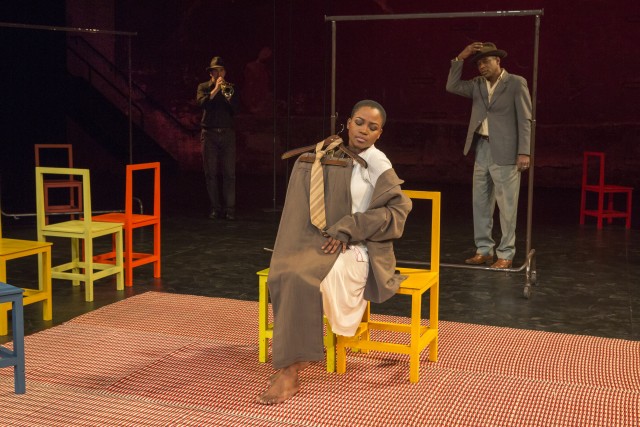
A married couple’s woes serve as a microcosm for life in apartheid South Africa in Peter Brook, Marie-Hélène Estienne, and Franck Krawczyk’s minimalist English-language adaptation of Can Themba, Mothobi Mutloatse, and Barney Simon’s French version of Themba’s award-winning short story, The Suit. Set in the 1950s in Sophiatown, a culturally vibrant suburb of Johannesburg that was crushed by apartheid, The Suit is a story within a story with Jared McNeill serving as narrator, speaking directly to and interacting with the audience, even bringing three people onstage at one point. McNeill relates the tale of Philomen (William Nadylam), a working man who comes home early one day to catch his wife, Matilda (Brooklyn-based South Africa native Nonhlanhla Kheswa), in the arms of another man (Rikki Henry, who plays multiple small roles as well as serving as assistant director). The lover takes off in a hurry, leaving behind his well-tailored suit on a hanger. As punishment for her cheating, Philomen forces Tilly to treat the suit as a member of the family, pretending to feed it and giving it an honored place in their bedroom every night. But when he decides that they should throw a party that includes the suit as a guest, tragedy awaits.

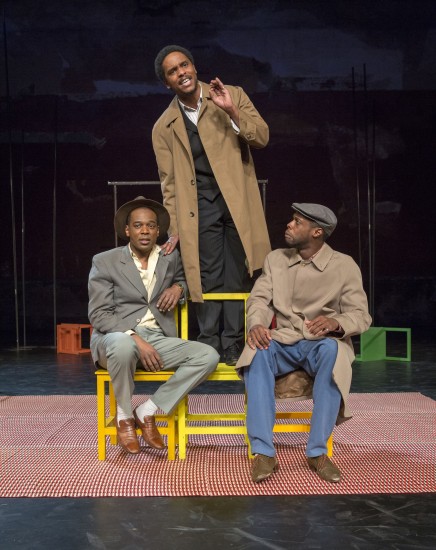
Three friends talk about life and love in South African drama THE SUIT (photo by Richard Termine)

Three friends talk about life and its limited possibilities in THE SUIT (photo by Richard Termine)

The Suit takes place on a relatively bare stage that features only a dozen brightly colored backless chairs and metal clothing racks that become doors, windows, closets, bathrooms, and bus stops. The empty spaces in the racks and chairs evoke the emptiness of the characters’ lives during apartheid; Brook, Estienne, and Krawczyk fill these empty spaces with music, performed live by guitarist Arthur Astier, pianist Raphaël Chambouvet, and accordionist David Dupuis, who also make humorous surprise appearances at the party. Tilly also sings several heartfelt songs herself, with Kheswa revealing a lovely voice. The Suit doesn’t make any grand statements about racism, politics, or even infidelity, instead concentrating on the claustrophobic lives the people of Sophiatown must endure. The cast is uniformly excellent; the night we saw it, the show had to be stopped for a few minutes because of a sick audience member, but McNeill, Nadylam, and Henry were able to get back into their scene afterward, improvising a handful of playful jokes referencing the delay. Brook is a familiar fixture at BAM, going back more than forty years; in 1971, he presented A Midsummer Night’s Dream there, and in 1987 he helped renovate the Majestic Theater, now known as the Harvey, for The Mahabharata. At eighty-seven, he is back at the Harvey, with a delightful yet dark seventy-five-minute production that once again proves that less can be more.

NEXT WAVE FESTIVAL: RHINOCEROS

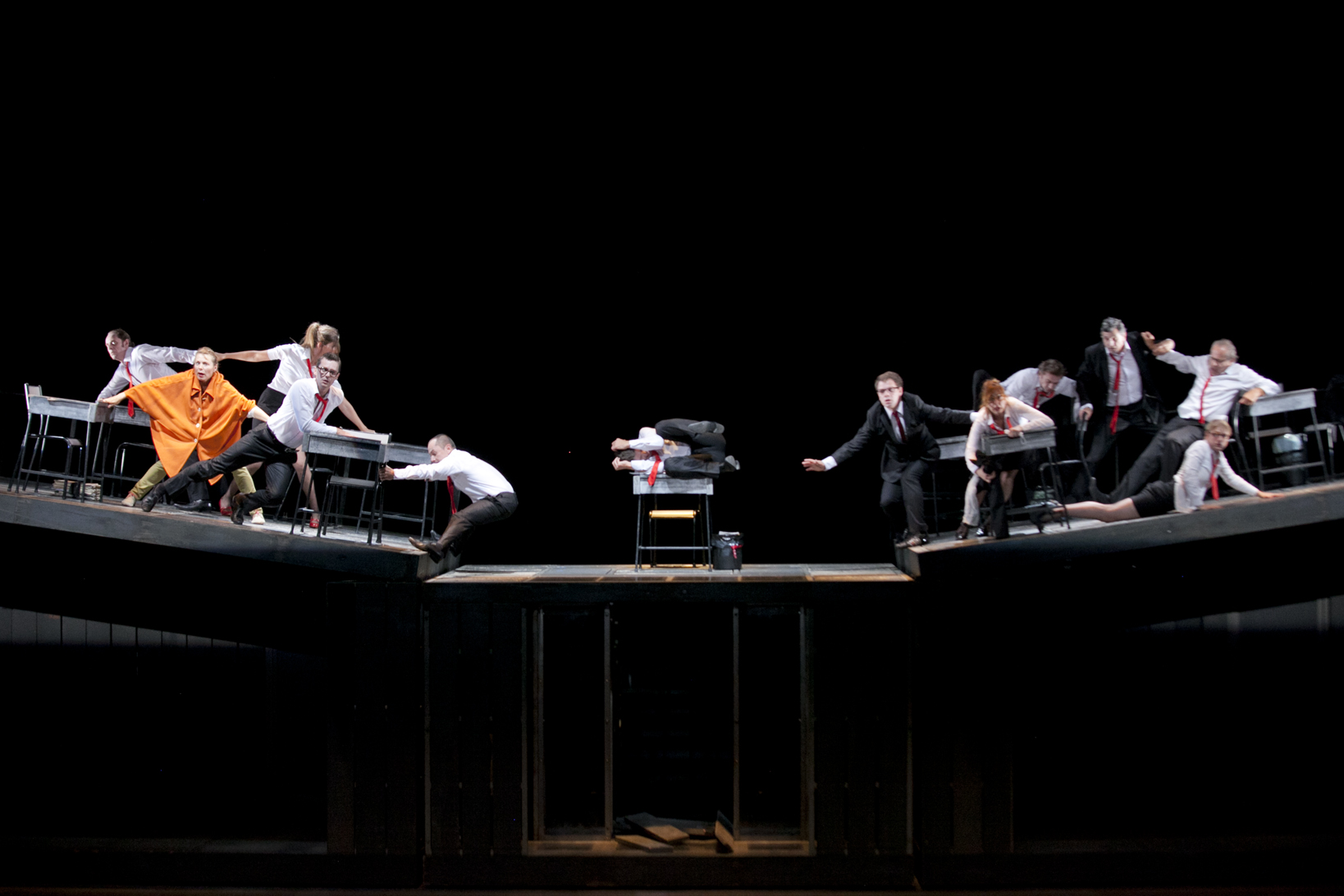
Théâtre de la Ville, Paris, will present Eugène Ionesco’s classic absurdist tale RHINOCÉROS this week at BAM (photo by Jean-Louis Fernandez)

BAM Howard Gilman Opera House
30 Lafayette Ave. between Ashland Pl. & St. Felix St.
October 4-6
718-636-4100
www.bam.org
www.theatredelaville-paris.com

As much as Jean-Paul Sartre is associated with the idea of existentialism, playwright Eugène Ionesco is linked with the word absurd. Born in Romania in 1909 and raised primarily in France, Ionesco changed the face of dramatic narrative with such works as The Lesson, The Chairs, The Killer, and Exit the King. One of his most famous plays, 1959’s Rhinocéros, which was turned into a 1973 film starring Zero Mostel, Gene Wilder, and Karen Black, can now be seen in an inventive adaptation by Emmanuel Demarcy-Mota and Théâtre de la Ville, Paris, running at BAM’s Howard Gilman Opera House October 4-6 as part of the thirtieth Next Wave Festival. “I like to come back to playwrights who question the place and role of the individual in collective history, on his responsibility, his freedom of thought, beyond any form of individualism,” Demarcy-Mota, who has also recently directed works by Horváth and Brecht, explains on the company website. The allegory about totalitarianism features set and lighting by Yves Collet, music by Jefferson Lembeye, and costumes by Corinne Baudelot, with François Regnault serving as artistic collaborator; Serge Maggiani plays Bérenger, Hugues Quester is Jean, and Valérie Dashwood takes on the role of Daisy. “”Ionesco knows how to depict dialectically every man’s cowardice, conformism and hypocrisy,” Demarcy-Mota adds. Rhinocéros “is a funereally burlesque play that we wish to render with full energy.” As a bonus, on October 5 at 5:00 at the Rosenthal Pavilion at NYU’s Kimmel Center, the esteemed panel of Demarcy-Mota, Edward Albee, Israel Horovitz, and Marie-France Ionesco will participate in the free “Next Wave Talk: On Ionesco,” moderated by NYU French literature professor Tom Bishop.
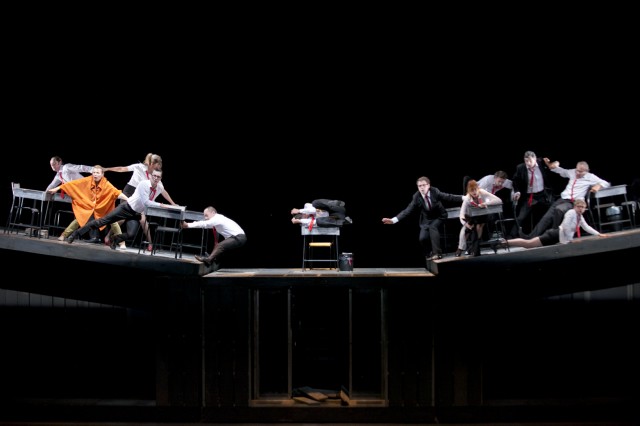
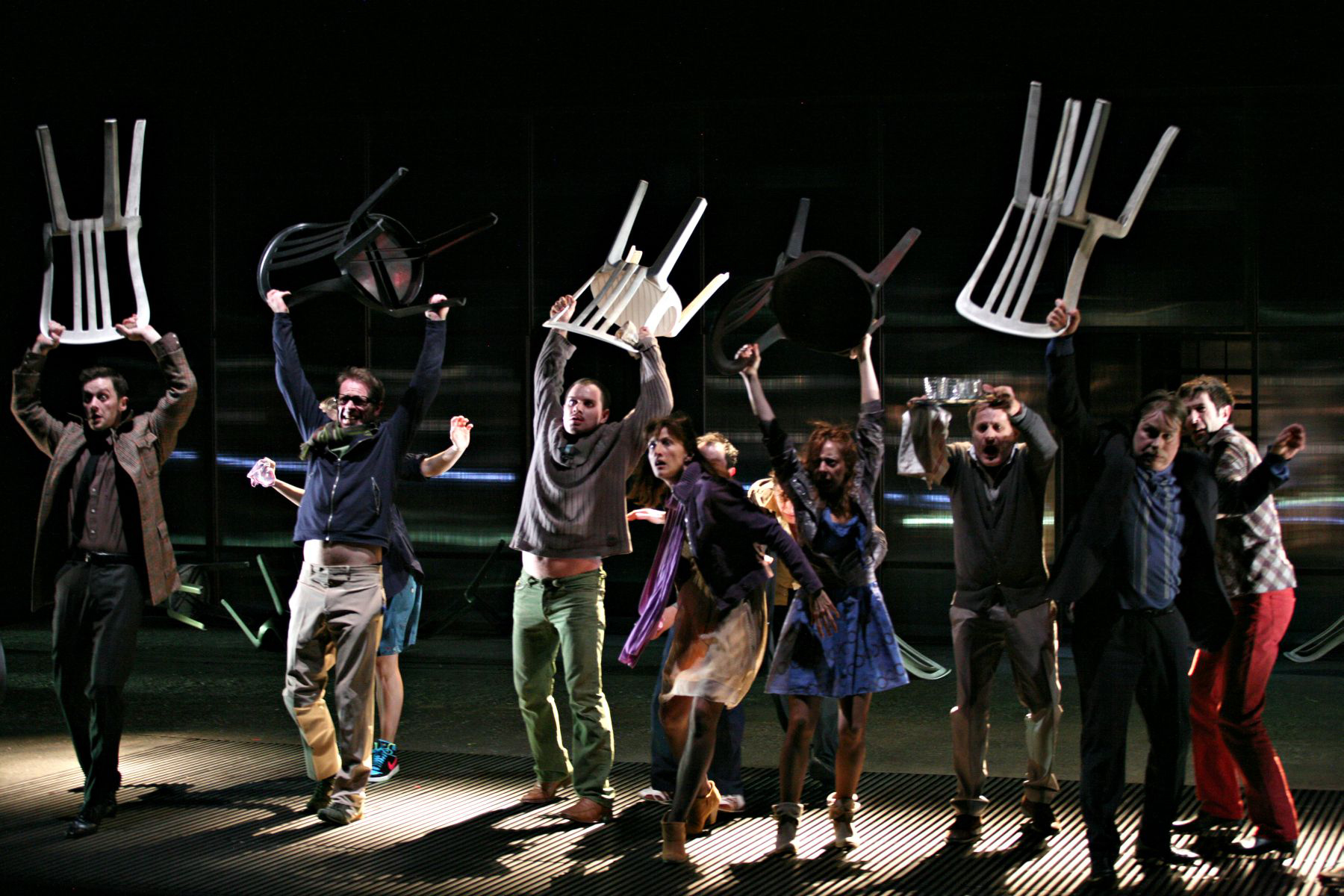
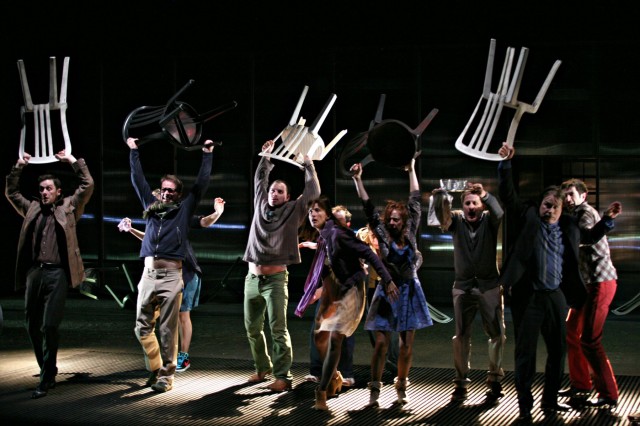
Nowhere is safe in Théâtre de la Ville’s thrilling production of Eugène Ionesco’s absurdist classic (photo by Pavel Antonov)

Update: Théâtre de la Ville director Emmanuel Demarcy-Mota promised a Rhinocéros rendered “with full energy,” and he and the company deliver all that and more in their engaging version of Eugène Ionesco’s 1959 absurdist classic, running October 4-6 at BAM’s Howard Gilman Opera House as part of the thirtieth Next Wave Festival. Following a short introductory excerpt from Ionesco’s sole novel, The Hermit, the curtain opens on a group of people in a town square just going about their daily business. Jean (a big, blustery Hugues Quester) bikes in to meet his friend Bérenger (Serge Maggiani), a bedraggled man recovering from a hangover, not able to remember much of what occurred the night before. A rhinoceros suddenly roars through the town like a tsunami, leaving in its wake a stunned crowd not quite sure what it really just saw, instead getting caught up in existential discussions of cats’ paws. Eventually life goes on, with Bérenger, who has a crush on Daisy (Valérie Dashwood), arriving at the publishing house where he works, only to encounter another stampeding rhino. As everyone around him starts turning into rhinos, the hapless Bérenger is determined not to succumb to the mass hysteria. Featuring terrific staging (courtesy of Yves Collet) that includes a raised-level office, collapsing rooms, and a majestically morphing figure in addition to a slowly building score by Jefferson Lembeye that nearly explodes at the end, Théâtre de la Ville’s Rhinocéros cleverly captures the philosophical underpinnings of Ionesco’s tale of the fight for individualism in the face of growing totalitarianism and an ever-increasing conformity that is overwhelming a consumer-driven society. Evoking Franz Kafka’s novella The Metamorphosis, Don Siegel’s sci-fi classic Invasion of the Body Snatchers, and such recent disasters as Hurricane Katrina and the 2011 Japanese earthquake and tsunami, the show combines humor, pathos, and playful investigations of logic as the community is overcome by a collective consciousness that seems unstoppable. Ionesco might have written Rhinocéros because of what he saw occurring in Eastern Europe in the 1930s, but it still feels as fresh and relevant as ever in this outstanding production.
DANCEAFRICA: ONE AFRICA/MANY RHYTHMS

The inimitable Baba Chuck Davis will once again lead the BAM DanceAfrica celebration on Memorial Day Weekend (photo by Julieta Cervantes)

Brooklyn Academy of Music
30 Lafayette Ave. between Ashland Pl. & St. Felix St.
May 25-28, free – $50
718-636-4100
www.bam.org

For some people, it isn’t summer in New York City until the beaches and pools open, or half-day Fridays begin, or the free outdoor music series kick off all over town. For us, summer doesn’t get under way until BAM’s annual DanceAfrica returns, four days of dance, film, music, fashion, food, and one of the best street fairs of the year. The thirty-fifth annual cultural celebration starts in the Howard Gilman Opera House on May 25 with performances by the Adanfo Ensemble, Farafina Kan: The Sound of Africa, United African Dance Troupe, and the BAM/Restoration DanceAfrica Ensemble. On Saturday, Adanfo and Restoration will be joined by the Forces of Nature Dance Theatre and the Oyu Oro Afro-Cuban Dance Company, on Sunday by Illstyle Peace Productions and Creative Outlet, and on Monday by Hamalali Wayunagu Garifuna and Asase Yaa. The inimitable Baba Chuck Davis will participate in an Iconic Artist Talk on May 27 at 6:00 with Kariamu Welsh in the Hillman Attic Studio. The Mason-Jam-Ja Band will play BAMcafé Live on Friday night at 10:00, while the Black Rock Coalition Orchestra Salute to Don Cornelius & Soul Train takes place on Saturday night, followed by a late-night dance party with DJ Idlemind. BAMcinématek will be screening such films as Fabio Caramaschi’s One Way, a Tuareg Journey, Zelalem Woldemariam Ezare’s Lezare (For Today), Abdelkrim Bahloul’s A Trip to Algiers, Akin Omotoso’s Man on Ground, Lionel Rogosin’s Come Back, Africa, Andy Amadi Okoroafor’s Relentless, Daniel Daniel Cattier’s 50 Years of Independence of Congo, Claus Wischmann & Martin Baer’s Kinshasa Symphony, and Michel Ocelot’s Tales of the Night, with Omotoso, Cattier, and Okoroafor on hand for Q&As. Through June 3, BAM will be hosting the exhibition “Waiting for the Queen,” highlighting works on paper by U.S.-based Nigerian artists Njideka Akunyili and Ruby Onyinyechi Amanze, curated by Dexter Wimberly. And on Saturday, Sunday, and Monday, the DanceAfrica 2012 Bazaar will transform Ashland Pl. into a global marketplace rich with African and Caribbean cultural heritage, including great food, clothes, art, jewelry, books, music, and so much more. “Ago!” “Amée!!”

BEING SHAKESPEARE

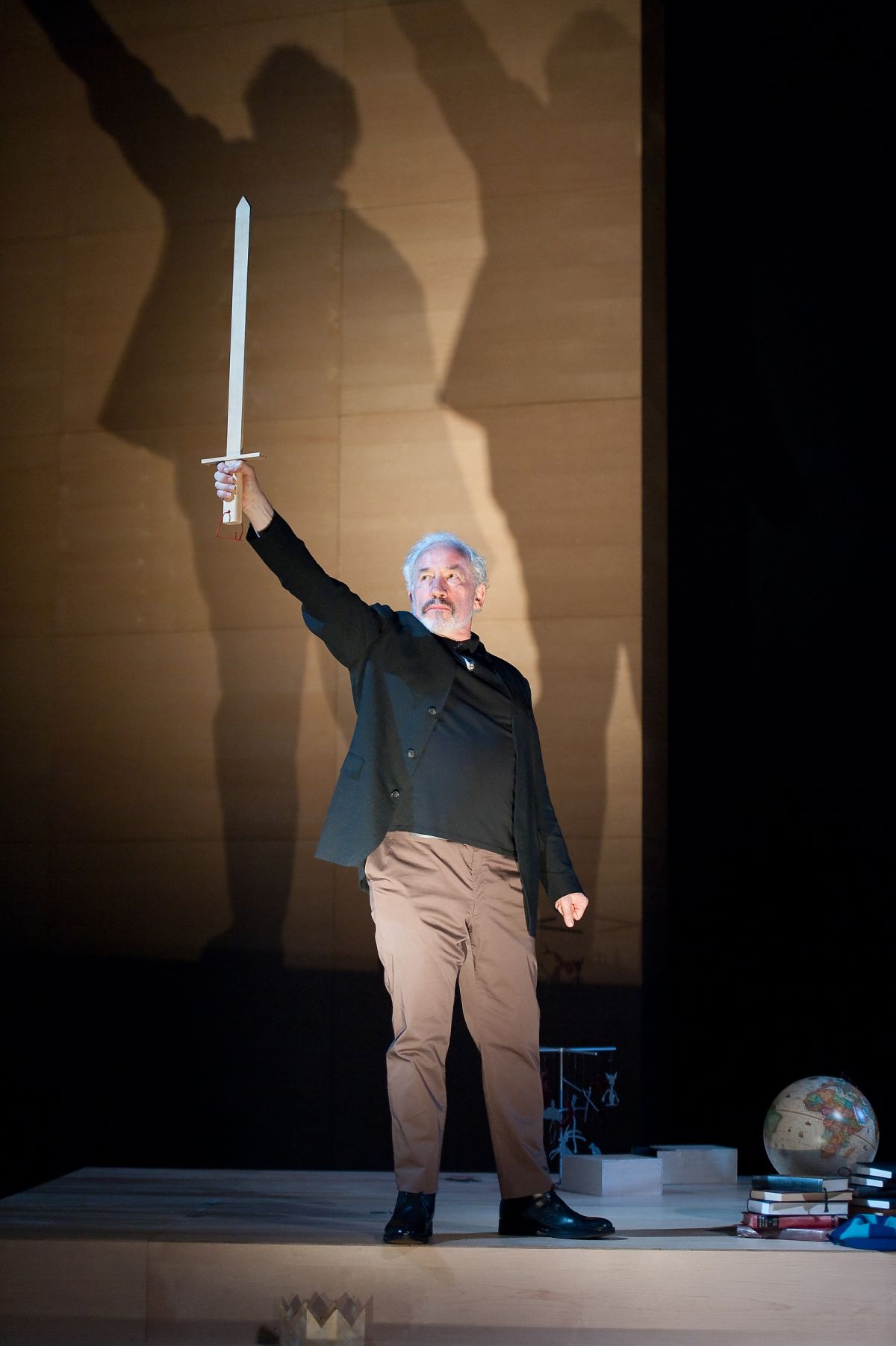
Simon Callow goes through the seven stages of Shakespeare in one-man show (photo by Stephanie Berger)

Brooklyn Academy of Music
BAM Harvey Theater
651 Fulton St. between Ashland & Rockwell Pl.
Through April 14, $25-$100
718-636-4100
www.bam.org

Obsessed with William Shakespeare since he was six years old, British actor Simon Callow, now sixty-two, is currently at BAM playing Hermione and Leontes from The Winter’s Tale, Mark Antony and Caesar from Julius Caesar, Jaques, Orlando, and Rosalind from As You Like It, Antipholus from The Comedy of Errors, Falstaff and Prince Henry from Henry IV, Prospero and Miranda from The Tempest, Quince, Flute, Bottom, and Puck from A Midsummer Night’s Dream, Kings Henry V, Richard II, and Lear (as well as Queen Margaret), both Romeo and Juliet, Macbeth, Old Hamlet, and even Shakespeare himself. And he does all that and more in a mere hour and a half in the one-man show Being Shakespeare, written by Bard scholar and Oxford English literature professor Jonathan Bate and directed and designed by Tom Cairns. Built around Jaques’s seven stages of man monologue from As You Like It — “All the world’s a stage / And all the men and women merely players / They have their exits and their entrances / And one man in his time plays many parts / His acts being seven ages” — Being Shakespeare follows the Bard from birth to death, with Callow (Shakespeare in Love, Four Weddings and a Funeral) discussing various aspects of Shakespeare’s personal life, about which precious little is known, and relating them to specific lines and characters from his plays and sonnets. Although there are a handful of Eureka! moments, there are also a lot of comparisons that are too much of a stretch, supposition instead of fact. Bate does include fascinating tidbits about Shakespeare’s sisters, working in his father’s glove-making shop, dealing with lawyers, and marrying the pregnant Anne Hathaway, but the show often feels more like a historical literary lecture than a dramatic play — and, of course, as Hamlet famously intoned, “The play’s the thing.” Callow does a magnificent job at some points, particularly his marvelously entertaining handling of an exchange between Falstaff and Prince Henry about preparing an army unit and the scene in which Peter Quince is casting Pyramus and Thisbe in Dream, but other snippets lack depth and power, perhaps better in idea than in execution. Being Shakespeare might be a treat for Shakespeare fanatics and completists, but it will leave others wanting more. Callow will participate in a postshow talk moderated by Jeff Dolven on April 12, and Bate will be in conversation with Barry Edelstein on April 15 in the BAM Hillman Attic Studio.

’TIS PITY SHE’S A WHORE

Cheek by Jowl returns to BAM with its first non-Shakespeare Brooklyn production (photo by Manuel Harlan)

Brooklyn Academy of Music
BAM Harvey Theater
651 Fulton St. between Ashland & Rockwell Pl.
March 20-31, $25-$80
718-636-4100
www.bam.org

Founded in 1981 by Declan Donnellan and Nick Ormerod, British theater company Cheek by Jowl specializes in presenting unique takes on the classics, with a primary focus on the actors. The London-based troupe, which has previously been at BAM with As You Like It in 1994, Much Ado About Nothing in 1998,Othello in 2004, Cymbeline in 2007, and Macbeth in 2011, is back at the Harvey with John Ford’s controversial seventeenth-century tragedy, ’Tis Pity She’s a Whore. Directed by Donnellan and designed by Ormerod, the production stars Jack Gordon as Giovanni and Lydia Wilson as Annabella, wealthy siblings who are more than just a little bit too close. Romy Schneider and Alain Delon played the incestuous couple in a 1961 stage version at the Théâtre de Paris directed by Luchino Visconti, while Charlotte Rampling and Oliver Tobias inhabited the roles for Giuseppe Patroni Griffi’s 1971 film, Addio, fratello crudele. The play was even a major inspiration for Peter Greenaway’s 1989 cult classic, The Cook, the Thief, His Wife & Her Lover. So it should be fascinating to see what Cheek by Jowl, which was named after a line in Shakespeare’s A Midsummer Night’s Dream, does in its first non-Bard play in Brooklyn.

Update: As the audience enters the Harvey Theater — which, on the night we went, included namesake and former BAM president Harvey Lichtenstein himself — a young woman in a red hoodie is sitting on a red bed in the middle of the stage, playing with her laptop. On the back wall of her bedroom are movie posters for The Vampire Diaries, A Clockwork Orange, Breakfast at Tiffany’s, and Sweet Bird of Youth, hinting toward such things to come as innocence betrayed, dangerous sex, and a bit of the old ultraviolence, and come they do. The woman on the bed is Annabella (a delightful Lydia Wilson), a cheery sort whose father, Florio (David Collings), is preparing to marry her off to one of a string of well-dressed suitors who parade in front of her, but it turns out that she is most attracted to Giovanni (Jack Gordon), who just happens to be her older brother. After doing the dirty deed — depicted by director Declan Donnellan in a hot and heavy manner — all kinds of nastiness ensues, including scandal, treachery, lies, unwanted pregnancy, deception, more sex, and bloody murder. Cheek by Jowl’s streamlined version of John Ford’s controversial 1633 Jacobean drama is a lively, energetic production thumping with loud dance music and displaying a wry, ribald sense of humor. Although a few couples got up and left following the incest scene, everyone else stayed for the two-hour show — performed without intermission, which makes sense for this fast-paced production — only rising to their feet at the end, expressing their admiration by way of standing ovation.

THE BRIDGE PROJECT: RICHARD III

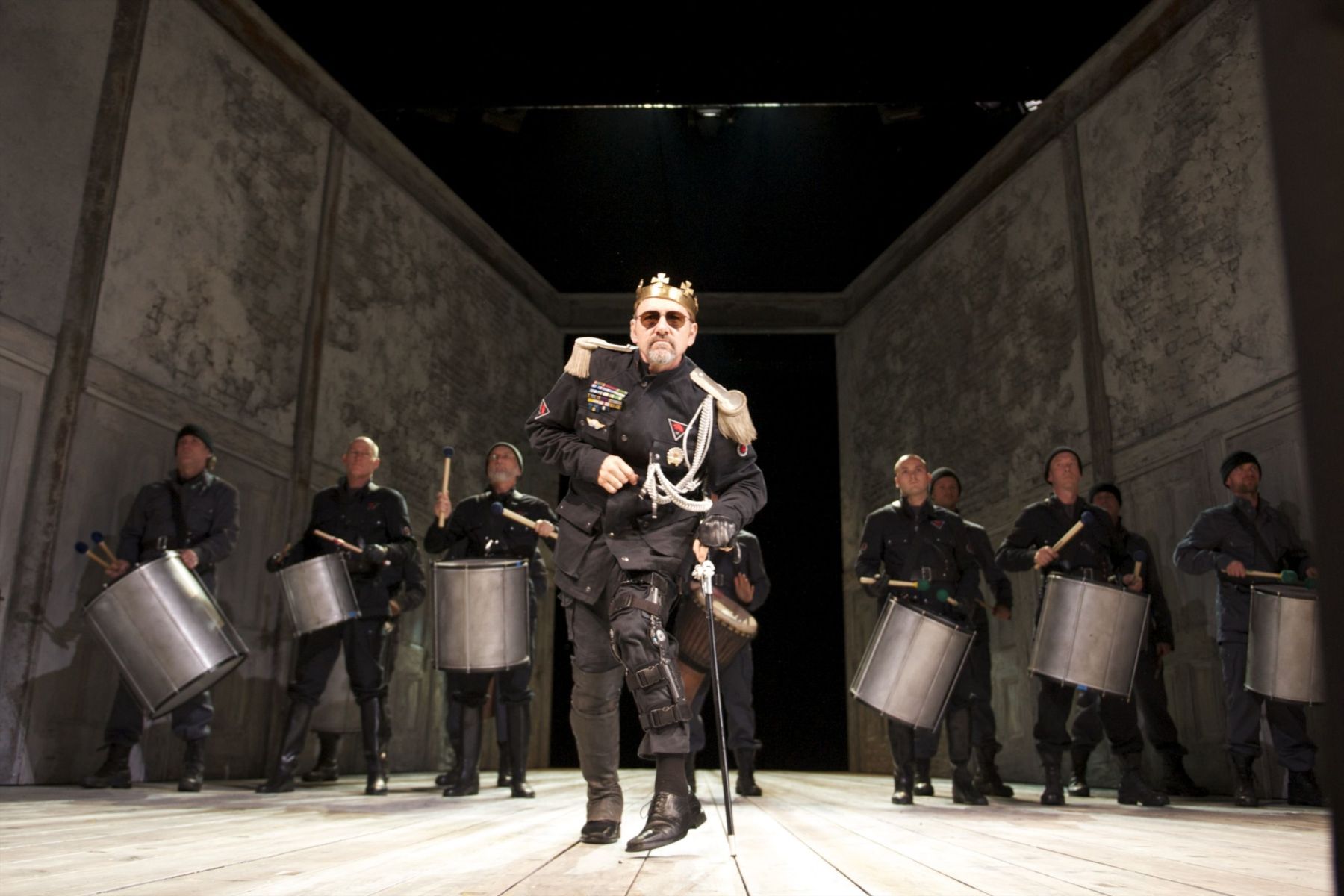
Kevin Spacey stars as the iconic Shakespearean king at BAM in final production of the Bridge Project (photo by Manuel Harlan)

Brooklyn Academy of Music
BAM Harvey Theater
651 Fulton St. between Ashland & Rockwell Pl.
Through March 4, $30-$135
718-636-4100
www.bam.org

As the audience enter BAM’s Harvey Theater for the Bridge Project production of Richard III, the word Now is glowing on a makeshift curtain, announcing not only the first word of the concluding work in Shakespeare’s War of the Roses tetralogy but the time in which the play takes place. When the curtain rises, Richard, the Duke of Gloucester, is sitting in a chair, a flat-screen video monitor behind him showing his brother, King Edward IV (Andrew Long), as Kevin Spacey intones those famous lines, “Now is the winter of our discontent / Made glorious summer by this sun of York; / And all the clouds that lour’d upon our house / In the deep bosom of the ocean buried.” The technology at the opening might indicate the play is set in the modern day, but the rest of this version of Richard III, a coproduction of BAM, Sam Mendes’s Neal Street Productions, and the Old Vic, headed by Spacey, is a timeless story of the intense desire for power. Taking on the iconic role previously played onstage by the likes of John Barrymore, Alec Guinness, Ian McKellen, Kenneth Branagh, and Al Pacino and, most famously, on film by Laurence Olivier, Spacey is delightfully devilish as he orchestrates the murder of anyone and everyone who stands in the way of his ascent to the throne of England.

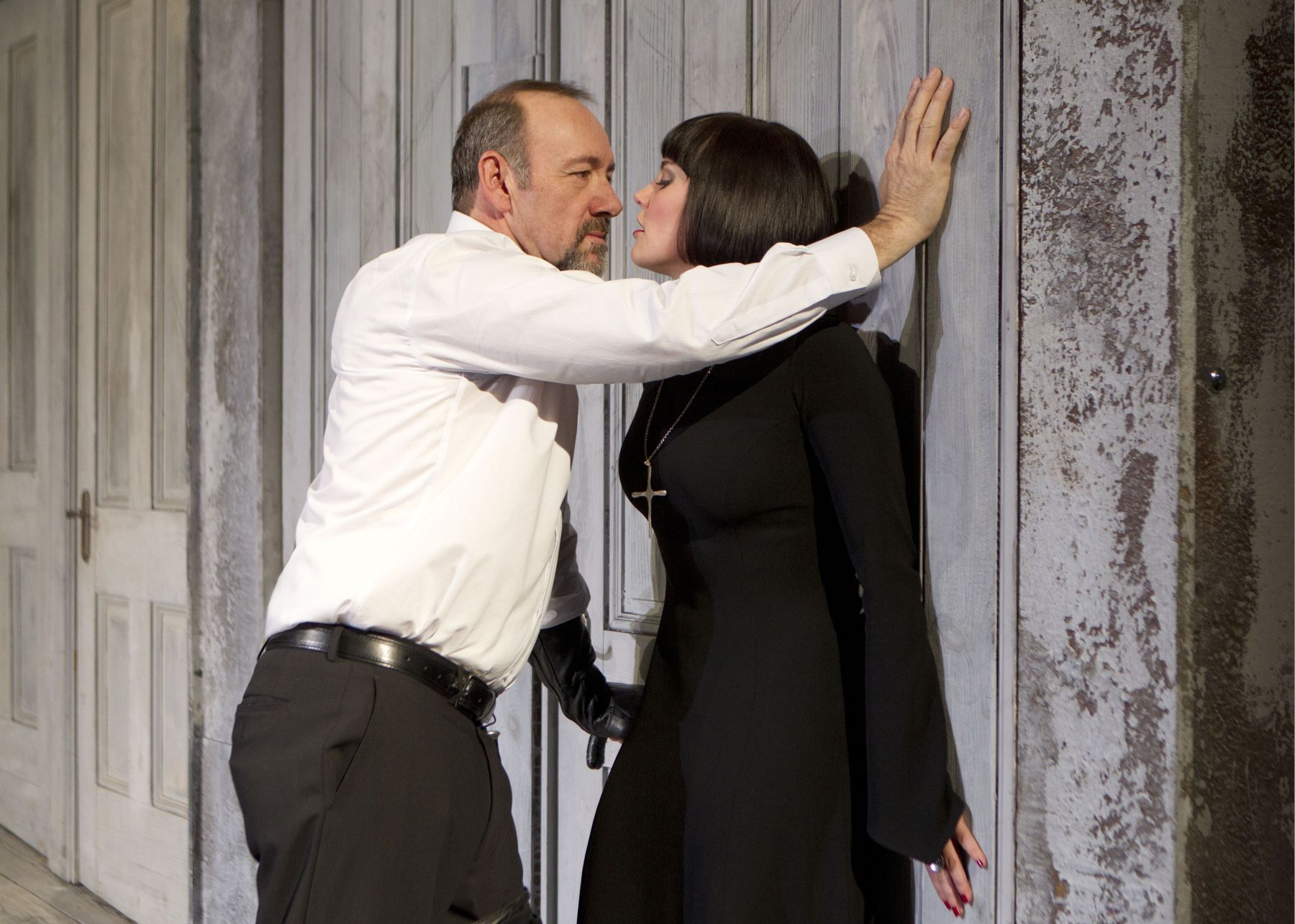
Richard (Kevin Spacey) woos the just-widowed Lady Anne (Annabel Scholey) in Sam Mendes’s RICHARD III (photo by Joan Marcus)

Spacey, walking with a limp that is part Porgy, part Roger “Verbal” Kint (his character in The Usual Suspects), regularly turns to the audience and makes funny faces and gestures, mugging with a wicked sense of humor as he lasciviously betrays his brother Clarence (Chandler Williams), Queen Elizabeth (Haydn Gwynne), the Duke of Buckingham (Chuk Iwuji), and even his own mother, the Duchess of York (Maureen Anderman). In one of the play’s most potent scenes, the hunchbacked Richard woos Lady Anne (Annabel Scholey), even as her husband, the Prince of Wales, lies on his back murdered, blood still oozing out of his body. Tom Piper’s set is a three-sided whitewashed wall of eighteen doors through which characters enter and leave; in the shorter second act, the stage opens up into a long, narrowing pathway that seems to go on forever, particularly effective during the battle scene; the Harvey bursts with energy when Richard, dressed like a crazed dictator, marches his way from the back, pounding his cane like a royal scepter. Spacey, who cut his Gloucester teeth playing Buckingham in Al Pacino’s Looking for Richard, a thorough examination of the work viewed from numerous angles, does at times get a little too cutesy, and several of the actors in minor roles deliver stilted lines, but director Mendes — the two previously teamed up on the Oscar-winning American Beauty — does a good job keeping the delicious story centered and focused. The final production of the Bridge Project, which in past years combined American and British actors in The Winter’s Tale, The Tempest, As You Like It, and Tom Stoppard’s adaptation of The Cherry Orchard, this version of Richard III is fun and fanciful, funny and frightening, a fitting finale to this unique three-year collaboration.