Andrei Tarkovsky masterpiece reflects back on life and art
THE MIRROR (ZERKALO) (Andrei Tarkovsky, 1975)
Museum of Arts & Design
2 Columbus Circle at 58th St. & Eighth Ave.
Friday, August 7, $10, 7:00
Series continues Friday nights through August 28
212-299-7777
madmuseum.org
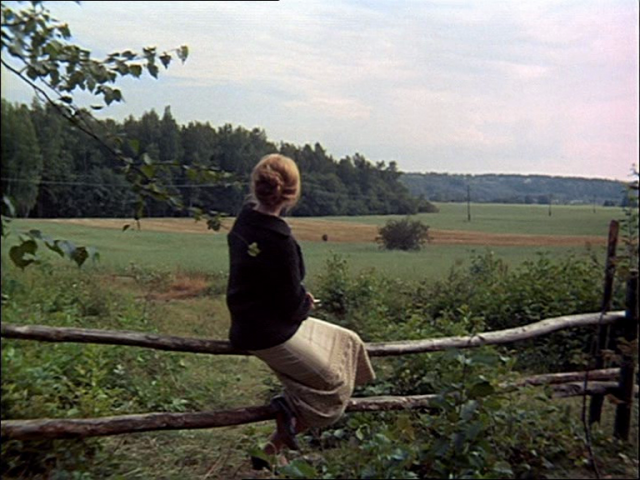
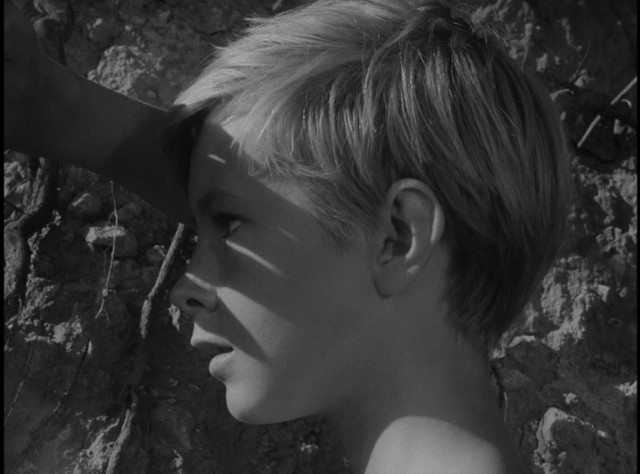
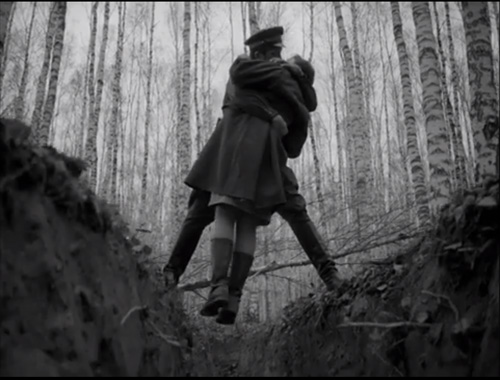
 “Words can’t really express a person’s emotions. They’re too inert.” So explains Andrei Tarkovsky in his 1975 semiautobiographical masterpiece, The Mirror, in which the Soviet auteur takes a literal and figurative looking glass to reflect on his life, particularly his childhood, in twentieth-century Russia. The nonlinear film, which features long, beautifully composed scenes with little or no dialogue, alternates between color and black-and-white as Tarkovsky maneuvers between three time periods, telling the fragmented and disjointed story of forty-year-old Alexei, who is never onscreen as an adult (he is only heard offscreen in voiceover by Innokenty Smoktunovsky) but is shown as a young boy (Filipp Yankovsky) and an adolescent (Ignat Daniltsev, who also plays Alexei’s son, Ignat). Margarita Terekhova portrays Alexei’s ex-wife, Natalia, as well as his mother, Maria; Tarkovsky’s own mother, Maria Vishnyakova, plays the elderly Maria (who is also called Masha and Marusya), and his father, Arseny Tarkovsky, a successful poet, reads several of his works over the gorgeous imagery that is composed, in many cases, like paintings. Incorporating archival footage of WWII, the Spanish Civil War, and the Sino-Soviet split, Tarkovsky explores family relationships as seen through the eyes of the young Alexei and Ignat, adding mystery and magic, including levitation and slow motion, to the personal, poignant tale. As with Andrei Rublev, the film begins with an odd prologue in which Ignat turns on a sepia-toned television show in which a woman uses a type of hypnosis, concentrating on the hands, to help a student speak without a stutter, as if Tarkovsky is warning the viewer about what is to follow, a deeply hypnotic film that speaks in unusual ways.
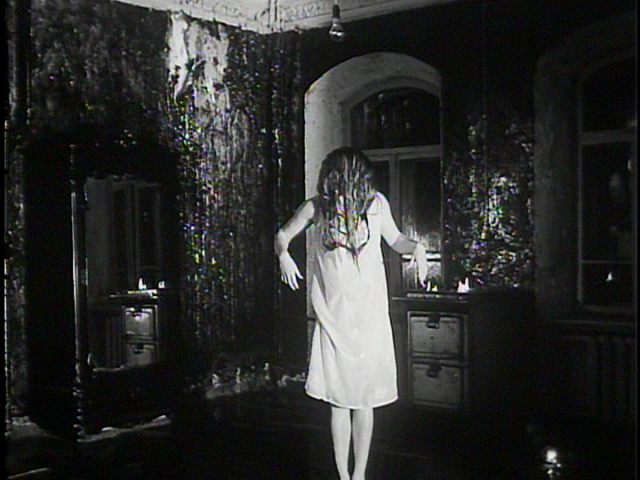
Stunning imagery can be found throughout Andrei Tarkovsky’s hypnotic tone poem, THE MIRROR
In his 1986 book, Sculpting in Time, Tarkovsky wrote, “Generally people’s memories are precious to them. It is no accident that they are coloured by poetry. . . . It occurred to me then that from these properties of memory a new working principle could be developed, on which an extraordinarily interesting film could be built. Outwardly the pattern of events, of the hero’s actions and behavior, would be disturbed. It would be the story of his thoughts, his memories and dreams. And then, without his appearing at all — at least in the accepted sense of the traditionally written film — it would be possible to achieve something highly significant: the expression, the portrayal, of the hero’s individual personality, and the revelation of his interior world.” Cowritten with Aleksandr Misharin and photographed by Georgi Rerberg — Tarkovsky’s regular cinematographer, Vadim Yusov, pulled out of the project because of artistic differences — The Mirror is a visual wonder, a true revelation, filled with stunning scenes that will emblazon themselves in your memory, from a burning barn to parts of a ceiling falling from above, from a woman washing her hair to a man sitting down next to a woman on a fence and breaking it. Don’t worry if you can’t always figure out who is who and what exactly is going on at any one moment and just put your trust in the hands of a genuine master. The Mirror is screening August 7 at 7:00 as part of the Museum of Arts & Design series “Andrei Tarkovsky, Sculpting in Time,” which runs Friday nights through August 28 and includes all seven of Tarkovsky’s full-length films (Solaris, Stalker, Ivan’s Childhood, Andrei Rublev, The Mirror, Nostalghia, The Sacrifice) before concluding with the behind-the-scenes documentary Directed by Andrei Tarkovsky.
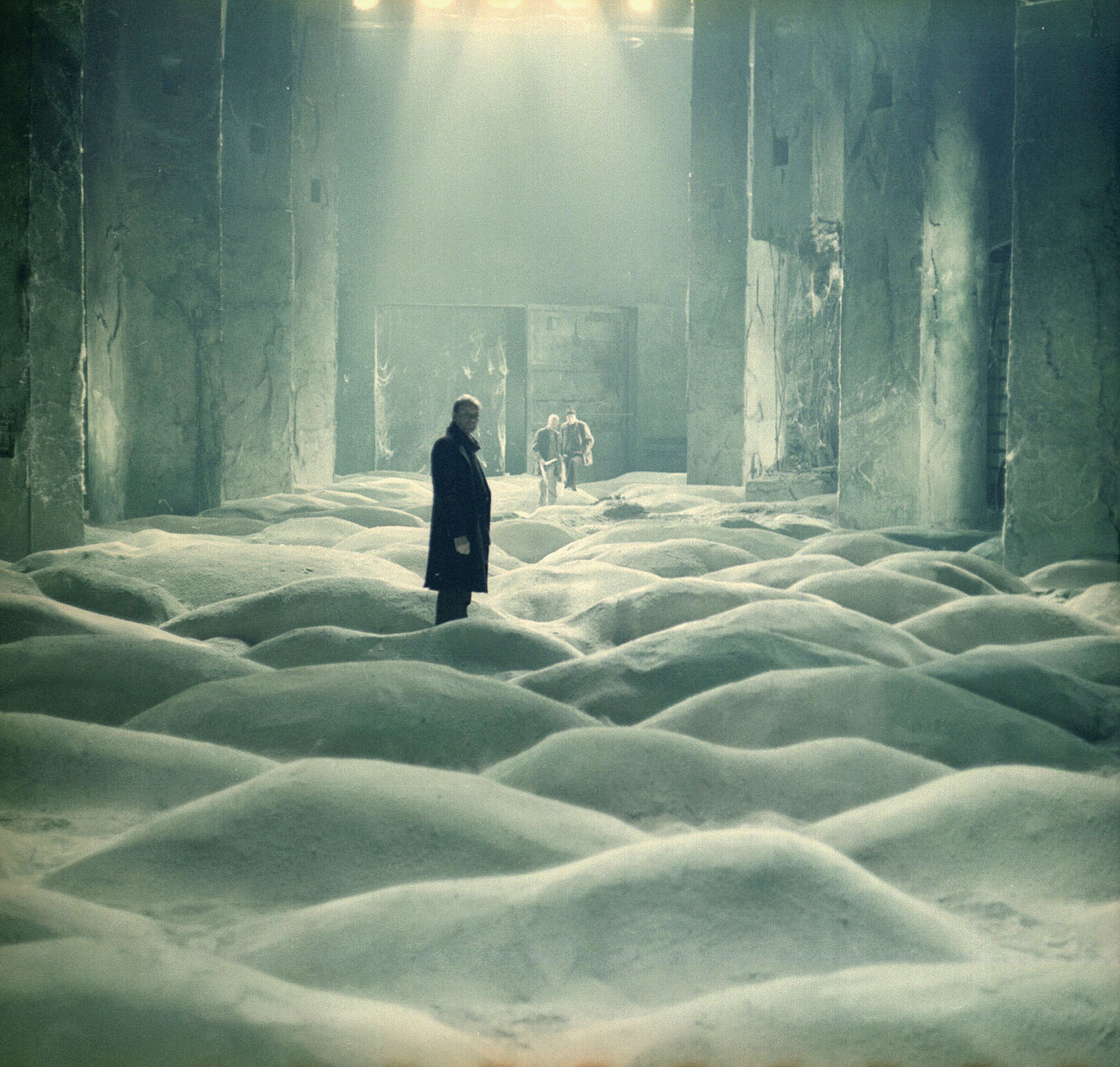
 Set in a seemingly postapocalyptic world that is never explained, Andrei Tarkovsky’s Stalker is an existential work of immense beauty, a deeply philosophical, continually frustrating, and endlessly rewarding journey into nothing less than the heart and soul of the world. Alexander Kaidanovsky stars as Stalker, a careful, precise man who has been hired to lead Writer and Professor (Tarkovsky regulars Anatoli Solonitsyn and Nikolai Grinko, respectively) into the forbidden Zone, a place of mystery that houses a room where it is said that people can achieve their most inner desires. While Stalker’s home and the bar where the men meet are dark, gray, and foreboding, the Zone is filled with lush green fields, trees, and aromatic flowers — as well as abandoned vehicles, strange passageways, and inexplicable sounds. The Zone — which heavily influenced J. J. Abrams’s creation of the island on Lost — has a life all its own as past, present, and future merge in an expansive land where every forward movement is fraught with danger but there is no turning back. An obsessive tyrant of a filmmaker, Tarkovsky imbues every shot with a supreme majesty, taking viewers on an unusual and unforgettable cinematic adventure.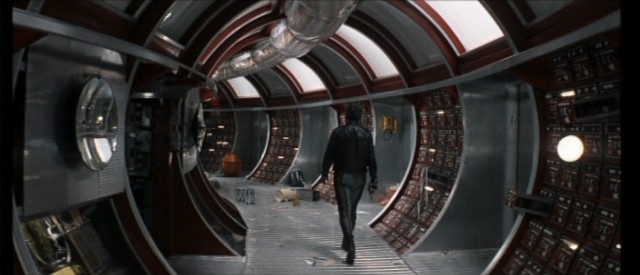
 In Andrei Tarkovsky’s Solaris, the Russian 2001: A Space Odyssey, Natalya Bondarchuk and Donatus Banionis star as a different kind of couple caught up in something very strange that is going on in outer space, unexplainable to both the characters in the film and the people in the audience. Banionis plays Dr. Kris Kelvin, a psychologist who is sent to the Solaris space station to decide whether to put an end to the solaristics project that Burton (Vladislav Dvorzhetsky) complicated twenty years before. What he discovers is one death, two possibly insane men, and his supposedly dead wife (Bondarchuk). Ambiguity reigns supreme in this gorgeously shot (in color and black-and-white by cinematographer Vadim Yusov) and scored (by Eduard Artemyev) film that, while technically science fiction, is really about the human conscience, another gem from master Russian director Tarkovsky. See it whether or not you checked out Steven Soderbergh’s underrated remake with George Clooney and Natascha McElhone. Based on Stanislaw Lem’s novel, Solaris, which won the Grand Prix at the Cannes Film Festival, kicks off the Museum of Arts & Design film series “Andrei Tarkovsky, Sculpting in Time,” which runs Friday nights from July 10 through August 28 and includes all seven of Tarkovsky’s masterpieces (Solaris, Stalker, Ivan’s Childhood, Andrei Rublev, The Mirror, Nostalghia, The Sacrifice) before concluding with the behind-the-scenes documentary Directed by Andrei Tarkovsky. Tarkovsky, who died in 1986 at the age of fifty-four, was a superior craftsman whose cinematic oeuvre is filled with poetry and wonder, mystery and self-examination, exploring life and death, the past, the present, and the future, incorporating mesmerizing sound and visuals in telling complex stories like one else before or since.