this week in theater

THE SUIT

Matilda (Nonhlanhla Kheswa) clutches the object of her affection, and ultimate downfall, while Philomen (William Nadylam) sneaks up on her in THE SUIT (photo by Richard Termine)

Matilda (Nonhlanhla Kheswa) clutches the object of her affection, and ultimate downfall, while Philomen (William Nadylam) sneaks up on her in THE SUIT (photo by Richard Termine)

Brooklyn Academy of Music
BAM Harvey Theater
651 Fulton St. between Ashland & Rockwell Pl.
Through February 2, $25-$90
718-636-4100
www.bam.org

A married couple’s woes serve as a microcosm for life in apartheid South Africa in Peter Brook, Marie-Hélène Estienne, and Franck Krawczyk’s minimalist English-language adaptation of Can Themba, Mothobi Mutloatse, and Barney Simon’s French version of Themba’s award-winning short story, The Suit. Set in the 1950s in Sophiatown, a culturally vibrant suburb of Johannesburg that was crushed by apartheid, The Suit is a story within a story with Jared McNeill serving as narrator, speaking directly to and interacting with the audience, even bringing three people onstage at one point. McNeill relates the tale of Philomen (William Nadylam), a working man who comes home early one day to catch his wife, Matilda (Brooklyn-based South Africa native Nonhlanhla Kheswa), in the arms of another man (Rikki Henry, who plays multiple small roles as well as serving as assistant director). The lover takes off in a hurry, leaving behind his well-tailored suit on a hanger. As punishment for her cheating, Philomen forces Tilly to treat the suit as a member of the family, pretending to feed it and giving it an honored place in their bedroom every night. But when he decides that they should throw a party that includes the suit as a guest, tragedy awaits.

Three friends talk about life and love in South African drama THE SUIT (photo by Richard Termine)

Three friends talk about life and its limited possibilities in THE SUIT (photo by Richard Termine)

The Suit takes place on a relatively bare stage that features only a dozen brightly colored backless chairs and metal clothing racks that become doors, windows, closets, bathrooms, and bus stops. The empty spaces in the racks and chairs evoke the emptiness of the characters’ lives during apartheid; Brook, Estienne, and Krawczyk fill these empty spaces with music, performed live by guitarist Arthur Astier, pianist Raphaël Chambouvet, and accordionist David Dupuis, who also make humorous surprise appearances at the party. Tilly also sings several heartfelt songs herself, with Kheswa revealing a lovely voice. The Suit doesn’t make any grand statements about racism, politics, or even infidelity, instead concentrating on the claustrophobic lives the people of Sophiatown must endure. The cast is uniformly excellent; the night we saw it, the show had to be stopped for a few minutes because of a sick audience member, but McNeill, Nadylam, and Henry were able to get back into their scene afterward, improvising a handful of playful jokes referencing the delay. Brook is a familiar fixture at BAM, going back more than forty years; in 1971, he presented A Midsummer Night’s Dream there, and in 1987 he helped renovate the Majestic Theater, now known as the Harvey, for The Mahabharata. At eighty-seven, he is back at the Harvey, with a delightful yet dark seventy-five-minute production that once again proves that less can be more.

COLLISION

The Amoralists explore manipulation, vulnerability, power, and control in COLLISION (photo by Russ Rowland)

The Amoralists explore manipulation, vulnerability, power, and control in COLLISION (photo by Russ Rowland))

Rattlestick Playwrights Theater
224 Waverly Pl.
Through February 17, $55
www.theamoralists.com
www.rattlestick.org

In such recent works as The Bad and the Better and HotelMotel, the New York–based Amoralists theater company challenged audiences with its unique take on story, staging, and setting; the former featured more than two dozen actors onstage at any one given time, effortlessly weaving between multiple scenes, while the latter took place in a hotel room where the crowd of twenty people sat either around a bed or within the set itself. Its latest production, the world premiere of Lyle Kessler’s Collision, is a more staid affair, both in design and execution. The play is set in a college dorm room as Grange (Amoralists cofounder and artistic director James Kautz) and Bromley (Nick Lawson) meet. It is instantly clear that Grange, who puts up posters of Che Guevara, Malcolm X, and Kurt Cobain as well as a photo collage of “a cross-section of humanity . . . No one of any consequence,” is adept at making people do whatever he wants, even if it goes against their own ethics and morals, manipulating them in devilishly clever ways that gets deep into their inner being. He exerts his power over Do (Anna Stromberg), an innocent coed who both Grange and Bromley are attracted to, in addition to one of his teachers, Professor Denton (Michael Cullen), who refuses to call on him in class. As the four grow closer, Grange takes advantage of their individual vulnerabilities on his way to a finale that is meant to be shocking but instead comes off as overly sensationalistic and even disappointing in its obviousness. “One man’s rose is another man’s Holocaust,” Grange tells Bromley early on. The five-person cast, which also includes Craig ‘muMs’ Grant (Oz) as a gun dealer, performs solidly throughout; Cullen (Cobb, Bug) is particularly effective as the older man looking to make one last stand. Much of the narrative relies on Kautz’s (Dedalus Lounge) ability to not only convince the other characters of his superiority but the audience as well, and he does so with a smooth determination. David Fofi’s unexciting direction doesn’t add anything to Kessler’s words, which too often toy with clichés in what amounts to clichéd ways. Collision was undergoing significant changes up to the last minute, when the ending was altered and the play morphed from a black comedy to a straight drama, and that lack of definition shows in far-too-many unsteady moments that result in the show falling somewhere in between, relying on too many leaps of faith on the part of the characters and the audience. Collision continues at the Rattlestick Playwrights Theater through February 17; Kessler’s 1983 hit, Orphans, will be making its Broadway debut in April, starring Shia LeBouf and Alec Baldwin.

PICNIC

(photo by Joan Marcus)

Pulitzer Prize–winning PICNIC looks at a day in the life of small-town America (photo by Joan Marcus)

American Airlines Theatre
227 West 42nd St. between Broadway & Eighth Ave.
Through February 24, $42-$127
212-719-1300
www.roundabouttheatre.org

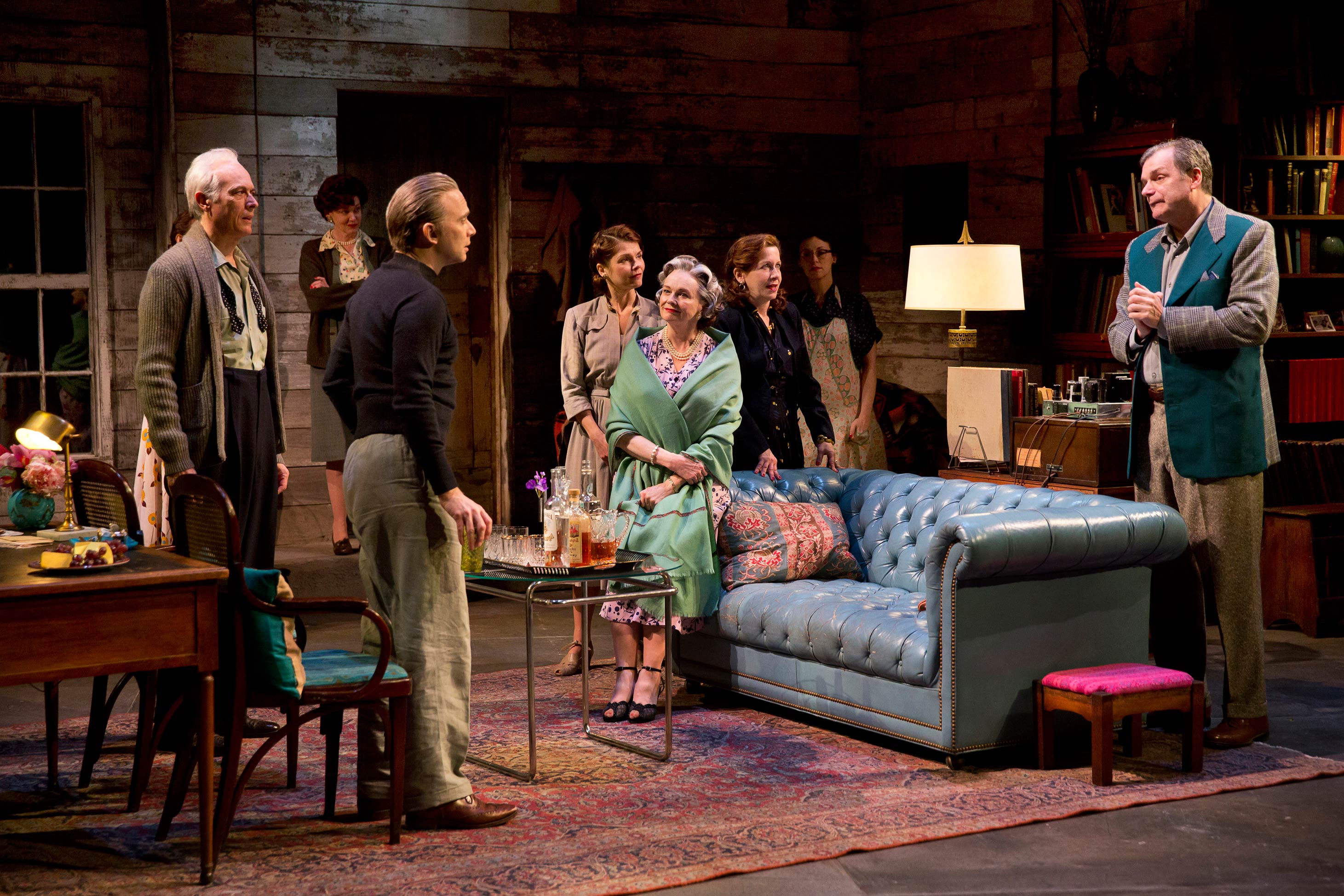
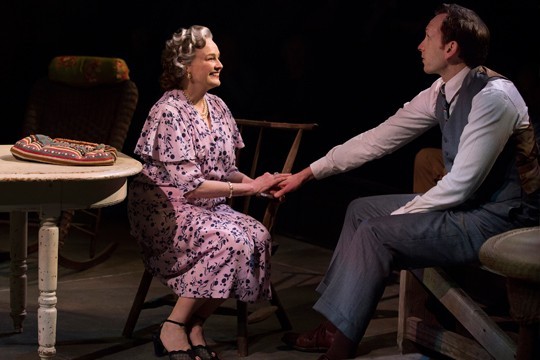
It’s been nearly sixty years since William Inge’s Pulitzer Prize–winning Picnic debuted on Broadway, with Ralph Meeker’s Hal and Paul Newman’s Alan battling over Janice Rule’s Madge; in the 1955 film, it was William Holden and Cliff Robertson with more than just their eyes on Kim Novak. So while the Roundabout’s current revival of Picnic at the American Airlines Theatre doesn’t boast quite the star power of those versions, it is still a charming and fun frolic through a bygone era. The two-hour play takes place in a small Kansas town in 1950s America that is preparing for the annual Labor Day picnic. Local beauty queen Madge Owens (Lost’s Maggie Grace) assumes she’ll be going to the picnic with Alan Seymour (Ben Rappaport), a relatively boring and self-satisfied college student from a wealthy family, along with her younger sister, the tomboy Millie (Californication’s Madeleine Martin), and their somewhat dowdy mother, Flo (Emmy winner Mare Winningham), whose husband walked out on her many years before, leaving her to raise her children on her own. The Owens family lives next door to Helen Potts (Oscar, Emmy, and Tony winner Ellen Burstyn), an older woman who has given up whatever life she could have had in order to care for her ailing mother. To get a cheap thrill, Helen hires a stranger, Hal Carter (Gossip Girl’s Sebastian Stan), to do some yard work for her, barely able to control herself when the Adonis-like man rips off his shirt, revealing his taut, sweaty chest. All of the other women notice as well, including spinster schoolteacher Rosemary Sydney (four-time Obie winner Elizabeth Marvel), who has been dating dull but reliable businessman Howard Bevans (two-time Obie winner Reed Birney). It turns out that Hal is a down-on-his-luck former fraternity brother of Alan’s who has come to town to get back on his feet, but after he is instantly attracted to Madge — and perhaps vice versa — things don’t exactly end up as planned.

(photo by Joan Marcus)

Madge (Maggie Grace) shares her hopes and dreams with her mother, Flo (Mare Winningham), in Roundabout revival of William Inge’s PICNIC (photo by Joan Marcus)

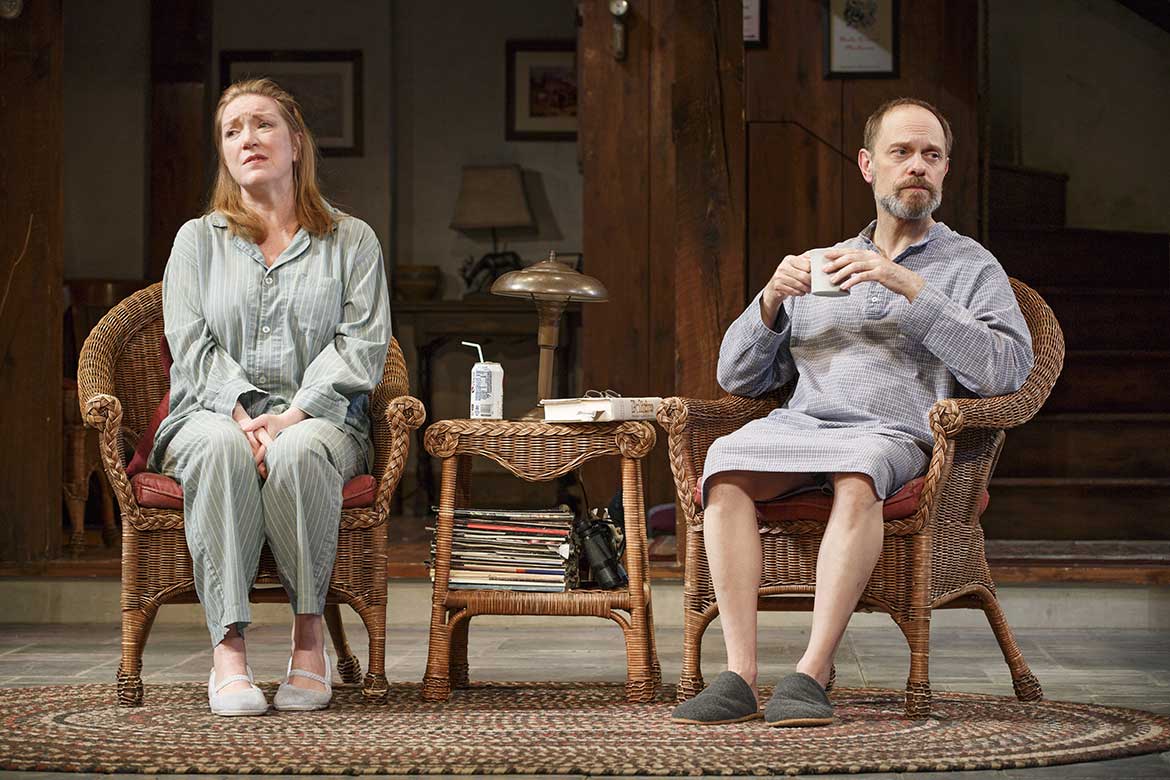
In Picnic, Inge, who also wrote such plays as Bus Stop and Come Back, Little Sheba and won an Oscar for his screenplay for Splendor in the Grass, cleverly deals with people’s hopes, dreams, and expectations in this funny, tender, and tense drama that explores the soft underbelly lying beneath the old-fashioned values of small-town America. Surprisingly, the acting is a mixed bag, with Marvel overplaying her part, Winningham underplaying hers, and Burstyn at times seeming to be lost while Grace, Birney, and Martin are more effective. Director Sam Gold (Look Back in Anger, Seminar) makes excellent use of Andrew Lieberman’s charming set, a shared backyard that firmly sets the action in America’s heartland. When Madge is up in her room, applying her makeup in front of a window that looks out on the backyard, the audience is sneaking a peek at her just as several characters are doing, everyone dreaming of the possibilities life holds for us all. In a season dominated by revivals of long-ago Broadway classics, including Golden Boy, The Heiress, Who’s Afraid of Virginia Woolf? and Cat on a Hot Tin Roof, Picnic is a fine addition.

THE OTHER PLACE

(photo by Joan Marcus)

Real-life mother and daughter Laurie Metcalf and Zoe Perry star in Sharr White’s fascinating THE OTHER PLACE (photo by Joan Marcus)

Manhattan Theatre Club at the Samuel J. Friedman Theatre
261 West 47th St. between Broadway & Eighth Aves.
Tuesday – Sunday through March 3, $67-$120
www.theotherplacebroadway.com

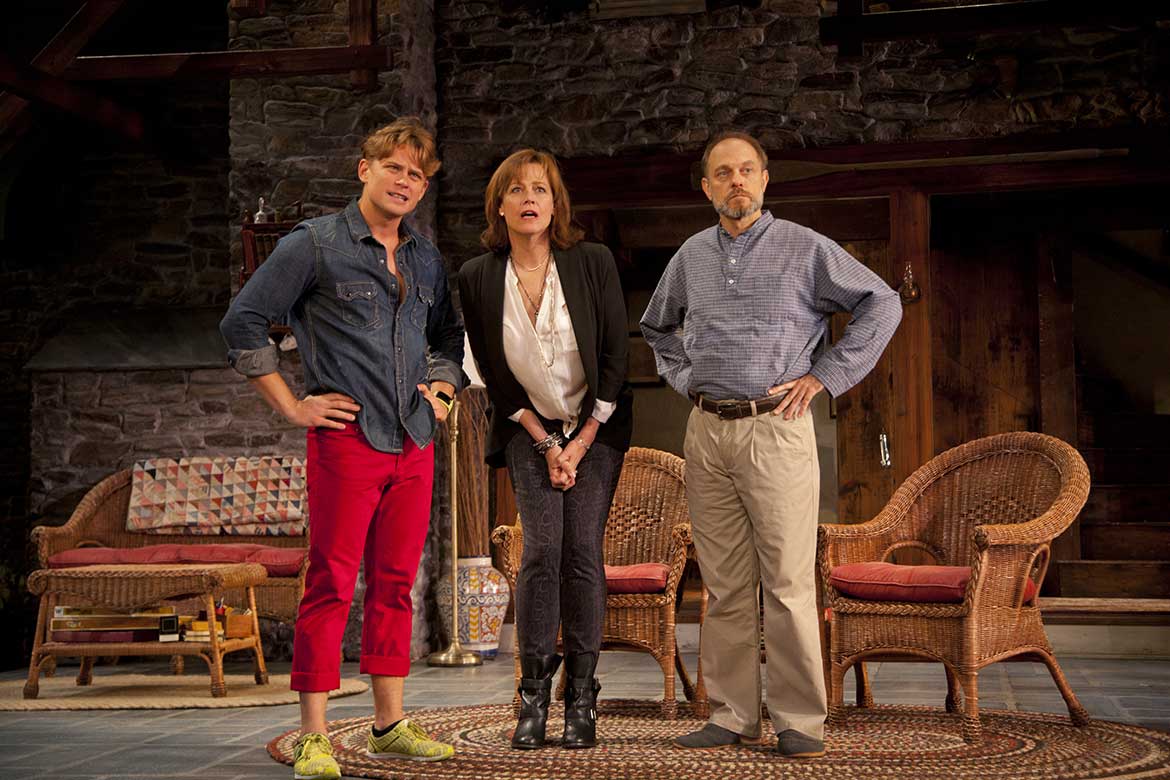
Three-time Emmy winner Laurie Metcalf won both an Obie and a Lucille Lortel Award for her 2011 off-Broadway portrayal of neurologist Juliana Smithson in Sharr White’s The Other Place, and now she has a strong shot at a Tony as the play moves to Broadway in the gripping MTC production at the Samuel J. Friedman. Metcalf stars as Juliana, a pharmaceutical pitch-woman who suffers an “episode” while on the road touting a new wonder drug. Long estranged from her daughter (Zoe Perry, Metcalf’s real-life daughter, in her Broadway debut) and accusing her doctor-husband, Ian (Daniel Stern), of having an affair with her much-younger doctor (Perry again), Juliana is trying to hold herself together even as she believes she has brain cancer. But as the complex, highly cinematic play continues, it becomes evident that she is suffering from something very different, and in many ways far more frightening.

White and Tony-winning director Joe Mantello (Other Desert Cities, Wicked, Love! Valour! Compassion!) tell Juliana’s harrowing story by going back and forth between the past and the present, as Justin Townsend’s lighting signals the time shifts. The action takes place within set designers Eugene Lee and Edward Pierce’s semicircular web of bleak gray frames (hiding lights and speakers) that serve as doors, windows, and mirrors while also evoking the misfiring synapses of Juliana’s brain. Metcalf (Rosanne, November) gives a dazzling performance as Juliana, an intelligent, scientific woman who doesn’t understand — and is unwilling to accept — what is happening to her. As the audience filters into the theater, she is already onstage, sitting in a chair, fiddling with her cell phone, helping the incoming crowd instantly identify with her. But soon it’s Ian, strongly portrayed by Stern, who is standing in for the audience as the truth is slowly revealed. Despite a few missteps — primarily a somewhat baffling finale that takes things much too far — The Other Place is an involving eighty minutes of fascinating theater, expertly told and brilliantly acted.

BROADWAY WEEK 2013

broadway week

January 22 – February 7
www.nycgo.com/broadwayweek

Ticket prices on the Great White Way getting you down? During Broadway Week, which is actually seventeen days long (January 22 to February 7), you can get two-for-one tickets to nineteen shows, from such long-running musicals as Jersey Boys, Chicago, The Phantom of the Opera, and Wicked to such outstanding plays as Picnic, The Other Place, and Who’s Afraid of Virginia Woolf? and such newer musicals as The Mystery of Edwin Drood, Once, and Newsies. And for an extra twenty bucks, you can upgrade your seats. The only Broadway Week participant that is currently sold out is The Lion King, but you better act fast if you want to score some tickets to any of the other eighteen productions, which also include Spider-Man: Turn Off the Dark, Rock of Ages, and The Heiress, starring Oscar nominee Jessica Chastain.

COIL: MAGICAL

MAGICAL

Anne Juren exposes her body and more in MAGICAL collaboration with Annie Dorsen at New York Live Arts

ANNE JUREN AND ANNIE DORSEN: MAGICAL
New York Live Arts, Bessie Schönberg Theater
219 West 19th St. between Seventh & Eighth Aves.
January 17-18, 7:30, and January 19, 6:00, $30
212-691-6500
www.newyorklivearts.org

In Magical, Anne Juren and Annie Dorsen recontextualize five seminal works in the history of feminist performance art, restaging them as theatrical entertainment for the twenty-first century. New Yorker Dorsen (cocreator of Passing Strange) and the Vienna-based Juren (founder of Wiener Tanz-und Kunstbewegung), who previously collaborated on Pièce Sans Paroles, explore ideas of illusion and transformation as Juren brings together the five radical pieces, which all date from between 1964 and 1975, taking them out of the avant-garde art gallery world and into a respected performance venue dedicated to movement artistry. They also add numerous magic tricks, designed by Steve Cuiffo, that play with reality and spectators’ perception. “Perhaps our generation has gotten a little comfortable inside the trap,” Dorsen tells Olivia Jane Smith in the program notes. “Have we won the right to self-exploit? Or self-objectivize?” The solo piece examines these questions and more in five re-creations, beginning with Carolee Schneeman’s Interior Scroll, in which Schneeman’s voice can be heard in a moving gold box, reading text that, back in 1975, came out of her vagina. Juren next appears in a kitchen as she reimagines Martha Rosler’s Semiotics of the Kitchen, picking up a knife and making violent motions and exposing a breast and filling a cup with milk. She then takes on Yoko Ono’s Cut Piece, using scissors to snip away pieces of her dress and undergarments until she is naked, then wraps part of the dress around her face and, as Marina Abramović did in Freeing the Body, starts dancing wildly, but this time to loud music that includes Led Zeppelin’s “Whole Lotta Love,” in which Robert Plant famously screams, “Way down inside.”

After a film clip of Schneeman’s Meat Joy, Juren returns to Interior Scroll, pulling surprising things out of her vagina that deal with power, further exerting her control over the proceedings. It’s a tour-de-force sixty minutes that both honors those performance artists who came before her and forces the audience to consider issues of voyeurism, nudity, and the continually changing role of women in society. Back in the ’60s, Virginia Slims might have proclaimed, “You’ve come a long way, baby,” but Magical confirms what we all know: There’s still a long way to go. Magical continues at New York Live Arts through January 19 as part of PS 122’s Coil festival. The January 17 performance will be proceeded at 6:30 by the Come Early Conversation “The Feminist Performance Art Canon,” while the January 18 show will be followed by the Stay Late Discussion “Strategies of Illusion and Transformation in Modern Performance,” with Vallejo Gantner and Carla Peterson. Juren and Dorsen will also host a Shared Practice class on January 19 at 1:30 involving trance and improvisation in choreography.

TWI-NY TALK: KIRSTEN HOLLY SMITH AND JONATHAN VANKIN — FOREVER DUSTY

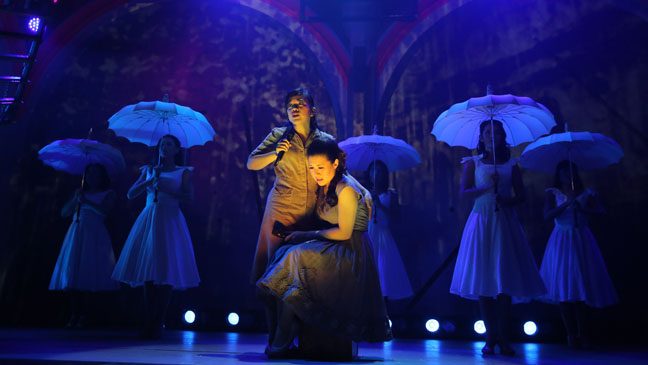
Kirsten Holly Smith sings her heart out as she channels legendary British singer Dusty Springfield in FOREVER DUSTY (photo by Joan Marcus)

Kirsten Holly Smith sings her heart out as she channels legendary British singer Dusty Springfield in FOREVER DUSTY (photo by Joan Marcus)

New World Stages
340 West 50th St. between Eighth & Ninth Aves.
Wednesday – Monday through March 3, $69-$79
www.foreverdusty.com
www.newworldstages.com

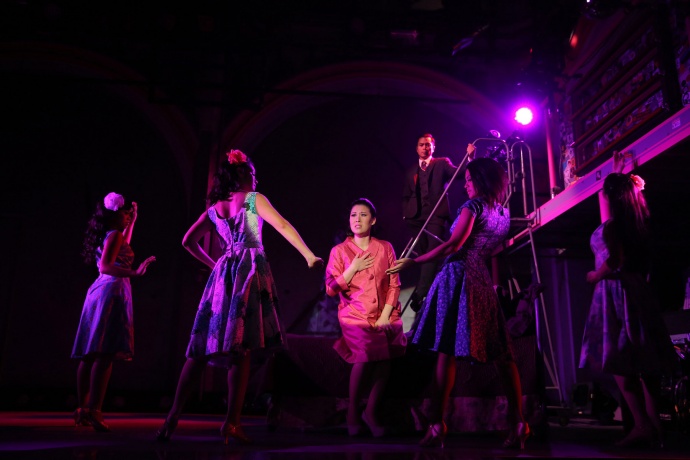
After more than seven years and several transformations, the hit off-Broadway musical Forever Dusty has settled comfortably into its home at New World Stages, where it opened in November and is currently scheduled to run through March 3. The biographical show examines the career of Mary Isobel Catherine Bernadette O’Brien, better known as British singing sensation Dusty Springfield — dazzlingly channeled by Forever creator Kirsten Holly Smith — from her childhood to her superstardom through her death in 1999 at the age of fifty-nine. The ninety-minute musical also delves into Springfield’s personal life, including her long estrangement from her brother (played by Sean Patrick Hopkins) and her relationships with women, embodied in the show by a composite character named Claire (Christina Sajous). There are family matters going on behind the scenes, too, as Smith cowrote Forever Dusty with her husband, journalist and author Jonathan Vankin. Smith, who is from Pittsburgh, has previously appeared in such plays as Three Sisters, Of Mice and Men, and Twelfth Night and such films as Isle of Lesbos and Firecracker, while Vankin, who hails from Williamstown, Massachusetts, has written for comic books, the New York Times Magazine, and Salon as well as authoring books in the Greatest Conspiracies series. Below the two discuss their collaboration and their still-growing admiration of Dusty Springfield.

twi-ny: Whose initial idea was it to create a show about Dusty Springfield? What was it about Dusty that drew you to her?

Jonathan Vankin: Forever Dusty is Kirsten’s idea, her vision, her baby. I came on as her writing partner a few years into her process. So on one level, it is Kirsten Holly Smith who drew me to Dusty.

That said, I’ve always been a huge fan of ’60s music in general and, specifically, the era that Dusty came out of — the British Invasion, Swinging London era. I knew about Dusty and of course I knew “Son of a Preacher Man,” like everyone. But once I became involved in this project and started to listen to every song that Dusty ever recorded and watch every bit of film and video I could find, I immediately became a die-hard fan. Our show covers her life story, which was tragic and triumphant in itself and has become something of an obsession for me over the past few years. But sometimes I have to take a step back, put on one of her records, and just let myself be astonished by how unbelievably good Dusty really was.

Everyone starts with her Dusty in Memphis album, and that is an excellent place to start. But I’d also strongly recommend seeking out her other albums from the 1960s, especially my favorites, A Brand New Me, which was her Philadelphia soul album, and Dusty . . . Definitely, her final British album before her relocation to America.

There are some fantastic female vocalists out there today. Adele, for example, is a phenomenal talent. But I don’t think anyone can or will ever equal what Dusty Springfield was able to do with her voice, her uncanny instinct for selecting great material — and her incredible charisma.

Kirsten Holly Smith: Looking back, I would have to say I was naive about where this journey would take me. It has taken a lot of courage and commitment to not give up on this piece. Somehow we just kept going and a few miracles happened. We are very fortunate and excited to be open off Broadway at New World Stages.

The first thing about Dusty that drew me in was her voice. There was a vulnerability, a grit. The soul that I heard in it — I was immediately fascinated. Then came her look: the blonde beehive, the black panda eye makeup, the incredible costumes and theatrical gestures. The whole package pulled me in. I slowly became obsessed. As I started to learn more about her story, it was like gold. I knew it had to be told. She was the first to stand against apartheid in South Africa and was put under house arrest. She was gay when it was literally a crime in England. Her deep love of soul music, which led her to produce a televised concert called The Sound of Motown with Little Stevie Wonder, the Temptations, Martha Reeves and the Vandellas, and others. She in many ways inspired a nation and introduced them to soul and R&B music. You can still strongly see her influence today with artists like Adele, the late Amy Winehouse, and Duffy.

Kirsten Holly Smith and Jonathan Vankin

Kirsten Holly Smith and Jonathan Vankin are professional collaborators as well as husband and wife (photo by Monica Simoes)

twi-ny: In doing your research, what was the most surprising thing you learned about Dusty?

JV: Well, as far as surprises go, it’s hard to say because there are so many. After studying her life and career for the past four or five years, I’d think I should know everything about her. But in fact, every time I go back into her story, I find something new. One of my favorite fun facts about Dusty that I think would surprise a lot of people is that she was responsible for the career of a little band some people may have heard of, by insisting that Ahmet Ertegun, the legendary head of Atlantic Records, sign them. Which he did, sight unseen, on Dusty’s suggestion alone. That band went on to have a pretty decent career, despite their funny name — Led Zeppelin.

KHS: I think the most surprising thing about Dusty is that no matter how much I learn or listen or study about her, there is always something new that pops up that I don’t know. Or someone who was close to her will reach out to me or come see the show and tell me an anecdote about her. I am always learning and discovering new things about her, and that is after many years of research. She is endlessly fascinating as a character study. I am grateful that I picked a character that continually inspires me. Not to mention all the cool and lovely people who are now in my life because of doing this project. Thank you, Dusty!

twi-ny: What do you think is the most misunderstood aspect of her career?

JV: It depends on who’s doing the understanding. I think that for today’s generation, it’s very difficult to understand the intense struggles that Dusty faced in her era — being a woman in the music business, especially. Dusty was producing her own records from the start of her career, but she was never given or took credit for it because she knew that the industry, and for that matter the public, wouldn’t tolerate the idea of a woman controlling her own career the way she did. I think that’s very difficult for people in our era to understand — even a female superstar like Dusty was supposed to stay in her “place.”

KHS: I think there was a lot about her career that was misunderstood, but [I agree that] one thing that comes to mind is that she produced her own records at a time when women did not take that kind of role in the studio. Although she never really took credit for it, she really pushed producers in England into that soul sound.

twi-ny: Do you have a particular favorite Dusty song?

JV: Hard to pick one. Like the Beatles, she recorded so many great songs that my favorite changes on an almost daily basis. Lately I’ve been listening to the lead track on her final album, A Very Fine Love (though the original, and better title, was Dusty in Nashville). The song is called “Roll Away,” and given its place in Dusty’s life and career, it’s a very moving epitaph and a beautiful number.

KHS: That’s really tough for me. Dusty literally recorded hundreds of great songs and many of them hits. I would probably have to break it down by decade. Early ’60s: “I Only Want to Be with You.” Mid-’60s: “You Don’t Have to Say You Love Me.” Late ’60s: “Son of a Preacher Man.” ’70s: “Crumbs Off the Table.” (She also recorded a lot of backup vocals in the ’70s under the pseudonym Gladys Thong; I love that. Fun fact: She sang backup on Elton John’s “The Bitch Is Back.”) The ’80s: “What Have I Done to Deserve This” or “Soft Core.” I also love her version of “Can I Get a Witness” and her cover of a Baby Washington song called “Doodlin’.” But . . . if I was stranded on a desert island and only had to pick one song, it would have to be “Son of a Preacher Man.”

twi-ny: Kirsten, you make a lot of eye contact with the audience during the show. In general, how have the crowds been?

KHS: In general, I only make eye contact in the context of there being a live performance that is incorporated into the story. As much as I can, I see the audience through that filter in my imagination. That is, the filter of what part of the story I am telling when I am singing that particular song to the audience.

I am also aware of the audience and how they are responding. I do my best as an actor to just focus on what is happening onstage; listen, receive, and respond to the other actors in the moment. That is my job, and that is hopefully where most of my focus lies during the performance. We move through the story at a fast pace. I do feel that if I am off my game in any way that the audience directly responds to that, so I do my best to be in the moment. Being in such an intimate space as the 199-seat house we are in at New World keeps me very grounded and honest in my work. I can’t really fake it, and it makes me work harder. It’s a good, fertile training ground to make me stronger as an artist and performer. I also think it gives the audience a direct experience with the artist, and I believe that can be very powerful to experience.

JV: I can say that just from being in the crowd myself at quite a few of the performances so far, audiences love this show. People are on their feet at the end of every show, and when Kirsten heads into the lobby afterward, she’s always swarmed with autograph and photo requests — all of which she happily obliges.

KHS: In general the crowds have been really supportive. I do go out to meet the audience in the lobby after the show and people can be very emphatic about the show. It’s delightful and makes me feel like all of our hard work is worth it. The audience members seem to have a very positive and emotional reaction to the story and the music. I get a lot of, “I didn’t know that about her.” And “Thank you for keeping her memory alive.” Or “I loved the music; you brought me back to my youth.”

There are younger people too who are just getting to know Dusty and are coming to the show; they too really love the story and are moved by it. Forever Dusty is a slice of rock-n-roll history and one that I think is really cool for younger people to take in as well. I feel very moved, proud, and grateful when people are inspired by the piece. Art is all about sharing and inspiring people. Theater is a very direct medium for storytelling: There is no filter; you are living the story. When theater is done right, it is truly a very powerful experience for the audience.

JV: What I find most meaningful is when people who actually knew Dusty in her life come to see the show (and there have been a number of them). Inevitably, they have tears in their eyes when they approach Kirsten and tell her that she brought Dusty back for them. What could mean more than that?

Kirsten Holly Smith has been playing to enthusiastic crowds as Dusty Springfield at New World Stages

Kirsten Holly Smith has been playing to enthusiastic crowds as Dusty Springfield at New World Stages

twi-ny: You wrote the show together. Do you work well with each other, or can it get a little crazy?

JV: To tell you the truth, it went great. Any collaboration has its bumps in the road, but in this case we know each other’s talents and abilities so well that we always knew what to expect from each other and what we each had to contribute.

KHS: Jonathan and I did write this version of the show together. The show was born out of a piece that I started writing in 2005 that ended up being produced in 2008. Then Jonathan and I got together and wrote a screenplay that encompassed more of Dusty Springfield’s entire story. It was a big, sprawling biopic about her life. We went in and did a lot more research, fleshed out the story, added a lot more music. Our screenplay was twice a finalist at the Sundance Screenwriters Lab 2.

While we were writing the film script, we were working on getting the play up in New York, but there was not a lot of movement happening with it so we decided to flesh out the play script that was produced in L.A. (which was a one-woman musical) and create a bigger theatrical piece. This eventually became Forever Dusty, the show we currently have in place, which has five actors and four band members onstage. I am really proud of where it landed.

I think Jonathan and I work really well together. Yes, it can get crazy, but we seem to somehow always be able to work through it. We balance each other out well; it’s a strong partnership.

Jonathan has extensive experience as a writer and editor, and I always learn an immense amount working with him. He’s very detailed about the choices a character makes and why they make them. He has an incredible talent. I have seen few people who can craft a story and character with the depth and ease that Jonathan does. It is truly a gift and honor to work with him. He is more of a mentor to me when it comes to writing. I am a strong ideas person and creative. It can be really fun bouncing ideas around and coming up with dialogue.

twi-ny: Do you have plans to write together again?

KHS: I will always work with Jonathan, but he is busy with other projects right now. I think he just finished a screenplay for a producer and is now working on writing another play for another producer. We have talked about several other projects that could work. I guess time will tell. Right now we are still pretty focused on building Forever Dusty into the long-term success we know it can be. We need all the support we can get right now from the community.

JV: Sure, we’d love to write together again. (And here’s a secret — we already have.)